
Assembling the Core Mechanical Systems
Welcome back to our hands-on series on building your own CNC machine. In Part 1, we laid the groundwork with design principles and frame selection. Part 2 dove into constructing a rigid and square frame, the literal backbone of your machine. Now, in Part 3, we arrive at the heart of the build: installing the core mechanical systems that translate digital commands into precise physical motion. This phase is where precision engineering becomes tangible, and your choices here will directly determine the machine’s accuracy, speed, and capability.
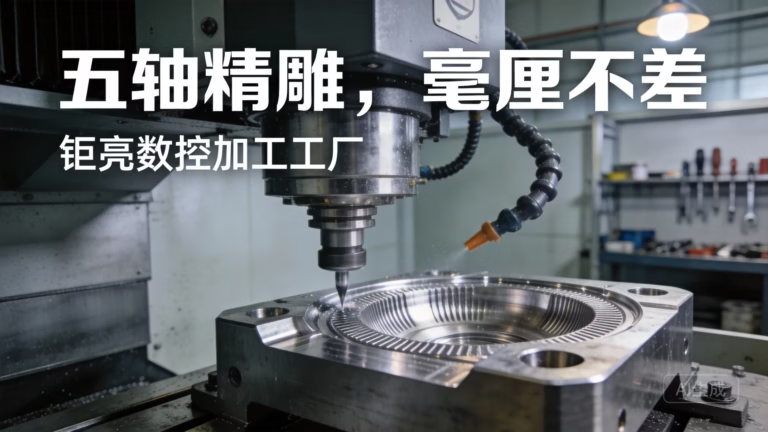
For enthusiasts and engineers embarking on this journey, understanding these systems is crucial. While a DIY build is rewarding, it’s important to recognize when a component’s precision requirements exceed typical workshop fabrication capabilities. This is where partnering with a professional manufacturer like GreatLight Metal can be invaluable, providing mission-critical parts like custom spindle mounts, precision-machined bearing blocks, or complex drive brackets that ensure your machine performs at a professional level.
H2: The Three Pillars of Mechanical Motion
The core mechanical assembly revolves around three interdependent systems: the linear motion system, the spindle system, and the drive system. Each must be installed and aligned with meticulous care.
H3: 1. Linear Motion System: Guidance and Precision
This system comprises the rails, bearings (blocks), and the surfaces they mount to. Its job is to allow movement along an axis with minimal friction and deflection.
Component Installation:
Rails/Shafts: Whether you’re using supported round rails, profiled linear rails, or hardened steel shafts, their installation is critical. They must be perfectly parallel to each other and aligned with the machine’s axis of travel.
Mounting Surface Preparation: The mounting surface on your frame (often aluminum extrusion or steel) must be clean, flat, and free of burrs. Use a precision straightedge to check.
Alignment Procedure: Do NOT fully tighten the rail mounting screws initially. Use a dial indicator mounted to a sled that runs along the rail. Gently tap the rail into alignment, checking for straightness along its length and parallelism to its partner rail. This is a slow, iterative process. Once aligned, tighten the screws in a cross pattern to avoid inducing stress.
Bearing Blocks: Once rails are secured, slide the bearing blocks (linear bearings) onto them. Avoid letting them slam into the end; use soft stops. At this stage, ensure they move smoothly without any binding, which indicates misalignment.
H3: 2. Spindle Assembly: The Tool That Cuts
The spindle holds the cutting tool and provides the rotational force. Its mounting directly affects cutting performance and finish.
Spindle Mount Design & Sourcing: The mount must be incredibly rigid to dampen vibrations. For high-frequency (HF) or water-cooled spindles, the mount often needs precise pockets and bore holes. A simple clamp-style mount for a router may suffice for softer materials but won’t do for metals.
Professional Insight: This is a prime example where DIY meets professional manufacturing. A custom CNC machined spindle mount from aluminum or steel, with precisely bored pilot holes and mounting surfaces perpendicular to the travel axis, is a game-changer. Companies specializing in precision 5-axis CNC machining services can produce these mounts with the necessary accuracy, often incorporating complex coolant channels or integrated tool sensor mounts.
Mounting to the Z-Axis: The spindle mount attaches to the Z-axis carriage. Use a dial indicator to “tram” the spindle. This ensures the spindle’s axis is perfectly perpendicular to the machine’s X-Y plane. Adjust with shims or by slightly loosening mount bolts until the indicator reads near-zero runout across a flat plate attached to the spindle nose.
H3: 3. Drive System: Converting Rotation to Linear Motion
This system includes the motor, coupling, and leadscrew (or ball screw) that move each axis.
Motor Mounting: Servo or stepper motors must be aligned coaxially with the leadscrew to prevent premature wear and vibration. Flexible helical beam couplings can forgive minor misalignment, but the goal is perfect alignment.
Leadscrew/Ballscrew Installation:
End Supports: Screws need fixed and supported end bearings. The fixed end (typically coupled to the motor) handles thrust loads and must be secured against axial movement. The supported end allows for axial expansion (thermal growth) while providing radial support.
Alignment with Linear Rails: The screw must run parallel to the linear rails along its entire length. Use calipers or a dial indicator to measure the distance from the screw to the rail at multiple points. Misalignment causes binding, increased wear, and “stick-slip” motion.
Choice of Screw: Ball screws offer near-zero backlash and high efficiency but are costly. ACME screws with anti-backlash nuts are a common DIY choice. Rolled thread screws are economical but less precise than ground threads.
Nut Block Assembly: The leadscrew nut is attached to the moving axis (e.g., the gantry or Z-carriage). This connection must be rigid. Any flex here translates directly into lost motion and reduced accuracy.
H2: Integration, Alignment, and Tuning
With all core systems mounted, integration is key.
Axis Squareness: Use a precision square to check that the X-axis carriage is perpendicular to the Y-axis travel. Similarly, the Z-axis must be perpendicular to the X-Y plane. This is fundamental for making accurate, square parts.
Preload and Backlash Check: Manually move each axis across its entire range. Feel for any tight spots (indicating misalignment) or loose spots (indicating backlash in the screw/nut assembly). Anti-backlash nuts often have an adjustment mechanism.
Lubrication: Apply the appropriate lubricant to linear rails, bearing blocks, and leadscrews before final operation. Dry running will quickly damage components.
H2: Conclusion
How To Build Your Own CNC Machine Part 3 transforms your static frame into a dynamic precision system. Success hinges on patience, meticulous alignment, and an understanding that some components—like a perfectly machined spindle mount or a custom drive bracket—are best sourced from experts. The satisfaction of assembling these mechanical systems is immense, as you literally piece together the capability of your machine.
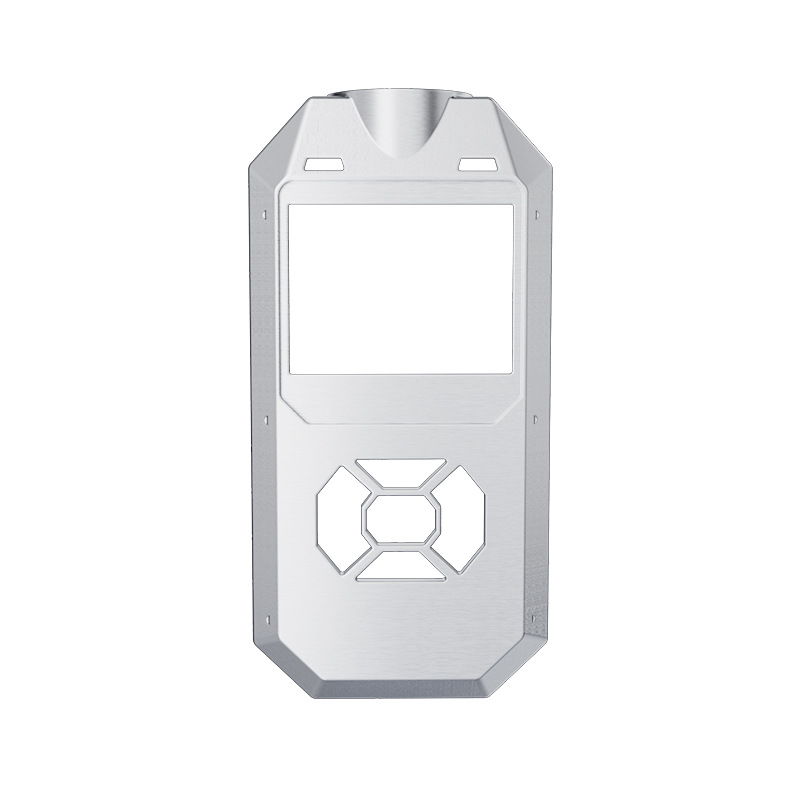
For builders who demand the highest levels of precision and reliability for critical components, leveraging the expertise of a manufacturer like GreatLight Metal can bridge the gap between a functional DIY project and a professional-grade tool. Their capabilities in 5-axis CNC machining and full-process manufacturing ensure that the most complex, tolerance-sensitive parts of your build are executed flawlessly, allowing you to focus on the integration and tuning that make the machine uniquely yours.
H2: Frequently Asked Questions (FAQ)
Q1: I’m getting binding on my linear rails when the bearing blocks are mounted. What did I do wrong?
A1: Binding almost always indicates misalignment between the two parallel rails. They are not perfectly parallel along their entire length, or the mounting surface is not flat. Revisit the alignment procedure using a dial indicator. Do not force the bearings.
Q2: What’s more important: using high-end ball screws or perfectly aligning cheaper ACME screws?
A2: Perfect alignment is almost always more critical. A perfectly aligned ACME screw with a good anti-backlash nut will outperform a misaligned, expensive ball screw, which may jam or wear out prematurely. Precision in installation trumps raw component cost in many cases.

Q3: My spindle has noticeable runout after mounting. Is this a problem with the spindle or my mount?
A3: It could be either. First, check the spindle’s native runout by indicating the tool holder taper directly. If it’s low there but high at the tool tip, the issue is likely mounting deflection or tram. Ensure your mount is rigid enough and that you’ve properly trammed the spindle to the table.
Q4: When should I consider outsourcing parts for my DIY CNC build?
A4: Consider professional manufacturing for:
Complex Geometry: Parts requiring 3+ axis machining, like a spindle mount with integrated cooling channels.
Critical Interfaces: Components where mating surfaces demand flatness or perpendicularity better than ±0.02mm.
Material Challenges: Parts needing to be made from specific, hard-to-machine alloys for stiffness or wear resistance.
Time vs. Cost: When achieving the required precision in your home workshop would require tooling or time investment exceeding the cost of simply having it professionally made.
Q5: How does thermal expansion affect my mechanical assembly?
A5: Metals expand with heat. A long steel leadscrew will lengthen during prolonged operation. This is why one end must be “fixed” and the other “supported” to allow for this expansion. If both ends are fixed, the screw will buckle or create immense thrust loads on the bearings. Aluminum extensions in the frame can also expand, subtly affecting alignment over long jobs—another reason for a rigid, thermally stable initial frame design.
For ongoing insights into precision manufacturing and engineering, follow industry leaders on professional networks like LinkedIn{:target=”_blank”}.



















