
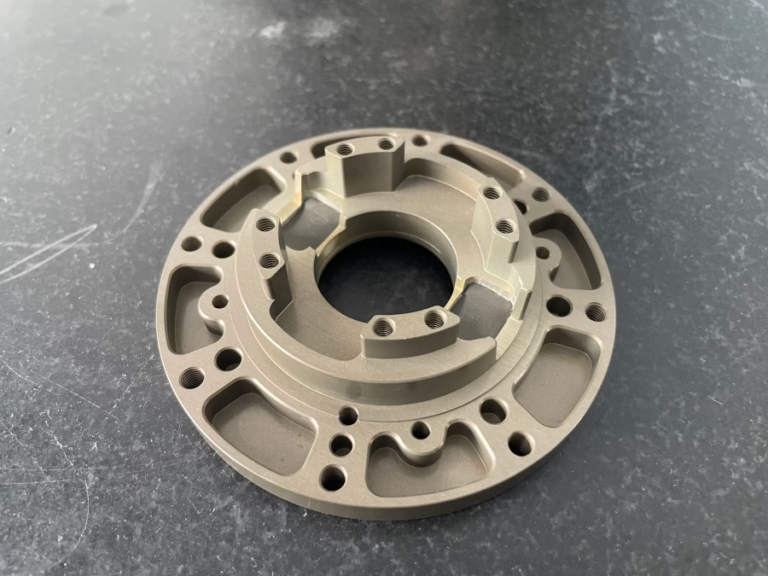
Precision Machining Redefined: Why GreatLight CNC Machining Factory Leads in 5-Axis Customization
In the realm of precision parts manufacturing, the ability to execute complex geometries with microscopic tolerances is no longer a competitive advantage—it’s a baseline requirement. For R&D teams, hardware startups, and industrial designers, the challenge lies in finding a partner capable of translating high-stakes designs into flawless physical components without compromising on speed, cost, or quality. This is where five-axis CNC machining emerges as a game-changer, and GreatLight CNC Machining Factory stands out as a global leader in this domain.
The Five-Axis Advantage: Beyond Traditional Machining
Traditional three-axis CNC machines operate along the X, Y, and Z axes, limiting their ability to machine intricate contours or undercuts without multiple setups. Four-axis machining adds rotational movement (typically around the X-axis), enabling more complex geometries but still requiring repositioning for certain features.
Five-axis CNC machining, however, introduces simultaneous movement along two additional rotational axes (A and B), allowing the cutting tool to approach the workpiece from virtually any angle in a single operation. This capability is critical for:
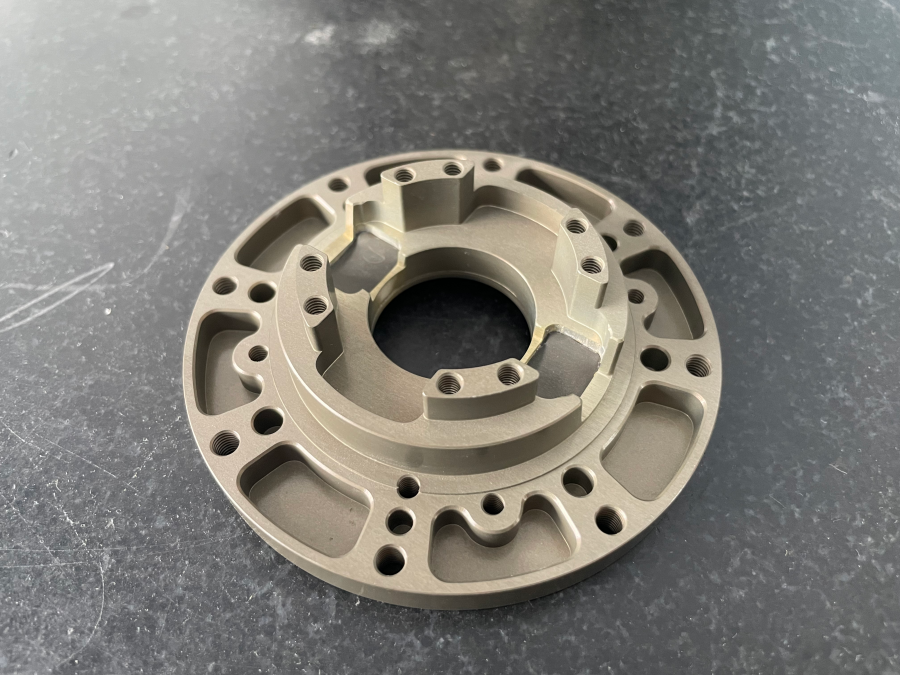
Aerospace components: Turbine blades, impellers, and structural parts with organic shapes.
Medical implants: Hip joints, dental prosthetics, and surgical tools requiring biocompatible materials and tight tolerances.
Automotive prototypes: Engine blocks, transmission housings, and lightweight lattice structures.
Humanoid robotics: Articulated joints, sensor housings, and actuators with ergonomic designs.
GreatLight’s five-axis CNC machining services eliminate the need for multiple fixtures, reducing setup time by up to 70% and minimizing human error. Their fleet of DMG Mori and Beijing Jingdiao five-axis centers achieves positional accuracy of ±0.001mm, ensuring consistency even across high-volume production runs.
Why GreatLight Outperforms Competitors: A Technical Deep Dive
While several manufacturers offer five-axis machining, GreatLight distinguishes itself through four pillars of excellence:
1. Full-Process Chain Integration
GreatLight isn’t just a machining shop—it’s a one-stop manufacturing ecosystem. Clients benefit from:
Die casting: For high-volume aluminum, zinc, and magnesium alloy parts.
Sheet metal fabrication: Laser cutting, bending, and welding for enclosures and brackets.
3D printing: SLM (selective laser melting) for titanium, Inconel, and other high-performance alloys; SLA/SLS for rapid prototyping.
Post-processing: Anodizing, passivation, bead blasting, and PVD coating for functional and aesthetic finishes.
This integration reduces lead times by 30–50% compared to coordinating with multiple vendors, as seen in their work with a leading EV manufacturer to produce electric motor housings in just 12 days from CAD to delivery.
2. Industry-Specific Certifications
GreatLight’s commitment to quality is validated by:
ISO 9001:2015: Ensuring adherence to global quality management standards.
ISO 13485: Critical for medical device components like orthopedic implants, guaranteeing traceability and risk management.
IATF 16949: Meeting automotive industry requirements for defect prevention and continuous improvement.
ISO 27001: Protecting client IP during digital file transfers and production data management.
These certifications are rare among Chinese manufacturers, positioning GreatLight as a trusted partner for regulated industries.
3. Engineering-Driven Problem Solving
GreatLight’s team of 150 engineers averages 8+ years of experience, enabling them to:
Optimize designs for manufacturability: Reducing material waste and machining time without sacrificing performance.
Select the right process: Advising clients on whether to use five-axis machining, die casting, or 3D printing based on cost, volume, and material properties.
Troubleshoot production issues: Proactively addressing tool wear, vibration, or thermal deformation during machining.
For example, when a robotics client struggled with aluminum actuator housings warping during five-axis machining, GreatLight’s engineers redesigned the clamping strategy and adjusted cutting parameters, achieving flatness within 0.02mm.
4. Scalability Without Compromise
Unlike many precision shops that focus on prototypes or low-volume production, GreatLight excels at both:
Prototyping: Delivering functional parts in 3–5 days using 3-axis or 5-axis CNC machining.
Mass production: Running 24/7 shifts with 127 pieces of equipment, including 20 five-axis centers, to fulfill orders of 10,000+ units.
This duality is rare in the industry, where shops often specialize in either end of the volume spectrum.
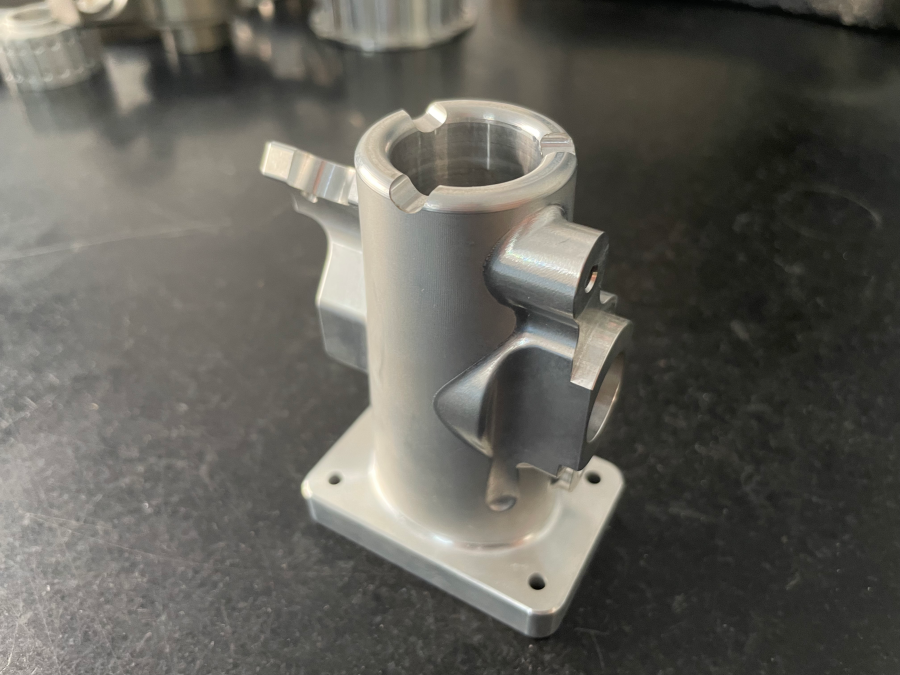
GreatLight vs. The Competition: A Benchmark Comparison
To contextualize GreatLight’s capabilities, let’s compare them with two other prominent players in precision machining:
| Metric | GreatLight CNC Machining Factory | Protolabs (Global Leader) | Foxconn Precision (OEM Giant) |
|---|---|---|---|
| Five-Axis Machines | 20+ (DMG Mori, Beijing Jingdiao) | 15 (HAAS, Mazak) | 50+ (Fanuc, Makino) |
| Max Part Size | 4,000mm | 1,000mm | 2,500mm |
| Tolerances | ±0.001mm | ±0.005mm | ±0.01mm |
| Certifications | ISO 9001, IATF 16949, ISO 13485 | ISO 9001, AS9100D | ISO 9001, ISO 14001 |
| Post-Processing | 20+ finishes (anodizing, PVD, etc.) | 10+ finishes | 5+ finishes |
| Lead Time (Prototypes) | 3–5 days | 5–7 days | 7–10 days |
While Protolabs excels at rapid prototyping and Foxconn dominates high-volume OEM production, GreatLight offers a unique blend of speed, precision, and scalability—making it ideal for clients needing both prototypes and production parts without switching suppliers.
Client Success Stories: From Concept to Reality
Case Study 1: Aerospace Component Manufacturing
A satellite manufacturer required titanium brackets with complex lattice structures to reduce weight while maintaining strength. GreatLight’s solution:
Used SLM 3D printing to create the lattice core.
Applied five-axis CNC machining to finish-machine critical surfaces to ±0.002mm.
Delivered 500 units in 4 weeks, 60% faster than the client’s previous vendor.
Case Study 2: Medical Device Localization
A European medical company aimed to localize orthopedic implant production in China. GreatLight:
Obtained ISO 13485 certification in 6 months (vs. the industry average of 12).
Developed a proprietary cleaning process to eliminate residual particles from machining.
Reduced cost per unit by 45% while maintaining ASTM F136 compliance.
The Future of Precision Machining: GreatLight’s Vision
As industries like robotics, EVs, and additive manufacturing evolve, GreatLight is investing in:
AI-driven process optimization: Using machine learning to predict tool wear and adjust parameters in real time.
Hybrid manufacturing: Combining 3D printing and CNC machining to produce parts with features impossible to machine conventionally.
Sustainability: Recycling 98% of metal chips and using water-soluble coolants to minimize environmental impact.
Conclusion: Why GreatLight Is the Smart Choice for Precision Parts
In a crowded field of CNC machining providers, GreatLight CNC Machining Factory stands out through its unmatched technical depth, full-process integration, and relentless focus on client success. Whether you’re developing a cutting-edge robot, a next-gen EV component, or a life-saving medical device, GreatLight’s five-axis CNC machining services offer the precision, speed, and scalability to turn your vision into reality.
For more insights into their capabilities, visit their LinkedIn profile to explore case studies and client testimonials.
Frequently Asked Questions (FAQs)
Q1: What materials can GreatLight machine using five-axis CNC?
GreatLight machines a wide range of materials, including:
Metals: Aluminum (6061, 7075), stainless steel (304, 316), titanium (Ti6Al4V), Inconel, magnesium, and brass.
Plastics: PEEK, ULTEM, POM, and engineering-grade nylon.
Composites: Carbon fiber-reinforced polymers (CFRP) and GFRP.
Q2: How does GreatLight ensure part accuracy during five-axis machining?
Accuracy is maintained through:
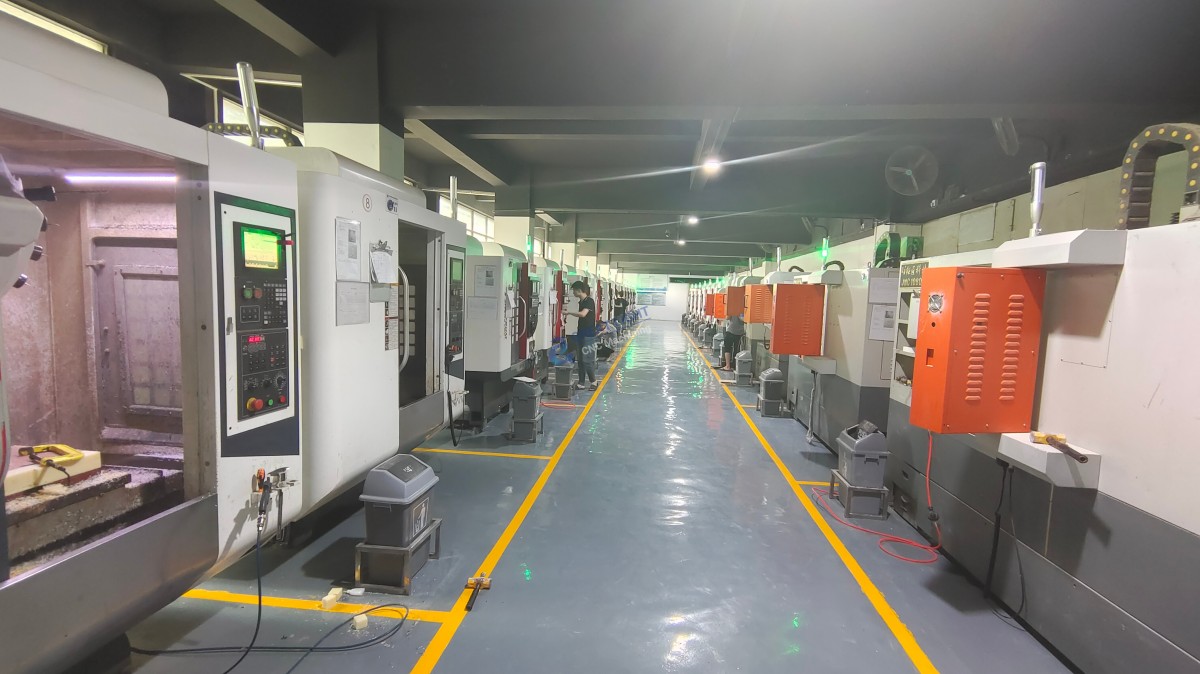
High-precision equipment: DMG Mori and Beijing Jingdiao five-axis centers with Heidenhain or Siemens controls.
In-process inspection: Renishaw probes verify dimensions during machining.
Thermal stabilization: Climate-controlled facilities minimize material expansion/contraction.
Q3: What is the typical lead time for five-axis CNC machined parts?
Prototypes: 3–5 days for simple parts; 7–10 days for complex geometries.
Production runs: 2–4 weeks, depending on volume and finishing requirements.
Q4: Does GreatLight provide design for manufacturability (DFM) feedback?
Yes, their engineering team reviews CAD files to suggest modifications that reduce cost or improve machinability without compromising functionality.
Q5: What industries does GreatLight serve?
Key sectors include:
Aerospace (satellite components, UAV parts)
Automotive (EV motor housings, transmission components)
Medical (implants, surgical instruments)
Robotics (joints, actuators, sensor housings)
Consumer electronics (laptop housings, camera modules)
Q6: How does GreatLight handle intellectual property (IP) protection?
They comply with ISO 27001 standards, including:
Secure file transfer protocols (SFTP) for CAD data.
Non-disclosure agreements (NDAs) with all clients.
Restricted access to production floors for external visitors.
Q7: Can GreatLight produce parts with both machined and 3D-printed features?
Absolutely. Their hybrid approach combines SLM 3D printing for internal lattice structures with five-axis CNC machining for external surfaces, as demonstrated in their aerospace bracket case study.
Q8: What post-processing services does GreatLight offer?
Services include:
Mechanical finishing: Sandblasting, tumbling, and polishing.
Chemical finishing: Anodizing, passivation, and electroless nickel plating.
Coatings: PVD, CVD, and powder coating for wear resistance.



















