For professionals and businesses searching online for “small CNC machining services near me,” this query represents a fundamental step in the product development and manufacturing journey. The instinct to find a local supplier is natural—driven by desires for easier communication, faster turnaround, and perceived lower logistical complexity. However, in today’s globally connected and digitally managed manufacturing landscape, “near me” should be re-evaluated beyond mere geography to encompass technological proximity, capability alignment, and service reliability. As a senior manufacturing engineer, I will dissect what you should truly be seeking in a small CNC machining partner and how to make an informed choice that balances locality with world-class capability.
Beyond Geography: What “Small CNC Machining Services” Really Entail
When we specify “small,” it typically refers to two dimensions: the physical size of the parts and the volume of the production run. Small CNC machining is the backbone of prototyping, R&D, and low-to-medium volume production across industries like medical devices, aerospace components, robotics, and precision instrumentation.
The core services under this umbrella include:
Precision CNC Milling & Turning: For creating complex 3D geometries, pockets, slots, and contours from blocks of material.
Multi-Axis Machining (3-axis, 4-axis, 5-axis): Essential for complex parts that require machining from multiple angles without re-fixturing. 5-axis CNC machining is particularly crucial for intricate, monolithic components.
Micro-Machining: For exceptionally small features and tight tolerances, often required in medical and optical applications.
Secondary Operations: Including drilling, tapping, boring, and threading.
Comprehensive Post-Processing: Such as anodizing, plating, powder coating, polishing, and heat treatment to meet final part specifications.
The Real Criteria for Choosing a “Near Me” Partner
While a local shop might be convenient for a quick conversation, the following criteria are far more critical for project success:
1. Technical Capability and Equipment Portfolio:
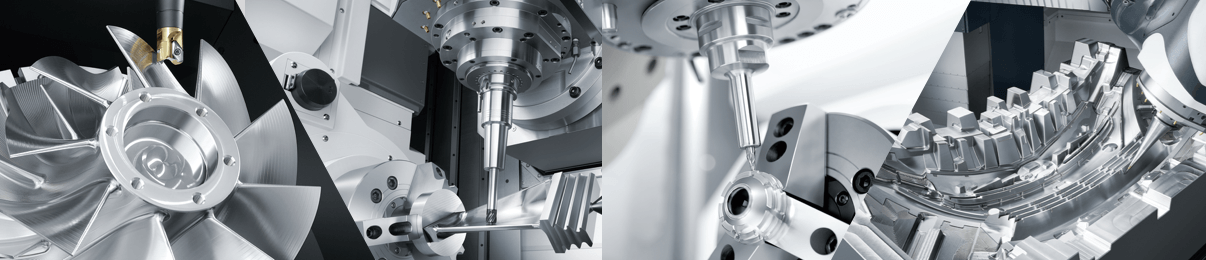
The question isn’t just “Do you have CNC machines?” but “What specific machines do you have, and what are their capabilities?” A supplier’s ability to handle your project hinges on their equipment’s precision, size envelope, and axis count. For instance, a local shop with only 3-axis machines may be ill-equipped for a complex impeller or turbine blade, which demands simultaneous 5-axis CNC machining. True capability is defined by the machining envelope (the maximum part size they can handle), positioning accuracy, and repeatability.
2. Material Expertise and Inventory:
A proficient partner should offer a wide range of materials—from common alloys like 6061 and 7075 aluminum, 303 and 316 stainless steel, and brass to more challenging materials like titanium, Inconel, and PEEK. Their familiarity with the machining characteristics of each material directly impacts tool life, surface finish, and dimensional stability.
3. Engineering Support and DFM Feedback:
This is perhaps the most valuable service a machining partner can provide. An experienced manufacturer will review your design for manufacturability (DFM) and offer suggestions to reduce cost, improve strength, or simplify machining without compromising function. This collaborative engineering approach is a hallmark of a true partner, not just a job shop.
4. Quality Assurance Systems and Metrology:
Precision is meaningless without verification. A credible supplier must have in-house metrology equipment such as Coordinate Measuring Machines (CMM), optical comparators, and surface roughness testers. More importantly, their commitment should be backed by a formal Quality Management System (QMS).
5. Scalability and Project Management:
Can the supplier handle your project from a single prototype through to a production run of hundreds or thousands? Do they have streamlined processes for quoting, order tracking, and communication? Efficient project management often outweighs the marginal time saved from physical proximity.
The Supplier Landscape: A Comparative View
When evaluating “small CNC machining services near me,” you’ll encounter different types of suppliers, each with its own strengths. Let’s objectively compare a few models, highlighting a capable integrated manufacturer.
| Supplier Type | Typical Strengths | Considerations |
|---|---|---|
| Local Job Shop | Fast initial response, ease of in-person visits, potential for quick-turn prototypes. | May have limited advanced equipment (e.g., 5-axis), material options, or formal QMS. Scalability can be a challenge. |
| Online Instant Quoting Platforms (e.g., Xometry, Fictiv, RapidDirect) | Extremely fast quoting, vast network of suppliers, user-friendly interface for simple parts. | Less direct engineering collaboration, potential variability in quality across their network, less optimal for highly complex or mission-critical parts. |
| Specialized Integrated Manufacturers (e.g., GreatLight CNC Machining Factory) | Deep engineering support, full in-house control over the entire process (machining, finishing, inspection), robust QMS certifications (ISO 9001, IATF 16949), ability to handle high-complexity work. | May not be physically “around the corner” for all clients, though digital communication bridges this gap effectively. |
| Large-Scale Contract Manufacturers | Massive capacity for very high-volume production. | Often less interested in low-volume or prototype work, can be less agile and more expensive for small batches. |
As illustrated, companies like GreatLight CNC Machining Factory occupy a vital niche. They combine the agility and focus on precision typical of a high-end job shop with the systematic processes, certifications, and full-service capability of a larger contract manufacturer. This makes them exceptionally well-suited for clients who need more than just a part cut—they need a manufacturing solution that ensures reliability from the first prototype to the final production batch.
Building Trust: The Role of Certifications
Trust is the ultimate currency in precision manufacturing. When you cannot visit a facility daily, international certifications serve as an independent validation of a supplier’s commitment to quality and consistency.
ISO 9001:2015: The baseline for a structured QMS, ensuring processes are documented, followed, and continuously improved.
IATF 16949: The automotive industry’s stringent standard, signifying a focus on defect prevention and reducing variation in the supply chain. This discipline benefits all complex hardware projects.
ISO 13485: For medical device manufacturing, emphasizing risk management and traceability.
ISO 27001: For information security, crucial when sharing sensitive IP and design files.
A manufacturer investing in these certifications demonstrates a long-term commitment to operational excellence that transcends location.
Conclusion: Redefining “Near Me” for the Modern Era
The search for small CNC machining services near me is, at its heart, a search for a capable, responsive, and trustworthy manufacturing partner. While local options have their place for simple, urgent tasks, the most critical projects demand a partner chosen for technological capability, quality systems, and engineering partnership above all else.
In this context, “proximity” is better measured by responsiveness of communication, clarity of process, and alignment of capabilities than by kilometers or miles. A manufacturer like GreatLight CNC Machining Factory, with its comprehensive precision 5-axis CNC machining services{:target=”_blank”} and integrated approach, can be more “present” and effective for your project through digital tools and professional project management than a geographically close but technically limited shop.
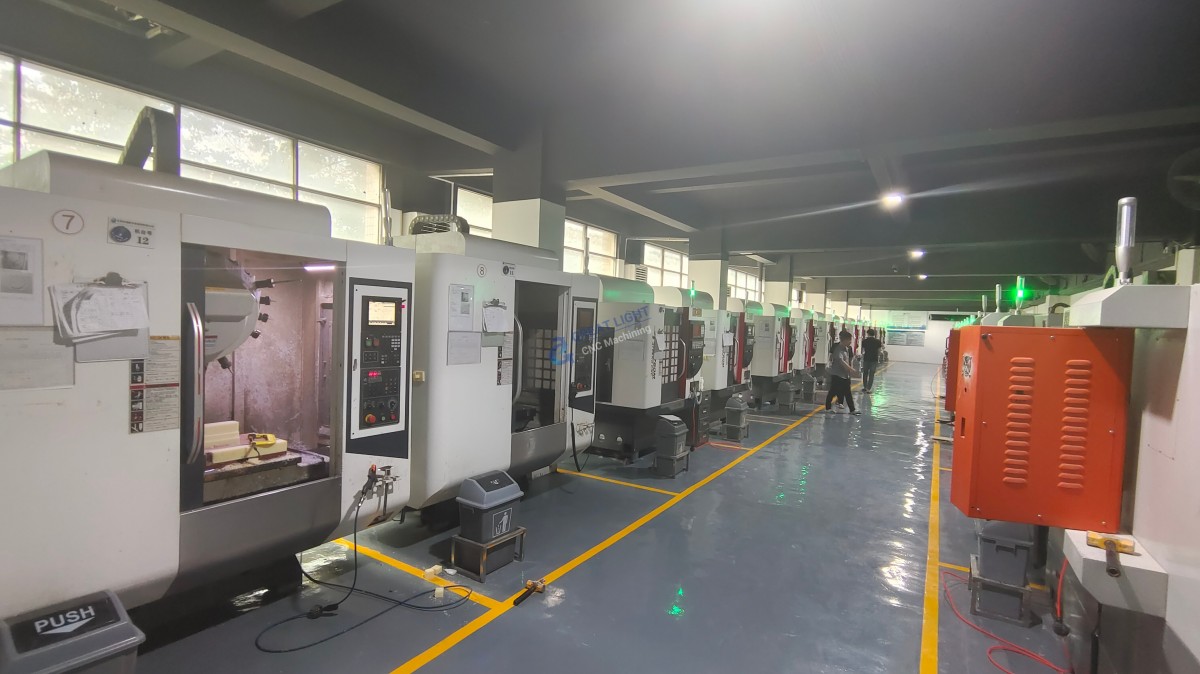
Therefore, broaden your search criteria. Evaluate potential partners on the depth of their equipment, the rigor of their quality controls, the insight of their engineering team, and the transparency of their operations. By doing so, you will find a partner who is truly “near” you in every way that matters for bringing your precision designs to life successfully. For ongoing insights into precision manufacturing, connect with industry leaders on platforms like LinkedIn{:target=”_blank”}.