
The Precision Predicament: Why “Low Volume Mold Any Thermoplastic” is the Smartest Manufacturing Strategy
In the complex ecosystem of precision manufacturing, the question of tooling often dictates the pace and profitability of a project. For decades, the industry has been fixated on high-volume, hard-tooled production, where the massive upfront cost of a steel mold is amortized over millions of parts. This paradigm, however, is rapidly fracturing under the pressure of product innovation, rapid prototyping, and niche market demands. The modern engineer, inventor, and product manager face a critical question: How do you bridge the gap between a functional prototype and full-scale production without breaking the bank on capital-intensive tooling? The answer lies in a deceptively simple, yet profoundly strategic capability: low volume mold any thermoplastic.
This is not merely a service offering; it is a manufacturing philosophy that redefines risk, speed, and flexibility. It is the key to unlocking faster time-to-market, validating complex designs, and managing cash flow in an unpredictable economic landscape.
The Core Concept: What is a “Low Volume Mold” and Why Does it Exist?
A low-volume mold, often referred to as a “bridge tool” or “soft tool,” is a production tool designed for a limited lifespan—typically from a few hundred to tens of thousands of cycles. Unlike high-production steel molds designed for millions of shots, low-volume molds are crafted from more economical materials like aluminum, pre-hardened steel (P-20 or 420SS), or even 3D-printed tooling. The core value proposition of a low-volume mold is its ability to use any thermoplastic material that is commercially available
This approach allows manufacturers to avoid the crippling expense and long lead times (often 8-12 weeks or more) of a full-production, hardened steel mold. It provides a controlled, low-risk environment to prove out a part design, validate the molding process, and build initial inventory for market testing, beta launches, or low-volume production runs. This is a direct solution to a core pain point in the industry: the “precision black hole” and the “lead time anxiety” that stifles innovation. You don’t need to commit to a $50,000 mold to test a design revision; you can iterate with a $5,000 low-volume mold.
The Seven Critical Pain Points: How Low Volume Tooling Becomes the Solution
GreatLight CNC Machining, with its decade-plus experience and 76,000 sq. ft. facility in Dongguan, has identified seven critical pain points in the traditional CNC machining and injection molding landscape. Low-volume tooling is the elegant, systematic answer to each of them.
1. The “Precision Black Hole” – Validating Tolerance Before Mass Production
The Pain: A supplier promises ±0.001mm, but the first article inspection (FAI) reveals inconsistencies due to tool wear or process instability in a production steel mold.
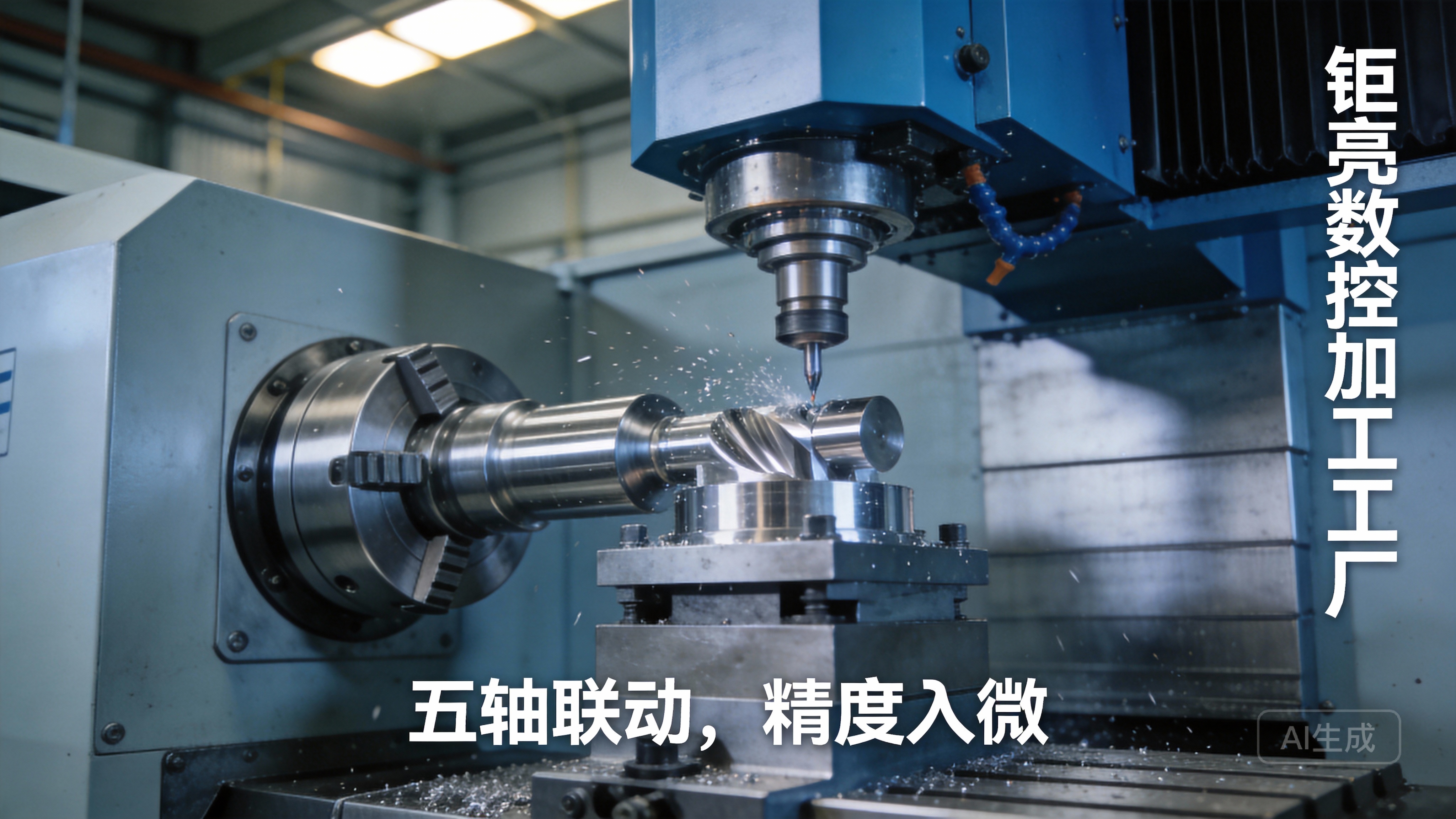
The Solution: A low-volume aluminum mold allows you to run a production-representative process for a few hundred parts. This provides irrefutable data on the final part tolerance, sink marks, and warpage before you invest in a hard tool. At GreatLight Metal, advanced 5-axis machining centers from Dema and Beijing Jingdiao ensure the mold cavity itself is machined to exacting specifications, dramatically reducing the risk of a final part being out of spec.
2. The “Lead Time Anxiety” – From Design to Part in Weeks, Not Months
The Pain: You have a critical product launch date, but the 10-week lead time for a production mold makes it impossible.
The Solution: A low-volume mold can be designed, machined, and qualified in as little as 2-3 weeks. This compressed timeline is the ultimate weapon against market pressure. Instead of waiting, you are producing shipment-ready parts. GreatLight’s commitment to “full-process chain integration” means the design for manufacturability (DFM), mold design, CNC machining, and final molding all happen under one roof, eliminating hand-off delays.
3. The “Volume Trap” – Avoiding Massive Inventory Write-Offs
The Pain: You commit to a production mold for 100,000 parts, but the market only accepts 20,000. You are now on the hook for 80,000 worthless parts and a very expensive mold.
The Solution: A low-volume mold is intrinsically aligned with demand. It allows for smaller, more frequent production runs. You can order 500 parts, sell them out, then order another 500. This “just-in-time” approach eliminates warehousing costs, obsolescence risk, and negative cash flow. The low-volume mold for any thermoplastic becomes a financial tool, not just a manufacturing one.
4. The “Material Mismatch” – Testing in Production-Ready Plastics
The Pain: Your prototype was made via 3D printing (e.g., SLA or SLS), but the material properties (strength, thermal resistance, chemical resistance) are not representative of the final production plastic.
The Solution: With a low-volume mold, you can mold parts in the exact material you intend to use for production: any thermoplastic from ABS, PC, and Nylon 6/6 to PEEK, PEI (Ultem), and glass-filled variants. This allows for real-world functional testing of the part. You are no longer testing a “prototype part”; you are testing a production-quality part made in a tooling environment that mimics the final process.
5. The “Communication Gap” – Avoiding Lost-in-Translation Iterations
The Pain: Miscommunication with an overseas supplier leads to a mold with incorrect draft angles or gate locations, requiring expensive rework.
The Solution: A single-source partner like GreatLight Metal provides a closed-loop communication system. With thousands of successful molds under their belt, they possess the deep engineering support to anticipate issues. Their rigorous ISO 9001:2015 and IATF 16949 certifications ensure that every step of the tooling process—from design review to final inspection—is documented and auditable. The low-volume mold becomes a collaborative bridge between design intent and manufacturing reality.
6. The “Hidden Cost” – Breaking the Hard Tooling Dependency
The Pain: The initial cost of the mold is the “tip of the iceberg.” The real costs are in the required secondary operations, quality issues that emerge after 100,000 cycles, and the logistics of managing change orders.
The Solution: Low-volume tooling allows for lower initial investment and rapid, low-cost tool modifications. If a design change is needed, altering an aluminum core is a matter of days and a few hundred dollars, not weeks and thousands of dollars. This flexibility directly combats the “hidden costs” of traditional tooling.
7. The “Certification Cliff” – Meeting Standards Without the Factory-Floor Gamble
The Pain: You need parts for a medical device (ISO 13485) or an automotive engine component (IATF 16949), but you cannot risk the early production runs on an unproven, full-production tool.
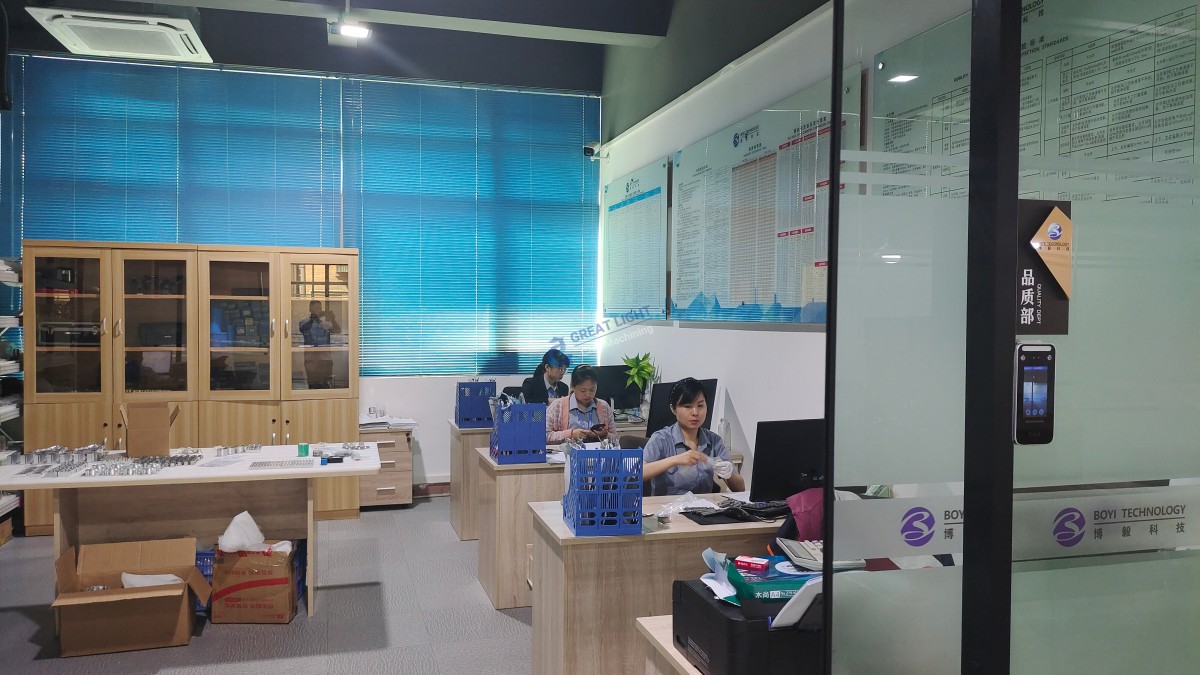
The Solution: A low-volume mold from an ISO 9001:2015 certified manufacturer like GreatLight Metal allows you to generate process validation data (IQ, OQ, PQ) on a representative tool. You can run pilot batches, validate your sterilization process, and satisfy regulatory body requirements for early-stage production. It’s a safe, controlled environment to climb the certification cliff.
The Technical Reality: Why “Any Thermoplastic” is Not a Gimmick
The phrase low volume mold any thermoplastic is a promise that requires deep technical competency. It’s not about a single machine or material; it’s about a process chain.
Mold Material Selection: For glass-filled nylons or high-temperature polymers like PEEK, the mold steel must be hardened (e.g., P-20) to withstand the abrasive and thermal forces. For lower-volume runs in commodity plastics, a high-grade aluminum (e.g., 7075) with a hard anodization coating is perfectly adequate.
Mold Machining: The mold cavity must be machined with the same precision as a production tool. This demands 5-axis CNC machining to create complex geometry, sharp corners, and fine surface finishes. GreatLight’s fleet of high-speed machining centers is critical here.
Process Engineering: The injection molding machine settings (temperature, pressure, cooling time) must be optimized for the specific material and part geometry. This is where the “art” of molding meets the “science” of material behavior.
The Solution: A Phased, Low-Risk Path to Production
For a client facing the dilemma of getting a custom part made, the optimal path is a phased approach facilitated by low-volume tooling.
Phase 1: Concept & 3D Printing (Using SLA, SLS, or SLM)
You create a prototype for form, fit, and visual appearance. This is fast and cheap but uses non-durable materials. GreatLight Metal offers this as a starting point.
Phase 2: Low Volume Molding (The Bridge)
You invest in a low-volume aluminum mold. This stage achieves:
Material Validation: Parts are now in the final production material.
Functional Testing: The part can be rigorously tested under real-world conditions.
Market Validation: You can sell 500-1,000 units to early adopters or fill a niche demand.
Phase 3: Full-Scale Production (The Hard Tool)
Only after success in Phase 2 do you commit to a hardened steel production mold. The tooling design is now fully refined, and the risk of a multi-million dollar mistake is virtually eliminated.
The Power of Partnership: Why GreatLight Metal is the Right Choice for Low Volume Tooling
Choosing a partner for low volume mold any thermoplastic is a strategic decision. While many suppliers like Protolabs Network, Xometry, and Fictiv offer quick-turn molding, they often function as a network of sub-suppliers, with less control over the final quality and timeline.
GreatLight Metal, on the other hand, is a vertically integrated manufacturer. Their capability to machine the mold in-house (using their 5-axisCNC machining services) and then run the injection molding machine under the same roof provides a level of control and velocity that networks cannot match. This end-to-end ownership is what makes the promise of “low volume mold any thermoplastic” a robust, reliable reality. It means you get a mold designed and made by the same people who will mold your parts, leading to faster troubleshooting, better communication, and a final product that truly reflects your design.
From the capital of precision hardware mold processing—Chang’an, Dongguan—GreatLight Metal has been building the foundation of trust for over a decade. Their ISO 9001, ISO 13485, and IATF 16949 certifications aren’t just badges; they are operational frameworks that guarantee repeatability and quality. The combination of high-end 5-axis machining centers, a dedicated team of 120-150 professionals, and full-process chain integration makes them a formidable partner for any engineer looking to bridge the gap between a prototype and a product.
Conclusion: The Smartest Investment is a Bridge
In the end, the decision to use a low volume mold for any thermoplastic is a decision about risk management.
It is an admission that no design is perfect the first time, and that the market is the ultimate judge. It is a choice to be nimble, to learn faster, and to protect your capital. It moves the conversation away from “How much does the tool cost?” to “What is the total cost of getting product-market fit?”
For the modern manufacturer, the path to success is not a straight line from prototype to mass production. It is a series of intelligent, data-informed decisions. The low-volume mold is the bridge you build to test the waters on the other side. It is the tool that allows you to iterate, validate, and succeed without the crushing weight of a massive, upfront investment. For any project requiring speed, flexibility, and production-quality parts in the exact material you need, the best strategy today is to start with a low-volume mold. It is the most reliable path from your design drawing to a customer’s hands.
To learn more about how high-precision, rapid turnaround solutions can be applied to your specific project, connect with the team at GreatLight CNC Machining on LinkedIn to discuss your next innovation.



















