

When you’re searching for “CNC machining services pricelist,” you’re likely looking for straightforward, transparent cost information to budget for a project. However, in the world of custom precision machining, a simple, universal price list is akin to asking for the price of a “car”—the range is vast, from an economy sedan to a Formula 1 racer. The final quote is a nuanced calculation, a reflection of a complex interplay between your part’s design, material, and required precision. This article will demystify the factors behind CNC machining costs and explain how leading manufacturers like GreatLight Metal Tech Co., LTD. (GreatLight Metal) structure their pricing to offer both competitive value and uncompromised quality.
H2: Deconstructing the CNC Machining Price Formula: It’s More Than Just “Cost Per Hour”
Contrary to some online “instant quote” engines that rely on oversimplified algorithms, a professional quote from an expert manufacturer is built upon a detailed analysis of your project’s entire lifecycle. Here are the core pillars that construct the final price:
H3: 1. Part Design and Geometric Complexity
This is the single most influential factor. A simple bracket is worlds apart from a complex, organic-shaped aerospace component with deep pockets, thin walls, and compound curves.
Setup and Programming: A complex part requires advanced CAM programming, often for 5-axis strategies, and potentially multiple, intricate setups. This engineering time is factored in.
Machine Time: Complexity directly translates to longer machining cycles. A part requiring simultaneous 5-axis movement will consume more machine time than one machined on a 3-axis mill.
Tooling: Complex geometries may demand specialized, expensive tooling (e.g., long-reach end mills, small-diameter tools) which have higher wear rates and costs.
H3: 2. Material Selection and Raw Stock Cost
The raw billet or bar stock is a significant portion of the cost.
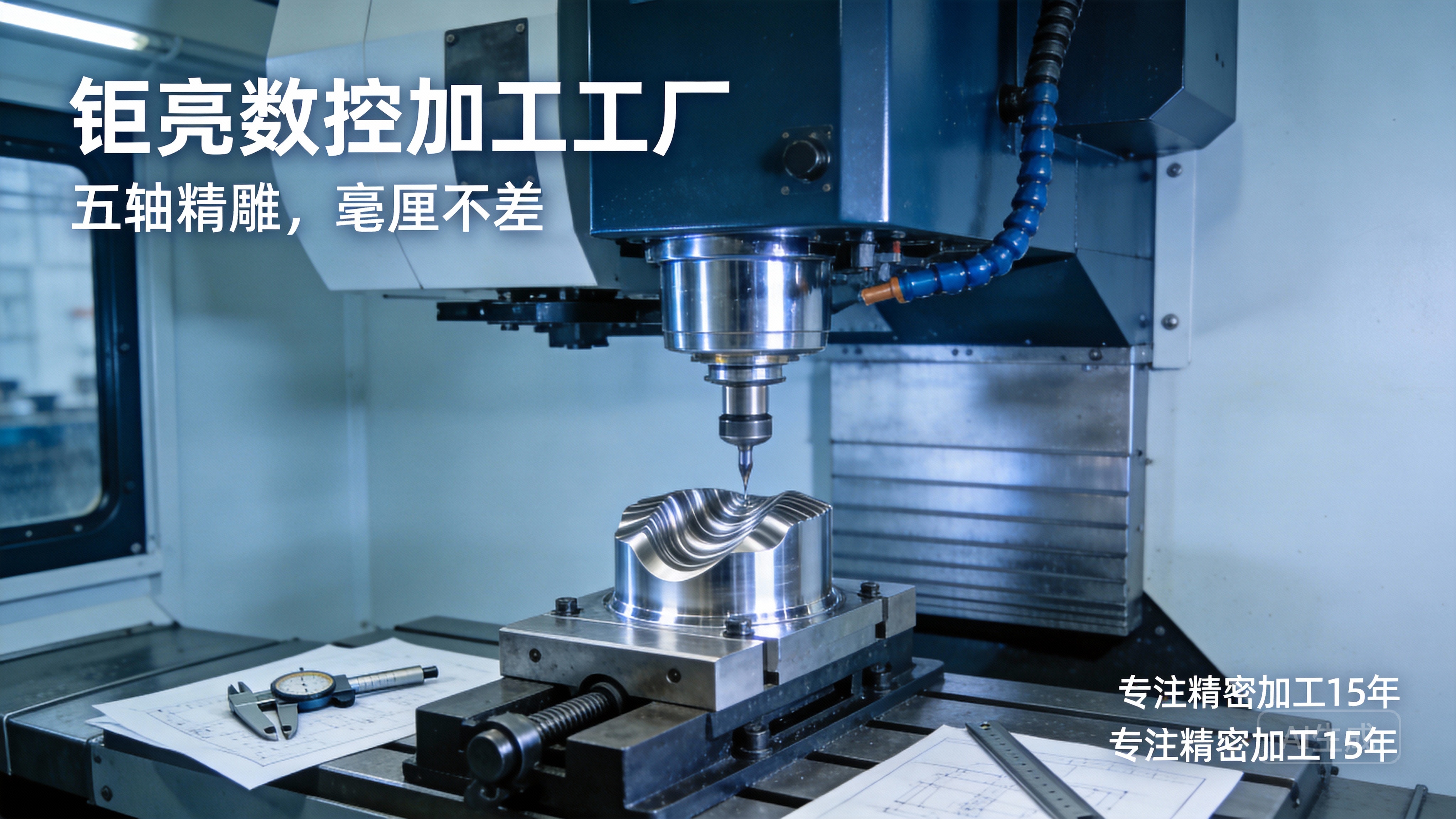
Common Alloys: Aluminum (e.g., 6061, 7075) is relatively economical, offers excellent machinability, and is a default choice for many prototypes and functional parts.
Engineering & Exotic Alloys: Stainless steels (e.g., 303, 316), tool steels, titanium, and Inconel are far more expensive per kilogram. They are also harder to machine, leading to longer cycle times and increased tool wear, further elevating costs.
H3: 3. Precision and Tolerance Requirements
Tolerances tighter than standard ISO 2768-medium quickly increase cost.
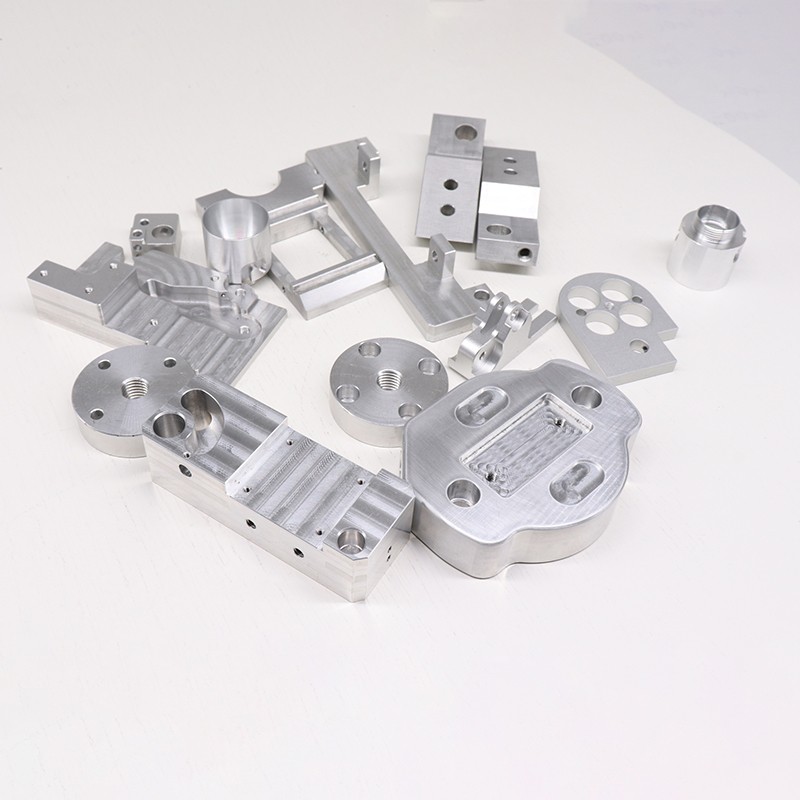
The “Precision Premium”: Holding tolerances of ±0.025mm (±0.001″) requires good machines and processes. Achieving ±0.0125mm (±0.0005″) or tighter demands high-end machines, climate control, meticulous inspection, and significantly more time, commanding a premium.
Surface Finish: An “as-machined” finish is standard. Specific Ra values (e.g., 0.8µm) or secondary processes like polishing, anodizing, or plating add separate cost layers.
H3: 4. Order Quantity and Economies of Scale
Prototype/Small Batch: High costs are driven by one-time engineering (programming, setup). The cost per part is high.
Production Run: The one-time engineering cost is amortized over many units. While material and machine time costs remain, the per-part price drops substantially.
H3: 5. Secondary Operations and Post-Processing
CNC machining is often just the first step. Costs add up for:
Deburring and Cleaning: Standard practice.
Heat Treatment: For added strength or hardness.
Surface Treatments: Anodizing, powder coating, plating, passivation.
Specialized Inspection: CMM (Coordinate Measuring Machine) reports, laser scanning, or material certification.
H2: A Comparative Lens: How Different Suppliers Approach Pricing
Understanding the market landscape helps contextualize quotes. Let’s compare the models of several notable players.
| Supplier Type / Example | Typical Pricing Model & Focus | Ideal For | Potential Trade-offs |
|---|---|---|---|
| Integrated Manufacturer(e.g., GreatLight Metal{:target=”_blank”}) | Value-Based / Project-Based. Cost is derived from a full technical analysis. Focus on Design for Manufacturability (DFM) feedback to optimize cost without sacrificing function. Transparent breakdowns. | Complex, high-precision parts; low-to-medium volume production; full-service needs (machining + finishing + inspection). | May not be the absolute lowest cost for ultra-simple, high-volume commodity parts. |
| Automated Platform(e.g., Xometry, Protolabs Network) | Algorithm-Driven / Instant Online Quote. Prices are generated by software based on uploaded 3D models. Highly efficient for standardized parts. | Simple to moderately complex prototypes; speed and convenience are top priorities; well-defined, platform-compatible designs. | Limited DFM collaboration; less flexibility for complex adjustments or exotic materials; quality can vary across network. |
| Specialist Job Shop(e.g., Owens Industries for large parts) | Capability-Based. Pricing reflects specialized equipment (e.g., huge 5-axis mills) or niche expertise (e.g., medical device compliance). | Projects requiring their specific, often unique, technical capability. | Scope may be narrow; may outsource secondary operations. |
| Low-Cost / High-Volume Focused(Various regional shops) | Highly Competitive, Volume-Driven. Often minimizes overhead and engineering support to compete on price per part for large runs. | High-volume production of standardized components where price is the paramount concern. | Risk of “precision black hole”; limited communication and DFM support; potential consistency issues. |
Why GreatLight Metal’s Approach Stands Out: As an integrated manufacturer, our pricing starts with a collaborative consultation. Our engineers don’t just quote the part as-is; we analyze it for manufacturability. We might suggest a slight radius increase to allow for a stronger, standard tool, or a tolerance relaxation on a non-critical feature. This proactive DFM process often reveals significant cost savings that automated platforms cannot identify, ensuring you pay for necessary precision, not unnecessary difficulty.
H2: The “Hidden” Costs of Choosing the Wrong Pricelist
Selecting a supplier based solely on the lowest line item quote can lead to far greater total cost and project risk.
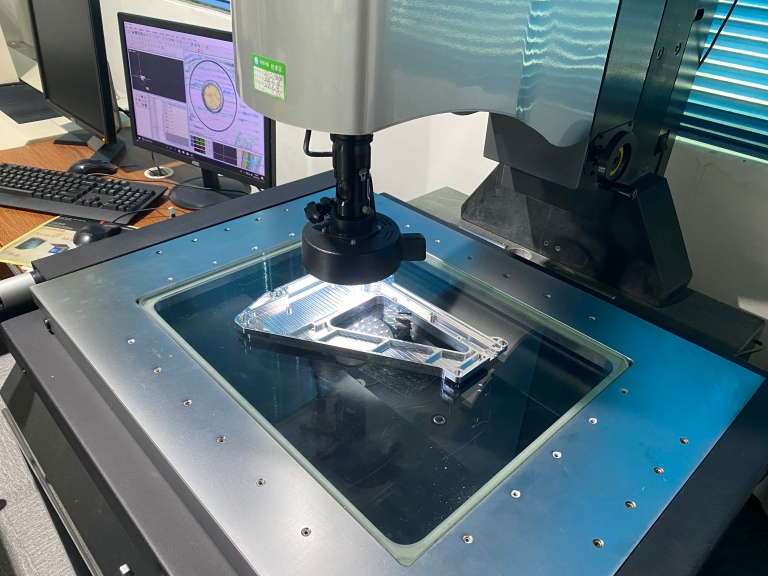
The Cost of Poor Quality: Parts that fail inspection, don’t fit in assembly, or have inconsistent quality lead to delayed timelines, rework costs, and potential product failure.
The Cost of Poor Communication: Lack of engineering support or DFM feedback means you bear the full burden of design optimization. An “as-drawn” quote for an unmanufacturable design is worthless.
The Cost of Inconsistency: A price that seems too good to be true may reflect a lack of robust quality systems (like ISO 9001). Inconsistent parts across a production run can halt assembly lines.
The Cost of Fragmented Supply: Using one shop for machining, another for plating, and a third for inspection adds logistical overhead, communication gaps, and accountability dilution.
H2: How to Get an Accurate and Competitive Quote from GreatLight Metal
To move beyond a theoretical pricelist and obtain a meaningful, reliable quote, preparation is key. Providing comprehensive information allows us to give you the most accurate and optimized price.
H3: Essential Information to Provide:
Detailed 2D Drawings (PDF or DXF/DWG): This is non-negotiable. Drawings specify critical dimensions, tolerances (GD&T preferred), surface finishes, and material callouts. A 3D model (STEP or IGES) is a great companion, but not a substitute.
3D Model (STEP, IGES, SLDPRT): For accurate programming and visualization.
Material Specification: Specify the exact grade/alloy (e.g., Aluminum 6061-T6, Stainless Steel 316L).
Quantity Required: Be clear about prototype vs. production volumes.
Post-Processing Requirements: List all desired surface treatments, markings, or special packaging.
Intended Use and Industry: Knowing the part’s function (e.g., aerospace fluid fitting, medical implant trial) helps us recommend the appropriate processes and quality controls.
H3: What You Can Expect in Our Quote:
A Detailed Line-Item Breakdown: We separate costs for material, programming/setup, machine time, and any secondary operations.
Design for Manufacturability (DFM) Report: Often included at the quoting stage, this highlights potential issues and suggests cost-saving optimizations.
Clear Lead Time: Based on current capacity and your project’s complexity.
Quality Assurance Plan: Outline of the inspection methods (e.g., First Article Inspection with CMM report) that will be used to ensure compliance.
Ultimately, the most valuable CNC machining services pricelist is not a static table but a dynamic, collaborative outcome. It’s the result of an expert manufacturer like GreatLight Metal applying deep engineering knowledge to your specific design, balancing cost-efficiency with the unwavering reliability demanded by industries from automotive to aerospace. The goal is to provide not just a price, but a predictable, high-value pathway from your concept to a flawlessly manufactured component. For a partnership built on this transparent and technically rigorous approach to pricing and manufacturing, connect with us on our professional network at GreatLight Metal on LinkedIn{:target=”_blank”}.



















