
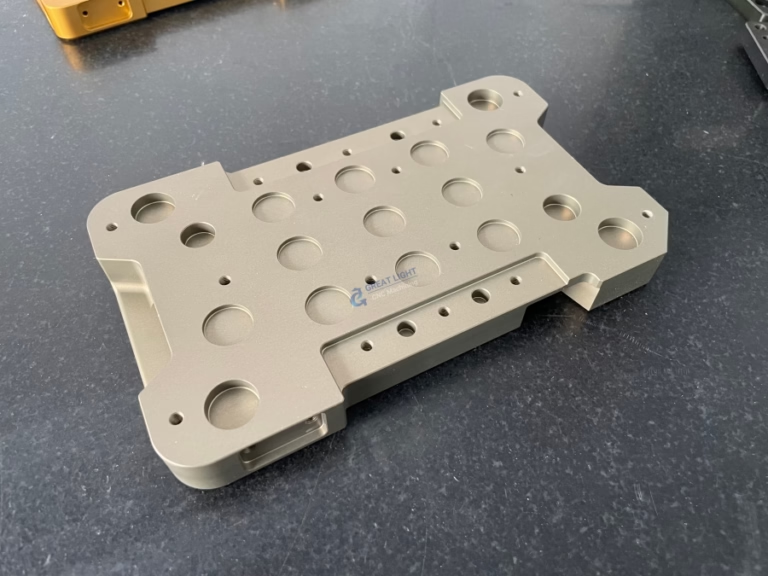
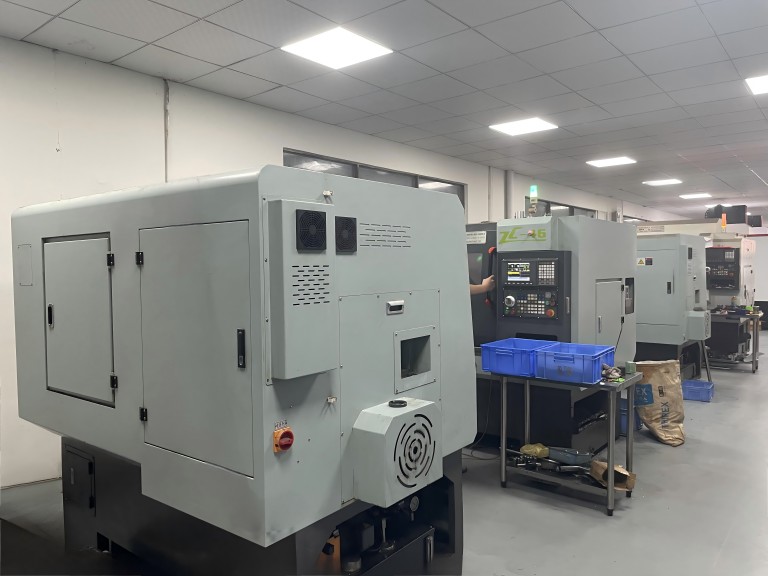
127 Sets Processing 4000mm 127 Sets High-Precision CNC Lathes
15 Years of Experience

What Plastics Can Be Used With CNC Machine Coolant?

When integrating plastic components into CNC machining systems—whether as custom fixture jaws, protective shrouds, coolant manifold blocks, or inspection fixtures—one of the most critical yet often overlooked considerations is material compatibility with machine coolants. Selecting the wrong plastic can lead to premature failure, dimensional instability, part contamination, and costly unplanned downtime. From the lens of […]

When integrating plastic components into CNC machining systems—whether as custom fixture jaws, protective shrouds, coolant manifold blocks, or inspection fixtures—one of the most critical yet often overlooked considerations is material compatibility with machine coolants. Selecting the wrong plastic can lead to premature failure, dimensional instability, part contamination, and costly unplanned downtime.

From the lens of a precision manufacturing engineer, the choice is not merely about chemical resistance on a chart; it’s about ensuring long-term reliability under the dynamic, often harsh conditions of a machining environment. At GreatLight, where we routinely design and manufacture high-precision plastic and composite components for complex assemblies, this compatibility analysis is a fundamental step in our design-for-manufacturability (DFM) process.

H2: Understanding the CNC Coolant Challenge

CNC coolants, or metalworking fluids (MWFs), are not a single substance. They are formulated blends designed to lubricate, cool, and remove chips from the cutting zone. Their composition directly dictates their aggressiveness towards plastics:

Water-Soluble Coolants (Emulsifiable Oils & Synthetic/Semi-Synthetic Fluids): These are the most common. They create an emulsion of oil in water. The water phase can cause certain plastics to absorb moisture (hygroscopic swelling), leading to dimensional growth and loss of mechanical strength. Additives like biocides, corrosion inhibitors, and extreme pressure (EP) agents can be particularly reactive.
Straight Oils (Neat Oils): These are non-emulsifiable petroleum or plant-based oils. They generally pose less of a swelling threat but can cause certain thermoplastics to soften, dissolve, or suffer environmental stress cracking (ESC) over time due to prolonged chemical exposure under stress.
Specialty Fluids: This includes high-performance synthetics or those with aggressive additives for machining exotic alloys. They require the most rigorous compatibility testing.

H3: Top-Performing Plastics for CNC Coolant Environments

Based on extensive field application and laboratory testing, the following engineering plastics consistently demonstrate excellent resistance to common water-soluble and straight oil coolants.
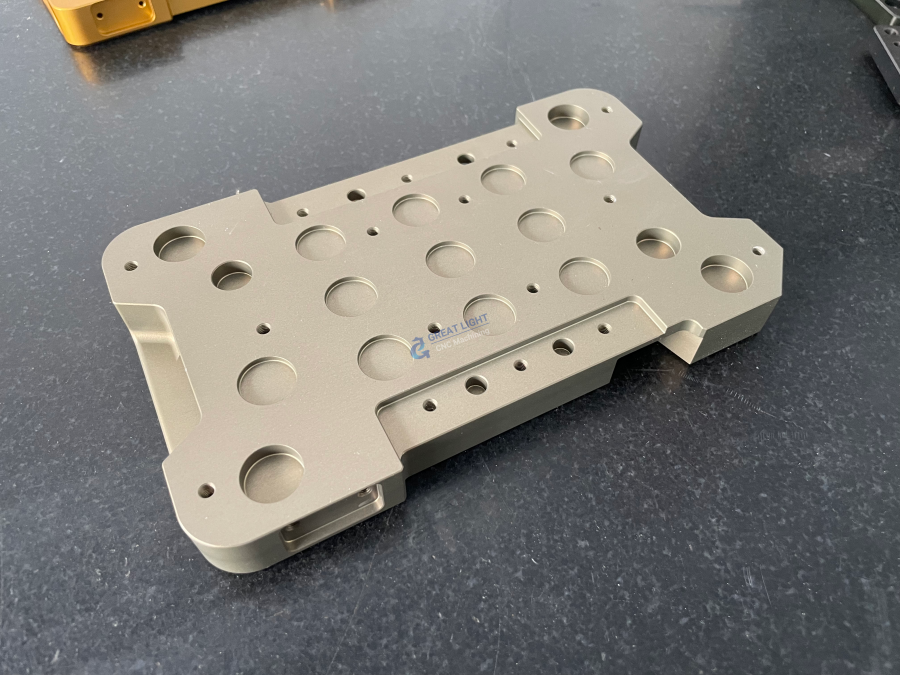
图片

H4: 1. Polyetheretherketone (PEEK)
The gold standard for high-performance applications. PEEK offers nearly universal chemical resistance, exceptional dimensional stability across a wide temperature range, and outstanding mechanical strength. It is virtually unaffected by all standard CNC coolants, making it ideal for permanent fixtures, high-wear guide components, and parts in high-temperature machining operations. Its primary constraint is cost.

H4: 2. Polytetrafluoroethylene (PTFE) – e.g., Teflon®
Renowned for its supreme chemical inertness and low friction. PTFE is completely resistant to virtually all coolants. It is often used for seals, liners, and non-stick surfaces within coolant systems. However, it is soft, has poor creep resistance, and is not suitable for structural or high-load bearing components.

H4: 3. Polypropylene (PP) & High-Density Polyethylene (HDPE)
These polyolefins are excellent, cost-effective choices for tanks, ducts, and covers. They exhibit very good resistance to a wide range of chemicals, including most coolants, and have low moisture absorption. They are easy to machine but lack the rigidity and temperature tolerance of more advanced engineering plastics.
图片

H4: 4. Acetal Copolymer (POM-C – e.g., Delrin®)
A staple in precision machining for its excellent stiffness, low friction, and good dimensional stability. Acetal has good resistance to most coolants, particularly oils and hydrocarbons. However, prolonged exposure to hot, highly acidic or alkaline water-based coolants may lead to slight surface degradation or dimensional change over very long periods.

H4: 5. Cast Nylon (PA 6G – e.g., McMaster-Carr’s “Machineable Nylon”)
Offers a good balance of mechanical properties, machinability, and chemical resistance. It performs well with most oils and coolants, though it will absorb some moisture from water-based emulsions. This absorption is significantly lower in cast grades compared to extruded nylon. It’s a robust choice for fixture bodies, gear racks, and wear pads.

H3: Plastics to Use with Caution or Avoid

ABS: Generally poor chemical resistance. It can craze, crack, or dissolve upon exposure to many coolants, especially those containing certain oils or esters.
Standard Polycarbonate (PC): Notorious for susceptibility to environmental stress cracking when exposed to many chemicals, including ingredients found in some coolants and cleaning agents. It can develop fine cracks under stress.
Some PVC Formulations: While rigid PVC (uPVC) has good chemical resistance, certain plasticizers in flexible PVC can leach out when exposed to oils, causing the material to become brittle.
Polystyrene (PS) & Acrylic (PMMA): These materials are brittle and have very limited chemical resistance to hydrocarbons and aggressive additives, making them unsuitable.

H2: The GreatLight Metal Approach: Validation Through Application

At GreatLight, our expertise extends beyond machining metals. We routinely apply our full-process engineering capability to select, machine, and validate plastic components for integration into advanced manufacturing systems, including our own.

Our process ensures reliability:


Application-Specific Analysis: We don’t just pick a plastic from a chart. We assess the component’s function, mechanical load, temperature exposure, and the specific coolant brand/type used in the client’s process.
Controlled Machining & Handling: We machine plastics with dedicated tools and parameters to prevent thermal degradation and stress, which can create micro-cracks that accelerate chemical attack.
Real-World Validation: For critical applications, we can conduct or recommend immersion tests, where a sample coupon is exposed to the client’s exact coolant under controlled conditions and monitored for dimensional change, weight change, and loss of properties.

This rigorous approach is why clients in the medical device (where biocompatibility and fluid resistance are paramount) and automotive powertrain sectors trust us with their most demanding plastic component needs.

Conclusion

The question of what plastics can be used with CNC machine coolant has no single answer, but a definitive methodology: understand the coolant chemistry, respect the operational environment, and select from the family of proven, stable engineering plastics like PEEK, PTFE, PP/HDPE, Acetal, and Cast Nylon. Arbitrary material selection risks component failure and process contamination. Partnering with a manufacturer that views material science as integral to precision engineering—like GreatLight—transforms this from a potential pitfall into a guaranteed advantage for your system’s longevity and performance.


FAQ

H3: Q1: Can I use 3D printed plastic parts (like SLA or FDM) in coolant environments?
A: This requires extreme caution. Most standard 3D printing resins (SLA) and filaments (ABS, PLA for FDM) have poor chemical resistance and are prone to swelling and degradation. For permanent fixture use, consider using the 3D print to create a mold for casting a compatible polyurethane or epoxy, or use specialized, chemically resistant engineering-grade printing materials (e.g., PEEK or PEKK via FDM/FFF), though these are expensive and require high-end printers.
图片

H3: Q2: My plastic fixture worked fine for months, then suddenly cracked. Why?
A: This is a classic sign of Environmental Stress Cracking (ESC). The combined effect of sustained mechanical stress (from clamping) and prolonged, slow chemical exposure from the coolant vapors or mist weakens the polymer at a molecular level until it fails. Materials like polycarbonate are especially prone. The solution is to redesign to lower stress concentrations or switch to a more chemically resistant plastic like PEEK or Acetal Copolymer.

H3: Q3: Are there any coatings to protect less resistant plastics?
A: While certain sealants or epoxy coatings can offer a temporary barrier, they are generally not recommended for precision components. The coating can wear, chip, or delaminate, leading to unpredictable failure and potential contamination. It is almost always more reliable to select a bulk material with inherent compatibility.

H3: Q4: How does GreatLight handle requests for plastic parts exposed to coolants?
A: We initiate a technical review. Our engineers will discuss the operating environment, request a Safety Data Sheet (SDS) for the coolant if available, and recommend a shortlist of suitable materials based on performance and budget. We then apply our high-precision machining protocols for plastics to deliver a part that is dimensionally accurate and structurally sound for its intended life. For more on our collaborative engineering ethos, connect with our team on LinkedIn.


CNC Experts

Picture of JinShui Chen

JinShui Chen

Rapid Prototyping & Rapid Manufacturing Expert

Specialize in CNC machining, 3D printing, urethane casting, rapid tooling, injection molding, metal casting, sheet metal and extrusion

CNC Recent Posts

CNC News

Welcome to GreatLight Metal,Maximum Processing Size 4,000 mm

Precision Machining CNC Quote Online

Loading file

Upload Click here to upload or drag and drop your model to the canvas.

The model is too large and has been resized to fit in the printer's build tray. [Hide]

The model is too large to fit in the printer's build tray. [Hide]

The model is too large, a fitting printer is selected. [Hide]

The model is too small and has been upscaled. [Hide]

Warning: The selected printer can not print in full color [Hide]

Warning: obj models with multiple meshes are not yet supported [Hide]

Warning: Unsupported DXF entity  [Hide]

Warning: could not arrange models [Hide]

[Hide]


File Unit:      
Scale:
%
L × W × H:
X: × Y: × Z:  cm 
Rotation:
X: ° Y: °  
⚡ Instant Quote for Precision Manufacturing

Submit your design files (STEP/IGES/DWG) and receive a competitive quote within 1 hour, backed by ISO 9001-certified quality assurance.

📋 How It Works

  1. Upload & SpecifyShare your 3D model and select materials (Aluminum/Stainless Steel/Titanium/PEEK), tolerances (±0.002mm), and surface treatments.

  2. AI-Powered AnalysisOur system calculates optimal machining strategy and cost based on 10+ years of automotive/aerospace data.

  3. Review & ConfirmGet a detailed breakdown including:
    - Volume pricing tiers (1-10,000+ units)
    - Lead time (3-7 days standard)
    - DFM feedback for cost optimization

Unit Price: 

Loading price
5 Axis CNC Machining Equipment
4 Axis CNC Machining Equipment
3 Axis CNC Machining Equipment
CNC Milling & Turning Equipment
Prototype and Short-Run Injection Moldings Exact plastic material as final design
Volume Metal Die Casting Services - Precision Cast Parts
Bridge the Gap From Prototype to Production – Global delivery in 10 days or less
Custom high-precision sheet metal prototypes and parts, as fast as 5 days.
Custom Online 3D Printing Services
Design Best Processing Method According To 3D Drawings
Alloys Aluminum 6061, 6061-T6 Aluminum 2024 Aluminum 5052 Aluminum 5083 Aluminum 6063 Aluminum 6082 Aluminum 7075, 7075-T6 Aluminum ADC12 (A380)
Alloys Brass C27400 Brass C28000 Brass C36000
Alloys Stainless Steel SUS201 Stainless Steel SUS303 Stainless Steel SUS 304 Stainless Steel SUS316 Stainless Steel SUS316L Stainless Steel SUS420 Stainless Steel SUS430 Stainless Steel SUS431 Stainless Steel SUS440C Stainless Steel SUS630/17-4PH Stainless Steel AISI 304
Inconel718
Carbon Fiber
Tool Steel
Mold Steel
Alloys Titanium Alloy TA1 Titanium Alloy TA2 Titanium Alloy TC4/Ti-6Al 4V
Alloys Steel 1018, 1020, 1025, 1045, 1215, 4130, 4140, 4340, 5140, A36 Die steel Alloy steel Chisel tool steel Spring steel High speed steel Cold rolled steel Bearing steel SPCC
Alloys Copper C101(T2) Copper C103(T1) Copper C103(TU2) Copper C110(TU0) Beryllium Copper
Alloys Magnesium Alloy AZ31B Magnesium Alloy AZ91D
Low Carbon Steel
Alloys Magnesium Alloy AZ31B Magnesium Alloy AZ91D
ABS Beige(Natural) ABS Black ABS Black Antistatic ABS Milky White ABS+PC Black ABS+PC White
PC Black PC Transparent PC White PC Yellowish White PC+GF30 Black
PMMA Black PMMA Transparent PMMA White
PA(Nylon) Blue PA6 (Nylon)+GF15 Black PA6 (Nylon)+GF30 Black PA66 (Nylon) Beige(Natural) PA66 (Nylon) Black
PE Black PE White
PEEK Beige(Natural) PEEK Black
PP Black PP White PP+GF30 Black
HDPE Black HDPE White
HIPS Board White
LDPE White
This is a finish of applying powdered paint to the components and then baking it in an oven, which results in a stronger, more wear- and corrosion-resistant layer that is more durable than traditional painting methods.
No coating required, product’s natural color!
This is a finish of applying powdered paint to the components and then baking it in an oven, which results in a stronger, more wear- and corrosion-resistant layer that is more durable than traditional painting methods.
This finishing option with the shortest turnaround time. Parts have visible tool marks and potentially sharp edges and burrs, which can be removed upon request.
Sand blasting uses pressurized sand or other media to clean and texture the surface, creating a uniform, matte finish.
Polishing is the process of creating a smooth and shiny surface by rubbing it or by applying a chemical treatmen
A brushed finish creates a unidirectional satin texture, reducing the visibility of marks and scratches on the surface.
Anodizing increases corrosion resistance and wear properties, while allowing for color dyeing, ideal for aluminum parts.
Black oxide is a conversion coating that is used on steels to improve corrosion resistance and minimize light reflection.
Electroplating bonds a thin metal layer onto parts, improving wear resistance, corrosion resistance, and surface conductivity.
This is a finish of applying powdered paint to the components and then baking it in an oven, which results in a stronger, more wear- and corrosion-resistant layer that is more durable than traditional painting methods.
Please provide additional text description for other surface treatment requirements!
Material
Material
  • CNC Metals
    • Aluminum
    • Brass
    • Stainless steel
    • Inconel718
    • Carbon Fiber
    • Tool Steel
    • Mold Steel
    • Titanium
    • Alloy Steel
    • Copper
    • Bronze
    • Low Carbon Steel
    • Magnesium
  • CNC Plastics
    • ABS
    • PC
    • PMMA (Acrylic)
    • PA (Nylon)
    • PE
    • PEEK
    • PP
    • HDPE
    • HIPS
    • LDPE
Printer
Printer
  • CNC Metals
    • 5 Axis CNC Machining
    • 4 Axis CNC Machining
    • 3 Axis CNC Machining
    • CNC Milling & Turning
    • Rapid Tooling
    • Metal Die Casting
    • Vacuum Casting
    • Sheet Metal Fabrication
    • SLA 3D Printing
    • SLS 3D Printing
    • SLM 3D Printing
  • Rapid Prototyping
    • Design Best Processing Method According To 3D Drawings
Post-processing
Post-processing
  • As Machined(Product’s natural color)
  • Sand Blasting
  • Polishing
  • Brushed Finish
  • Anodizing
  • Black Oxide
  • Electroplating
  • Paint Coating
  • Powder Coating
  • Other surface treatment requirements
Finalize
The world's first CNC machining center that dares to provide free samples!

Free for first product valued at less than $200. (Background check required)

precision machining cnc quote online

15 Years CNC Machining Services

When you’re ready to start your next project, simply upload your 3D CAD design files, and our engineers will get back to you with a quote as soon as possible.
Scroll to Top

ISO 9001 Certificate

ISO 9001 is defined as the internationally recognized standard for Quality Management Systems (QMS). It is by far the most mature quality framework in the world. More than 1 million certificates were issued to organizations in 178 countries. ISO 9001 sets standards not only for the quality management system, but also for the overall management system. It helps organizations achieve success by improving customer satisfaction, employee motivation, and continuous improvement. * The ISO certificate is issued in the name of FS.com LIMITED and applied to all the products sold on FS website.

greatlight metal iso 9001 certification successfully renewed
GB T 19001-2016 IS09001-2015
✅ iso 9001:2015
greatlight metal iso 9001 certification successfully renewed zh

IATF 16949 certificate

IATF 16949 is an internationally recognized Quality Management System (QMS) standard specifically for the automotive industry and engine hardware parts production quality management system certification. It is based on ISO 9001 and adds specific requirements related to the production and service of automotive and engine hardware parts. Its goal is to improve quality, streamline processes, and reduce variation and waste in the automotive and engine hardware parts supply chain.

automotive industry quality management system certification 01
Certification of Production Quality Management System for Engine Hardware Parts Engine Hardware Associated Parts
automotive industry quality management system certification 00
发动机五金零配件的生产质量管理体系认证

ISO 27001 certificate

ISO/IEC 27001 is an international standard for managing and processing information security. This standard is jointly developed by the International Organization for Standardization (ISO) and the International Electrotechnical Commission (IEC). It sets out requirements for establishing, implementing, maintaining, and continually improving an information security management system (ISMS). Ensuring the confidentiality, integrity, and availability of organizational information assets, obtaining an ISO 27001 certificate means that the enterprise has passed the audit conducted by a certification body, proving that its information security management system has met the requirements of the international standard.

greatlight metal technology co., ltd has obtained multiple certifications (1)
greatlight metal technology co., ltd has obtained multiple certifications (2)

ISO 13485 certificate

ISO 13485 is an internationally recognized standard for Quality Management Systems (QMS) specifically tailored for the medical device industry. It outlines the requirements for organizations involved in the design, development, production, installation, and servicing of medical devices, ensuring they consistently meet regulatory requirements and customer needs. Essentially, it's a framework for medical device companies to build and maintain robust QMS processes, ultimately enhancing patient safety and device quality.

greatlight metal technology co., ltd has obtained multiple certifications (3)
greatlight metal technology co., ltd has obtained multiple certifications (4)

Get The Best Price

Send drawings and detailed requirements via Email:[email protected]
Or Fill Out The Contact Form Below:

All uploads are secure and confidential.











