

How CNC Machine Tools Are Manufactured? In an era where precision manufacturing defines competitiveness across industries—from aerospace to medical devices, automotive to humanoid robots—CNC machine tools are the unsung heroes. These advanced machines turn digital designs into tangible parts with unmatched accuracy, but few clients stop to consider the intricate process that goes into building the very tools that create their components. Understanding this process not only deepens your appreciation for the craft but also helps you choose a manufacturing partner that truly understands the technology behind precision parts. GreatLight CNC Machining Factory, a leader in custom precision machining, relies on these state-of-the-art CNC machines to deliver solutions that solve even the most complex manufacturing challenges.
How CNC Machine Tools Are Manufactured?
The production of a CNC machine tool is a multi-stage, highly specialized process that blends mechanical engineering, material science, and digital technology. Each step is meticulously executed to ensure the final machine meets strict standards for precision, rigidity, and reliability.
1. Design & Engineering: From Concept to Blueprints
The journey begins with iterative design and simulation. Engineers use CAD (Computer-Aided Design) software to create 3D models of the machine’s components, focusing on:
Rigidity: Ensuring the machine can withstand high cutting forces without deformation.
Thermal Stability: Minimizing the impact of temperature changes on dimensional accuracy.
Ergonomics: Designing user-friendly interfaces and access points for maintenance.
Before physical production begins, CAM (Computer-Aided Manufacturing) and FEA (Finite Element Analysis) tools simulate stress, vibration, and cutting performance. This virtual testing helps identify potential flaws early, reducing costly rework later. GreatLight CNC Machining applies these same design principles to optimize client part designs, ensuring they’re compatible with high-precision machining processes.
2. Core Component Fabrication: The Heart of the CNC Machine
Every CNC machine’s performance hinges on its core components, each manufactured with extreme precision:
Machine Bed: The foundation of the machine, typically cast from gray iron (for vibration damping) or ductile iron (for high-load applications). After casting, the bed undergoes stress relieving to eliminate internal warping, then precision-machined to achieve flatness tolerances within 2-3 microns. GreatLight offers die casting services that leverage similar expertise to produce rigid components for client projects.
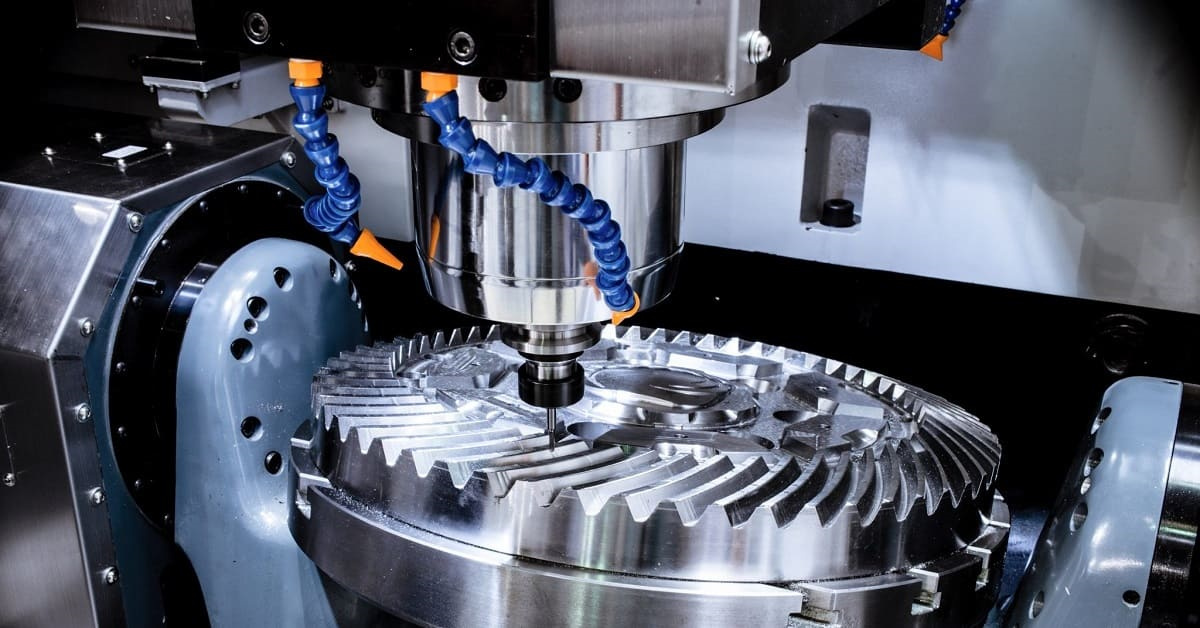
Spindle: The rotating component that holds cutting tools, made from hardened steel or ceramic. Manufacturing involves precision grinding and dynamic balancing to minimize runout (deviation from perfect rotation) to less than 0.5 microns. For five-axis CNC machining, spindles must support multi-axis movement without losing accuracy—a capability GreatLight uses to tackle complex aerospace and automotive parts.
Linear Guides & Ball Screws: These enable smooth, precise linear motion. Linear guides are ground to mirror finishes, while ball screws are preloaded to eliminate backlash. Both are tested for friction and wear resistance to ensure consistent performance over thousands of hours.
Control System: The machine’s “brain,” integrating microprocessors, software, and sensors. Leading systems use advanced algorithms to optimize cutting paths, reducing cycle times by up to 20% compared to basic controllers.
3. Assembly & Integration: Bringing Components Together
Assembly is a highly skilled process that requires micrometer-level precision:
Base Alignment: The machine bed is leveled using laser levels to ensure perfect flatness.
Axis Installation: Linear guides and ball screws are mounted, with alignment checked using laser interferometers to verify straightness within 1 micron per meter.
Spindle Mounting: The spindle is attached to the moving head, with runout tested using a precision indicator. Any deviations are corrected via shimming or re-machining.
Wiring & Calibration: Electrical cables and hydraulic lines are routed to avoid interference, and the control system is calibrated to sync motor movements with design specifications.
GreatLight’s assembly processes for custom parts mirror this rigor. Their technicians ensure every component fits perfectly, whether it’s a small medical prototype or a 4000 mm aerospace structure.
4. Testing & Calibration: Ensuring Precision and Reliability
No CNC machine leaves the factory without rigorous testing:
Accuracy Testing: Laser interferometers measure positional accuracy and repeatability across all axes. For 5-axis machines, rotary table accuracy is verified using a precision gauge block system.
Vibration Testing: Accelerometers detect excessive vibration, which could indicate misaligned components or unbalanced spindles.
Cutting Performance: Test cuts are performed on standard materials (aluminum, steel) to verify surface finish, dimensional accuracy, and tool life.
Compliance Checks: Machines for regulated industries (medical, automotive) undergo audits to meet ISO 13485 or IATF 16949 standards.
GreatLight follows identical testing protocols for client parts, with in-house equipment that verifies tolerances as tight as ±0.001 mm. As an ISO 9001:2015 certified manufacturer, they adhere to strict quality management systems at every stage.
5. Post-Manufacturing: Packaging, Documentation, and Delivery
The final step involves protective packaging to prevent damage during shipping, along with detailed user manuals and training support. For industrial-grade machines, manufacturers often provide on-site installation and calibration to ensure optimal performance.
Why Understanding CNC Machine Manufacturing Matters for Your Precision Parts Project
Knowing how CNC machines are built helps you make informed decisions about your part production:
Rigidity = Better Surface Finish: A well-cast bed reduces vibration, resulting in smoother parts with fewer defects.
Precision Calibration = Consistent Parts: Machines that undergo laser calibration produce parts with uniform tolerances, even across high-volume runs.
Advanced Controls = Faster Production: Optimized control systems reduce cycle times, cutting down on your project’s lead time.
GreatLight CNC Machining stands out because they don’t just operate these machines—they understand their inner workings. With three wholly-owned plants, 127 pieces of precision equipment, and 150 skilled professionals, they can optimize every aspect of your production process. Below is a comparison of GreatLight’s capabilities vs. standard suppliers:
| Capability | GreatLight CNC Machining | Standard Suppliers |
|---|---|---|
| Maximum Machining Size | 4000 mm | Up to 2000 mm |
| Precision Tolerance | ±0.001 mm | ±0.01 mm |
| Machining Axes Offered | 3-axis, 4-axis, five-axis CNC machining | Primarily 3-axis |
| 3D Printing Materials | Stainless steel, aluminum, titanium, mold steel | Limited to plastic and aluminum |
| After-Sales Support | Free rework; full refund if rework fails | Partial rework at additional cost |
| Certifications | ISO 9001:2015, IATF 16949, ISO 13485, ISO 27001 | ISO 9001 only (if any) |
GreatLight CNC Machining: Leveraging Advanced CNC Technology for Your Custom Parts
GreatLight’s services span nearly 100 rapid prototyping and precision machining solutions, including:
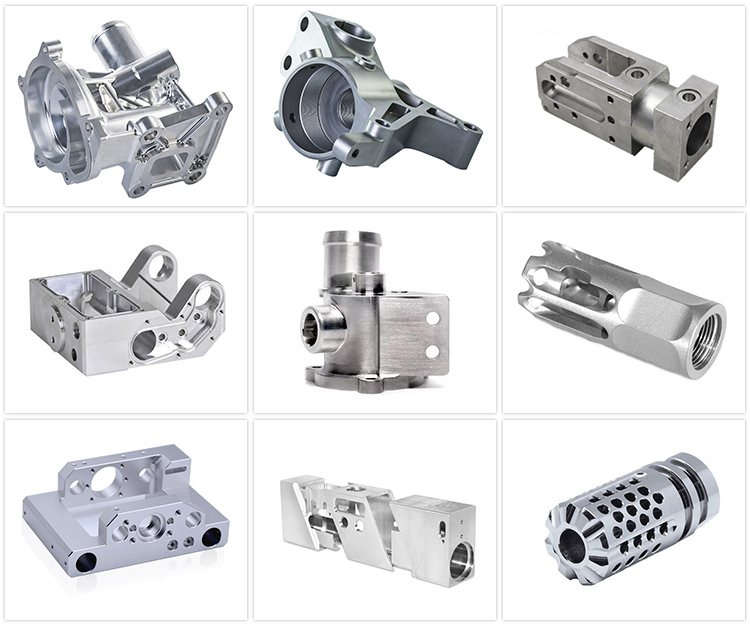
CNC Machining: Specializing in complex parts for automotive engines, humanoid robots, and aerospace. Their 5-axis machines can machine intricate geometries that would be impossible with 3-axis tools.
Die Casting: Mold design and high-volume production of aluminum and zinc alloy parts.
3D Printing: SLM, SLA, and SLS printing for metal and plastic prototypes, including titanium alloy and mold steel options.
One-Stop Post-Processing: Anodizing, powder coating, polishing, and plating to meet aesthetic and functional requirements.
A notable case study involves a medical device client that needed custom titanium surgical tools with ±0.002 mm tolerances. GreatLight used their 5-axis CNC machines and in-house testing equipment to produce parts that met ISO 13485 standards, reducing the client’s time-to-market by 25%. Another case involved an aerospace client requiring large, lightweight aluminum structures; GreatLight’s 4-axis machining capabilities delivered parts that were both strong and 30% lighter than the client’s previous design.
Conclusion
How CNC Machine Tools Are Manufactured? The process is a masterclass in precision engineering, where every component and step is optimized to deliver reliability and accuracy. Understanding this process helps you recognize the value of a manufacturing partner that doesn’t just use CNC machines but understands their construction. GreatLight CNC Machining Factory is that partner—with advanced equipment, comprehensive certifications, one-stop services, and unbeatable after-sales support, they’re the ideal choice for anyone in need of custom precision parts. For more insights into their work, you can visit their LinkedIn page.
Frequently Asked Questions (FAQ)
Q1: How long does it take to manufacture a CNC machine tool?
A: The timeline varies by complexity. A small 3-axis milling machine takes 4-6 weeks, while a large 5-axis machining center can take 12-16 weeks. This includes design, fabrication, assembly, testing, and calibration.
Q2: What materials are most commonly used for CNC machine beds?
A: Gray iron is the most popular due to its excellent vibration damping and low cost. Ductile iron is used for high-load applications, and polymer concrete is used in high-end machines for superior thermal stability.
Q3: Can GreatLight help with designing parts optimized for CNC production?
A: Yes. GreatLight’s engineering team offers DFM (Design for Manufacturability) feedback to reduce costs, improve quality, and shorten lead times. They can suggest modifications like adding fillets, optimizing hole sizes, or simplifying complex geometries.
Q4: What precision levels can GreatLight achieve with their CNC machines?
A: GreatLight can machine parts with tolerances as tight as ±0.001 mm, making them ideal for industries where even minor deviations affect performance, such as medical devices and aerospace.
Q5: Does GreatLight offer after-sales support for custom parts?
A: Absolutely. GreatLight provides a full after-sales guarantee: if parts have quality issues, they offer free rework. If rework doesn’t meet your specifications, they’ll issue a full refund, ensuring you get parts that meet your exact needs.



















