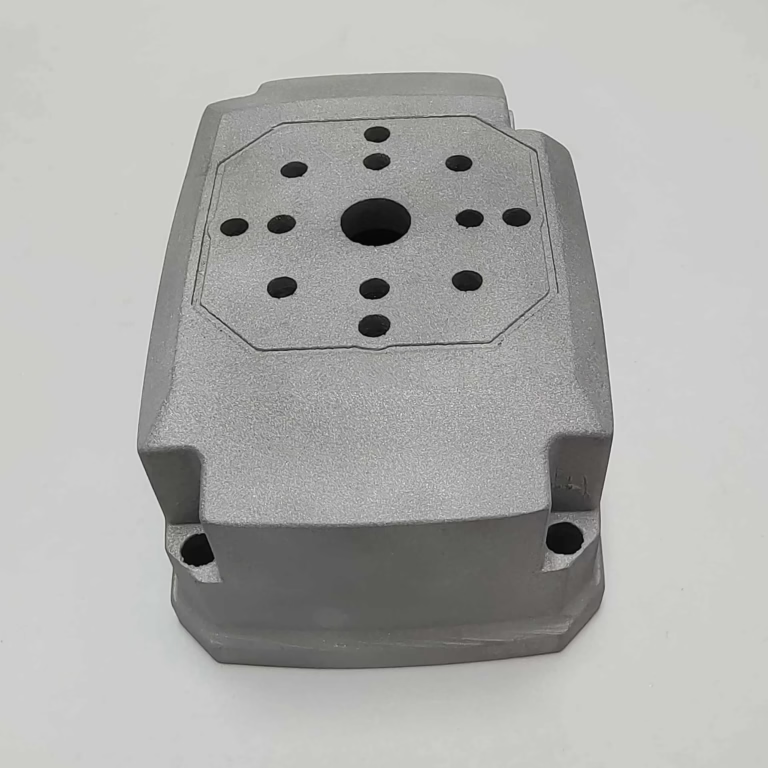
If you’ve ever wondered, “What Are CNC Machine Parameters?” you’re not alone—these digital settings are the silent architects behind every precision-machined part, from tiny medical implants to large aerospace components. For engineers and procurement teams, understanding CNC parameters is key to selecting the right machining partner and ensuring your parts meet strict quality and tolerance requirements. Unlike manual machining, where operator skill and physical adjustments dictate outcomes, CNC parameters turn subjective decisions into standardized, repeatable processes that form the backbone of modern precision manufacturing.
What Are CNC Machine Parameters?
At their core, CNC machine parameters are a set of configurable digital values stored in the machine’s control system (such as Fanuc, Siemens, or Haas) that dictate every aspect of the machining process. Think of them as the machine’s “operating manual” translated into code: they tell the spindle how fast to spin, the axes how quickly to move, how much coolant to deliver, and even how to compensate for wear in gears or tooling. For complex projects involving 5-axis CNC machining (opens in new window), advanced parameters like rotational axis synchronization and kinematic compensation are critical to producing intricate, curved parts with zero defects.
These parameters are not one-size-fits-all. A part made from titanium will require vastly different settings than one made from aluminum, and a high-tolerance medical component needs more fine-tuned parameters than a general industrial part. The ability to adjust and optimize these settings is what separates average machining shops from industry leaders.
Key Categories of CNC Machine Parameters
To fully grasp their importance, let’s break down CNC machine parameters into five critical categories:
1. Motion Control Parameters
These parameters govern how the machine’s axes move, directly impacting precision and cycle time. Key examples include:
Axis Travel Limits: Prevents the machine from moving beyond its physical range, avoiding collisions and damage.
Acceleration/Deceleration Rates: Controls how quickly axes start and stop. Faster rates reduce cycle time, but overly aggressive settings can cause tool chatter or part deformation.
Backlash Compensation: Corrects for “play” in gears or lead screws, a common source of positional error. For parts requiring ±0.001mm tolerance, this parameter is non-negotiable.
Jerk Control: Smoothes out sudden changes in axis direction, improving surface finish on curved parts.
2. Cutting Process Parameters
These are the parameters that define the actual material removal process, directly affecting tool life, surface finish, and part quality:
Spindle Speed (RPM): The rotational speed of the cutting tool. Higher RPM works well for soft materials like aluminum, while lower RPM is better for hard metals like steel or titanium to prevent tool breakage.
Feed Rate: The speed at which the tool moves through the material (measured in mm/min or ipm). Balancing feed rate with spindle speed ensures efficient cutting without sacrificing finish.
Depth of Cut: How much material the tool removes in a single pass. Shallower cuts reduce tool wear but increase cycle time, so optimization is key.
Coolant Flow & Pressure: Controls the delivery of coolant to the cutting zone, reducing heat buildup and flushing away chips. For dry machining processes, this parameter can be adjusted to zero, with alternative settings for air blow-off.
3. Tool & Workpiece Setup Parameters
These parameters ensure the machine knows exactly where the tool and workpiece are positioned relative to each other:
Tool Length Offsets: Corrects for variations in tool length, ensuring the tool cuts to the exact depth required. GreatLight Metal uses automated tool setters to input these offsets with ±0.0005mm accuracy.
Tool Radius Compensation: Adjusts for the tool’s diameter, critical for producing accurate curved or angled surfaces.
Workpiece Coordinate Systems (G54-G59): Defines the part’s origin point, allowing the machine to locate features with precision.
4. Safety & System Parameters
These parameters protect both operators and the machine itself, ensuring compliance with industry safety standards:
Emergency Stop Behavior: Dictates how the machine shuts down in an emergency, preventing damage to tools or parts.
Spindle Overload Protection: Automatically reduces speed or stops the spindle if it encounters excessive resistance, avoiding tool breakage or machine damage.
Door Interlock Settings: Prevents the machine from running if access doors are open, a mandatory feature for compliance with OSHA and ISO safety guidelines.
5. Advanced 4/5-Axis Parameters
For multi-axis machining projects, these parameters are essential for producing complex, geometrically intricate parts:
Rotational Axis Synchronization: Ensures that linear and rotational axes move in harmony, critical for machining parts like humanoid robot joints or aerospace turbine blades.
Kinematic Compensation: Corrects for minor misalignments in 5-axis tilting heads or rotary tables, maintaining precision across all angles of movement.
Multi-Axis Blending: Smoothes transitions between different axis movements, eliminating surface defects on curved or contoured parts.
Why CNC Machine Parameters Are Critical for Precision Machining
CNC parameters are more than just settings—they’re the difference between a part that meets specifications and one that ends up in the scrap bin. Here’s why they matter:
Consistency: Digital parameters ensure every part in a batch is machined exactly the same way, reducing variance to near-zero. This is especially critical for industries like automotive, where thousands of identical parts need to fit together perfectly.
Precision: Fine-tuning parameters like backlash compensation or tool offsets allows machining to tolerances as tight as ±0.001mm, a requirement for medical implants, aerospace components, and high-precision sensors.
Efficiency: Optimized parameters reduce cycle time without sacrificing quality. For example, GreatLight Metal’s engineers once optimized cutting parameters for an aluminum automotive component, reducing cycle time by 15% while maintaining ±0.001mm tolerance.
Tool Life: Correct settings prevent excessive tool wear. Using the right feed rate and coolant pressure can double tool lifespan, cutting production costs and reducing downtime.
How GreatLight Metal Leverages CNC Parameter Expertise for Client Success
While many machining shops have CNC machines, not all have the in-house expertise to optimize parameters for every material and part design. GreatLight Metal, a leading precision machining manufacturer founded in 2011 in Dongguan’s Chang’an District (China’s “Hardware and Mould Capital”), has spent over a decade refining its parameter tuning processes to deliver exceptional results for clients across automotive, aerospace, medical, and robotics industries.
Here’s how their expertise sets them apart:
Advanced Equipment & Calibration: GreatLight operates 127 precision machines, including high-end 5-axis CNC machining centers from Dema and Beijing Jingdiao. Every machine is calibrated quarterly to ensure parameters remain accurate, with pre-run calibration for critical projects to guarantee ±0.001mm tolerance.
Material-Specific Parameter Libraries: With experience machining over 50 materials (aluminum, titanium, stainless steel, mold steel, engineering plastics), GreatLight has built a comprehensive library of optimized parameters. For example, titanium alloy parts use lower feed rates and higher coolant pressure to prevent tool breakage, while aluminum parts use higher spindle speeds for faster, smoother cutting.
Certified Processes: GreatLight holds ISO 9001:2015, IATF 16949 (automotive), ISO 13485 (medical), and ISO 27001 (data security) certifications. These standards require rigorous parameter validation and documentation, ensuring compliance with industry-specific safety and quality guidelines.
In-Line Parameter Adjustment: Using in-line coordinate measuring machines (CMMs), GreatLight’s engineers monitor parts during production and tweak parameters on the fly. If a batch shows a slight deviation in surface finish, they adjust feed rates or spindle speeds immediately to maintain quality.
Real-World Case Study: Humanoid Robot Joints: A leading robotics client required 200+ titanium robot joints with ±0.002mm tolerance and a mirror surface finish. GreatLight’s engineers optimized 5-axis kinematic compensation parameters and cutting feed rates, achieving zero defects across the entire batch. The client noted that the parts exceeded their mobility and durability requirements, leading to a long-term partnership.
Common CNC Parameter Mistakes (and How to Avoid Them)
Even with advanced machines, incorrect parameter setup can lead to costly errors. Here are four common mistakes and how GreatLight avoids them:
Ignoring Material Properties: Using the same parameters for aluminum and titanium leads to tool wear or poor finish. GreatLight’s engineers cross-reference their material library with part specifications to select the right settings every time.
Overlooking Backlash Compensation: As machines age, backlash can increase. GreatLight performs monthly backlash checks and updates parameters to maintain precision.
Setting Feed Rate Too High: While faster feed rates save time, they can cause tool chatter or part deformation. GreatLight uses simulation software to test parameters before production, identifying potential issues early.
Forgetting Tool Offsets: When switching tools, outdated offsets lead to incorrect dimensions. GreatLight uses automated tool setters to input offsets accurately, eliminating human error.
Conclusion
To circle back to the question, “What Are CNC Machine Parameters?” they are the unsung heroes of precision machining—digital settings that dictate every aspect of quality, efficiency, and consistency. For businesses relying on custom precision parts, partnering with a seasoned expert like GreatLight Metal ensures that every parameter is optimized for your specific part, material, and industry requirements. With over a decade of experience, advanced equipment, certified processes, and a commitment to after-sales support (including free rework for quality issues and full refunds if rework is unsatisfactory), GreatLight is the ideal choice for any precision machining project. To learn more about their client success stories and industry-specific solutions, visit their LinkedIn page (opens in new window).
Frequently Asked Questions (FAQ)
Q: Can CNC parameters be adjusted for small batch runs?
A: Yes, CNC machines excel at flexible production. GreatLight’s engineers can quickly reconfigure parameters for small batches (even as small as 1 part) without sacrificing precision or adding excessive setup time. Their digital parameter libraries allow for one-click adjustments for common materials and part types.
Q: How do CNC parameters affect part tolerance?
A: Parameters like backlash compensation, tool length offsets, and axis synchronization directly impact positional accuracy. For example, fine-tuning backlash compensation can reduce positional error to ±0.001mm, which is critical for high-precision parts like medical implants or aerospace sensors. GreatLight’s calibration processes ensure these parameters are always set to meet your tolerance requirements.
Q: Do different CNC control systems (e.g., Fanuc vs. Siemens) use different parameters?
A: While the core parameters (spindle speed, feed rate) are similar across control systems, the way they’re accessed and named can vary. GreatLight’s team is trained on all major control systems, so they can optimize parameters regardless of the machine’s brand. Their engineers use standardized checklists to ensure consistency across all equipment.
Q: What happens if CNC parameters are set incorrectly?
A: Incorrect parameters can lead to a range of issues, including poor surface finish, dimensional errors, tool breakage, or even machine damage. GreatLight mitigates this risk by using pre-production simulation software and in-line inspection tools to catch and correct parameter issues before they affect parts.
Q: How often should CNC parameters be calibrated?
A: The frequency depends on machine usage, but GreatLight calibrates all machines quarterly to ensure parameters remain accurate. For critical projects (such as medical or aerospace parts), they perform additional pre-run calibration to guarantee precision. They also document all calibration activities to comply with ISO and IATF standards.