
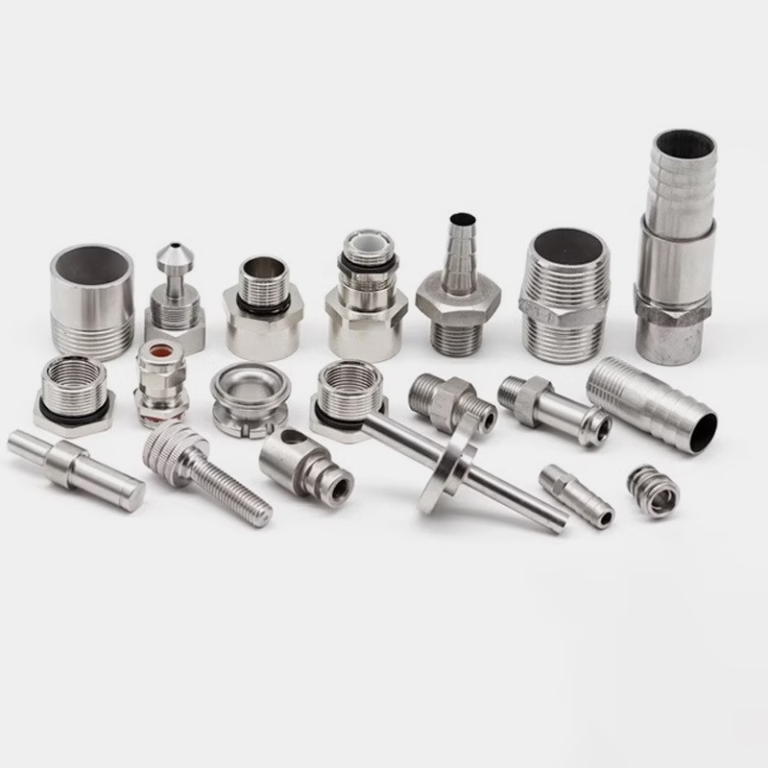
When clients in manufacturing and engineering discuss Efficient CNC Machining Services, the immediate association is often with fast turnaround times. However, as a manufacturing engineer with over a decade on the shop floor, I propose that true efficiency in CNC machining is a multidimensional concept. It’s a synergistic blend of advanced technology, optimized processes, rigorous management, and collaborative partnership that ultimately delivers the right part, at the right quality, at the right time, and crucially, at the right total cost.
This holistic view of efficiency separates leading suppliers from mere job shops. It’s the difference between a vendor who simply cuts metal and a strategic partner who actively contributes to your product’s success.
H2: Deconstructing “Efficiency” in Modern CNC Machining
Efficiency is no longer a single metric. Let’s break it down into its core components, which collectively define a high-performance machining service.
Time Efficiency (Speed-to-Market): This is the most visible aspect—rapid prototyping, quick-turn production, and compressed lead times from order to delivery.
Process Efficiency (First-Pass Yield): Minimizing setup times, optimizing toolpaths, and reducing non-cut time (like fixturing and inspection) to lower cost per part.
Material & Resource Efficiency: Intelligent nesting for sheet metal, effective chip control and recycling for solids, and predictive maintenance to avoid machine downtime.
Communication & Operational Efficiency: Streamlined quoting, clear engineering feedback (DFM), and transparent project management that prevents errors and revisions.
A service excelling in only one area is inherently fragile. The most reliable partners build systems that excel across all four.
H3: The Technological Backbone of an Efficient CNC Operation
The tools in the arsenal directly dictate the ceiling of potential efficiency. Here’s what to look for:

Multi-Axis Machining Capability: The leap from 3-axis to 5-axis CNC machining is perhaps the single greatest efficiency multiplier for complex parts. It allows for complete machining in a single setup, eliminating multiple fixtures and the associated cumulative errors and handling time. This is where partners like GreatLight Metal demonstrate significant advantage, utilizing advanced 5-axis centers to tackle monolithic aerospace brackets or medical implant prototypes that would otherwise require days of refixturing.
Automation and Lights-Out Production: Robotic part loaders/unloaders, pallet changers, and integrated probing for in-process measurement enable machines to run unattended for extended periods, dramatically boosting throughput and consistency for production runs.
High-Speed Machining (HSM) & Advanced Tooling: Utilizing spindles with high RPM and feed rates, coupled with modern carbide tooling and coolant-through systems, allows for faster material removal while maintaining precision and surface finish.
Digital Integration & CAM Software: The efficiency battle is often won at the computer before metal is cut. Advanced CAM software generates optimized, collision-free toolpaths that minimize air-cutting and tool wear. A seamless digital thread from your CAD model to the machine controller is essential.
H3: The Process & System: Where True Efficiency is Engineered
Technology alone is inert without robust processes. Key systemic differentiators include:
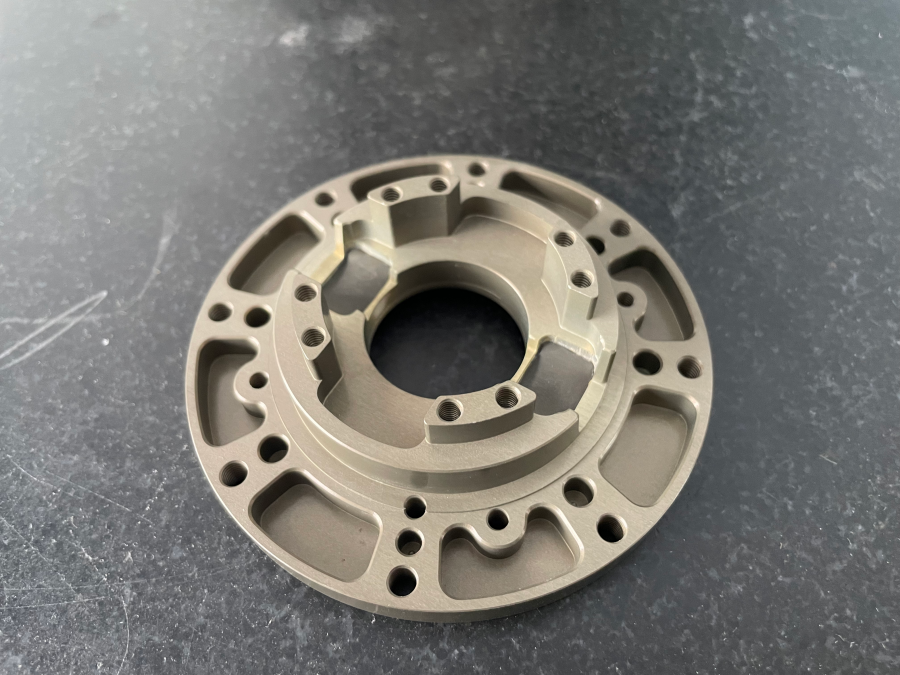
Proactive Design for Manufacturability (DFM): An efficient partner doesn’t just accept your file and quote. They analyze it for manufacturability challenges and propose modifications—a slight radius increase, a tolerance adjustment, a feature repositioning—that can slash machining time and cost without compromising function. This collaborative engineering step prevents costly iterations.
Setup Reduction Strategies: This involves standardized workholding (like modular fixture plates), qualified tool presetting, and proven process documentation to ensure that repeat jobs or similar geometries can be set up in a fraction of the time.
Integrated Quality Management: In-process verification via machine-mounted probes and post-process inspection on CMMs or vision systems isn’t just for quality; it’s for efficiency. It catches deviations early, preventing the waste of machining an entire batch out of spec. This is underpinned by certifications like ISO 9001:2015, which mandates systematic process control.
H4: Comparing Service Models: A Quick Guide
| Feature | Traditional Job Shop | Online Platform Aggregator | Integrated Solution Provider (e.g., GreatLight Metal) |
|---|---|---|---|
| Core Efficiency Driver | Low cost, niche expertise | Broad network, instant quoting | Full-process control, technical partnership |
| DFM & Engineering Support | Reactive, often limited | Variable, depends on final shop | Proactive, deep, and included |
| Technology Consistency | Can vary widely | Unpredictable; you may not know the shop | Guaranteed; owned and operated advanced equipment |
| Communication & Transparency | Can be opaque | Platform-centric, can lack technical depth | Direct engineer-to-engineer, project managed |
| Best For | Simple, well-defined parts | Low-risk, commoditized components | Complex, high-value, and critical path components |
H2: The Trust Factor: Certifications as an Efficiency Guarantee
In a global supply chain, trust is the lubricant of efficiency. You need certainty that your partner’s systems are reliable. This is where authoritative certifications transition from nice-to-have to non-negotiable. They are a proxy for predictable, high-quality output.
ISO 9001:2015: The baseline for a quality management system, ensuring processes are documented, followed, and continuously improved.
ISO 13485 (Medical): For medical device components, this certification is critical. It adds stringent controls for traceability, risk management, and sterile environments, eliminating costly quality audits and compliance risks for the client.
IATF 16949 (Automotive): This automotive-specific standard focuses on preventive defect reduction and supply chain stability. For a machining supplier, it means implementing rigorous production part approval processes (PPAP), statistical process control (SPC), and failure mode analysis—all of which prevent delays and recalls.
A partner holding these certifications, like GreatLight Metal, has already institutionalized the disciplines that prevent the inefficiencies of rework, scrap, and delayed shipments.
H3: Efficiency in Action: Case Scenarios
Let’s translate theory into practice with two scenarios:
Aerospace Bracket (From 4 Setups to 1):
Challenge: A complex, thin-walled titanium bracket requiring machining on five faces.
Inefficient Path: Using a 3-axis mill, this part would require at least four separate setups with custom fixtures for each, leading to potential datum shift, accumulated error, and 20+ hours of machine and handling time.
Efficient Solution: A 5-axis CNC machine completes the entire part in one fixture. The tool accesses all angles without moving the part. Result: Lead time reduced by 60%, geometric accuracy improved due to a single setup, and total cost lowered despite a higher machine-hour rate.
Medical Instrument Housing (From Prototype to Production):
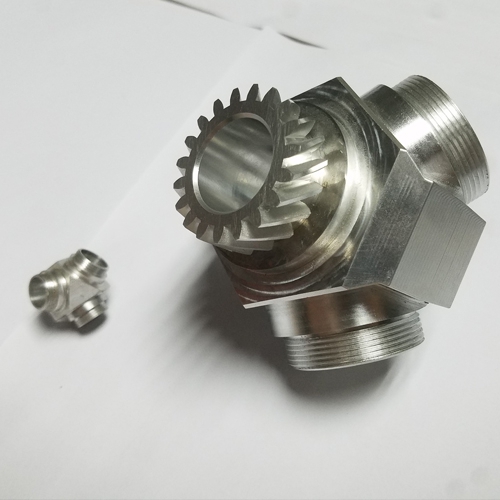
Challenge: A startup needs 10 functional prototypes of a stainless steel surgical device housing in two weeks, with a clear path to a first production batch of 500.
Inefficient Path: Sourcing prototypes from one shop (fast but expensive), then struggling to find a production shop that can match the prototype’s precision and finish, leading to requalification delays.
Efficient Solution: Partnering with a full-service provider capable of precision CNC machining for prototypes and production. The prototype run validates the process on the same equipment that will be used for mass production. Tooling and fixturing are designed with scalability in mind. Result: Seamless transition from prototype to production, no re-qualification needed, and faster overall time-to-market.
H2: Conclusion: Choosing Your Partner for Efficient CNC Machining Services
Selecting a provider for Efficient CNC Machining Services is a strategic decision. Look beyond the quoted price and headline lead time. Evaluate their technological infrastructure—do they have the multi-axis and automated capabilities your parts need? Scrutinize their processes—do they offer insightful DFM and have robust quality controls? Verify their credibility through international certifications.
The most efficient partnerships are built on transparency, technical dialogue, and shared goals. They transform the client-supplier dynamic from a transactional exchange into a collaborative engineering extension of your own team. In this model, efficiency becomes a sustained competitive advantage, fueling innovation and ensuring your products reach the market faster and more reliably. To explore how a partner with this philosophy approaches complex challenges, you can learn more about their integrated capabilities in precision 5-axis CNC machining services{:target=”_blank”}. For ongoing insights and a view into the operational excellence driving modern manufacturing, follow the industry conversation on platforms like LinkedIn{:target=”_blank”}.



















