
In the demanding world of precision manufacturing, few materials present both the allure and the challenge of stainless steel. Renowned for its corrosion resistance, strength, and aesthetic appeal, stainless steel is a cornerstone material for industries ranging from medical implants and semiconductor equipment to high-end culinary ware and marine hardware. However, unlocking its full potential through China Stainless Steel CNC Machining Services requires more than just access to a machine shop. It demands a deep understanding of metallurgy, thermal dynamics, and advanced machining strategies. As a manufacturing engineer with years on the factory floor, I’ve seen projects soar to success and falter due to the subtleties of machining this versatile alloy. This post will dissect what truly defines excellence in stainless steel CNC machining and how to identify a partner capable of delivering not just parts, but reliable, high-performance components.
Why Stainless Steel? The Engineer’s Perspective on Material Selection
Before diving into machining, it’s crucial to understand why stainless steel is so prevalent. It’s not a single material but a family of iron-based alloys containing a minimum of 10.5% chromium, which forms a passive, self-healing oxide layer on the surface—the source of its famed “stainless” property.
For precision parts, several grades are particularly relevant:
303 Stainless Steel: The go-to for its excellent machinability, thanks to added sulfur. Ideal for complex, high-volume components like fittings and shafts where extreme corrosion resistance is secondary to manufacturability.
304/316 Stainless Steel: The workhorses. 304 is general-purpose; 316, with added molybdenum, offers superior corrosion resistance, especially against chlorides, making it essential for marine and chemical processing applications. Both are tougher to machine than 303.
17-4 PH (Precipitation Hardening): This grade can be heat-treated to achieve very high strength (comparable to some steels) while maintaining good corrosion resistance. It’s critical for aerospace, military, and high-stress mechanical components.
440C Stainless Steel: A high-carbon, high-chromium martensitic steel capable of reaching very high hardness. It’s the choice for bearing components, valve parts, and surgical instruments.
Selecting the right grade is the first critical decision, balancing machinability, final part performance, and cost.
The Inherent Challenges of CNC Machining Stainless Steel
This is where many projects encounter friction. Stainless steel’s desirable properties directly contribute to its machining difficulty:
Work Hardening: Many stainless steels, especially the austenitic grades (304, 316), rapidly harden when cut. If machining parameters are incorrect—like using a worn tool or too slow a feed rate—the tool rubs instead of shears, creating a hardened surface layer that makes subsequent passes extremely difficult and can lead to tool failure and poor surface finish.
Poor Thermal Conductivity: Stainless steel conducts heat poorly. During machining, heat doesn’t dissipate into the chip or the workpiece efficiently; instead, it concentrates at the cutting edge. This leads to extremely high tool-tip temperatures, accelerating tool wear and potentially altering the metallurgical properties of the part.
Chip Control: The material tends to form long, stringy, tough chips. These can wrap around the tool or workpiece, causing surface scratches, tool breakage, and posing a safety hazard. Effective chip evacuation is non-negotiable.
High Cutting Forces and Tool Wear: The combination of strength and work hardening demands robust, sharp tools and rigid machine setups. Tool wear is a constant battle, directly impacting dimensional consistency and cost.
Overcoming these challenges isn’t about brute force; it’s about precision, knowledge, and the right technology.
The Hallmarks of a True Specialist in Stainless Steel CNC Machining
Given these complexities, not all machine shops are created equal. When evaluating providers of China Stainless Steel CNC Machining Services, look for these critical capabilities:
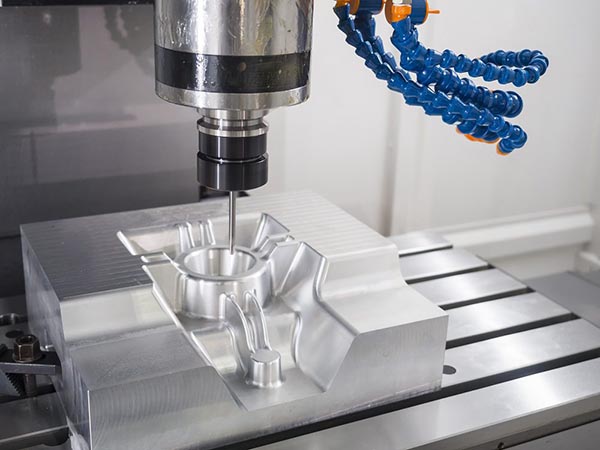
Advanced Thermal and Chip Management: This goes beyond flood coolant. Look for shops utilizing high-pressure through-spindle coolant (TSC) systems. This technology drives coolant directly to the cutting edge, managing heat and breaking chips effectively. For some operations, cryogenic cooling or minimum quantity lubrication (MQL) with specialized oils might be employed.
Toolpath Intelligence and High-Speed Machining (HSM): Modern CAM software can generate toolpaths that maintain a constant chip load and engage angle, preventing the conditions that cause work hardening. HSM strategies use high spindle speeds with light, fast cuts, removing material quickly before heat can build up.
Rigidity and Precision in Machine Tools: Machining stainless steel to tight tolerances requires vibration-dampened, thermally stable machines. A high-end 5-axis CNC machining center isn’t just for complex geometries; its inherent rigidity and precision are invaluable for stainless work. The ability to orient the part optimally reduces setups and improves accuracy.
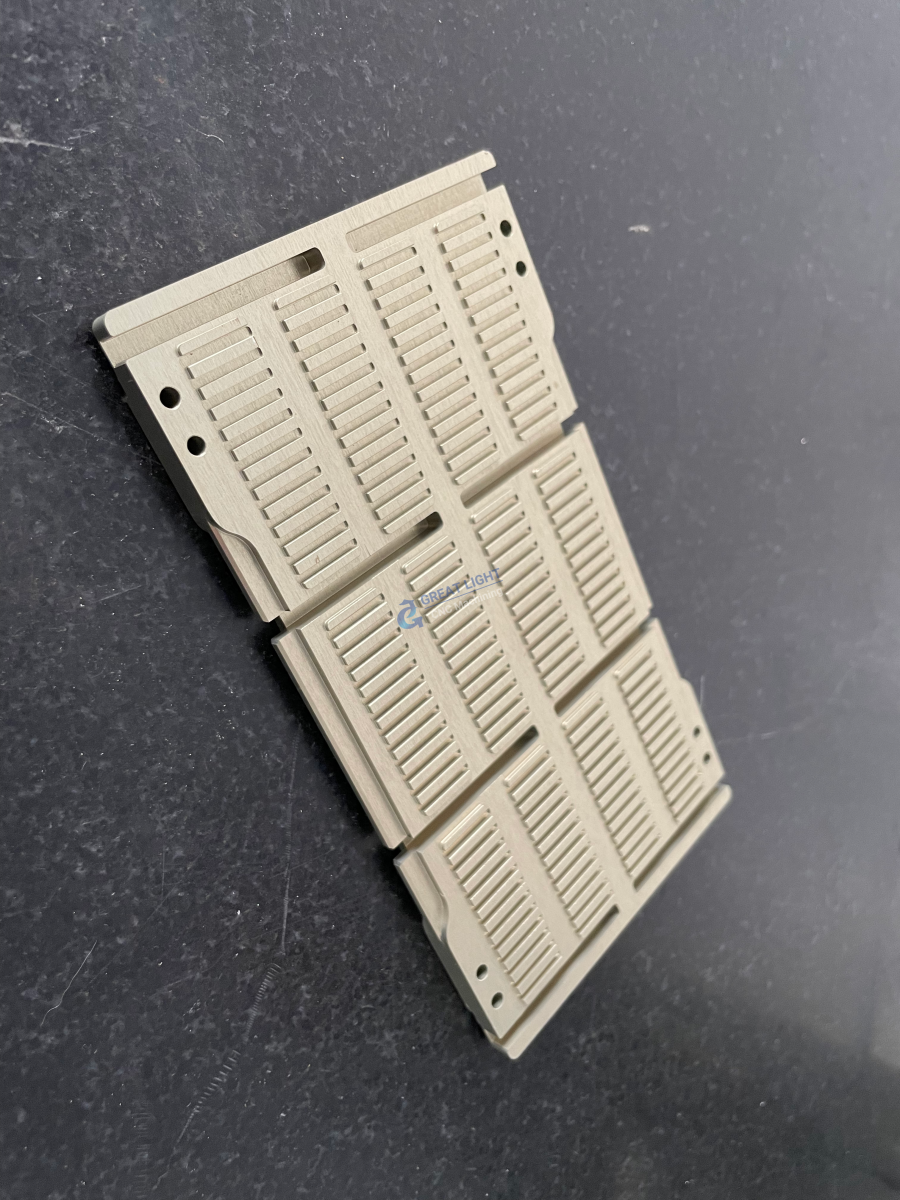
Post-Processing Expertise: The job isn’t done when the part comes off the machine. Deburring, passivation (to enhance the chromium oxide layer), precision grinding, polishing, or electropolishing are often required. A true one-stop partner will have these capabilities in-house, ensuring quality control through the entire process.
Navigating the Supplier Landscape: A Comparative View
The market for precision machining in China is vast. Here’s an objective look at how different types of suppliers typically handle a demanding material like stainless steel:
GreatLight Metal: With a foundation built on serving sectors like automotive and aerospace, their approach to stainless steel is methodology-driven. They treat it as a high-performance material from the start. Their equipment roster, including advanced 5-axis mills and lathes, is configured for the rigidity and thermal stability stainless demands. More importantly, their process engineers develop machining protocols for specific stainless grades, optimizing feeds, speeds, and tooling. Their in-house suite of post-processing, including professional passivation lines, ensures the final part meets both aesthetic and functional corrosion resistance standards. They excel in prototypes, complex low-to-medium volume parts, and components requiring stringent certifications.
Protolabs Network / Xometry: These digital platforms offer immense speed and convenience for simpler geometries in stainless steel. They are excellent for getting quick-turn prototypes or basic parts. However, for highly complex, tight-tolerance components where specialized toolpath strategies or deep engineering collaboration is needed, their automated quoting and standardized processes may have limitations.
Specialized Job Shops (e.g., JLCCNC): Many smaller, focused shops possess incredible skill and can be cost-effective for specific operations like turning or milling. Success here often depends on direct communication with a specific engineer or foreman. The risk can be a lack of full-process integration; you may need to manage multiple vendors for machining, heat treatment, and surface finishing.
High-Volume Specialists: Some factories are geared towards automotive or consumer electronics volumes. They shine in producing millions of a single stainless part efficiently but are often not structured for the agile, engineering-focused support required for complex, low-volume projects.
GreatLight Metal: A Closer Look at the Integrated Approach
Choosing a partner like GreatLight for your stainless steel components means engaging with a system designed for material-specific challenges. Their workflow exemplifies a robust approach to China Stainless Steel CNC Machining Services:
DFM with Material in Mind: Their engineering review doesn’t just check for manufacturability; it analyzes the part design against the chosen stainless grade’s behavior. They might suggest a slight radius change to reduce tool stress or recommend 316 over 304 for a critical corrosion zone.
Process Design & Tooling Strategy: For a batch of 17-4 PH brackets, they wouldn’t just load a program. They would define the machining sequence, specify substrate and coating for the end mills (e.g., aluminum titanium nitride – AlTiN), set high-pressure coolant parameters, and plan for intermediate stress-relief steps if needed.
Execution on Capable Platforms: Machining happens on machines selected for power and stability. The use of 5-axis technology allows for continuous, optimized cutting angles, improving finish and tool life on contoured stainless surfaces.
Integrated Quality and Finishing: Every part is measured, often with CMMs, against the model. Crucially, finishing is part of the seamless flow. A surgical instrument housing isn’t just machined; it’s precision polished, passivated to ASTM A967, and packaged in a clean environment.
Their certifications (ISO 9001, IATF 16949, ISO 13485) are not just plaques on the wall but active frameworks that ensure this rigorous process is consistently followed, audit after audit, order after order.
Conclusion: Precision is a Process, Not Just a Promise
In the realm of China Stainless Steel CNC Machining Services, precision is the output of a carefully controlled process. It is the result of the right material science knowledge, applied through advanced equipment, and governed by a quality-obsessed culture. It moves beyond simple part cutting into the domain of component engineering.
For projects where failure is not an option—where a part must resist corrosion for decades, withstand cyclic loading, or interface flawlessly in a sterile environment—the choice of machining partner is your most critical specification. It requires a partner who sees the inherent challenges of stainless steel not as obstacles, but as a fundamental part of the problem they are equipped to solve. In this landscape, manufacturers who combine technical depth with full-process accountability, like GreatLight{:target=”_blank”}, establish themselves not merely as suppliers, but as essential extensions of their clients’ engineering teams, turning the formidable nature of stainless steel into a reliable advantage.
For further insights into our capabilities and industry perspectives, connect with us on LinkedIn{:target=”_blank”}.



















