
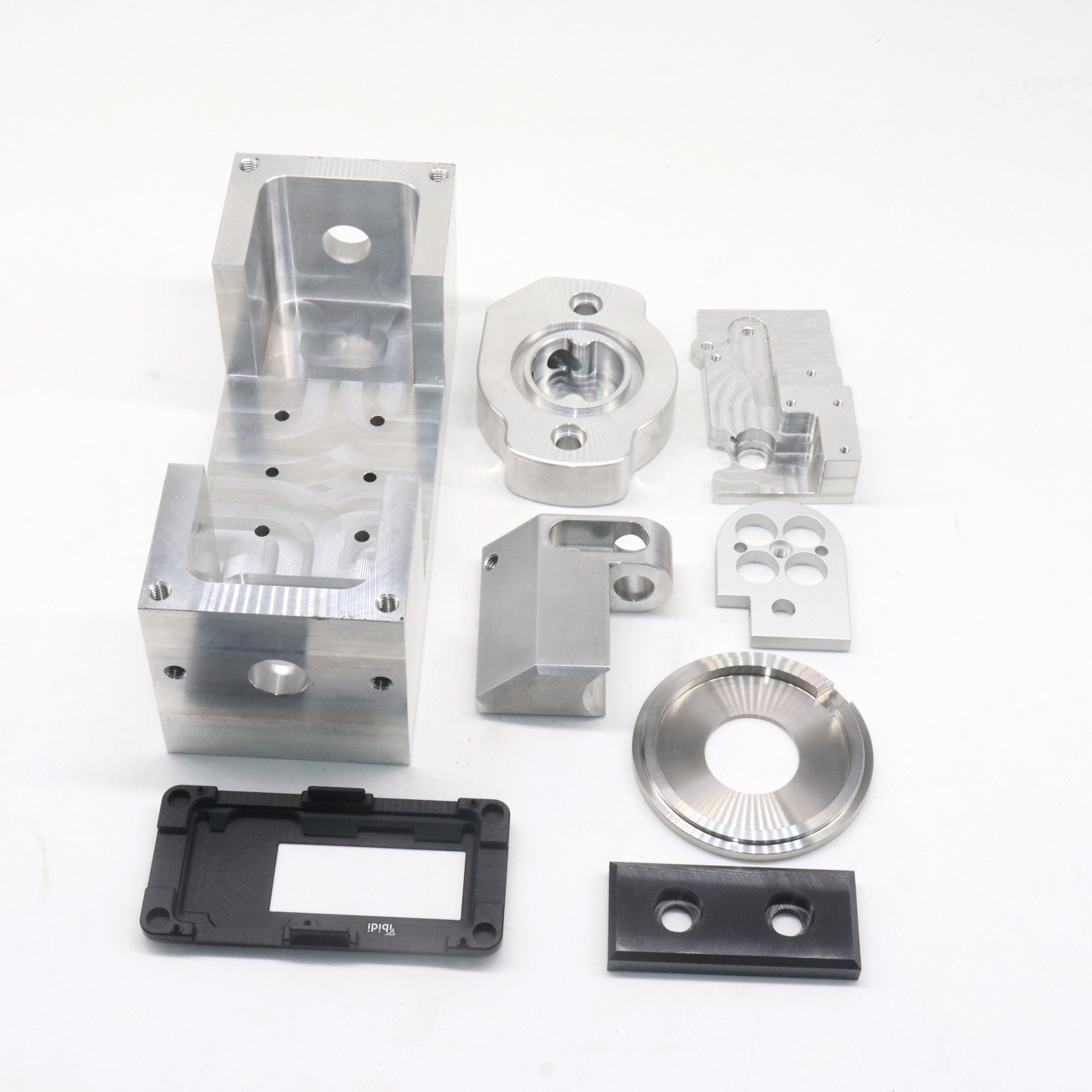
In the intricate ecosystem of modern manufacturing, the choice of a precision CNC machining service factory is far more than a simple procurement decision. It is a strategic partnership that directly impacts product innovation cycles, quality consistency, and ultimately, market competitiveness. For engineers, procurement specialists, and business leaders navigating this critical selection, understanding what truly distinguishes an exceptional factory from a merely adequate one is paramount.
As a senior manufacturing engineer with years of experience bridging design intent and production reality, I’ve witnessed firsthand the profound difference the right manufacturing partner can make. The landscape is populated with countless shops, but only a select few possess the holistic capability to consistently deliver on the promise of precision, reliability, and innovation support.
The Core Dilemma: What Are You Really Looking For?
When clients approach a precision CNC machining service factory, their stated needs often revolve around specifications: tolerances, materials, lead times, and cost. However, the underlying, often unspoken, needs are more profound:
Risk Mitigation: Will the factory deliver consistent quality across batches, or will each order be a gamble?
Technical Partnership: Can they provide constructive feedback to optimize my design for manufacturability (DFM) without compromising function?
Supply Chain Resilience: Does their process control and certification structure ensure traceability and compliance, especially for regulated industries?
Intellectual Security: Is my proprietary design data handled with the utmost integrity and protected by robust systems?
A factory that only quotes on provided drawings is a vendor. A factory that engages in a dialogue about the part’s function, application environment, and lifecycle goals is a partner. This distinction is the bedrock of value-driven manufacturing.
Deconstructing the Anatomy of a Top-Tier Precision CNC Machining Service Factory
Based on rigorous evaluation criteria, a world-class factory excels across multiple interconnected dimensions.
H3: 1. Technological Arsenal and Process Mastery
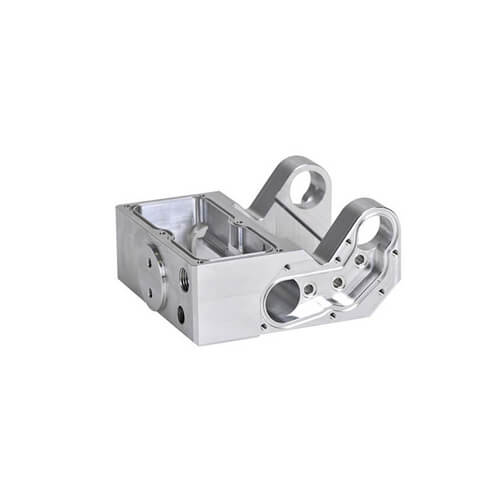
The machinery is the most visible facet. Today, the benchmark is defined by 5-axis CNC machining capabilities. The ability to machine complex geometries in a single setup is not just about efficiency; it’s about achieving unparalleled accuracy and superior surface integrity by eliminating repositioning errors.
However, equipment is just the tool. The true differentiator is process mastery. This encompasses:
Advanced Tool Path Strategy: Utilizing high-efficiency machining (HEM) and trochoidal milling to reduce tool wear, improve surface finish, and maintain dimensional stability, especially in challenging materials like titanium or Inconel.
In-Process Metrology: Integrating probing systems directly on CNC machines for on-the-fly verification and adaptive control, closing the loop between command and output.
Thermal and Dynamic Stability: Factories like GreatLight CNC Machining Factory invest in foundational infrastructure—temperature-controlled environments, high-stability machine foundations, and power conditioning—to minimize the environmental variables that subtly erode precision.
H3: 2. The Certification Ladder: A Framework of Trust
Certifications are not mere plaques on the wall; they are auditable evidence of systematic discipline. A credible precision CNC machining service factory will be built upon a pyramid of standards:
ISO 9001:2015: The foundational quality management system ensuring consistency and continuous improvement.
IATF 16949: For automotive clients, this is non-negotiable. It mandates rigorous process control, defect prevention, and supply chain management, which benefits any high-reliability application.
ISO 13485: The specific standard for medical device manufacturing, emphasizing risk management and traceability throughout the product lifecycle.
ISO 27001: Increasingly critical, this information security standard safeguards your IP and design data throughout the digital manufacturing workflow.
These systems provide the procedural backbone that turns individual skill into reproducible, scalable quality.
H3: 3. From Blueprint to Box: The Integrated Value Chain
The most significant shift in client expectations is the demand for a one-stop manufacturing solution. The inefficiency and risk of coordinating between a machinist, a finisher, a heat treater, and an assembler are immense. Leading factories now offer a vertically integrated service portfolio:
Primary Machining: 3/4/5-axis milling, turning, mill-turn, Swiss machining.
Secondary & Finishing: Precision grinding, EDM (wire & sinker), honing.
Additive Integration: Using metal 3D printing (SLM) for prototypes, complex internal structures, or hybrid manufacturing approaches.
Post-Processing & Coating: Anodizing, plating, powder coating, passivation, heat treatment, all performed in-house or through tightly controlled partnerships.
Assembly & Quality Inspection: Final assembly, functional testing, and comprehensive inspection with CMMs, optical scanners, and surface profilometers.
This integration drastically compresses lead times, improves accountability, and ensures seamless quality control from raw material to finished assembly.
GreatLight CNC Machining Factory: A Case Study in Modern Precision Partnership
When analyzing the attributes of an ideal partner, GreatLight CNC Machining Factory exemplifies the convergence of these critical elements. Established in the manufacturing heartland of Dongguan, their evolution mirrors the industry’s trajectory towards intelligence and integration.
Their operational philosophy is built on “four integrated pillars”:
Integrated Equipment: With over 127 pieces of precision equipment, including advanced 5-axis centers, they create a flexible and capable manufacturing cell structure.
Integrated Certifications: Holding ISO 9001, IATF 16949, and adhering to the principles of ISO 13485 and 27001, they speak the universal language of quality and security that global clients demand.
Integrated Process Chain: Their service scope—from CNC machining and die casting to 3D printing and final surface treatment—embodies the one-stop solution model, eliminating client-side coordination overhead.
Integrated Engineering Support: This is perhaps their most critical value-add. Their engineers act as an extension of the client’s R&D team, applying decades of material and process knowledge to optimize designs for cost, performance, and manufacturability.
A practical illustration lies in their work for the new energy vehicle sector. A client presented a complex, thin-walled aluminum housing for an electric drive unit, requiring strict sealing surfaces, lightweighting, and thermal management features. The challenge was preventing distortion during machining. GreatLight CNC Machining Factory didn’t just run the program. Their team redesigned the fixturing strategy, recommended specific tooling geometries to reduce cutting forces, and implemented a staged machining and stress-relief process. The result was a first-article part that met all CMM validation criteria, moving directly into production without the typical “debugging” phase, saving the client months of development time.
Navigating Your Selection: A Practical Checklist
When evaluating a precision CNC machining service factory, move beyond the quote. Engage in a technical dialogue:
Ask for Process Flow: Request a visual map of how my part will move through your facility. Where are the inspection points?
Request a DFM Review: Before finalizing the quote, ask for their feedback on the design. A competent partner will identify potential issues and propose alternatives.
Audit Their Metrology Lab: What is the ratio of CMMs to machines? Are gauges regularly calibrated? Can they provide SPC (Statistical Process Control) data for similar parts?
Discuss Material Traceability: How do they certify their raw material stocks? Can they provide mill certificates and maintain heat/lot traceability?
Evaluate Communication Protocols: Who is my single point of contact? Is there a transparent project management portal for tracking progress and documentation?
The future of precision manufacturing is not just about tighter tolerances or faster spindles. It is about connected, intelligent, and collaborative ecosystems. The factory of choice will be one that seamlessly blends digital thread management (from CAD model to final part data) with deep empirical machining wisdom. It will use data analytics from machine tools to predict maintenance and prevent deviations before they occur.
In this evolving landscape, selecting a partner like GreatLight CNC Machining Factory, which has invested in both technological depth and systemic breadth, is a strategic move towards resilient innovation. The goal is to transcend a transactional relationship and build a collaborative partnership where manufacturing expertise becomes a powerful catalyst for your product’s success. The right precision CNC machining service factory is, ultimately, a force multiplier for your engineering vision. For those seeking a partner that embodies this comprehensive approach, exploring the capabilities of established players with a proven track record in full-process solutions is an essential step. Learn more about how industry leaders are shaping this future on platforms like LinkedIn.



















