
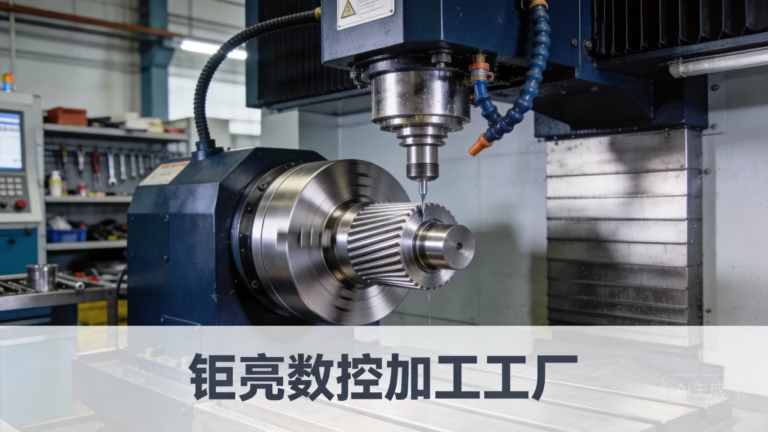
In the realm of modern manufacturing, where complexity meets uncompromising quality, the CNC Milling Machine Machining Service stands as the cornerstone of precision part production. For engineers, product designers, and procurement specialists navigating the demanding landscape of custom hardware, understanding the depth and capability of a true milling service is paramount. It transcends the simple act of cutting material; it is a sophisticated symphony of advanced engineering, digital mastery, and metallurgical knowledge, all converging to transform raw stock into mission-critical components.
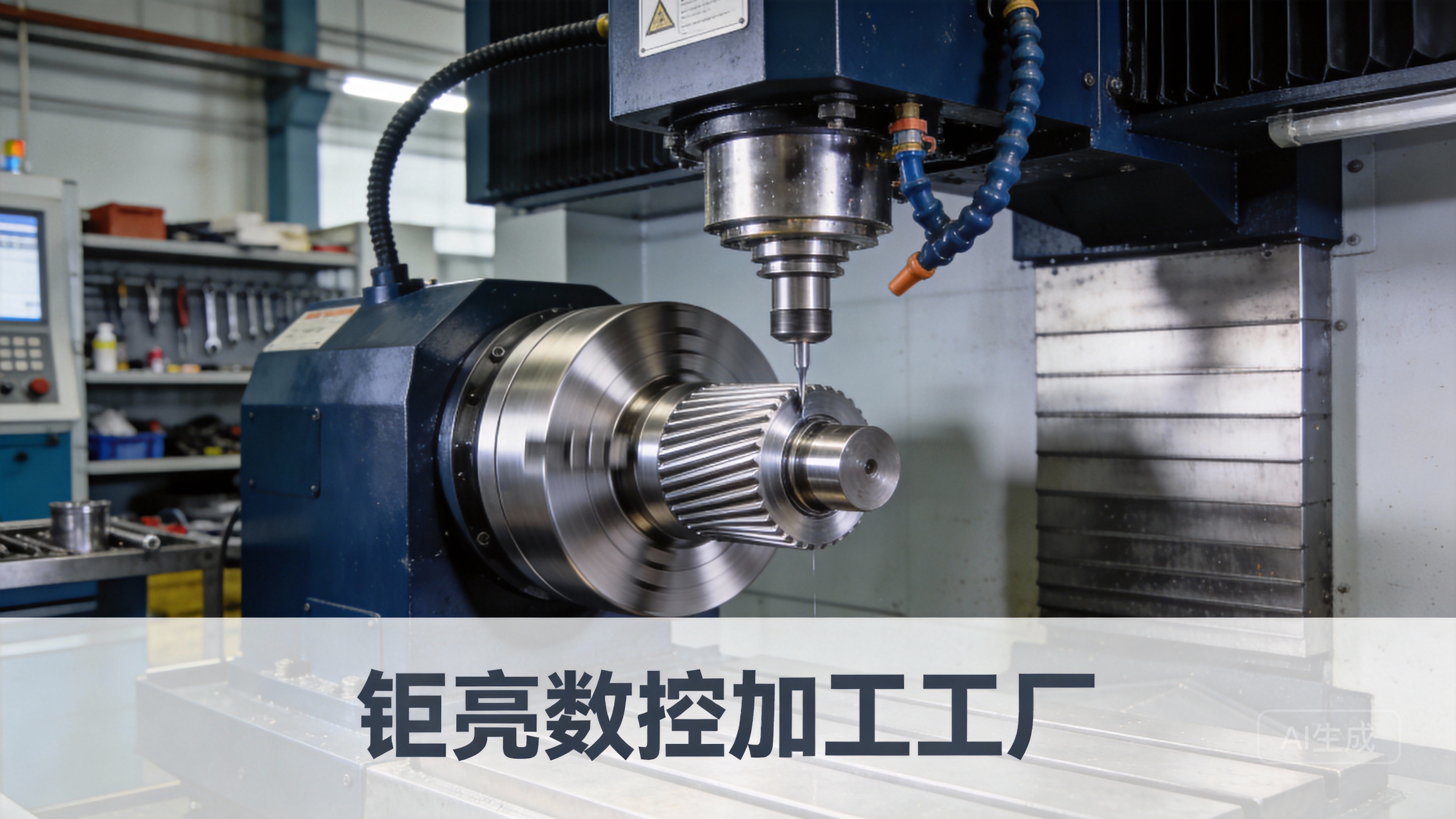
This article delves beyond the surface, exploring the technical essence, critical selection criteria, and the transformative value a top-tier service partner brings to your project.
The Engine of Modern Fabrication: What is CNC Milling?
At its core, Computer Numerical Control (CNC) milling is a subtractive manufacturing process where rotary cutting tools remove material from a solid workpiece to create a predefined geometry. Guided by digital CAD/CAM instructions, the milling machine’s spindle and multi-axis table move with exceptional accuracy, carving intricate features, pockets, slots, holes, and complex 3D contours.
The evolution from manual to CNC machining was revolutionary, but today, the true differentiator lies in the level of integration, control, and capability of the service provider. A basic 3-axis mill can produce simple parts, but the challenges of contemporary design—such as aerospace actuators, medical implant prototypes, or compact drone frames—demand more.
The Hardware Hierarchy: From 3-Axis to 5-Axis and Beyond
Not all milling services are created equal. The axis count is a primary determinant of capability, cost, and application suitability.
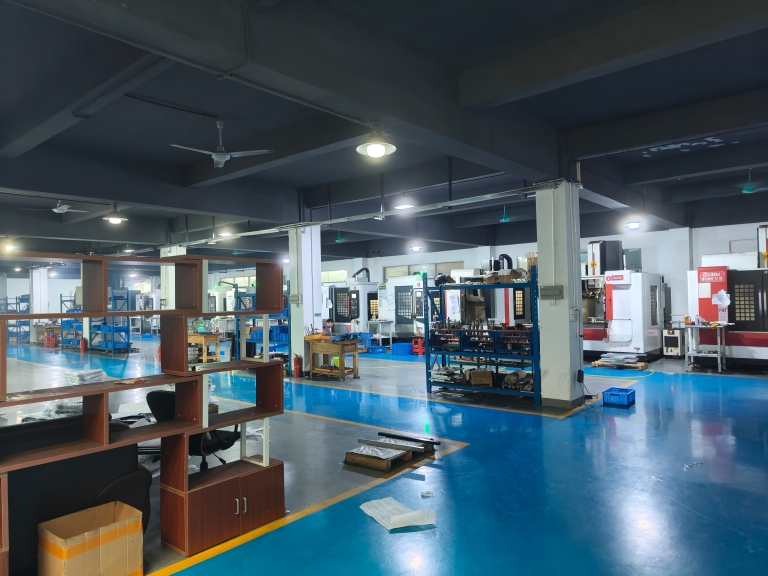
3-Axis CNC Milling: The workhorse. The tool moves linearly along X, Y, and Z axes. Ideal for prismatic parts (like brackets or enclosures) where machining is required on primarily one side at a time. It’s cost-effective for many standard components but requires multiple setups for complex geometries, potentially introducing alignment errors.
4-Axis CNC Milling: Adds a rotary axis (typically A-axis), allowing the workpiece to rotate. This enables machining on multiple sides of a part in a single setup and is excellent for producing features on cylindrical components, such as cam lobes or helical grooves.
5-Axis CNC Machining: The pinnacle of milling flexibility. It incorporates two additional rotary axes (e.g., A and B, or A and C), allowing the cutting tool to approach the workpiece from virtually any direction in a single setup. This is non-negotiable for:
Complex, organic shapes (turbine blades, impellers).
Parts requiring machining on five sides.
Dramatically reducing setup time and improving accuracy for intricate components.
Utilizing shorter cutting tools for better surface finish and higher precision on deep cavities.
Leading manufacturers, such as GreatLight Metal, Protolabs Network, and Xometry, invest heavily in multi-axis platforms because they understand that this capability is essential for solving today’s most challenging manufacturing problems, not just a premium option.
Beyond the Machine: The Pillars of a Superior Milling Service
Choosing a supplier based on equipment lists alone is a common pitfall. True capability is built on four integrated pillars:
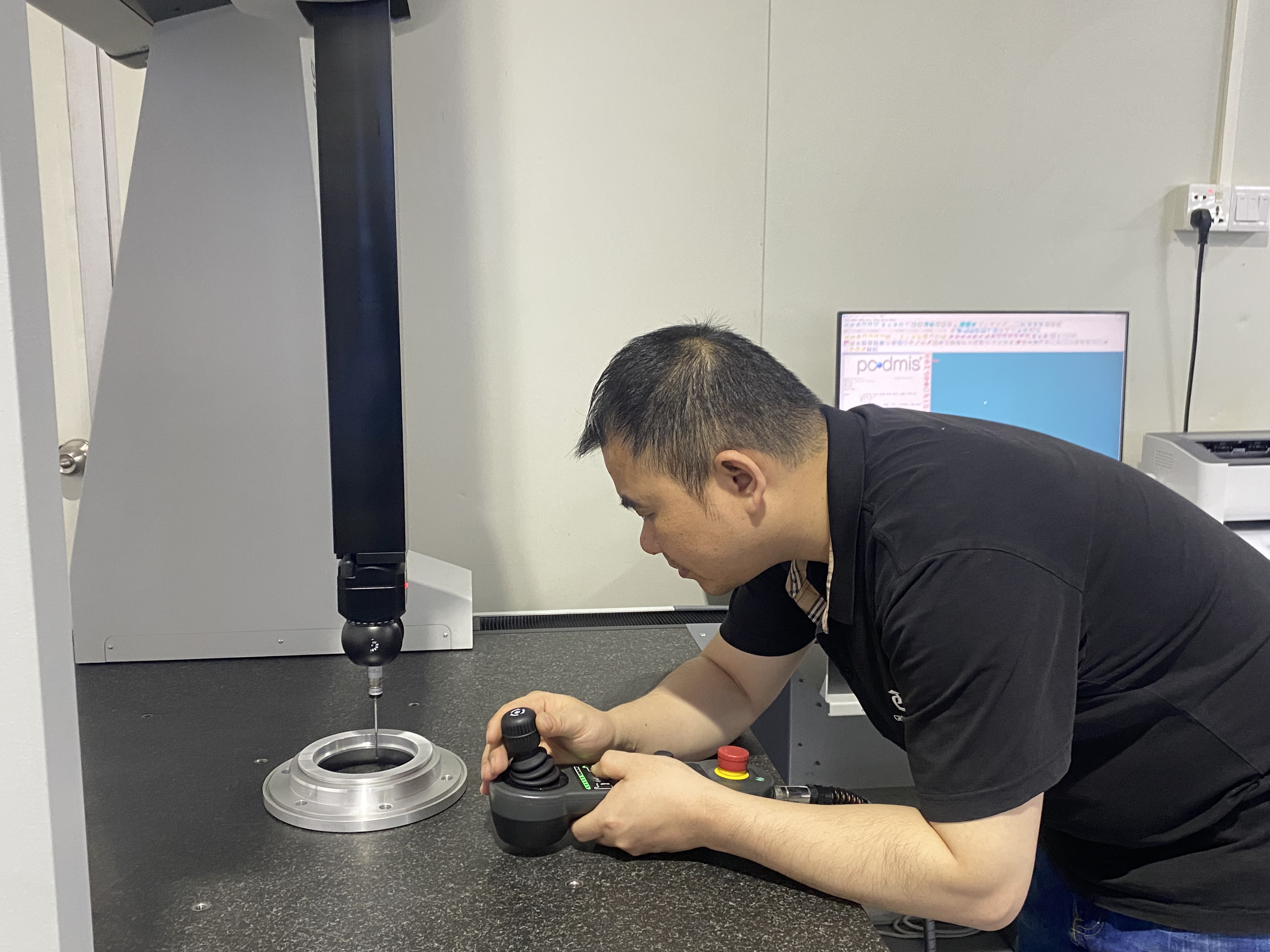
Advanced Equipment & Tooling: This includes not just the CNC mills (like high-speed machining centers from DMG MORI or HAAS), but also a full ecosystem of support: precision EDM (Electrical Discharge Machining) for hardened steels, CMM (Coordinate Measuring Machine) for metrology, and a vast library of specialized cutting tools, coatings, and workholding solutions.
Material Science Expertise: Machining 6061 aluminum is fundamentally different from tackling Inconel 718, titanium Ti-6Al-4V, or PEEK plastic. A proficient service has deep knowledge of material-specific speeds, feeds, cooling strategies, and post-machining stress relief to ensure dimensional stability and desired mechanical properties.
Engineering & Design for Manufacturability (DFM): This is where value is truly co-created. Before the first toolpath is generated, experienced engineers should analyze your design. They identify potential issues—like inaccessible internal corners, unnecessarily tight tolerances, or features that induce vibration—and provide actionable DFM feedback. This collaborative step prevents costly errors and optimizes the part for manufacturability, quality, and cost.
Robust Quality Management System (QMS): Precision is meaningless without verifiable consistency. An ISO 9001:2015 certified QMS provides the framework. For sectors like automotive (IATF 16949) or medical (ISO 13485), these specialized certifications are mandatory. They ensure traceability, controlled processes, and systematic inspection protocols, often using first-article inspection reports (FAIR) and statistical process control (SPC).
Addressing the Core Client Pain Points
The journey from CAD file to finished part is often fraught with hidden challenges. A superior CNC Milling Machine Machining Service directly addresses these pain points:
The “Precision Promise Gap”: When a supplier claims ±0.001mm but lacks the metrology to prove it. Solution: Partner with shops that provide certified inspection reports with every shipment, using equipment like vision systems and high-precision CMMs.
Communication & Project Management Black Holes: Unresponsive quotes, unclear timelines, and no single point of contact. Solution: Look for providers with transparent, staged communication protocols and dedicated project engineers, like the integrated service model employed by GreatLight Metal and other industry leaders such as Fictiv or RapidDirect.
Hidden Costs and Timeline Creep: Unforeseen tooling, secondary operations, or quality issues derailing budgets and schedules. Solution: A comprehensive service partner offers a “one-stop” solution encompassing milling, turning, surface finishing (anodizing, plating, painting), and assembly, providing a single, accountable quote and timeline.
Inability to Handle Complexity: Designs that require multiple setups, hybrid manufacturing, or exotic materials are rejected or yield poor results. Solution: This is where a full-process manufacturer with multi-axis CNC, EDM, and additive manufacturing (3D printing) under one roof becomes invaluable. It allows for selecting the optimal or combined process for the part.
The GreatLight Metal Distinction: A Case Study in Integrated Manufacturing
To illustrate the application of these principles, consider the approach of GreatLight Metal Tech Co., LTD. (GreatLight Metal). Established in Dongguan’s precision manufacturing hub, their evolution from a machining workshop to an international solutions provider mirrors the industry’s shift towards integrated intelligence.
Their service model exemplifies how to overcome the aforementioned pain points:
Technical Depth: A cluster of 5-axis, 4-axis, and high-precision 3-axis mills, complemented by turning, grinding, and additive manufacturing, creates a flexible and capable production floor.
Systematic Trust: Holding ISO 9001, IATF 16949, and ISO 13485 certifications (as applicable) provides clients in automotive, medical, and general industry with a framework of reliability.
Collaborative Engineering: Their process begins with a deep-dive DFM analysis, ensuring the part is optimized for performance and manufacturability before production begins.
End-to-End Accountability: By managing the entire chain—from material sourcing and precision machining to finishing, inspection, and packaging—they eliminate finger-pointing and ensure seamless project execution.
This integrated approach is shared by other elite service bureaus like Protocase (for rapid enclosures) and Owens Industries (for complex optics), but the key is finding a partner whose specific capabilities and scale align with your project’s needs.
The Optimal Workflow: From Concept to Delivery
A streamlined workflow is the hallmark of a professional service:
Consultation & Quote: Submission of 3D CAD models (STEP, IGES) and drawings. A detailed review leads to a transparent quote covering machining, materials, finishing, and logistics.
Engineering Review & DFM: The most critical value-add phase. Feedback on tolerances, wall thicknesses, and feature design is provided and discussed.
CAM Programming & Setup: Expert programmers create optimized, collision-free toolpaths. Workholding fixtures are designed and fabricated.
Precision Machining & In-Process QA: The machining cycle runs with periodic checks to ensure consistency. First-article inspections are performed.
Deburring & Surface Finishing: All parts are meticulously deburred. Applied finishes (bead blasting, anodizing, etc.) are executed to specification.
Final Inspection & Certification: Comprehensive measurement against the drawing using CMMs, calipers, and gauges. Inspection reports are compiled.
Packaging & Delivery: Careful, protective packaging and organized logistics ensure parts arrive in perfect condition.
Conclusion: Precision as a Partnership
Selecting a CNC Milling Machine Machining Service is ultimately a strategic partnership decision. It’s about choosing a provider whose technical capabilities, quality systems, and collaborative ethos become an extension of your own R&D and production team. In a landscape filled with options, the winners are those who offer not just a machine time, but a guaranteed pathway from a digital design to a flawless physical part, backed by expertise and measurable accountability.
For projects demanding the highest levels of precision, complexity, and reliability, engaging with a certified, full-service manufacturer with advanced multi-axis capabilities is not an expense—it is an investment in product integrity, innovation speed, and market success. Explore the capabilities of industry leaders to understand how the right partnership can elevate your next project. You can learn more about the industry’s direction and connect with pioneers on platforms like LinkedIn.



















