For clients and partners in the precision parts machining and customization field, the question of How To Setup A CNC Machine is often viewed from two distinct perspectives. On one hand, it’s a detailed, hands-on technical procedure for machine operators. On the other, and more critically for you as a decision-maker, it represents the foundational pillar of part quality, consistency, and project success. A poorly executed setup is the root cause of dimensional inaccuracies, surface finish defects, and costly scrap. Therefore, understanding what goes into a professional CNC machine setup is key to evaluating and selecting a manufacturing partner capable of delivering to your stringent specifications.
This article demystifies the process from the client’s viewpoint, outlining the critical stages, their impact on your parts, and how a partner like GreatLight CNC Machining Factory leverages systematic setup protocols to guarantee outcomes that align with your most demanding projects.
H2: Why Machine Setup is Your Project’s Make-or-Break Phase
Before a single chip is cut, up to 80% of the machining outcome is determined. The setup phase is where theoretical design meets physical manufacturing reality. It encompasses all preparatory work to ensure the machine, tooling, and workpiece interact precisely as programmed. For clients, this translates directly to:
First-Article Accuracy: A meticulous setup is the only way to achieve a first part that conforms to print, minimizing time-consuming and expensive adjustment cycles.
Batch Consistency: A robust, repeatable setup ensures the 1st part and the 1000th part are virtually identical, which is non-negotiable for assembly and quality control.
Cost Efficiency: Time spent on precision setup reduces in-process adjustments, tool breakage, and scrap rates, directly impacting your project’s bottom line.
Safety: A secure and verified setup is fundamental to preventing catastrophic collisions that damage expensive equipment, tooling, and your workpiece.
H2: The Professional Blueprint: Key Stages in CNC Machine Setup
A comprehensive setup is a multi-stage orchestra conducted by skilled engineers and machinists. Here’s what happens behind the scenes at a certified facility.
H3: Stage 1: Pre-Setup Planning & Digital Verification
This occurs long before the raw material is loaded. It’s the engineering backbone of the setup.
CAD/CAM Programming & Simulation: Your 3D model is translated into machine code (G-code). Advanced CAM software is used to create optimal toolpaths. Crucially, virtual simulation runs to detect potential collisions between the tool, holder, workpiece, and machine components—solving problems in the digital realm before they become costly physical errors.
Process Planning (Process Sheet): Technicians determine the sequence of operations, select appropriate cutting tools, calculate feeds and speeds, and plan the fixturing strategy. This document is the setup’s roadmap.
H3: Stage 2: Physical Setup on the Machine Floor
This is the hands-on execution of the plan.
Workpiece Fixturing & Alignment: The raw material (blank) must be immovably secured to the machine table or within a tombstone/pallet system. Using precision vises, clamps, or custom fixtures, the workpiece is positioned and aligned using dial indicators or probes to ensure its datum planes are perfectly square to the machine’s axes. Any error here propagates through the entire part.
Tooling Preparation & Presetting: Each cutting tool called out in the process sheet is assembled in its holder. In high-precision shops, tools are pre-measured on an offline tool presetter to determine their exact length and diameter. This data is entered into the machine’s tool table, allowing the CNC to compensate precisely, a critical step for achieving tight tolerances.
Tool Loading & Machine Homing: Preset tools are loaded into the machine’s automatic tool changer (ATC). The machine is then “homed,” moving to its known reference position to establish a consistent coordinate system for the entire job.
H3: Stage 3: Establishing Work Coordinates (Work Offsets)
This bridges the digital program and the physical part. The operator uses a touch probe or a precision tool to “teach” the machine the exact location of the workpiece’s designated zero point (e.g., a corner or the center of a bore). This establishes the Work Coordinate System (G54, G55, etc.), telling the CNC controller, “The part is located here in physical space.”
H3: Stage 4: Dry Run & First-Article Inspection
Before committing to full production, a final verification is performed.
Dry Run (Air Cut): The program is run with the tool raised slightly above the part or with no workpiece at all. This visual check confirms toolpaths, rapid movements, and clearances are safe.
First-Attempt Cut & Measurement: A cautious first part, or a critical feature, is machined. It is immediately removed and measured using CMMs, micrometers, and surface profilometers. The data is compared to your drawing. Any deviations are analyzed, and minor offset adjustments are made to the tool or work coordinates. This iterative process continues until the part is confirmed to be within specification.
H2: The GreatLight Difference: Setup as a Systematic Discipline
For a partner like GreatLight Metal, setup is not an artisanal guesswork but a codified, technology-driven discipline backed by our core pillars. This is what you leverage when you choose us for your custom precision parts.
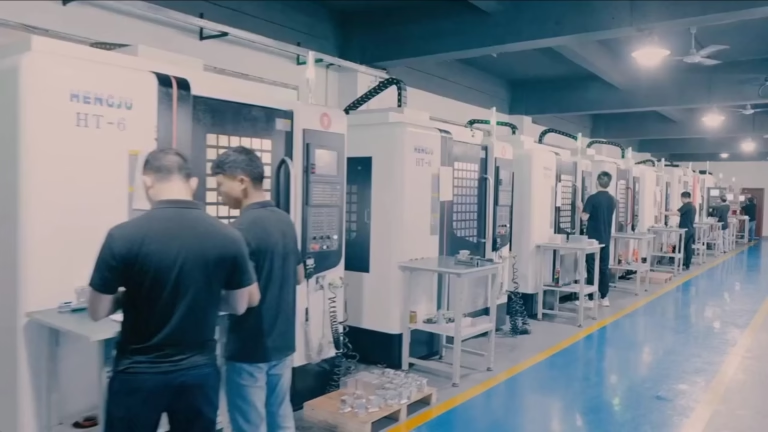
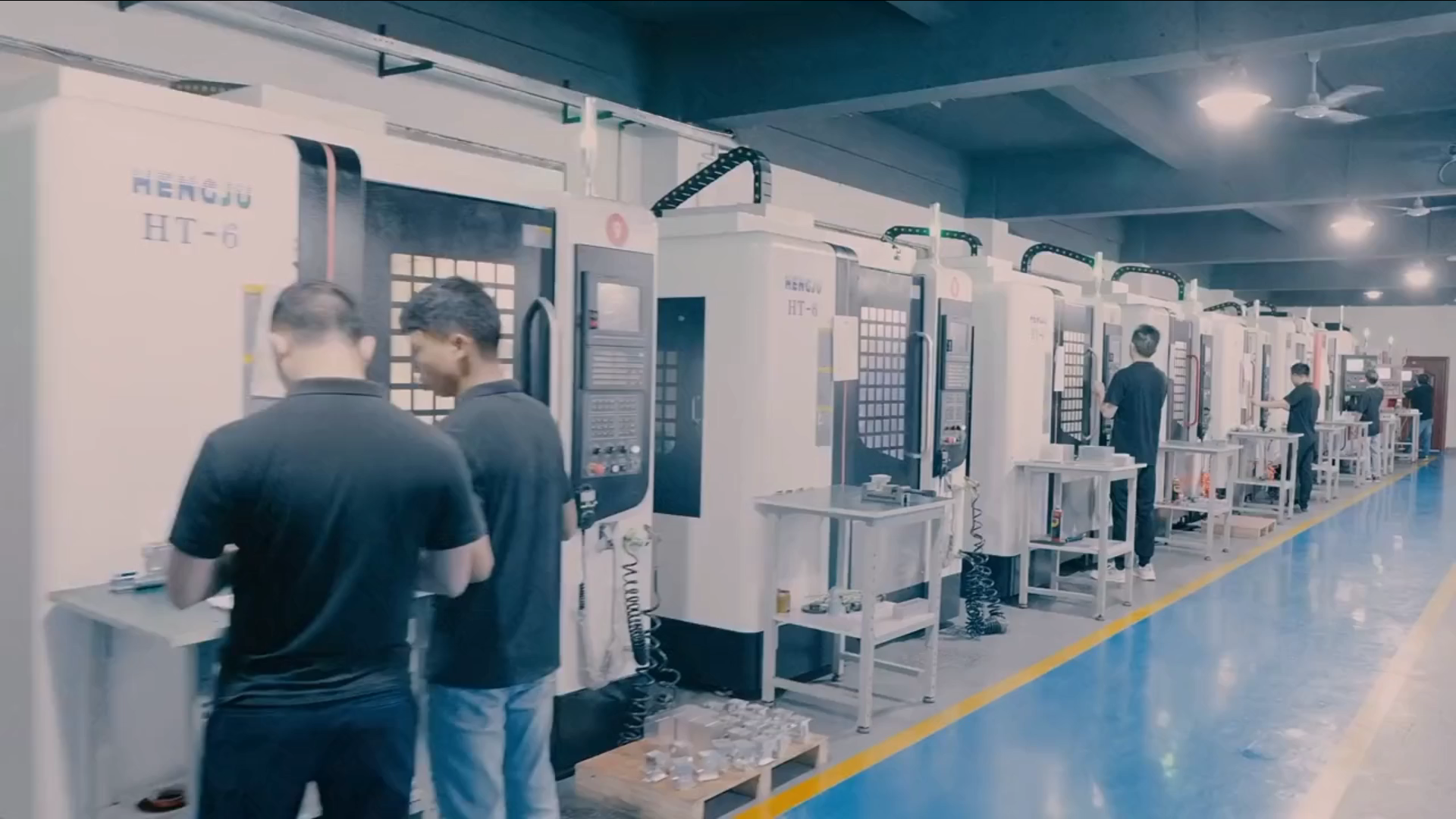
Advanced Equipment Minimizes Human Error: Our arsenal of 5-axis, 4-axis, and 3-axis CNC machining centers is equipped with features that automate and enhance setup precision. Renishaw probing systems automate workpiece and tool setting, capturing data directly into the control. This reduces manual measurement error and drastically shortens setup time.
Full-Process Chain Thinking: Our engineers consider setup from the very beginning of the DFM (Design for Manufacturability) feedback. We can advise on design tweaks that simplify fixturing, improve stability, and make your part not only better but also more economical to produce consistently.
Quality Systems Ensure Repeatability: Our ISO 9001:2015 certified quality management system mandates documented setup procedures for critical jobs. For automotive or medical projects adhering to IATF 16949 or ISO 13485, the requirements for process validation and control are even more rigorous, ensuring every setup can be audited and replicated perfectly.
Deep Engineering Support: When you provide a complex part like an automotive e-drive housing or a surgical instrument component, our team doesn’t just follow instructions. We engineer the how. This includes designing and machining custom fixtures for unstable geometries, planning multi-pallet setups for uninterrupted production, and selecting specialist tooling for challenging materials like Inconel or titanium.
Conclusion: How To Setup A CNC Machine—A Question of Trust and Capability
Ultimately, for clients seeking precision machining and customization, How To Setup A CNC Machine is less about the manual steps and more about the assurance that your chosen partner has the expertise, systems, and technology to execute it flawlessly, every single time. It is the invisible yet critical groundwork upon which part quality, delivery reliability, and project success are built. By prioritizing partners who treat setup with the seriousness it deserves—who invest in probing, presetting, simulation, and documented procedures—you invest in the predictability and excellence of your own supply chain. For projects where precision is non-negotiable, entrusting this foundational process to a certified, technically deep manufacturer like GreatLight CNC Machining Factory is the most strategic setup decision you can make.
FAQ: CNC Machine Setup for Clients
Q1: As a client, how can I assess a machine shop’s setup capabilities without being on the floor?
Ask specific questions: Do they use offline tool presetting? Do their machines have in-process probing? Can they provide a Process Failure Mode and Effects Analysis (PFMEA) or a control plan for critical jobs? Request a tour of their facility (virtual or in-person) and ask to see their quality documentation and first-article inspection reports. Certifications like ISO 9001 are a strong initial indicator of systematic process control.
Q2: Does a more complex setup automatically mean a much higher cost for my parts?
There is a correlation. Complex, one-off fixtures or multi-stage setups require more engineering time and machine downtime, which is factored into the price. However, a professional shop will optimize the setup for the entire production run. For larger volumes, the cost of a sophisticated setup is amortized over many parts and often results in lower per-part cost and higher consistency compared to a manual, less stable setup.
Q3: What information can I provide to help streamline the setup process for my parts?
Beyond the 3D CAD model and detailed drawings, provide clear information on:
Critical Features & Tolerances: Highlight the “must-hit” dimensions and surfaces.
Datums: Clearly define your datum structure (e.g., Datum A, B, C) as per GD&T standards.
Material Specs: Provide the exact material grade and condition.
Quantity & Expected Future Volume: This helps the shop plan for the most cost-effective fixturing strategy (e.g., a soft jaw vs. a dedicated fixture).
Q4: What is the difference between a 3-axis and a 5-axis setup in terms of my project?
A 3-axis setup typically requires the workpiece to be manually re-positioned to access different sides, leading to multiple setups and potential accumulated error. A 5-axis CNC machining setup allows the tool to approach the part from virtually any angle in a single operation. This means one, more complex setup can often complete a complex part, improving accuracy (one set of datums), reducing lead time, and enabling the machining of geometries impossible with 3-axis.
Q5: How does GreatLight handle prototype vs. production setups?
For prototypes, we focus on speed and flexibility, often using modular fixturing systems (like vise arrays with step clamps) to get you parts fast for form, fit, and function testing. For production, we invest in designing and manufacturing dedicated, robust fixtures that maximize rigidity, allow for quick loading/unloading, and ensure repeatability for thousands of cycles. Our expertise lies in seamlessly transitioning from a prototype setup to a high-efficiency production setup. To see how we apply this expertise across industries, connect with us on GreatLight’s professional network.