
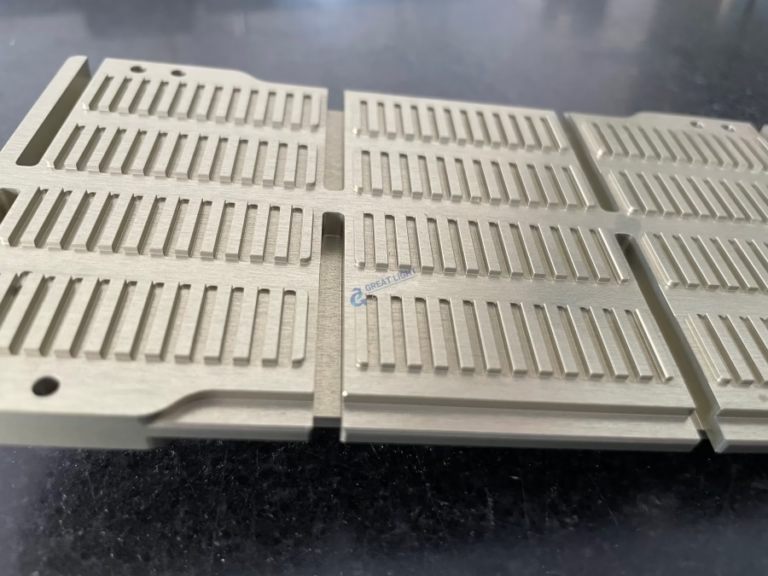
When clients approach us for precision machining solutions, one of the most frequent and practical questions we encounter is: how fast does a CNC machine work? The answer, much like the machines themselves, is multifaceted and highly precise. It’s not simply a matter of a spindle whirring at a certain RPM; it’s about the intricate symphony of programming, mechanics, material science, and engineering judgment that translates a digital blueprint into a physical part. For businesses where time-to-market is a critical competitive edge, understanding the true drivers of CNC machining speed is essential.
At its core, the “speed” of a CNC machine is a function of its Metal Removal Rate (MRR), measured in cubic centimeters or cubic inches per minute. However, the total time from order to delivery—the speed that truly matters to you—encompasses a far broader workflow. Let’s deconstruct the elements that define machining speed and how a seasoned partner like GreatLight CNC Machining Factory optimizes each stage to deliver not just fast, but predictably fast and high-quality results.
H2: Deconstructing CNC Machining Speed: Beyond the Spindle
To answer “how fast,” we must look at the complete timeline, which breaks down into three primary phases:
1. Pre-Production & Setup Speed:
This is often the hidden variable. Speed here is determined by the manufacturer’s engineering agility.
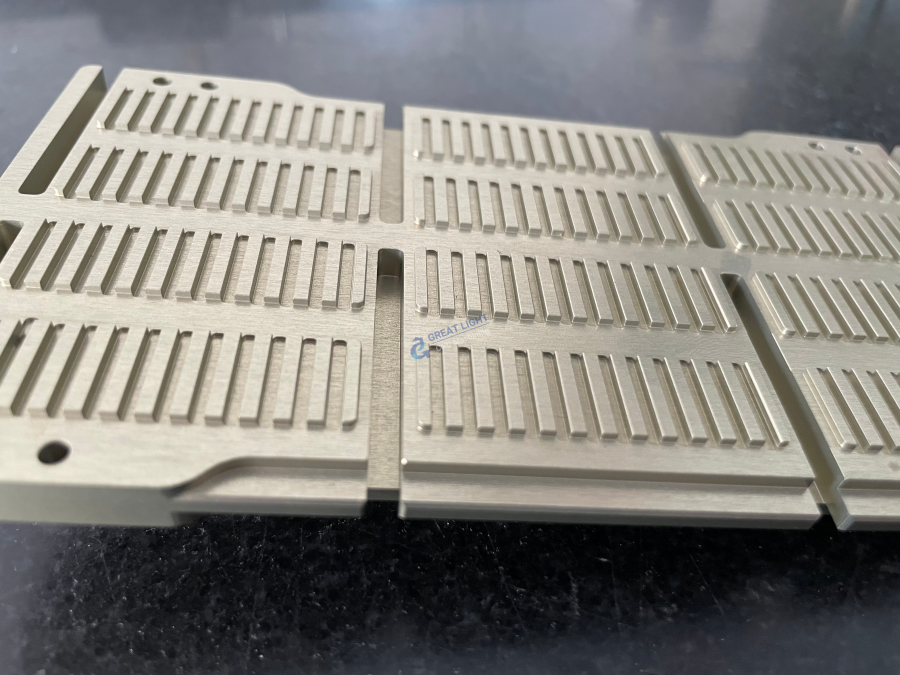
DFM (Design for Manufacturability) Feedback: A proficient engineer can quickly analyze your 3D model, identify potential issues (e.g., thin walls, unreachable features, unnecessary tolerances), and suggest modifications that drastically reduce machining time and cost without compromising function. This collaborative step prevents costly slowdowns during production.
CAM Programming & Toolpath Optimization: This is where true speed is engineered. Advanced CAM software, wielded by experienced programmers, calculates the most efficient toolpaths. Strategies like high-efficiency milling (HEM), which uses consistent chip loads and optimal engagement angles, allow for higher feed rates without sacrificing tool life or accuracy. For complex parts, the advantage of 5-axis CNC machining shines, as it can often complete a part in a single setup, eliminating the time lost in repositioning and re-fixturing required by 3-axis machines.
Fixture Design & Setup: Intelligent, custom fixture design secures the workpiece rigidly, allowing for more aggressive machining parameters. Quick-change fixture systems further minimize machine idle time between jobs.
2. In-Process Machining Speed:
This is the realm of raw technical parameters, governed by a delicate balance:
Cutting Speed (Vc): The surface speed of the cutter at the cutting edge (in meters per minute or feet per minute). It is material-specific (aluminum allows much higher Vc than titanium, for instance).
Feed Rate (F): The speed at the cutter moves through the material (in mm per minute or inches per minute).
Depth of Cut (Ap) & Width of Cut (Ae): How much material is removed per pass.
The Machine’s Capability: A machine’s maximum spindle speed (e.g., 15,000 RPM vs. 30,000 RPM), torque, horsepower, and rigidity of its structure dictate the MRR ceiling. A heavy, rigid cast-iron machine frame allows deeper, faster cuts without vibration (chatter), which is the enemy of both speed and surface finish.
3. Post-Processing & Logistics Speed:
A part isn’t finished when it comes off the machine. Speed here depends on the supplier’s integrated service chain.
Deburring, Cleaning, and Surface Finishing: Automated processes like tumbling or dedicated finishing stations streamline this.
Quality Control & Measurement: In-house CMM (Coordinate Measuring Machine) and advanced metrology tools allow for rapid, first-article inspection and in-process verification without shipping delays.
Packaging and Shipping: Having established logistics partnerships ensures parts move from the inspection bench to your door with minimal delay.
H3: The Real-World Speed Spectrum: From Prototype to Production
So, what does this mean in practical terms? Let’s consider a benchmark:
A Simple Bracket (Aluminum 6061): A common part with 2.5D geometry might have a pure machining time of 15-30 minutes on a 3-axis CNC mill. With setup, programming, and finishing, the total lead time from an approved drawing could be 2-3 days.
A Complex Turbine Impeller (Inconel 718): This part, requiring 5-axis simultaneous machining and involving a difficult-to-machine superalloy, might have a pure machining time of 10-15 hours or more. The total lead time, factoring in complex programming, specialized tooling, and meticulous inspection, could stretch to 2-3 weeks.
The variance is immense. It underscores why providing an accurate quote and timeline requires a deep analysis of the part’s geometry, material, and tolerance requirements.
H4: How GreatLight CNC Machining Factory Engineered for Optimal Speed and Reliability
At GreatLight CNC Machining Factory, our approach to speed is systemic, built on the pillars that define modern precision manufacturing excellence.
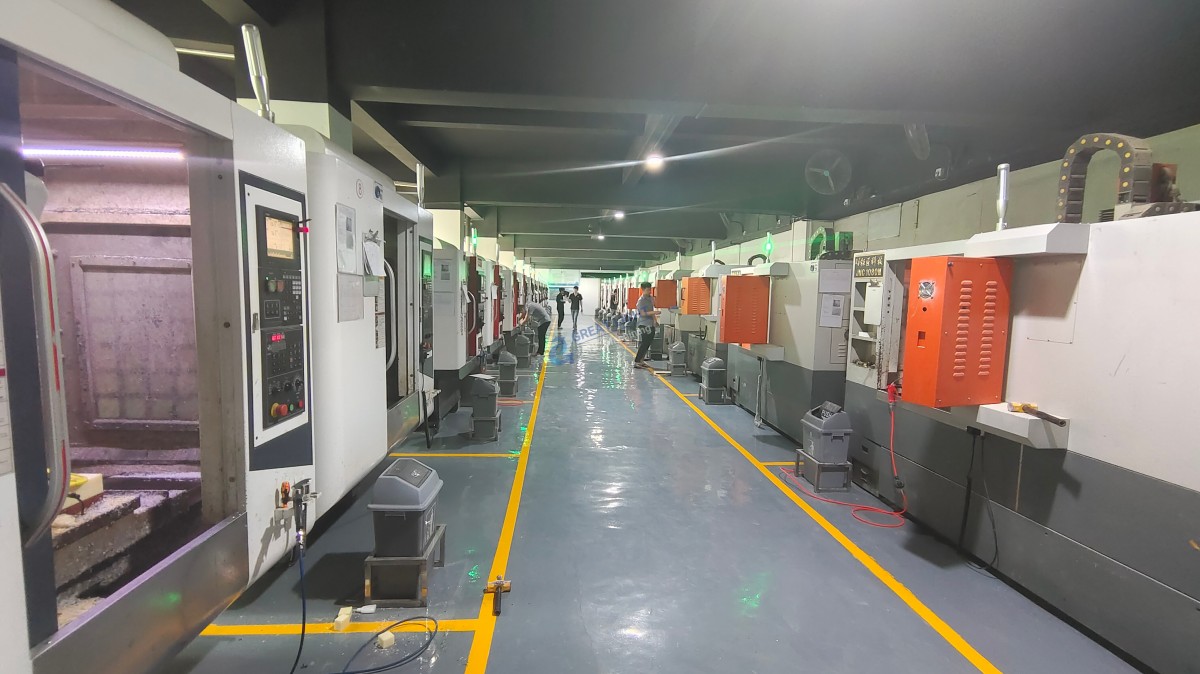
1. Advanced Equipment for Higher MRR: Our workshop is equipped with a range of high-performance 5-axis, 4-axis, and 3-axis CNC machining centers. The strategic use of 5-axis machining is a key speed multiplier. By machining complex features from multiple angles in one clamping, we eliminate up to 80% of the setup time required by traditional methods and often reduce total machining time by enabling more efficient tool access and orientation.
2. Deep Process Engineering & DFM: Our engineers don’t just run programs; they optimize them. We treat every project with a Design for Manufacturability (DFM) review as a standard, non-negotiable step. By advising on slight design tweaks—a radius increase here, a tolerance relaxation there—we can often unlock significantly faster machining strategies without compromising the part’s integrity.
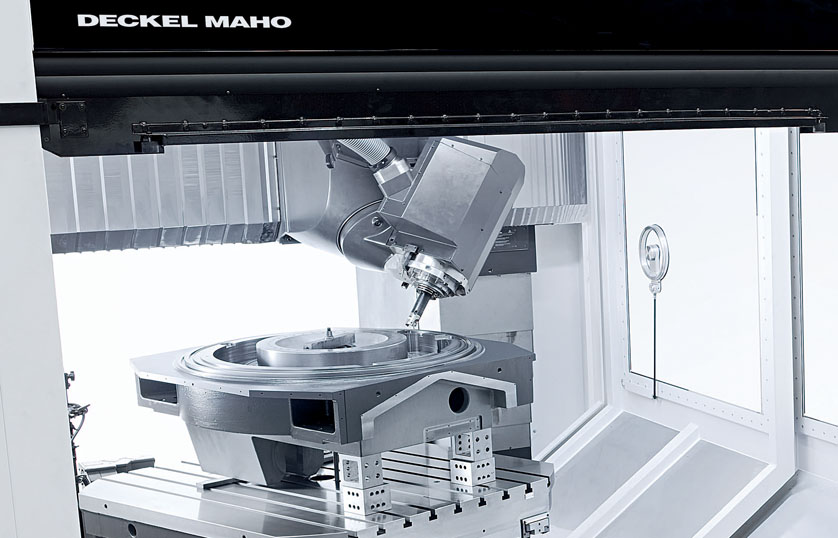
3. Integrated, One-Stop Workflow: Speed is lost at handoffs. Our integrated services—from machining to 3D printing for prototype validation, to sheet metal fabrication, to a full suite of surface finishing options—are managed under one roof. This seamless flow eliminates external vendor delays, simplifies communication, and gives us complete control over the schedule.
4. Rigorous Quality Systems for “Right-First-Time” Speed: Paradoxically, the pursuit of raw speed can lead to errors and rework, which is the ultimate slowdown. Our adherence to ISO 9001:2015, IATF 16949 (automotive), and ISO 13485 (medical) standards embeds quality checks at every stage. In-house precision measurement with CMMs and optical scanners ensures parts are correct before they leave, preventing the week-long delays of a rejected shipment.
5. Material & Tooling Mastery: We maintain an inventory of common stock materials and have partnerships with premium tooling suppliers. Understanding how to push a specific aluminum alloy or stainless steel to its optimal MRR, while managing heat and tool wear, comes from over a decade of focused experience.
Conclusion: The True Measure of Speed is Predictable, Quality-Conscious Velocity
So, how fast does a CNC machine work? The physical machine operates at parameters dictated by physics and its build. But the effective speed of a CNC machining service is a measure of its total engineering competency, process integration, and operational discipline.
It is the difference between a supplier who simply loads a program and hits “start,” and a partner like GreatLight CNC Machining Factory, who engages as an extension of your engineering team to architect the fastest, most reliable, and most cost-effective path from your CAD model to a batch of flawless parts in your hands. In today’s market, speed is not just about rapid spindle rotation; it’s about intelligent velocity across the entire manufacturing value chain.
Frequently Asked Questions (FAQ)
Q1: What is typically the fastest step in CNC machining?
A: The actual material cutting (milling/turning) is often the fastest mechanical phase for simple parts. However, for complex components, the advanced programming and simulation done for 5-axis CNC machining can save many hours of physical machining time, making the pre-production phase the most significant time-saver overall.
Q2: Does using a 5-axis machine always mean faster production?
A: Not always for very simple parts. However, for components with complex contours, undercuts, or features on multiple faces, a 5-axis machine is almost always faster. It reduces setups from perhaps 4-5 on a 3-axis machine to just one, slashing total handling, alignment, and machining time dramatically.
Q3: How much does material choice affect machining speed?
A: Profoundly. As a rule of thumb, non-ferrous metals like aluminum and brass can be machined 3-5 times faster than stainless steel, and up to 10 times faster than exotic alloys like Inconel or titanium, due to differences in hardness, heat conductivity, and work hardening tendencies.
Q4: Can I sacrifice some precision to get parts faster?
A: To a degree, yes. Specifying unnecessarily tight tolerances (e.g., ±0.025mm when ±0.05mm is sufficient) forces the machine to make slower, lighter finishing passes and may require slower processes like grinding. A clear dialogue with your manufacturer about critical vs. non-critical dimensions is key to optimizing for speed.
Q5: What’s the single biggest factor that delays CNC projects?
A: Incomplete or ambiguous design data. Providing a fully detailed 3D CAD model (STEP or IGES), a clear 2D drawing with critical tolerances called out, material specifications, and finish requirements from the outset prevents back-and-forth clarifications and ensures the manufacturing engine can start immediately. Partnering with a manufacturer like GreatLight CNC Machining Factory that offers proactive DFM analysis is the best safeguard against this common delay.
For more insights into the evolving landscape of precision manufacturing, connect with us on LinkedIn.



















