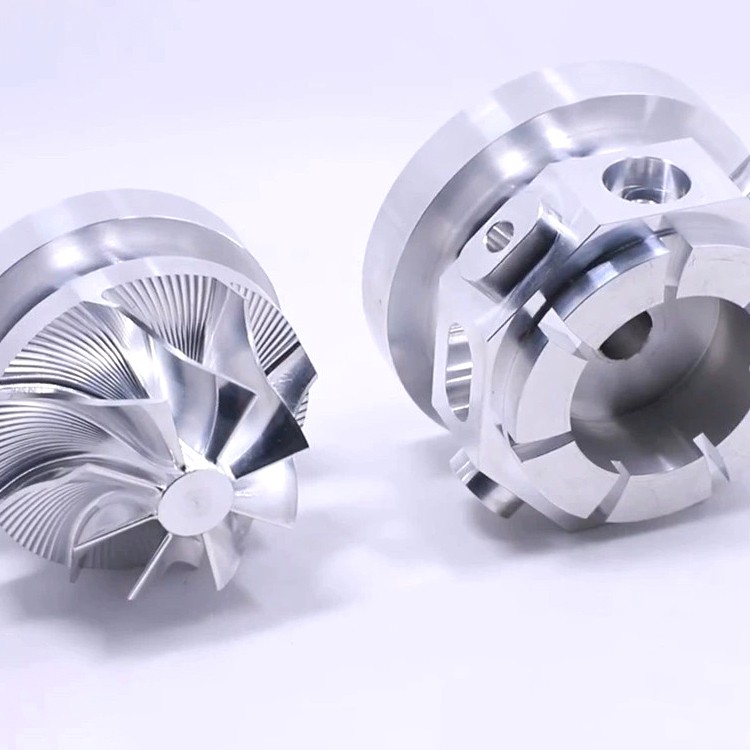
How Long Has CNC Machining Been Around? For procurement engineers, product designers, and manufacturing leaders, understanding the decades-long evolution of computer numerical control (CNC) machining isn’t just a lesson in history—it’s a window into the technological advancements that have shaped modern precision manufacturing. From its humble tape-driven beginnings to today’s smart, five-axis systems that can produce parts with tolerances as tight as ±0.001mm, CNC machining’s journey reflects the industry’s relentless pursuit of accuracy, efficiency, and flexibility.
How Long Has CNC Machining Been Around?
The Pre-CNC Era: Laying the Groundwork with Numerical Control (1940s–1950s)
Long before “CNC” became a household term in manufacturing, the concept of numerical control (NC) emerged as a solution to a critical World War II-era problem: producing complex aircraft parts quickly and with consistent precision. In the early 1940s, American engineer John Parsons, working with the U.S. Air Force, developed a method to use punched cards (inspired by early computing machines) to guide machine tools. This system replaced manual control, reducing human error and enabling the production of intricate components like helicopter rotor blades.
In 1952, the Massachusetts Institute of Technology (MIT) partnered with Parsons to build the first official NC milling machine. This machine used a paper tape with coded instructions to control its movements—each hole in the tape corresponded to a specific action, such as moving the spindle a precise distance or changing a tool. While primitive by today’s standards, this innovation marked the birth of automated precision machining, cutting down production time for complex parts by up to 90% compared to manual methods.
The Birth of CNC: Transitioning to Computerized Control (1960s–1970s)
The term “computer numerical control” (CNC) entered the lexicon in the 1960s, as early mainframe computers replaced the hardwired logic and paper tapes of NC machines. Unlike NC systems, which relied on fixed instructions stored on physical media, CNC machines used software to store and execute machining programs. This shift brought unprecedented flexibility: manufacturers could quickly reprogram machines to produce different parts without reconfiguring hardware, a game-changer for small-batch and custom production.
To better understand the evolution from NC to CNC, here’s a side-by-side comparison:
| Feature | Numerical Control (NC) (1940s–1960s) | Computer Numerical Control (CNC) (1960s–Present) |
|---|---|---|
| Instruction Storage | Punched paper tape or cards (fixed) | Digital software (easily modifiable) |
| Flexibility | Low—requires reconfiguring hardware for new parts | High—reprogram in minutes without hardware changes |
| Error Reduction | Moderate—still relies on manual tape handling | High—automated code generation reduces human error |
| Integration with Design | None—manual translation of drawings to tape | Seamless—CAD/CAM integration directly converts designs to code |
| Scalability | Limited to large-batch production | Suitable for small-batch, custom, and mass production |
By the late 1960s, mini-computers became more affordable, making CNC technology accessible to smaller workshops beyond large aerospace and automotive firms. Key advancements during this period included the development of CAD (Computer-Aided Design) software, which allowed designers to create digital part models directly, and CAM (Computer-Aided Manufacturing) software, which translated those models into machine-readable code. This integration of design and manufacturing laid the foundation for the seamless workflows we take for granted today.
Mainstream Adoption and Industry Expansion (1980s–1990s)
The 1980s saw CNC machining move from a specialized technology to a mainstream manufacturing staple, thanks to the rise of personal computers (PCs). PC-based CNC controllers were cheaper, easier to use, and more powerful than their mini-computer predecessors, democratizing access to precision machining for businesses of all sizes.
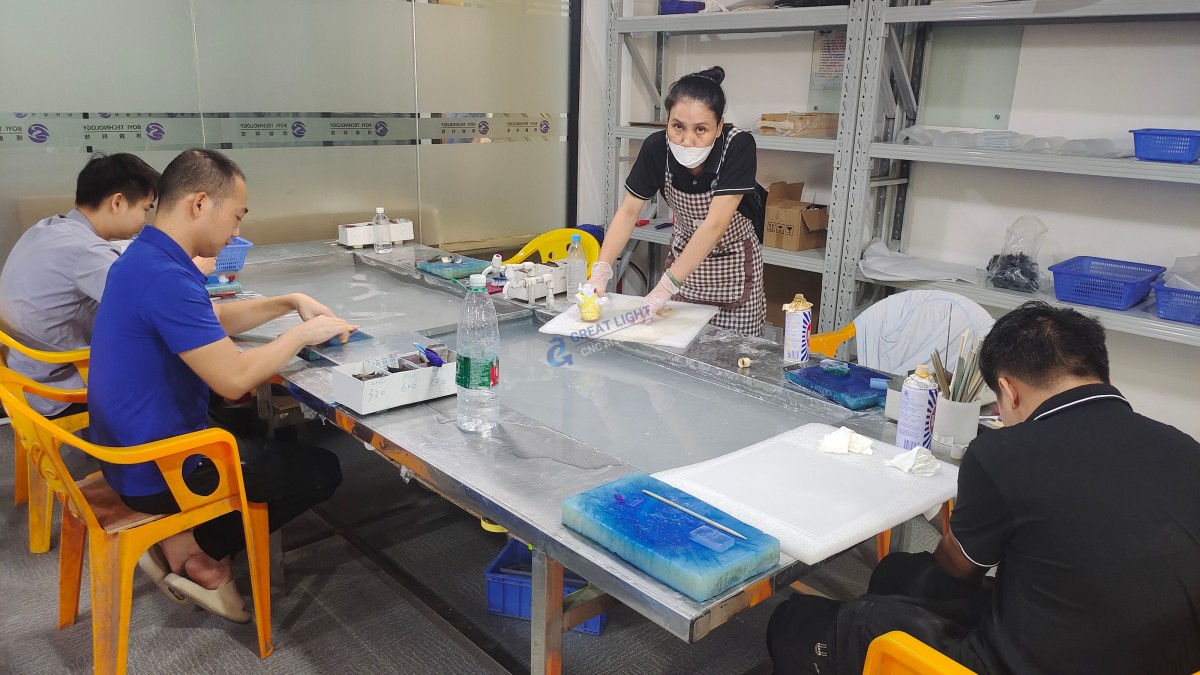
During this decade, industries ranging from medical device manufacturing to consumer electronics began relying on CNC machines to produce high-quality parts. For example, medical implant manufacturers used CNC lathes to create custom hip replacements with perfect fit, while electronics firms used CNC mills to produce intricate circuit board fixtures. By the 1990s, multi-axis CNC machines (like 3-axis and 4-axis systems) became common, enabling the production of complex, 3D-shaped parts in a single setup, reducing errors and improving efficiency.
21st Century: Smart, High-Precision CNC Machining (2000s–Present)
The 21st century has seen CNC machining evolve into a smart, interconnected technology that integrates with Industry 4.0 principles. Today’s most advanced systems, like five-axis CNC machining centers (learn more about our cutting-edge capabilities here), can move tools along three linear axes (X, Y, Z) plus two rotational axes (A, B), allowing the machine to approach the part from any angle. This eliminates the need for multiple setups, reduces production time, and ensures consistent precision across complex geometries—critical for parts like aerospace turbine blades, robotic joint components, and medical surgical instruments.
This era has also brought unprecedented precision: leading manufacturers like GreatLight Metal can achieve tolerances as tight as ±0.001mm, a level of accuracy that was unthinkable just a few decades ago. Additionally, CNC machining now works in tandem with additive manufacturing (3D printing) to offer hybrid solutions: 3D printing is used for rapid prototyping, while CNC machining finishes parts to meet strict precision requirements.
How GreatLight Metal Honors CNC’s Legacy While Pushing Boundaries
GreatLight Metal (founded in 2011 in Dongguan’s Chang’an Town, China’s “Hardware and Mould Capital”) builds on CNC machining’s 70-year legacy by combining decades of industry expertise with cutting-edge technology to deliver customized, high-precision solutions. Here’s how we translate this legacy into value for our clients:
1. Full-Process Chain Integration
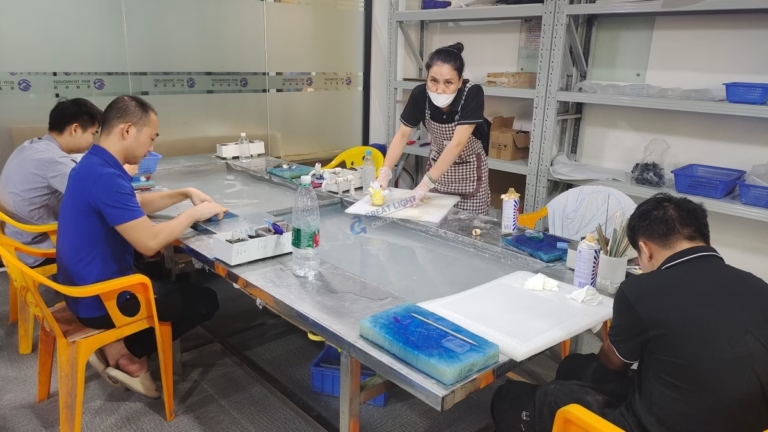
With three wholly-owned manufacturing plants spanning 7600 square meters, we offer end-to-end services that eliminate the need for multiple suppliers. Our capabilities include:
Precision CNC machining (3-axis, 4-axis, 5-axis)
Die casting and mold manufacturing
Sheet metal fabrication
3D printing (SLM, SLA, SLS) for metals (aluminum, titanium, mold steel) and plastics
One-stop surface post-processing (anodizing, powder coating, polishing, etc.)
This integration reduces lead times, ensures quality consistency, and simplifies project management for clients.
2. Uncompromising Precision and Compliance
We hold a suite of global certifications that validate our commitment to quality and compliance:
ISO 9001:2015 (general quality management)
IATF 16949 (automotive and engine component manufacturing)
ISO 13485 (medical device production)
ISO 27001 (data security for intellectual property-sensitive projects)
Our processes can achieve tolerances as tight as ±0.001mm, and we use in-house precision measurement tools (like coordinate measuring machines) to verify every part against client specifications.
3. Proven Track Record of Solving Complex Challenges
We’ve delivered critical solutions for clients across high-growth sectors:
Automotive: Produced complex e-housings for new energy vehicle prototypes in 7 days, enabling a client to accelerate their product launch.
Medical: Manufactured custom surgical instruments with biocompatible materials and strict ISO 13485 compliance, meeting FDA regulatory requirements.
Aerospace: Fabricated lightweight titanium alloy components with tight tolerances for satellite systems, passing rigorous aerospace testing standards.
Our after-sales guarantee—free rework for quality problems, full refund if rework is unsatisfactory—further underscores our commitment to client trust.
4. Scalable Production for Every Need
Whether you need a single prototype, a small batch of custom parts, or a large-scale production run, our 150-person team and 127 pieces of advanced equipment can scale to meet your needs. We specialize in rapid prototyping, with parts often delivered in 2–3 days, and can support volume production runs with consistent quality and on-time delivery.
Conclusion
How Long Has CNC Machining Been Around? For over 70 years, from its tape-driven NC origins to today’s smart five-axis systems, CNC machining has transformed precision manufacturing, enabling the production of parts that power everything from aircraft to medical devices. As a leader in modern CNC machining, GreatLight Metal builds on this legacy by combining decades of industry expertise with cutting-edge technology to deliver customized, high-precision solutions for clients worldwide. Whether you’re a startup developing a new product or an established enterprise scaling production, our end-to-end services and unwavering commitment to quality make us the ideal partner for your precision manufacturing needs. To learn more about our work and connect with our team, visit our LinkedIn profile.
Frequently Asked Questions (FAQ)
Q1: What’s the difference between NC and CNC machining?
A: NC (Numerical Control) is the predecessor to CNC, using fixed instructions stored on punched paper tapes or cards. CNC (Computer Numerical Control) uses digital software to store and execute programs, offering far greater flexibility, error reduction, and integration with modern design tools like CAD/CAM.
Q2: When did five-axis CNC machining become widely used?
A: Five-axis CNC machining was developed in the 1960s but didn’t become mainstream until the 2000s, as computer processing power increased and controllers became more affordable. Today, it’s a standard technology for producing complex parts in aerospace, automotive, and medical industries.
Q3: Can GreatLight Metal handle large-scale production runs, or only prototypes?
A: GreatLight Metal offers both rapid prototyping and volume production services. With three wholly-owned manufacturing plants and 150 employees, we can scale from single prototypes to mass production runs, maintaining consistent precision and quality across all volumes.
Q4: What materials can GreatLight Metal process with CNC machining?
A: We can process a wide range of materials, including aluminum alloys, stainless steel, titanium alloy, mold steel, and various engineering plastics. Our equipment and expertise allow us to handle both common and exotic materials, with custom solutions tailored to your specific material requirements.
Q5: How does GreatLight Metal ensure the precision of its CNC-machined parts?
A: We use a combination of high-precision equipment (capable of ±0.001mm tolerance), ISO 9001:2015 certified quality management processes, and in-house precision measurement tools (like coordinate measuring machines) to verify every part against your specifications. Our team of experienced engineers oversees each step of the machining process to catch and correct issues early.
Q6: What’s the typical lead time for CNC machining projects at GreatLight Metal?
A: Lead times vary depending on the complexity of the part, material, and order volume. For rapid prototypes, we can deliver parts in as little as 2–3 days. For small-batch production, lead times range from 5–10 days, while large-scale runs may take 2–4 weeks. We work closely with clients to align lead times with their project deadlines.