

When exploring the world of precision manufacturing, one of the most common and pivotal questions that arises is, “How much for a CNC machine?” The answer, much like the capabilities of the machines themselves, is complex and multi-faceted. Whether you are a startup engineer sourcing parts, a procurement manager building a supply chain, or a business owner considering in-house production, understanding the cost structure is crucial for making informed financial and strategic decisions. The price is not merely a number; it reflects a combination of technological capability, precision grade, operational scale, and long-term value.
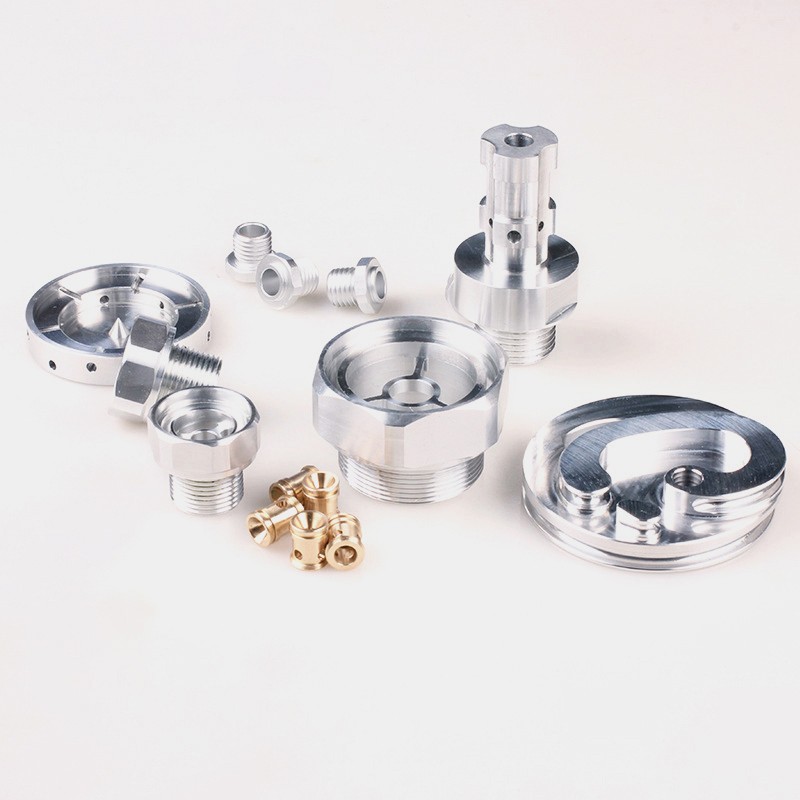
For clients seeking precision parts machining and customization, the cost equation splits into two primary paths: the capital expenditure (CAPEX) of purchasing and operating your own CNC equipment, and the operational expenditure (OPEX) of outsourcing to a professional machining service provider like GreatLight Metal Tech Co., LTD. This article will dissect both perspectives to give you a comprehensive view.
H2: Decoding the Investment: The Cost of Owning a CNC Machine
Purchasing a CNC machine is a significant investment. The price range is exceptionally broad, from tens of thousands to millions of dollars, dictated by several core factors.
H3: 1. Machine Type and Configuration
The type of CNC machine is the primary cost driver.
3-Axis CNC Mills: The most common entry point. Prices can range from \$50,000 to \$200,000+ for industrial-grade models from brands like Haas or DMG MORI. Smaller, benchtop models for prototyping can start under \$10,000.
CNC Lathes: Similar price range to 3-axis mills, heavily dependent on swing diameter and bar capacity.
5-Axis CNC Machines: This is where capability and cost jump dramatically. A standard 5-axis machining center typically starts around \$200,000 and can easily exceed \$1,000,000 for large-format, high-precision models from makers like Hermle or GROB. The ability to machine complex geometries in a single setup justifies the premium for aerospace, medical, and advanced automotive applications.
Multi-Tasking Mill-Turn Centers: These combine milling and turning, representing a top-tier investment often starting at \$300,000 and going well beyond.
H3: 2. Key Specifications That Influence Price
Work Envelope (Size): A machine that can handle a 4000mm part commands a vastly higher price than one for 400mm parts.
Precision and Accuracy: The quality of linear guides, ball screws, spindle thermal stability, and the overall construction rigidity define precision. Machines capable of holding tolerances under ±0.001mm are in the highest price bracket.
Spindle Power and Speed: High-speed spindles (30,000+ RPM) for machining aluminum or composites, or high-torque spindles for tough alloys, add cost.
Control System: Fanuc, Siemens, or Heidenhain controls are industry standards, with advanced versions offering more programming flexibility and smoother motion control.
Automation Options: Pallet changers, robotic part loading/unloading, and in-process probing systems significantly increase initial cost but boost productivity.
H3: 3. The Often-Overlooked “Total Cost of Ownership” (TCO)
The purchase price is just the beginning. A comprehensive budget must include:
Installation & Foundation: Requires a stable, level foundation and often special power hookups.
Tooling & Fixturing: A basic tool library can cost \$20,000 to \$50,000. High-performance carbide end mills and specialized fixtures are ongoing expenses.
Software: CAD/CAM software licenses (e.g., Mastercam, Siemens NX) are a critical and recurring cost.
Personnel: Hiring and training skilled CNC programmers and operators is a major long-term investment.
Maintenance & Downtime: Regular servicing, coolant management, and unexpected repairs add to operational costs.
Floor Space & Utilities: These machines consume substantial factory space and power.
For most businesses focused on product development rather than machine operation, these hidden costs make outsourcing to an established expert a more economical and lower-risk path.
H2: The Service-Based Perspective: Cost of CNC Machined Parts
For the majority of our clients, the more relevant question is, “How much will it cost to have my parts CNC machined?” This model converts large capital outlays into predictable per-part or per-project costs.
H3: Factors Determining Your Project Quote
A professional manufacturer like GreatLight Metal evaluates these elements to provide an accurate quote:
Part Design & Complexity:
Geometry: Simple brackets are low-cost. Parts with deep pockets, thin walls, complex contours, or requiring 5-axis CNC machining to avoid multiple setups are more expensive.
Tolerances: Tighter tolerances (e.g., ±0.025mm vs. ±0.001mm) require more precise machines, slower machining speeds, and rigorous inspection, increasing cost.
Design for Manufacturability (DFM): A design optimized for machining can drastically reduce cost. Experienced engineers provide DFM analysis to suggest modifications that save money without compromising function.
Material Selection:
Raw Material Cost: Aluminum 6061 is relatively economical. Titanium (Ti6Al4V), stainless steels (e.g., 316L), or engineering plastics like PEEK are more expensive.
Machinability: Materials that are hard, abrasive, or gummy (like some stainless steels or copper alloys) wear tools faster and require specific strategies, increasing machining time and cost.
Quantity & Volume:
Prototyping (1-10 pcs): Higher cost per part due to setup and programming time amortized over few units.
Low-Volume Production (10-500 pcs): Cost per part decreases as setup costs are spread.
High-Volume Production (500+ pcs): Manufacturers may optimize processes further or propose alternative methods like die casting for the best economy.
Post-Processing & Finishing:
Basic deburring is often included. Additional finishes like anodizing, powder coating, polishing, or plating are quoted as separate line items.
H2: GreatLight Metal’s Value-Driven Approach to Cost Efficiency
Choosing a partner like GreatLight Metal is not just about getting a quote; it’s about accessing a system designed to optimize your total cost and accelerate time-to-market.
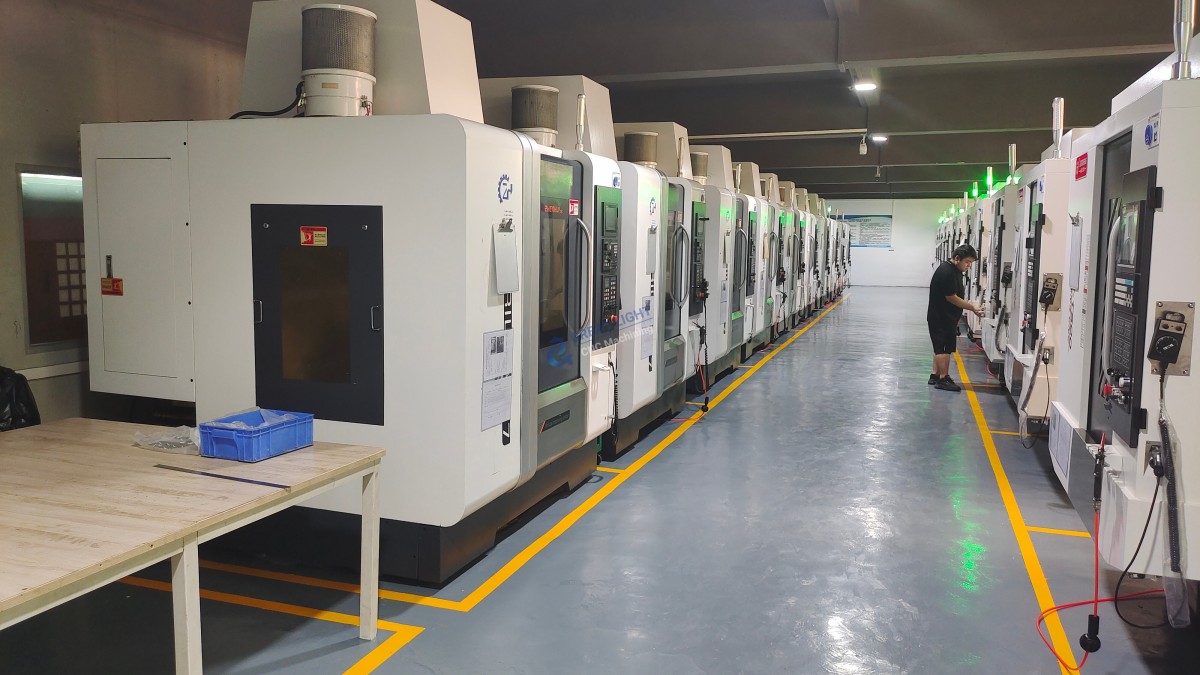
Elimination of Capital Investment: You gain immediate access to a full fleet of advanced equipment, including high-precision 5-axis CNC machines, without the associated CAPEX and TCO.
Deep Engineering Partnership: Our engineers work with you from the DFM stage to streamline the manufacturing process, select the most cost-effective materials, and suggest tolerance relaxations where possible—all to reduce your cost without sacrificing quality.
Integrated One-Stop Service: By consolidating CNC machining, 3D printing, sheet metal work, and surface finishing under one roof, we eliminate the logistical cost, communication overhead, and quality variance of managing multiple vendors.
Predictable Quality, Zero Hidden Cost: Our ISO 9001:2015 certified quality management system ensures parts are right the first time, preventing the immense hidden costs of delays, rework, and failed inspections down your supply chain.
Conclusion: Beyond the Sticker Price
So, “how much for a CNC machine?” The true cost extends far beyond the initial purchase order. It encompasses the total investment in technology, expertise, time, and risk management. For businesses focused on innovation and bringing high-quality products to market, partnering with an authoritative, full-service manufacturer like GreatLight Metal provides a clear financial advantage. It transforms a variable, high-overhead capital expense into a controlled, scalable, and expert-driven operational service. You pay for precision, reliability, and partnership, enabling you to invest your capital and energy into design, development, and growth.
Frequently Asked Questions (FAQ)
Q1: What is the cheapest type of CNC machine to buy for a small workshop?
A: For basic prototyping and small parts, a benchtop 3-axis CNC mill from brands like Tormach or a small CNC lathe can be an entry point, with prices starting between \$5,000 and \$20,000. However, their precision, durability, and capability are limited compared to industrial machines.
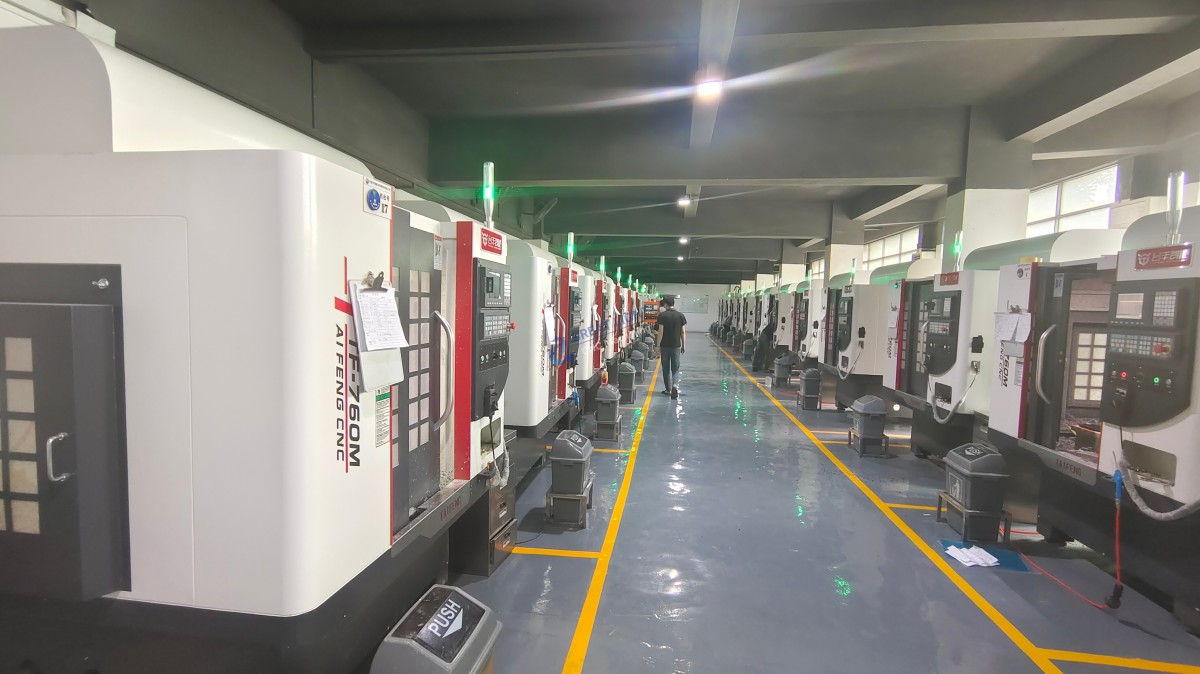
Q2: Why is 5-axis CNC machining so much more expensive than 3-axis?
A: The cost difference lies in the immensely more complex machine construction, advanced control software, and required programming expertise. The value, however, is unparalleled: it allows for machining intricate geometries in one setup, which improves accuracy, reduces lead time, and often eliminates the need for custom fixtures, which can make it more cost-effective for complex parts in the long run.
Q3: Are there hidden costs when outsourcing CNC machining?
A: With a transparent partner, there shouldn’t be. Reputable manufacturers like GreatLight Metal provide detailed quotes that break down costs for machining, materials, and specified post-processing. “Hidden costs” typically arise from design changes after quoting, unrealistic tolerance requirements not discussed upfront, or choosing a vendor with poor quality control leading to rejected parts.
Q4: How does material choice most significantly impact the final part cost?
A: Material impacts cost in three ways: 1) Raw Material Price: The cost per kilogram of the stock. 2) Machinability: Harder materials slow down machining speeds, increase tool wear, and require more expensive tools. 3) Scrap Rate: For expensive materials, efficient nesting and programming to minimize waste is critical.
Q5: What’s the single most effective way to reduce my CNC machining costs?
A: Engage in Design for Manufacturability (DFM) consultation early. Allowing the manufacturer’s engineers to review your design before finalizing can lead to suggestions—such as adjusting internal corner radii, simplifying undercuts, or standardizing hole sizes—that dramatically reduce machining time and difficulty without affecting the part’s performance.



















