
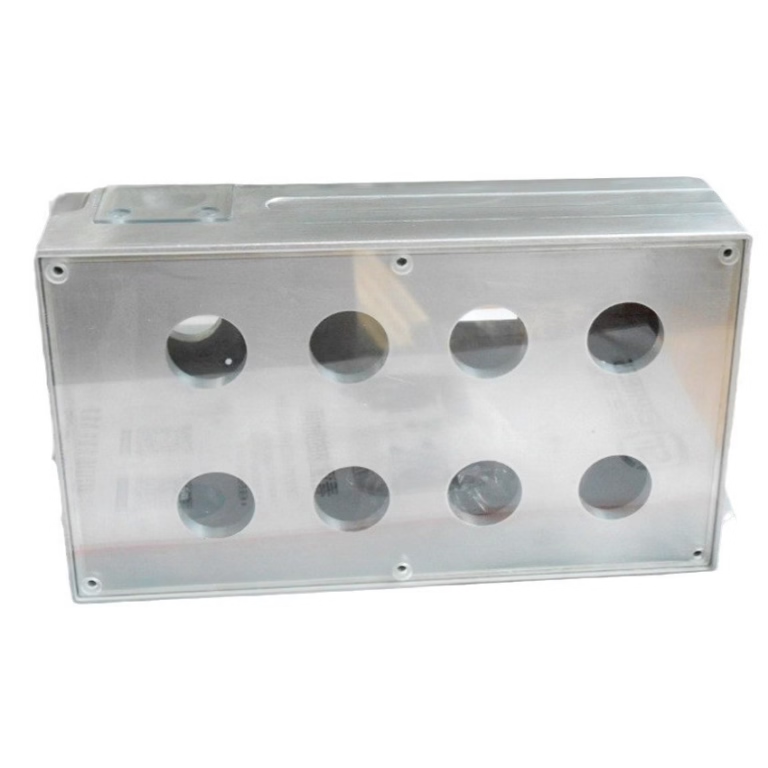
If you’ve ever held a precision-machined part that felt unbelievably smooth, looked impeccably uniform, or possessed a striking aesthetic finish, you’ve experienced the magic of professional CNC machining finishing services. For clients in the precision parts machining and customization field, the journey from a raw machined block to a flawless final component is where true value is added and critical specifications are met. As a senior manufacturing engineer, I often emphasize that machining is only half the battle; the finishing process is what transforms a “part” into a “product.”
Many assume that once a part comes off the CNC machine, the job is done. In reality, this is where a meticulous, science-driven phase begins. The right finishing service can enhance dimensional accuracy, improve functional performance, extend service life, and meet stringent cosmetic requirements. Conversely, an inappropriate or poorly executed finish can undermine even the most precise machining effort, leading to part failure, assembly issues, or customer rejection.
Why Finishing Services Are Non-Negotiable in Precision Manufacturing
The primary outputs from a CNC machine—milled, turned, or drilled surfaces—inevitably bear witness marks of the fabrication process. These include:
Tool Marks and Cusps: Visible lines left by the cutting tool’s path.
Burrs and Sharp Edges: Unwanted raised material or rough edges, especially at intersections.
Surface Residual Stresses: Micro-stresses induced during cutting that can affect dimensional stability.
Uncontrolled Surface Roughness (Ra): While machining can achieve a specific Ra, further refinement is often required for sealing, friction, or coating adhesion.
CNC machining finishing services systematically address these issues. The goals are multifaceted: achieving a specified surface texture (Ra, Rz), deburring to ensure safety and fit, applying protective or decorative coatings, and preparing surfaces for further assembly or painting. This process is not cosmetic vanity; it is engineering necessity. A hydraulic valve body, for instance, requires an ultra-smooth bore finish to prevent leakage, while an aerospace bracket might need a specific anodized layer for corrosion resistance and electrical insulation.
A Deep Dive into Common Finishing Techniques
Choosing the correct finishing method is a critical engineering decision, dependent on material, part geometry, function, and final application. Let’s explore the most prevalent techniques.
H2: Mechanical & Abrasive Finishing Methods
These methods physically alter the surface by removing small amounts of material through abrasion.
H3: Sanding and Polishing
Process: A progressive series of abrasives (sandpaper, polishing compounds) are used manually or with automated equipment to remove tool marks and create a smooth, often reflective, surface.
Best For: Cosmetic parts, molds, and surfaces requiring a high-gloss aesthetic finish. Common on stainless steel, aluminum, and plastics.
H3: Vibratory & Barrel Tumbling
Process: Parts are placed in a vibrating or rotating container with abrasive media. The constant motion causes the media to gently abrade the parts, removing burrs and radiusing edges uniformly.
Best For: High-volume deburring of small to medium-sized parts. Excellent for achieving a consistent edge break but less suitable for preserving sharp corners or critical dimensions.
H3: Blasting (Bead, Sand, Shot)
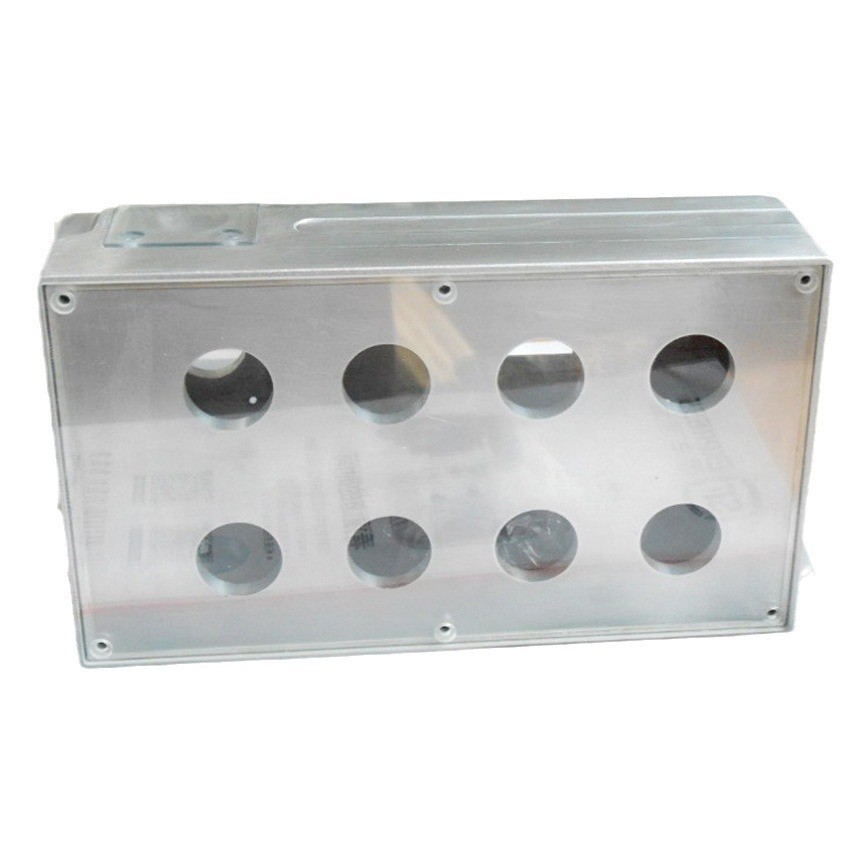
Process: Propelling fine media at high velocity against the part surface. Media type (glass bead, aluminum oxide, plastic) determines the outcome—from a matte, clean finish to a peened surface that induces compressive stress.
Best For: Surface cleaning, preparing for coating (creating anchor profile), achieving a uniform matte texture, or shot peening to enhance fatigue life.
H2: Chemical & Electrochemical Finishing Methods
These methods alter the surface through chemical reaction or dissolution, often providing functional benefits beyond aesthetics.
H3: Anodizing (for Aluminum & Titanium)
Process: An electrolytic passivation process that thickens the natural oxide layer on the metal surface. It creates a hard, wear-resistant, and corrosion-resistant finish that can also be dyed in various colors.
Types: Type II (standard), Type III (hard coat for extreme wear), and Chromic Acid Anodize.
Critical Consideration: Dimensional growth occurs; critical tolerances must be machined with anodizing thickness in mind.
H3: Passivation (for Stainless Steel)
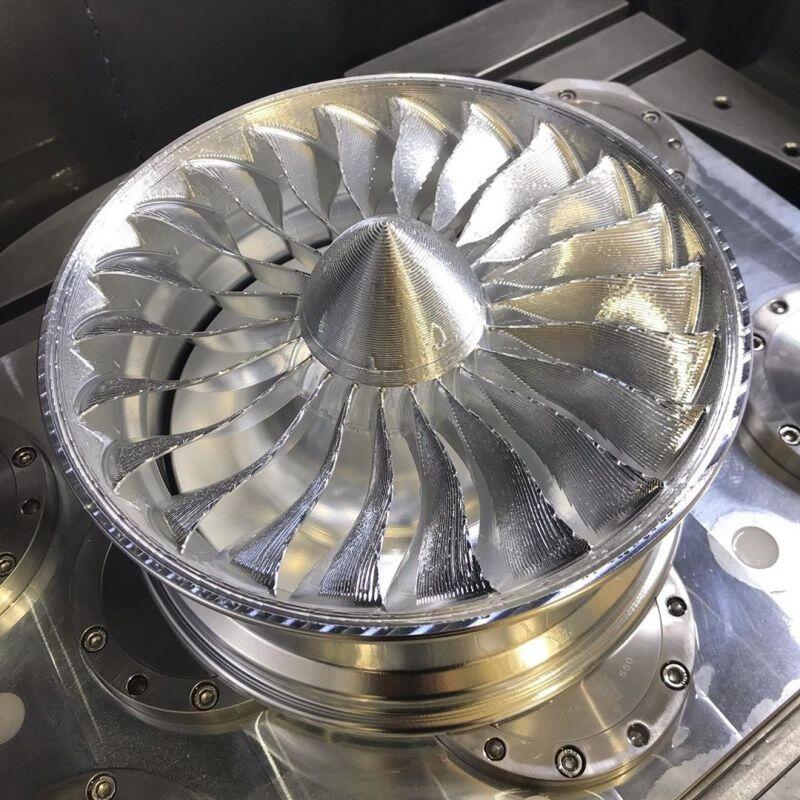
Process: A chemical bath (typically nitric or citric acid) that removes free iron particles from the surface, restoring the stainless steel’s inherent chromium oxide layer to maximize corrosion resistance.
A Must-Do: For any stainless steel part used in medical, food, marine, or high-purity applications.
H3: Plating (Electroplating & Electroless)
Process: Depositing a thin layer of another metal (e.g., nickel, chrome, zinc, gold) onto the part surface via an electrochemical (electroplating) or autocatalytic (electroless) reaction.
Benefits: Enhanced corrosion protection, increased surface hardness, improved solderability, or reduced friction (e.g., electroless nickel with PTFE).
H2: Coatings & Advanced Surface Treatments
These add a new layer of material or transform the surface layer for extreme performance.
H3: Powder Coating
Process: A dry, free-flowing polymer powder is electrostatically applied and then cured under heat to form a durable, thick, and decorative layer.
Best For: Excellent corrosion and impact resistance. Available in limitless colors and textures (gloss, matte, textured).
H3: Physical Vapor Deposition (PVD)
Process: A vacuum chamber process where a thin film of metal (like titanium nitride – TiN, or chromium nitride – CrN) is vaporized and deposited onto the part.
Benefits: Extremely hard, wear-resistant coatings with decorative colors (gold, black, bronze). Maintains precise dimensions as coating is very thin (microns).
H3: Heat Treating & Case Hardening
Process: While not a “surface finish” in the traditional sense, processes like carburizing, nitriding, or induction hardening alter the surface metallurgy to increase hardness and wear resistance while keeping a tough core.
Critical for: Gears, shafts, and tooling components subjected to high contact stress.
H2: The Material-Finish Matrix: A Guide to Optimal Pairings
Selecting a finish without considering the base material is a recipe for failure. Here’s a simplified guide:
| Material | Recommended Finishes for Function | Common Aesthetic/Protective Finishes |
|---|---|---|
| Aluminum | Anodizing (Type III), Chemical Film (Alodine), Powder Coat | Anodizing (colored), Polishing, Brushing |
| Stainless Steel | Passivation, Electropolishing, PVD | Bead Blasting, Mirror Polishing, Brushing |
| Steel / Carbon Steel | Zinc Plating, Black Oxide, Powder Coat, Nickel Plating | Powder Coating (any color), Chrome Plating |
| Titanium | Anodizing (can produce vibrant colors without dye), PVD | Anodizing (for color), Bead Blasting |
| Plastics (e.g., Delrin, Nylon) | – | Vibration Tumbling (for deburr), Light Media Blasting, Painting |
H2: Quality Control in Finishing: Beyond the Naked Eye
In our facility, finishing is not an artisanal guesswork but a controlled engineering process. Verification includes:
Surface Roughness Testing: Using profilometers to quantitatively measure Ra, Rz, and other parameters against the print.
Coating Thickness Measurement: Utilizing magnetic, eddy current, or ultrasonic gauges to ensure plating or anodizing meets specified thickness (e.g., mils or microns).
Adhesion Testing: Employing cross-hatch or tape tests to verify coating adhesion.
Salt Spray Testing (ASTM B117): Accelerated corrosion testing to validate protective finishes like plating or anodizing for specified hours.
Visual Inspection under Controlled Lighting: Meticulous checks for uniformity, color match, and defects.
H2: Choosing Your Finishing Partner: Key Questions to Ask
Not all machine shops have equal finishing capabilities. When sourcing, ask your supplier:
Do you perform finishing in-house or outsource it? In-house control, like what we maintain at GreatLight CNC Machining Factory{:target=”_blank”}, typically leads to better quality control, faster turnaround, and clearer accountability.
Can you provide material certification and process specifications (e.g., MIL, AMS, ASTM standards) for the finishes?
How do you handle masking for selective area finishing? Precision in masking is crucial for parts that require different finishes on specific features.
What is your quality control protocol for finished parts? Request specific data from their test reports.
Can you provide pre-finish and post-finish dimensional reports? This is vital for finishes like anodizing that add thickness.
Conclusion: The Final, Defining Step
In the competitive world of custom precision parts, CNC machining finishing services are the definitive step that separates adequate suppliers from exceptional partners. It’s the phase where engineering intent is fully realized, ensuring functionality, durability, and presentation align perfectly with design. It requires a blend of advanced equipment, deep material science knowledge, and rigorous process control.
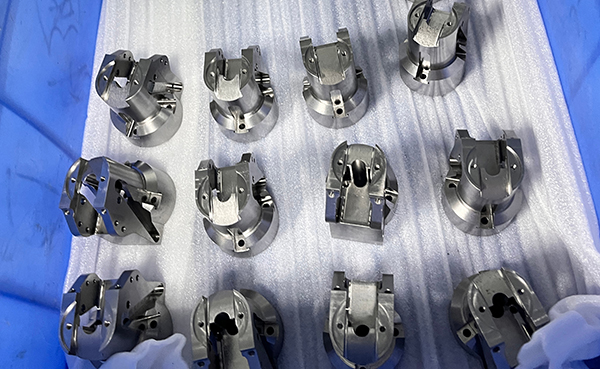
For projects where the finish is as critical as the form—whether it’s a medical implant requiring a biocompatible polish or an automotive component needing a wear-resistant coating—partnering with a manufacturer that integrates precision machining with expert finishing under one roof is paramount. This integrated approach, built on a foundation of expertise and certified quality systems, ensures a seamless journey from your digital design to a perfect physical part, ready to perform in its intended application. This holistic capability is what defines a true leader in the field of precision manufacturing. To explore how such an integrated approach can benefit your next project, consider engaging with industry leaders who demonstrate their expertise on platforms like professional networks.



















