When discussing CNC machining, one of the most fundamental questions that arises for engineers, designers, and procurement specialists is: How many axis are there in CNC machine? The answer is not a single number but a spectrum that defines a machine’s capability, complexity, and the types of geometries it can produce. At its core, the number of axes refers to the directions in which the cutting tool or the workpiece can move. Understanding this axis landscape is crucial for selecting the right manufacturing partner and process for your precision components.
This article will demystify the axis configurations, from the foundational 3-axis to the sophisticated 5-axis and beyond, providing you with the insights needed to make informed decisions for your next project.
H2: Decoding the Axis: The Foundation of CNC Movement
In CNC (Computer Numerical Control) machining, an “axis” represents a direction of linear or rotary movement. The basic three linear axes are universally defined:
X-axis: Typically left to right movement.
Y-axis: Typically forward and backward movement.
Z-axis: Typically up and down movement.
The combination and addition of rotary axes (usually designated as A, B, and C) around these linear axes are what create different machine configurations. More axes generally mean greater geometric freedom, allowing for more complex parts to be machined in a single setup, which translates to higher precision, better surface finishes, and reduced production time.
H3: 3-Axis CNC Machining: The Workhorse of the Industry
3-axis CNC machining is the most common and widely used configuration. The cutting tool can move in the three linear directions (X, Y, Z) relative to a workpiece that is fixed in place.
Capabilities: Ideal for machining prismatic parts—components with features on one primary face or sides that are perpendicular to each other. Think of engine blocks, simple brackets, gears, and panels.
Advantages: Lower machine cost, simpler programming, wide availability, and highly efficient for a vast array of standard parts.
Limitations: To machine multiple sides of a part, the workpiece must be manually repositioned and re-fixtured. This introduces potential alignment errors and increases total processing time. It cannot machine complex, organic, or undercut features in one setup.
For many applications, 3-axis machining remains the most cost-effective and practical solution. It forms the backbone of high-volume production for less geometrically complex components.
H3: 4-Axis CNC Machining: Introducing Rotary Freedom
A 4-axis CNC machine adds one rotary axis to the three linear movements. Most commonly, this is an A-axis (rotating around the X-axis) or a C-axis (rotating around the Z-axis). The workpiece is mounted on a rotary table that can rotate automatically during the machining process.
Capabilities: This allows for machining on four sides of a part in a single setup. It is perfect for cylindrical parts, engraving around a contour, or cutting features on the sides of a workpiece, such as camshafts, helical gears, or parts with continuous peripheral details.
Advantages: Significantly reduces setup time compared to 3-axis for parts requiring multiple-side access. Improves accuracy by maintaining a single datum. Enables the creation of more complex geometries.
H2: 5-Axis CNC Machining: The Pinnacle of Simultaneous Precision
This brings us to the domain of advanced manufacturing, where 5-axis CNC machining reigns supreme. A 5-axis machine incorporates two rotary axes in addition to the three linear ones. Common configurations are 3+2 axis (positional) and continuous (simultaneous) 5-axis.
3+2 Axis Machining: The tool is positioned at a fixed angle using the two rotary axes, and then machining proceeds with the three linear axes. It’s like having a highly precise, programmable tilting vise. This is excellent for accessing complex angles without full simultaneous motion.
Continuous 5-Axis Machining: All five axes can move simultaneously and in coordination throughout the cutting process. This is the true power of 5-axis CNC machining, allowing the tool to maintain the optimal orientation to the workpiece surface at all times.
Why is this transformative for precision parts?
Single-Setup Complexity: Machine incredibly complex, organic shapes (like impellers, turbine blades, aerospace structures, and medical implants) in one clamping. This eliminates cumulative errors from multiple setups.
Superior Surface Finish & Tool Life: The tool can be kept at an ideal cutting angle, using the side of the cutter more effectively, which leads to better surface quality and extends tool life.
Access to Difficult Geometries: It can machine undercuts and features that are impossible to reach with a 3 or 4-axis machine.
Faster Material Removal: Using shorter, more rigid cutting tools at optimal angles allows for higher feed rates.
This is where partnering with a specialist like GreatLight Metal provides a decisive edge. Our advanced 5-axis CNC machining services are not just about owning the equipment; it’s about the deep engineering expertise to program, fixture, and optimize the process for your most challenging parts, ensuring that the theoretical advantages of 5-axis technology are fully realized in your delivered components.
H3: Mill-Turn Centers and Beyond: The Multi-Tasking Machines
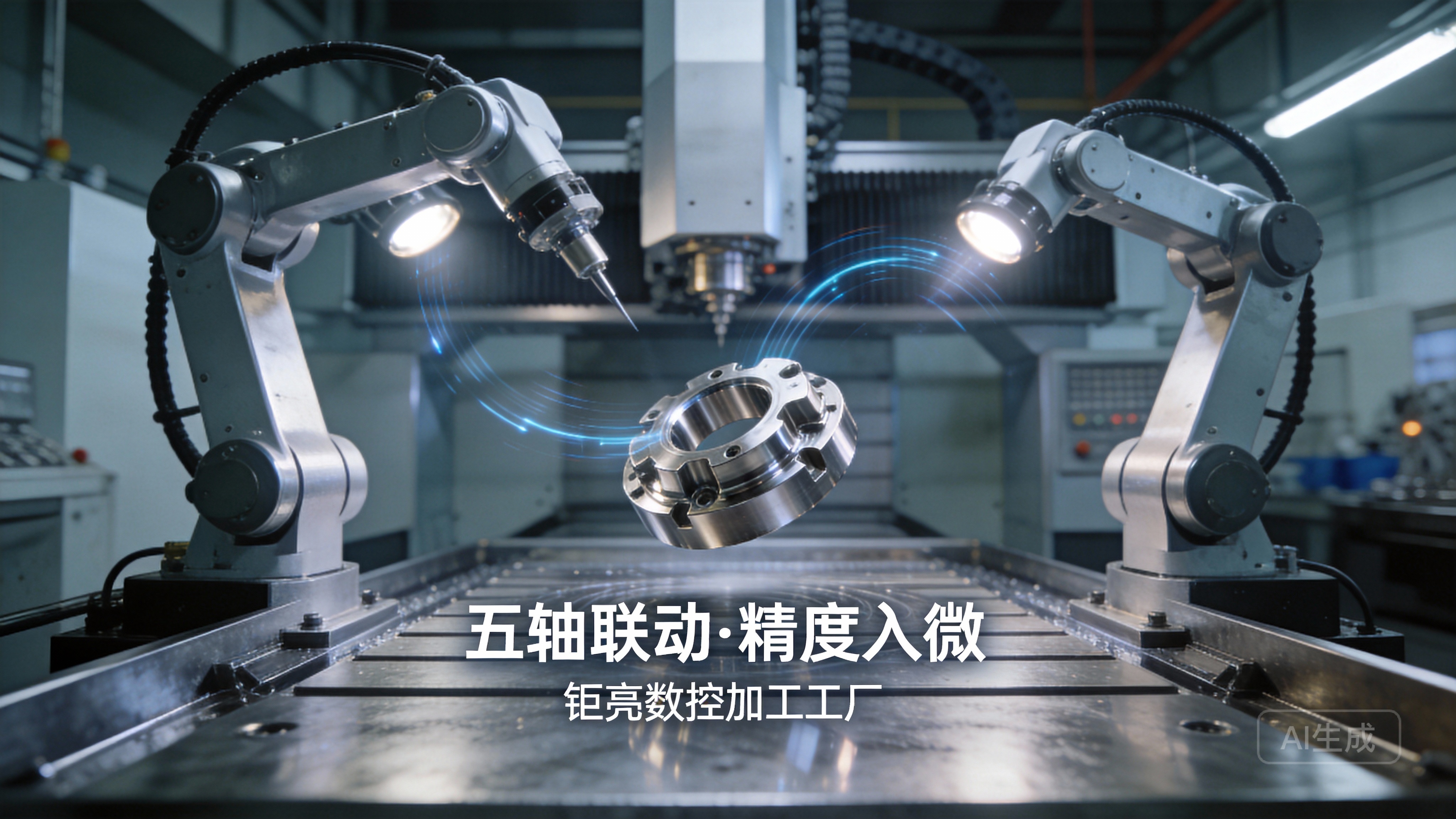
While 5-axis is often considered the peak, technology continues to evolve. Mill-Turn Centers (often 5-axis lathes with live tooling) combine the capabilities of a lathe (rotating the workpiece) and a milling machine (moving the tool), effectively operating with 7 or more axes of motion (X, Y, Z, C on the spindle, plus often a second spindle and driven tools). These machines can produce a complete, highly complex part from bar stock in one operation.
There are also specialized machines with more than 5 axes for particular industries, but for over 95% of high-precision custom machining applications, the progression from 3-axis to 5-axis covers the necessary capabilities.
Conclusion: How Many Axis Are There In CNC Machine?
So, how many axis are there in CNC machine? The practical answer for the precision manufacturing industry ranges from 3 to 5 primary axes, with multi-tasking machines incorporating additional coordinated movements. The choice isn’t about chasing the highest number, but about meticulously matching the axis capability to your part’s geometry, tolerance requirements, and production goals.
For prototypes and parts with simple geometry, 3-axis is efficient. For parts with rotational symmetry or features on multiple sides, 4-axis adds valuable efficiency. However, for truly complex, monolithic, and high-precision components where accuracy, surface finish, and lead time are critical, 5-axis CNC machining is indispensable. It represents a strategic manufacturing capability that accelerates innovation and solves problems that other methods cannot.
When your designs push the boundaries of complexity, choosing a partner with proven expertise in advanced multi-axis machining is crucial. It is the difference between a compromised design and a perfectly realized component.
FAQ: Frequently Asked Questions
Q1: Is 5-axis machining always better than 3-axis?
A: Not always. “Better” depends on the part. 5-axis is superior for complex geometries but comes with higher machine hourly rates and more complex programming. For simple, prismatic parts, 3-axis machining is far more cost-effective and faster to program. The key is to use the right tool for the job.
Q2: Does more axes mean higher precision?
A: Not inherently. The precision of a machine is determined by its mechanical construction, feedback systems, and thermal stability. However, 5-axis machining can achieve higher effective precision on complex parts by completing them in one setup, eliminating the errors that accumulate from multiple fixturings required in 3-axis machining.
Q3: What materials can be processed with multi-axis CNC machines?
A: Advanced multi-axis machines like those at GreatLight Metal can process virtually all machinable engineering materials. This includes metals (aluminum, stainless steel, titanium, brass, alloy steels), plastics (PEEK, Delrin, Nylon), and composites. The process is defined by the geometry, not the material.
Q4: How do I decide if my part needs 4-axis or 5-axis machining?
A: Consider these questions:
Does my part require features on more than one side? (If yes, consider 4 or 5-axis).
Are the features on angled surfaces, or is the part based on a complex, free-form shape? (If yes, you likely need 5-axis).
Is the part cylindrical with features around its circumference? (4-axis may be sufficient).
Are there deep cavities, undercuts, or areas with extremely limited tool access? (This strongly indicates a need for 5-axis). Consulting with an application engineer at a manufacturing service is the best way to determine this.
Q5: What file format is best for quoting and programming multi-axis parts?
A: A 3D CAD model in a solid format (such as .STEP or .IGES) is essential. This allows the manufacturer to properly analyze geometry, plan toolpaths, and identify potential machining challenges. 2D drawings remain important for specifying critical tolerances, finishes, and inspection criteria.
For further insights into our capabilities and industry applications, feel free to connect with our professional network on LinkedIn{:target=”_blank”}.