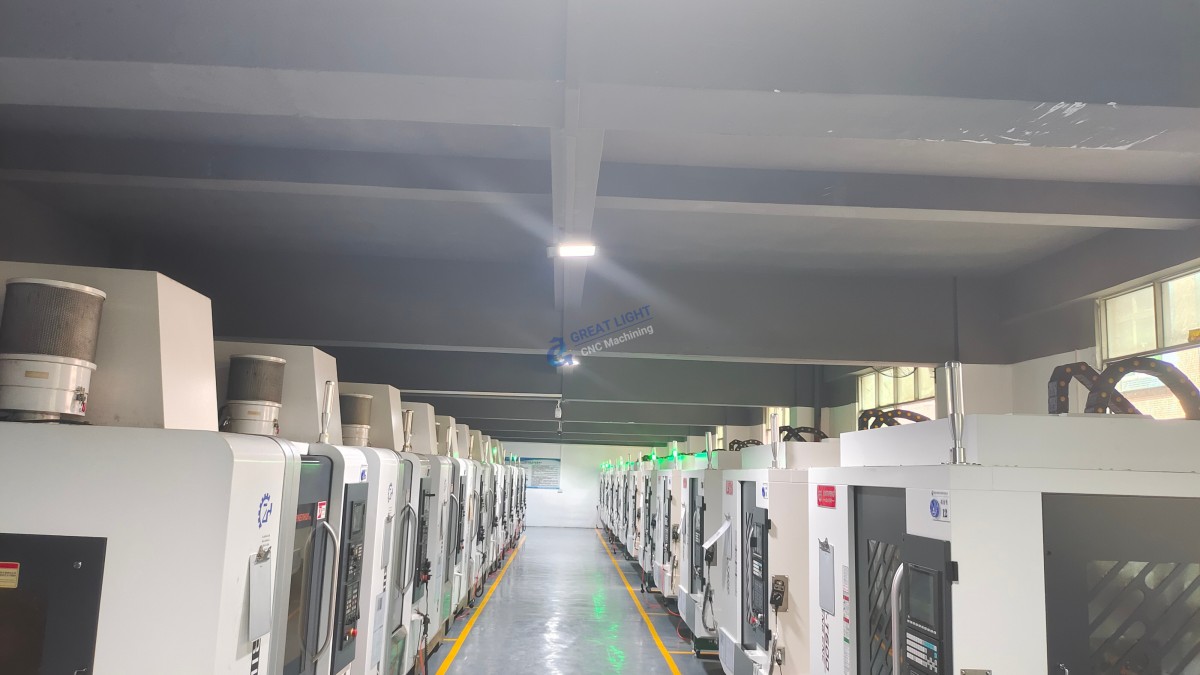
To the untrained eye, a modern CNC machining center is a marvel of automated production—a sophisticated block of metal and electronics that seamlessly carves raw material into finished parts with minimal human intervention. Yet, this perception overlooks the critical human intelligence that breathes life into the machine. The true conductor of this symphony of precision is the CNC Machine Programmer. Far more than just a coder, this professional is the essential bridge between digital design and physical reality, transforming complex engineering blueprints into flawless, executable machine instructions. In the realm of precision parts machining and customization, the expertise of the programmer is often the single most decisive factor between a successful project and a costly failure.
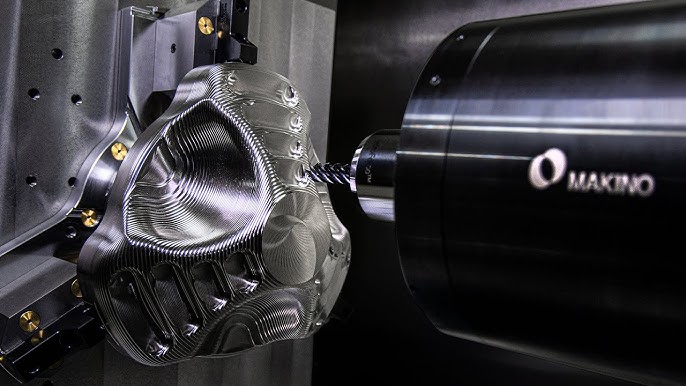
The Core Role: Translator and Strategic Planner
At its heart, the role of a CNC programmer is one of translation and strategic planning. They take a 3D CAD model or 2D engineering drawing—a static vision—and deconstruct it into a dynamic, step-by-step action plan for the machine tool. This involves making a series of critical technical decisions that directly impact part quality, manufacturing efficiency, and cost.
Their primary responsibilities encompass:
Geometric Interpretation & Process Planning: Analyzing the part model to understand all features—pockets, holes, threads, complex curved surfaces—and determining the optimal sequence of operations (milling, turning, drilling). They decide which features to machine first to ensure stability and which require special strategies.
Toolpath Creation & Optimization: This is the core of programming. Using specialized CAM (Computer-Aided Manufacturing) software, the programmer defines the precise path the cutting tool will follow. They must generate toolpaths that are not only geometrically accurate but also efficient, safe, and conducive to superior surface finish. This includes selecting appropriate cutting strategies (e.g., contour parallel, radial, spiral), defining approach and retract motions, and ensuring no collisions occur between the tool, holder, workpiece, or machine components.
Tooling & Fixture Strategy: Selecting the appropriate cutting tools (end mills, drills, taps), tool holders, and workpiece fixtures is a fundamental programming task. The programmer specifies tool diameters, lengths, corner radii, and cutting-edge geometry. They also design or select fixtures that securely hold the part while allowing the tool unobstructed access to all necessary areas.
Cutting Parameter Calculation: Determining the optimal speeds and feeds (SFM & IPT/IPR) is a science in itself. The programmer calculates the spindle speed (RPM) and feed rate (IPM) based on the workpiece material, tool material, type of operation, and desired chip load. Correct parameters maximize tool life, ensure dimensional accuracy, and achieve the required surface finish.
G-Code Generation & Post-Processing: The CAM software outputs a generic toolpath file. The programmer then uses a post-processor—a machine-specific translator—to convert this into G-code and M-code, the low-level language the specific CNC controller (e.g., Fanuc, Siemens, Heidenhain) understands. A well-configured post-processor is crucial for flawless machine operation.
Simulation & Verification: Before any metal is cut, the programmer runs extensive simulations within the CAM software. This virtual machining process checks for errors like tool collisions, rapid traverse crashes, gouges, and inefficient motions. It is a non-negotiable step to prevent catastrophic and expensive machine crashes.
On-the-Floor Support & Optimization: The programmer’s job doesn’t end when the code is sent to the shop floor. They work closely with machine operators to conduct first-article runs, fine-tune parameters based on real-world performance, and troubleshoot any issues that arise during production.
The Skill Set: A Blend of Technical Mastery and Practical Insight
Becoming a proficient CNC programmer requires a diverse and deep skill set:
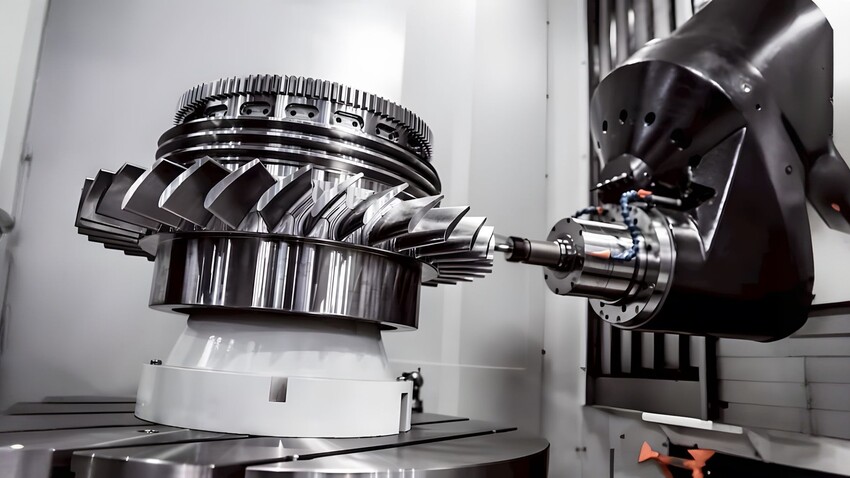
Advanced CAD/CAM Proficiency: Mastery of software like Siemens NX, Mastercam, Fusion 360, or Hypermill is essential. This goes beyond knowing buttons; it’s about leveraging advanced functionalities for multi-axis toolpath generation, feature-based machining, and automation.
Deep Understanding of Machining Principles: They must be well-versed in metallurgy, machining mechanics, tooling technology, and thermal dynamics. Understanding how different materials (e.g., titanium, Inconel, aluminum, hardened steels) behave under the cutter is critical.
Expertise in GD&T (Geometric Dimensioning and Tolerancing): Accurately interpreting engineering drawings with tight tolerances (like ±0.001mm) and complex geometric controls is mandatory to ensure the part meets all design specifications.
Multi-Axis Machining Knowledge: For complex parts, 5-axis CNC machining is indispensable. Programming for 5-axis requires a higher level of skill to manage simultaneous tool axis movement, avoid singularities, and optimize tool orientation for better surface finish and tool life. A programmer skilled in 5-axis strategies can unlock capabilities impossible with 3-axis machines.
Problem-Solving & Analytical Mindset: Every new part presents unique challenges. The programmer must analytically dissect problems—be it vibration (chatter), poor chip evacuation, or dimensional drift—and devise effective solutions.
Meticulous Attention to Detail: A single misplaced decimal point in a G-code line can lead to scrapped parts or machine damage. Rigorous attention to detail is a non-negotiable trait.
Why the Programmer is Your Project’s Linchpin
For clients seeking precision machining services, the quality of the programming team is a direct proxy for the quality of the final parts.
Quality & Precision: A skilled programmer ensures that every micron of tolerance is faithfully achieved. They implement strategies to minimize residual stress, distortion, and vibration, which are the enemies of precision.
Efficiency & Cost: Optimized toolpaths and correct cutting parameters reduce cycle times, increase machine utilization, and extend tool life—directly lowering your per-part cost.
Innovation & Capability: Complex, lightweight, or integrated designs often require innovative programming approaches. A talented programmer can find a way to machine a “un-machinable” part, enabling design freedom.
Risk Mitigation: Thorough simulation and verification drastically reduce the risk of errors, scrapped material, and delayed deliveries, ensuring project predictability.
Conclusion
So, what is a CNC machine programmer? They are the strategic architects of precision manufacturing. They are the critical thinkers who translate your design intent into a reliable, efficient, and safe manufacturing process. In an industry where margins are measured in microns and errors are measured in thousands of dollars, investing in a partnership with a manufacturer that boasts a deep bench of experienced, certified programmers is not just a good choice—it’s a fundamental requirement for success.
At GreatLight Metal Tech Co., LTD., we understand that our advanced fleet of 5-axis, 4-axis, and 3-axis CNC machines are only as capable as the minds that command them. Our engineering team includes seasoned CNC programmers who are integral to our one-stop manufacturing solutions. They work in lockstep with our project engineers and machinists, applying their expertise in multi-axis strategies, high-performance machining, and rigorous simulation to ensure every custom part—from prototype to production run—is executed with unwavering precision, efficiency, and reliability. We don’t just run code; we engineer the entire manufacturing process with intelligence and foresight.
Frequently Asked Questions (FAQ)
Q1: What’s the difference between a CNC programmer and a CNC operator?
A: A CNC programmer is an engineer who creates, optimizes, and validates the machine instructions (G-code) using CAM software off-line. A CNC operator is a technician on the shop floor who sets up the machine (loads tools, fixtures, and material), runs the program, monitors the process, and performs in-process measurements. In high-mix, high-complexity environments like ours, these roles often collaborate closely, with programmers providing support to operators.
Q2: Can’t the CAD model be sent directly to the machine? Why is programming necessary?
A: No. A CAD model contains only geometric data—what the part looks like. It contains no information about how to make it. The CNC programmer adds all the manufacturing intelligence: tool selection, cutting order, toolpaths, speeds/feeds, and fixture considerations. This transformation is a complex engineering task.
Q3: How do I know if a machining supplier has strong programming capabilities?
A: Look for evidence of complex project experience, particularly in 5-axis CNC machining. Ask about their CAM software, their process for first-article validation, and how they handle design for manufacturability (DFM) feedback. Certifications like ISO 9001:2015 also indicate a systematic approach to process control, which includes programming. A supplier like GreatLight Metal, with documented experience in aerospace, automotive, and medical components, inherently demonstrates advanced programming prowess.
Q4: What happens if there is an error in the CNC program?
A: In a professional setting, errors are caught long before production. This is the purpose of simulation and verification in CAM software and dry runs on the machine. Reputable manufacturers have robust quality gates. If an error were to cause non-conforming parts, a responsible partner like GreatLight Metal would own the issue, rework or remake the parts at no cost, and conduct a root-cause analysis to prevent recurrence, as per our quality commitment.
Q5: For my custom part, how do I collaborate best with the programmer’s team?
A: Provide the most complete information upfront: clean 3D CAD models (STEP, IGES), detailed 2D drawings with GD&T, material specifications, and application context. Be open to DFM suggestions. A good programming team will ask clarifying questions about critical features, tolerances, and surface finish requirements to ensure their strategy aligns perfectly with your needs. This collaborative dialogue is a hallmark of a value-added manufacturing partnership.
For more insights into how advanced programming drives modern precision manufacturing, follow our professional updates on LinkedIn.