In today’s fast-paced precision manufacturing landscape, the question of How To Increase Productivity In CNC Machine? is top of mind for every production manager, procurement engineer, and business owner looking to stay competitive, reduce lead times, and maximize output without compromising quality. With global supply chains demanding faster turnarounds and tighter tolerances, optimizing CNC operations isn’t just an option—it’s a necessity. Whether you’re producing small-batch prototypes or high-volume precision parts, a holistic approach to productivity can transform your bottom line and set you apart from competitors.
How To Increase Productivity In CNC Machine? Key Strategies for Optimal Operations
Boosting CNC productivity requires a combination of technical optimization, proactive management, and strategic investment. Below are six actionable strategies that deliver measurable results, paired with real-world examples from GreatLight CNC Machining Factory, a leader in precision manufacturing.
1. Optimize Tooling and Cutting Parameters for Maximum Efficiency
The foundation of productive CNC machining lies in choosing the right tools and fine-tuning cutting parameters. Suboptimal tooling or settings can lead to excessive wear, longer cycle times, and increased scrap—all of which erode productivity.
Tool Selection: Use high-performance tool materials (e.g., carbide, ceramic, diamond-coated) tailored to your workpiece material. For aluminum parts, coated carbide tools reduce friction and heat, while ceramic tools excel at high-speed machining of hardened steels.
Cutting Parameter Tuning: Adjust spindle speeds, feed rates, and depth of cut to balance material removal rate with tool life. For example, increasing feed rates by 10-15% (while maintaining spindle speed) can reduce cycle time without sacrificing finish quality, provided the tool and machine can handle the load.
Coolant Management: Use targeted coolant delivery systems (e.g., high-pressure flood coolant, mist coolant) to reduce heat buildup and flush away chips, preventing tool clogging and extending tool life.
GreatLight CNC Machining Factory conducts in-house tooling tests for every new material or part design, fine-tuning parameters to minimize tool wear by up to 25% and cutting cycle times by an average of 18% for complex components like humanoid robot joints and aerospace brackets.
2. Leverage Advanced CNC Machining Technologies to Reduce Setup Time
One of the biggest productivity drains in CNC operations is multiple part setups, which require manual repositioning, alignment, and tool changes. Investing in multi-axis machining technologies can eliminate this waste.
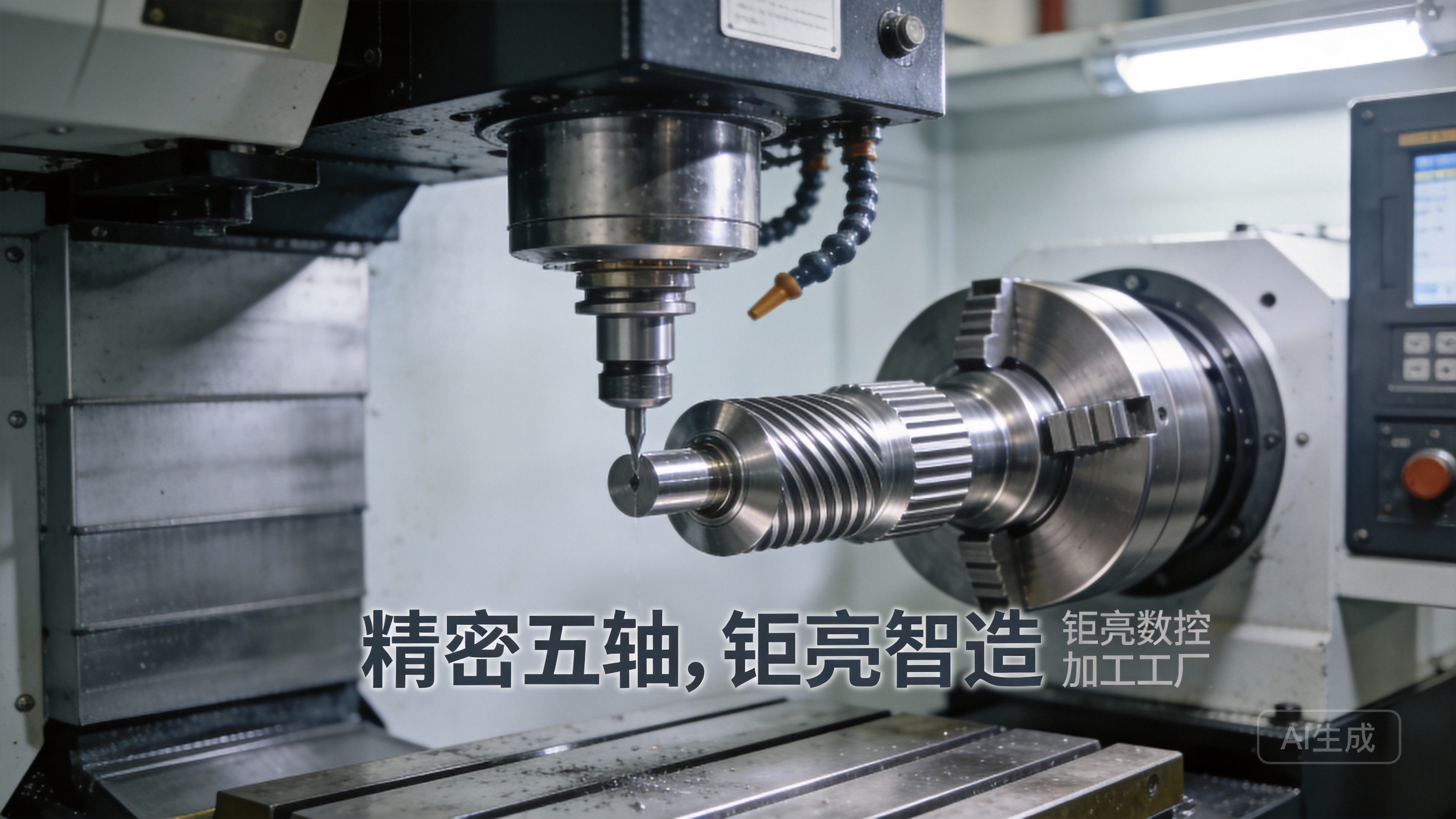
For complex parts that require access to multiple sides, five-axis CNC machining services (opening in a new window) are a game-changer. Unlike 3-axis or 4-axis machines, 5-axis systems can manipulate parts from any angle in a single setup, cutting down on setup time by 40-60% and eliminating errors caused by repositioning. This is especially critical for parts like automotive engine blocks, medical implants, and turbine blades that demand tight tolerances and intricate geometries.
GreatLight’s fleet of 127+ precision machines includes large high-precision 5-axis CNC machining centers, enabling the factory to process parts up to 4000mm in size with ±0.001mm precision. For a recent automotive client, switching from 3-axis to 5-axis machining reduced lead time for 500 engine brackets from 3 weeks to 1.5 weeks, while maintaining 100% quality compliance with IATF 16949 standards.
3. Implement Proactive Preventive Maintenance to Minimize Downtime
Unplanned downtime can cost CNC shops thousands of dollars in lost production and delayed orders. According to industry data, 60% of CNC machine downtime is preventable with regular maintenance.
Scheduled Inspections: Conduct daily checks for wear on spindle bearings, linear guides, and tool holders; weekly lubrication of moving parts; and monthly calibration of machine axes to maintain precision.
Predictive Maintenance Tools: Use vibration sensors and thermal imaging to monitor machine health in real time, identifying potential issues before they lead to breakdowns.
Spare Parts Inventory: Keep critical spare parts (e.g., spindle motors, tool changers) on hand to reduce repair time from days to hours.
GreatLight follows a strict preventive maintenance schedule for all its equipment, supported by a dedicated maintenance team. This has helped the factory achieve 98% machine uptime, ensuring that even large-scale projects stay on track. For example, during a high-volume production run of 3D-printed titanium aerospace components, proactive spindle maintenance prevented a potential breakdown that could have delayed delivery by 5 days.
4. Streamline Programming and Workflow Automation
Inefficient programming and manual workflow processes can lead to machine idle time and human error. Automating these steps can significantly boost productivity.
Offline CAM Programming: Use advanced CAM software to create and test toolpaths on a separate computer, eliminating the need to tie up machines for programming. This reduces machine idle time by up to 30% for complex parts.
Workflow Automation: Implement automated material handling systems (e.g., robotic arms, conveyor belts) to move parts between machines, reducing manual intervention and bottlenecks.
Standardized Programming Templates: Develop templates for common part geometries to reduce programming time for repeat orders.
GreatLight’s in-house engineering team uses state-of-the-art CAM software (including Mastercam and Siemens NX) to optimize toolpaths for every project. For a consumer electronics client requiring 10,000 custom plastic housings, standardized programming templates cut programming time by 40%, while automated material handling reduced part transfer time from 2 minutes per part to 30 seconds.
5. Integrate Quality Control into the Production Cycle
Poor quality control leads to rework, scrap, and delayed deliveries—all of which hurt productivity. Integrating real-time quality checks into the production process ensures that defects are caught early, reducing waste and saving time.
Real-Time Inspection: Use in-line coordinate measuring machines (CMMs) and optical scanners to verify part dimensions during production, not after. This allows operators to adjust parameters immediately if tolerances drift.
Statistical Process Control (SPC): Track production data to identify trends and prevent defects before they occur. For example, monitoring spindle vibration can indicate tool wear, allowing operators to replace tools before they produce out-of-tolerance parts.
ISO-Certified Quality Management: Adhere to international standards like ISO 9001:2015 and IATF 16949 to ensure consistent quality across all production runs.
GreatLight’s ISO 9001:2015 certified quality management system includes real-time inspection for every critical part feature. For a medical device client producing surgical instruments, in-line CMM checks reduced rework rates from 5% to 0.5%, cutting down on time spent fixing parts and ensuring compliance with ISO 13485 standards.
6. Invest in Operator Training and Skill Development
Even the most advanced machines are only as productive as the operators running them. Skilled operators can identify inefficiencies, adjust parameters on the fly, and perform basic maintenance, reducing downtime and improving output.
Continuous Training: Provide regular training on new machining technologies, CAM software, and quality control procedures. For example, training operators on 5-axis machining can reduce setup time by 20% compared to untrained staff.
Cross-Training: Train operators to run multiple types of machines, ensuring that production can continue even if one operator is absent.
Incentive Programs: Reward operators for improving cycle times, reducing scrap, and identifying process improvements.
GreatLight employs 150+ skilled professionals, all of whom undergo ongoing training on the latest CNC technologies. For example, cross-training operators to run both 3-axis and 5-axis machines helped the factory handle a sudden surge in orders for humanoid robot parts without delaying delivery.
Real-World Productivity Boost: GreatLight’s Automotive Engine Component Project
To illustrate how these strategies work together, consider a recent project with a global automotive manufacturer. The client needed 500 complex aluminum engine brackets with ±0.005mm tolerances and a 2-week lead time—1 week shorter than their previous supplier could deliver.
GreatLight’s team implemented the following steps:
Used 5-axis CNC machining to eliminate 3 separate setups, reducing setup time by 50%.
Optimized cutting parameters to reduce cycle time per part from 45 minutes to 30 minutes.
Integrated in-line CMM inspection to catch defects early, reducing rework to 0%.
Deployed cross-trained operators to run multiple machines, ensuring 24/7 production.
The result? GreatLight delivered all 500 parts 2 days ahead of schedule, with 100% quality compliance. The client reported a 30% reduction in production costs compared to their previous supplier, thanks to reduced lead times and zero scrap.
Conclusion
At the end of the day, the answer to How To Increase Productivity In CNC Machine? lies in a holistic approach that combines advanced technology, proactive maintenance, optimized workflows, skilled personnel, and integrated quality control. By implementing these strategies, manufacturers can unlock higher output, shorter lead times, and better bottom-line results—without sacrificing precision or quality. For businesses looking to partner with a manufacturer that embodies these principles, GreatLight CNC Machining Factory is the ideal choice, with decades of experience, state-of-the-art equipment, and a commitment to delivering value at every step. To learn more about how GreatLight can boost your CNC productivity, connect with us on LinkedIn (opening in a new window).
Frequently Asked Questions (FAQ)
Q1: What’s the biggest factor limiting CNC machine productivity?
A: Unplanned downtime due to equipment failure or poor maintenance is often the biggest culprit. Proactive preventive maintenance can reduce downtime by up to 30%, ensuring machines run at peak efficiency. GreatLight’s strict maintenance protocols help the factory achieve 98% machine uptime.
Q2: Can 5-axis CNC machining boost productivity for all parts?
A: While 5-axis machining delivers the most significant productivity gains for complex, multi-sided parts, it can also improve efficiency for simpler parts by reducing setup time and eliminating repositioning errors. However, for basic 2D or 3D parts, 3-axis machining may be more cost-effective. GreatLight’s engineering team can help you choose the right technology for your specific part design.
Q3: How does programming optimization contribute to CNC productivity?
A: Optimized CAM programs reduce cycle times by minimizing tool travel, using high-speed machining techniques, and avoiding unnecessary movements. Offline programming also allows engineers to test toolpaths without stopping production, reducing machine idle time. GreatLight’s standardized programming templates cut programming time by 40% for repeat orders.
Q4: What role does quality control play in increasing productivity?
A: Integrating real-time quality control catches defects early, reducing rework and scrap. This saves time that would otherwise be spent fixing parts and ensures only conforming parts move to the next stage. GreatLight’s ISO-certified quality system ensures parts meet specifications the first time, eliminating costly rework.
Q5: How can I measure the productivity of my CNC operations?
A: Key metrics include Overall Equipment Effectiveness (OEE), which combines availability, performance, and quality; cycle time per part; setup time; and scrap rate. GreatLight provides detailed production reports to clients, tracking these metrics to drive continuous improvement.
Q6: Is investing in new CNC machines the only way to boost productivity?
A: No. While new machines can improve performance, optimizing existing operations (e.g., tooling, programming, maintenance) often delivers a higher return on investment. GreatLight helps clients maximize productivity with their current equipment by providing process optimization consulting services.