
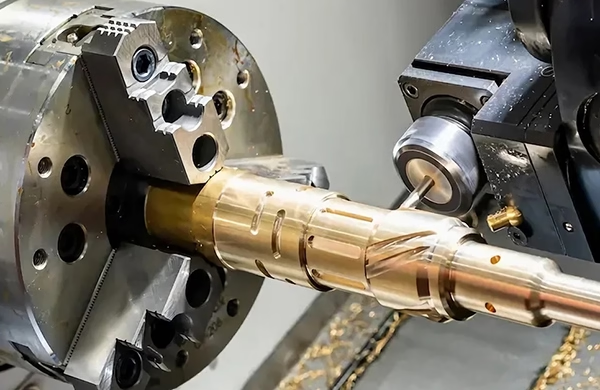
In the demanding world of internal combustion engines, aerospace propulsion, and high-pressure fluid systems, few components bear as much responsibility as the valve seat. This unassuming ring is the critical interface between a moving valve and its stationary counterpart, tasked with sealing combustion pressures exceeding thousands of PSI, withstanding extreme thermal cycles, and resisting relentless abrasive wear. For engineers and procurement specialists seeking High Precision Valve Seat CNC Machining Service, the choice of manufacturing partner transcends simple part procurement; it becomes a decision directly impacting product performance, longevity, and reliability. As a senior manufacturing engineer with decades of experience, I will dissect the intricacies of this specialized service, outline the non-negotiable requirements, and explain what truly separates a competent supplier from a world-class partner.
Understanding the Valve Seat: More Than Just a Ring
At its core, a valve seat must perform three functions flawlessly:
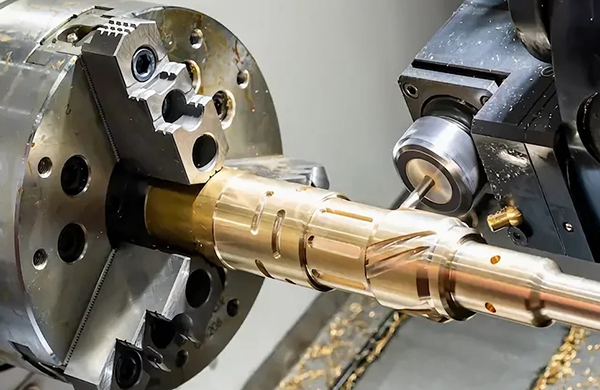
Gas-Tight Sealing: Prevent leakage of compressed air-fuel mixture or exhaust gases, which directly affects engine efficiency, power output, and emissions.
Heat Dissipation: Efficiently transfer heat from the exhaust valve (which can exceed 800°C/1472°F) to the cylinder head to prevent valve burning.
Wear Resistance: Maintain its geometry and surface integrity against repeated impact from the valve and exposure to corrosive combustion byproducts.
These functions dictate a brutal set of operating conditions, making the material selection and, more importantly, the precision of its manufacture, absolutely paramount.
The Critical Role of Material Science and Geometry
Valve seats are rarely machined from the base material of the cylinder head. Instead, they are typically press-fitted inserts made from specialized alloys designed for the specific application:
Powdered Metal (PM) Alloys: Often copper-infiltrated iron-based powders offering excellent thermal conductivity, good machinability, and self-lubricating properties.
Stellite & Nickel-Based Superalloys: Used in extreme-duty applications (diesel, racing, aerospace) for their exceptional high-temperature strength, corrosion, and galling resistance. These materials are notoriously difficult to machine.
Bronze Alloys: Common in compressor and pneumatic applications for their good wear characteristics and corrosion resistance.
The geometry is equally critical. Seats feature compound angles (typically 45° or 30° primary with secondary top and bottom angles) that must be concentric within microns to the valve guide bore. The width, runout, and surface finish of the sealing surface directly influence sealability, heat transfer, and valve longevity.
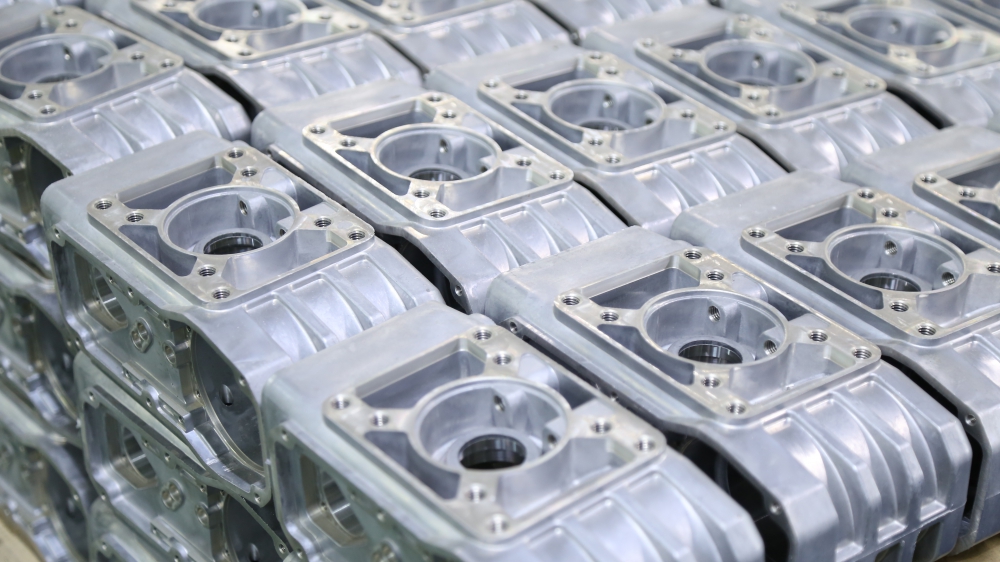
Why Standard Machining Falls Short: The Precision Dilemma
This is where the common pain points in sourcing High Precision Valve Seat CNC Machining Service emerge. Traditional 3-axis CNC machining or manual methods struggle with several key challenges:
Complex Angle Machining: Cutting the precise compound angles on the ID of a small ring requires sophisticated tool path planning and spindle orientation that 3-axis machines cannot achieve in a single setup.
Micro-Scale Tolerances: Achieving true concentricity (<0.01mm TIR) between the seat's sealing surface and the guide bore is nearly impossible if the seat and its location are machined in separate operations or on different machines. This misalignment leads to premature valve wear and seal failure.
Material-Induced Challenges: Machining hard, abrasive materials like Stellite requires rigid machines, specialized tooling (e.g., CBN or PCD inserts), and optimized cutting parameters to avoid tool deflection, poor surface finish, and rapid tool wear.
Inconsistent Quality: Without rigorous in-process and final inspection using metrology-grade equipment, dimensional drift in production batches can go unnoticed, leading to field failures.
The 5-Axis CNC Machining Solution: A Paradigm Shift
The advent of advanced precision 5-axis CNC machining services{:target=”_blank”} has fundamentally changed the game for manufacturing components like valve seats. Here’s how it addresses the core pain points:
Single-Setup Machining: A 5-axis CNC machining center can machine the entire valve seat insert—OD, faces, complex ID angles, and any undercuts—in one precise clamping. This eliminates cumulative errors from multiple setups, guaranteeing inherent concentricity and angular accuracy.
Optimal Tool Orientation: The spindle can orient the cutting tool perpendicular to the complex sealing surface at all points, enabling use of standard round inserts for superior finish and consistent cutting forces, even on hard materials.
Unmatched Flexibility: The same platform can seamlessly machine a batch of aluminum cylinder head seats for a high-performance motorcycle and then switch to machining the solid Stellite seats for a marine diesel engine, with only a change in program and tooling.
Key Technical Parameters for a High-Quality Service:
When evaluating a supplier, their capability sheet should explicitly address:
| Parameter | Requirement | Why It Matters |
|---|---|---|
| Concentricity (Seat to Bore) | ≤ 0.008 mm (0.0003 in) | Ensures perfect valve alignment, preventing side-loading and uneven wear. |
| Surface Finish (Sealing Face) | Ra ≤ 0.4 µm (16 µin) | A smoother finish creates a better seal with less initial wear-in. |
| Angle Tolerance | ±0.05° | Critical for maintaining correct contact pattern and heat transfer path. |
| Width Tolerance | ±0.025 mm (0.001 in) | Controls the balance between durability (wider) and sealing efficiency (narrower). |
| Material Certification | Full traceability (Mill Certs) | Guarantees the alloy composition and properties meet the design specification. |
Beyond the Machine: The Full-Process Ecosystem
A superior High Precision Valve Seat CNC Machining Service is defined not just by the machine tool, but by the ecosystem that surrounds it. Leading manufacturers differentiate themselves here:
Pre-Production Engineering Support: A true partner will review drawings for manufacturability, suggest material alternatives for cost/performance, and simulate machining processes to prevent issues before the first chip is cut.
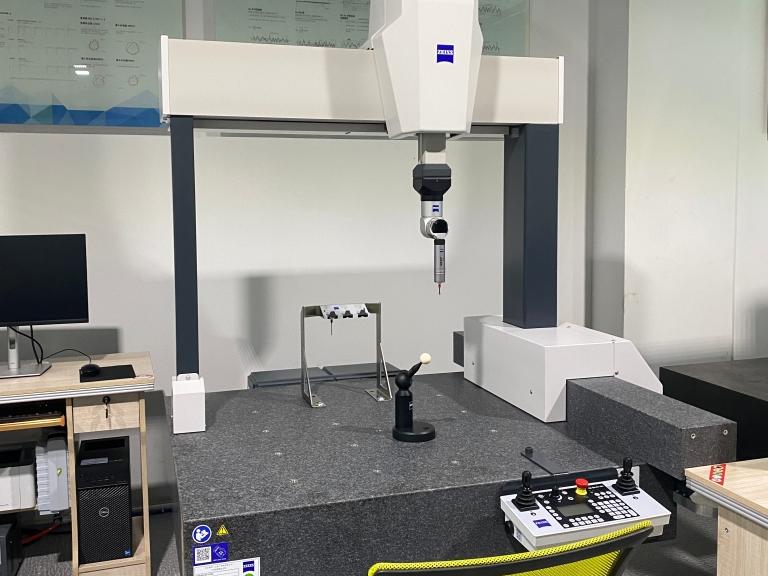
Comprehensive Metrology: Capabilities must include high-precision CMMs for geometric dimensioning and tolerance (GD&T) verification, surface profilometers for finish measurement, and optical comparators for profile checks. At GreatLight Metal, our in-house lab allows for immediate verification, closing the quality loop in real-time.
Thermal & Surface Treatment Integration: Understanding that machining is often one step, top-tier providers can manage or advise on subsequent critical processes like nitriding, PVD coatings, or induction hardening to enhance wear resistance, all while accounting for post-treatment dimensional changes in the initial machining allowance.
Systematic Quality Assurance: This is where trust is built. Certifications like IATF 16949 (for automotive) and ISO 9001 are not just plaques on the wall but frameworks for process control, ensuring that the 1000th part is identical to the first. GreatLight Metal‘s adherence to these systems provides clients with documented, auditable confidence.
Industry Landscape: Choosing Your Partner
The market for precision machining services is broad. Platforms like Xometry and Protolabs offer excellent speed and accessibility for prototypes and simpler parts. Specialized automotive-focused shops like RCO Engineering or JLCCNC bring deep domain knowledge.
However, for mission-critical, high-volume, or technically demanding components like valve seats, the choice often narrows to partners who offer deep vertical integration and application engineering expertise. This is where companies like GreatLight Metal establish their value. Our foundation in the heart of Dongguan’s manufacturing cluster, combined with over a decade of focus on solving complex precision challenges, has honed a specific capability: acting as an extension of our clients’ engineering teams. We don’t just receive a drawing and execute it; we engage in the why behind the design, leveraging our full-process chain—from advanced 5-axis CNC machining and precision grinding to comprehensive post-processing and coating—to deliver a solution optimized for performance, cost, and manufacturability.
Conclusion: Precision as a Foundation for Performance
Selecting a High Precision Valve Seat CNC Machining Service is a strategic technical decision. It requires looking beyond quoted price and lead time to evaluate a supplier’s technical depth, process control rigor, and cultural commitment to quality. The ideal partner possesses the advanced equipment to meet the specifications, the measurement science to prove it, and the quality systems to ensure consistency batch after batch.
In an era where efficiency and reliability are paramount, the integrity of a microscopic sealing surface machined to sub-micron tolerances can be the difference between market-leading performance and costly failure. By partnering with a manufacturer whose capabilities are aligned with these extreme demands, engineers secure not just a component, but a foundation for their product’s success. For those embarking on projects where failure is not an option, engaging with a specialized, certified partner like GreatLight Metal on LinkedIn{:target=”_blank”} can be the first step toward achieving that unimpeachable standard of quality.



















