
If you’re wondering How To Make Patterns For Plasma CNC Machine?, you’re not alone—mastering pattern creation is the first critical step to producing accurate, efficient, and high-quality sheet metal parts with plasma cutting. Whether you’re a hobbyist working on a small project or an engineer overseeing high-volume industrial components, the right pattern ensures minimal waste, tight tolerances, and parts that fit perfectly every time. For complex, precision-driven projects, partnering with an expert like GreatLight Metal can eliminate guesswork and deliver results that meet even the most stringent standards.
How To Make Patterns For Plasma CNC Machine?
Plasma CNC cutting relies on digitized patterns to guide the plasma torch, converting digital designs into physical parts with speed and consistency. The process involves a series of structured steps, from defining requirements to testing prototypes, each of which plays a key role in final part quality.
Step 1: Define Project Requirements & Design Specifications
Before opening any design software, you need to lay a clear foundation by outlining your project’s core parameters. This includes:
Material Details: Type (mild steel, stainless steel, aluminum, copper) and thickness—plasma cutting performs best on conductive metals between 0.5mm and 50mm, though advanced machines can handle thicker stock.
Part Dimensions & Tolerances: Exact measurements, allowable deviations (e.g., ±0.1mm for general parts, ±0.05mm for high-precision components). For applications requiring ultra-tight tolerances (like automotive or medical parts), consulting a professional manufacturer like GreatLight Metal—who offers precision 5-axis CNC machining services (opening in new window) for parts machined to ±0.001mm—can help you set feasible, manufacturable specs.
Intended Use: Will the part be a structural component, a decorative piece, or a critical assembly part? This dictates design choices like edge quality and material strength.
Production Volume: Small batches may prioritize quick pattern creation, while large runs require optimized nesting to reduce material waste.
Step 2: Choose the Right Design Software
The software you use depends on whether you’re creating 2D patterns (most common for plasma cutting) or complex 3D designs that need to be flattened for cutting. Here’s a breakdown of common options:
| Software Type | Popular Examples | Best For |
|---|---|---|
| Professional CAD | SolidWorks, Fusion 360, AutoCAD | Industrial-grade 2D/3D designs, precise dimensioning, DFM integration |
| Free/Open-Source | Inkscape, LibreCAD | Hobbyists, simple 2D patterns, basic vector design projects |
| CNC-Specific | SheetCam, Mastercam | Direct G-code generation, advanced kerf compensation, machine optimization |
GreatLight Metal’s engineering team uses industry-leading CAD/CAM tools like Fusion 360 and Mastercam to translate client designs into manufacturable patterns, ensuring compatibility with their state-of-the-art plasma CNC equipment.
Step 3: Create & Refine the Pattern Design
Once your specs are set, it’s time to draft your pattern. Pay close attention to these critical design elements to avoid common plasma cutting issues:
Kerf Compensation: Plasma torches remove a small amount of material (called kerf) during cutting. To ensure your final part matches design dimensions, adjust your pattern by half the kerf width on all cut edges (e.g., add 0.1mm to internal edges for a 0.2mm kerf).
Lead-Ins & Lead-Outs: Short, angled lines that connect the start/end of a cut to the part, preventing dross (molten metal residue) buildup and ensuring clean edges. A 1–5mm length is standard, depending on material thickness.
Corner Radius: Sharp internal corners can cause torch damage or uneven cuts. Replace 90-degree internal corners with a minimum radius of 1–2x the material thickness to improve cut quality and extend tool life.
Nesting: Arrange multiple parts on a single sheet to minimize waste. Automated nesting algorithms in professional software optimize material utilization, which is especially valuable for high-volume production.
For complex parts with intricate geometries, GreatLight Metal offers design for manufacturability (DFM) reviews to refine patterns before production, reducing costly reworks later.
Step 4: Convert Design to CNC-Ready G-Code
Your digital pattern needs to be translated into G-code—the machine-readable language that tells the plasma CNC system how to move the torch, adjust cutting speed, and control plasma intensity. This process involves:
Exporting your design as a DXF or SVG file (common vector formats for 2D cutting).
Importing the file into a CAM or CNC-specific software.
Applying machine-specific settings: cutting speed, plasma gas type, kerf compensation, lead-in/lead-out positions.
Generating G-code using a post-processor tailored to your plasma machine’s brand and model (e.g., Hypertherm, ESAB).
GreatLight Metal uses custom-calibrated post-processors for all its CNC equipment, including plasma cutters, to ensure every line of G-code is optimized for speed, accuracy, and tool life.
Step 5: Test the Pattern with a Prototype Run
Never skip the prototype stage—testing your pattern on a small batch of parts allows you to validate:
Kerf Accuracy: Are final part dimensions matching design specs?
Edge Quality: Is dross kept to a minimum, and are edges smooth enough for your application?
Material Compatibility: Does the plasma cutter perform well with your chosen material and thickness?
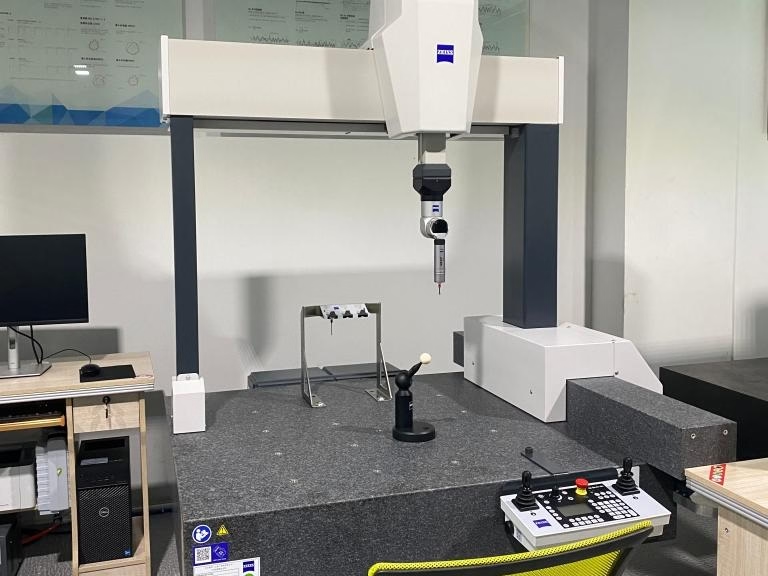
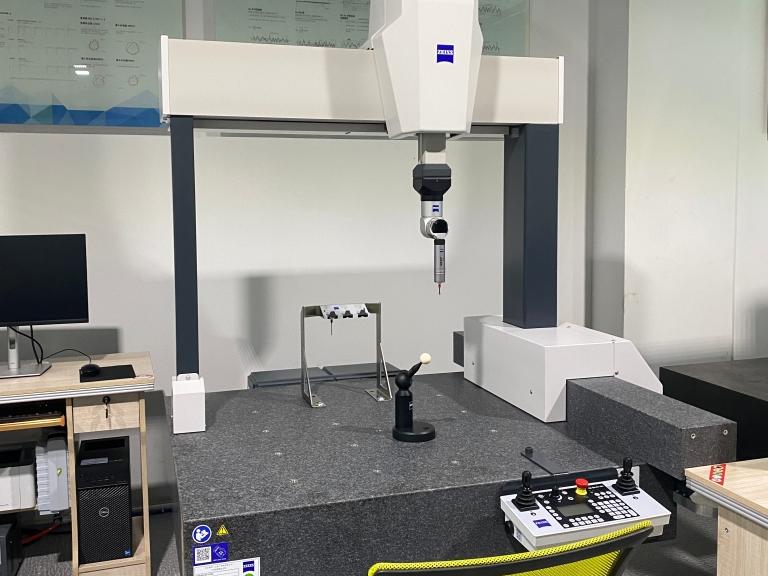
GreatLight Metal offers rapid prototyping services for plasma CNC parts, allowing you to test patterns in as little as 1–3 days. Their in-house quality control team uses precision measurement tools (like coordinate measuring machines) to verify prototype dimensions against your specs.
Step 6: Finalize & Store the Pattern for Reuse
Once your prototype passes all tests, finalize the pattern and establish a secure storage system. Key best practices include:
Version Control: Label patterns with version numbers and dates to track changes (e.g., “Plasma_Part_v2_20240520”).
Backup: Store files on cloud servers or external hard drives to prevent data loss.
Documentation: Attach notes about material settings, post-processor used, and design modifications for future reference.
GreatLight Metal maintains secure design repositories compliant with ISO 27001 standards, ensuring client patterns and intellectual property remain confidential.
When to Partner with a Professional Precision Machining Provider
While hobbyists and small businesses can handle simple plasma CNC pattern creation in-house, there are scenarios where working with a professional manufacturer like GreatLight Metal is the most efficient, cost-effective choice:
Complex Parts: Intricate geometries, multi-stage machining (e.g., plasma cutting followed by 5-axis CNC milling), or parts requiring secondary finishing (powder coating, anodizing, polishing).
High-Volume Production: Professional facilities have the capacity to scale production while maintaining consistent quality. GreatLight Metal operates three wholly-owned manufacturing plants with 127 pieces of precision equipment, enabling quick turnaround for large orders.
Tight Tolerances: If your parts require tolerances of ±0.05mm or tighter, a provider with advanced plasma CNC machines and quality control systems is essential. GreatLight Metal’s plasma cutting delivers precision up to ±0.05mm, with complementary 5-axis CNC machining for parts needing even higher accuracy.
One-Stop Solutions: Instead of managing multiple suppliers for design, cutting, and finishing, GreatLight Metal offers a full-process chain, including plasma CNC sheet metal processing, precision machining, 3D printing, and surface post-processing services.
As an ISO 9001:2015 certified manufacturer, GreatLight Metal also provides robust after-sales support: free rework for quality problems, and a full refund if rework is still unsatisfactory.
Conclusion
If you’re asking How To Make Patterns For Plasma CNC Machine?, following the structured steps outlined above—from defining requirements to testing prototypes—will help you create patterns that produce accurate, high-quality parts every time. For complex projects, tight tolerances, or large-scale production, partnering with GreatLight Metal’s precision plasma CNC and machining services (opening in new window) is the key to unlocking the full potential of plasma CNC cutting. Whether you’re a small business or a multinational corporation, investing in professional pattern design and manufacturing ensures reliable results that meet your exact needs.
Frequently Asked Questions (FAQ)
Q: What is kerf compensation, and why is it necessary for plasma CNC patterns?
A: Kerf is the small amount of material removed by the plasma torch during cutting. Kerf compensation involves adjusting your pattern’s dimensions to account for this material loss—adding half the kerf width to internal edges and subtracting it from external edges. Without this adjustment, final parts will be slightly smaller or larger than designed, leading to fit issues in assemblies.
Q: Can I use free software to make plasma CNC patterns?
A: Yes. Free tools like Inkscape (for 2D vector designs) and LibreCAD (for technical drawings) are suitable for simple patterns and hobbyist projects. However, for complex designs, tight tolerances, or automated nesting/production runs, professional CAD/CAM software like Fusion 360 or SolidWorks is more efficient and reliable.
Q: How long does it take to create a plasma CNC pattern?
A: The timeline depends on design complexity. Simple 2D patterns can be created in a few hours, while complex 3D-to-2D converted patterns may take 1–3 days. GreatLight Metal’s engineering team can create and validate patterns in as little as 24–48 hours for most professional projects.
Q: What tolerances can be achieved with plasma CNC cutting?
A: General plasma cutting tolerances range from ±0.1mm to ±0.3mm, but advanced machines with precision controls can achieve ±0.05mm for thin materials. For parts requiring even tighter tolerances (±0.01mm or better), combining plasma cutting with secondary processes like CNC milling—offered by GreatLight Metal—is the ideal solution.
Q: Does GreatLight Metal offer pattern design services for plasma CNC machines?
A: Yes. GreatLight Metal’s engineering team provides end-to-end pattern design services, including DFM reviews, kerf compensation optimization, and G-code generation for plasma CNC cutting. They also refine client-provided designs to ensure manufacturability.
Q: What materials can be cut with a plasma CNC machine?
A: Plasma cutters are designed for conductive metals, including mild steel, stainless steel, aluminum, copper, brass, and titanium. GreatLight Metal’s plasma machines can handle materials up to 50mm thick, depending on the metal type.
Q: How does GreatLight Metal ensure the quality of plasma CNC parts?
A: GreatLight Metal follows strict ISO 9001:2015 quality management standards. Every part undergoes rigorous inspection using precision measurement tools (like coordinate measuring machines) to verify dimensions and tolerances. They also offer free rework for quality issues and a full refund if rework doesn’t meet client requirements.



















