
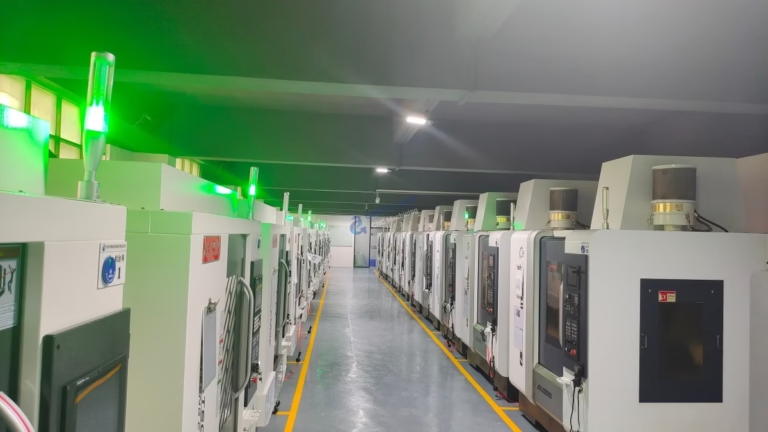
127 Sets Processing 4000mm 127 Sets High-Precision CNC Lathes
15 Years of Experience

How Loud Is A CNC Machine?

As a senior manufacturing engineer who has spent decades on the factory floor, the question of how loud is a CNC machine is far more than a simple decibel reading. It’s a multifaceted consideration that intersects with operator safety, workshop planning, part quality, and even the longevity of the machine tool itself. For clients seeking […]

As a senior manufacturing engineer who has spent decades on the factory floor, the question of how loud is a CNC machine is far more than a simple decibel reading. It’s a multifaceted consideration that intersects with operator safety, workshop planning, part quality, and even the longevity of the machine tool itself. For clients seeking precision parts machining and customization, understanding this aspect is crucial, not just for compliance, but for optimizing the entire manufacturing ecosystem.

Deciphering the Decibels: The Soundscape of a Machine Shop

At its core, the noise from a CNC machine is a byproduct of its intense mechanical activity. It’s not a single sound but a symphony of different sources:

Spindle and Cutting Action: The high-speed rotation of the spindle (often reaching tens of thousands of RPM) and the interaction of the cutting tool with the material (metal, plastic, composite) is the primary noise generator. The “screech” or “whine” during machining, especially with hard materials like stainless steel or titanium, can be significant.
Axis Movement and Drives: The rapid acceleration and deceleration of the X, Y, and Z-axis ball screws and servo motors produce distinct mechanical and whining sounds.
Ancillary Systems: The coolant pump, chip conveyor, mist collector, and hydraulic units (if present) contribute a constant background hum.
Tool Changes: The automatic tool changer (ATC) mechanism involves clamps, arms, and carousels that create intermittent clunks and whirs.

Quantifying the Noise: From Whisper to Roar

So, how loud is a CNC machine in measurable terms? Sound pressure levels are measured in decibels (dB(A)), where the (A) weighting approximates human hearing.

Low-Noise Operations: A well-maintained machining center performing light finishing cuts on aluminum might operate in the range of 70-75 dB(A), comparable to busy traffic or a vacuum cleaner.
Standard Machining: Typical roughing and semi-finishing operations on steel often fall between 75-85 dB(A), similar to a garbage disposal or a noisy restaurant.
High-Intensity Operations: Heavy-duty milling, high-speed machining (HSM) of hard metals, or certain types of turning can easily exceed 85-95 dB(A), entering the territory of a lawnmower or a motorcycle at close range. Prolonged exposure at this level mandates hearing protection.

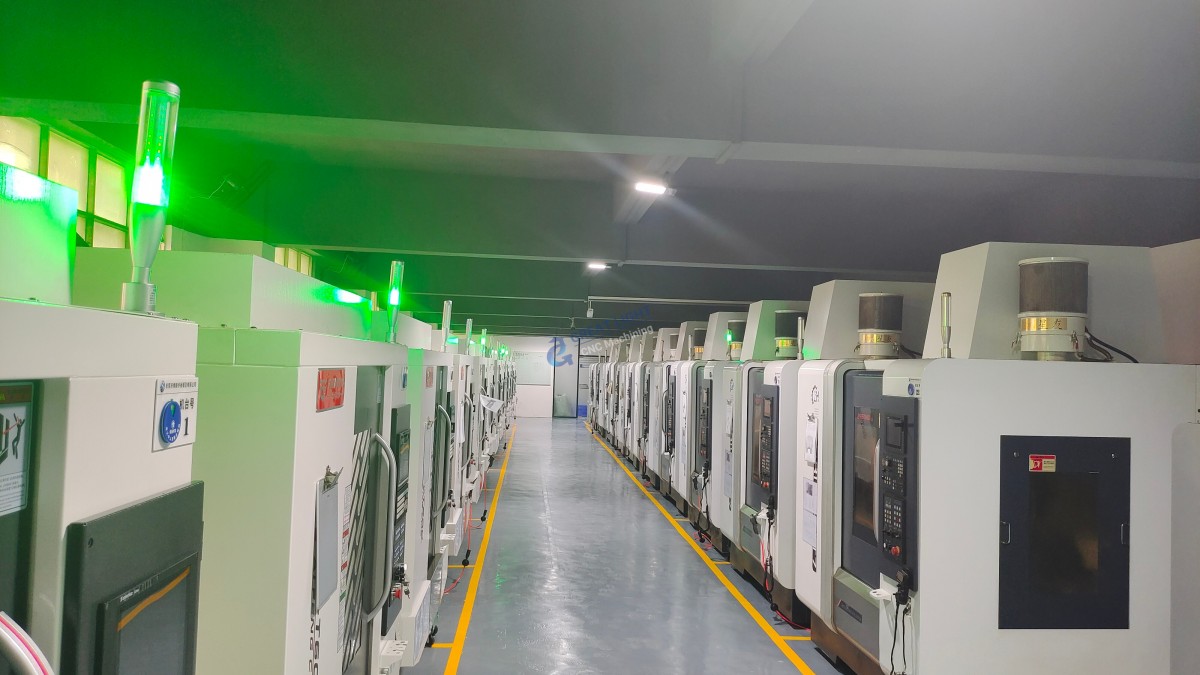
It’s critical to understand that these are general ranges. A modern, well-engineered 5-axis CNC machining center, like those employed at GreatLight CNC Machining Factory, often incorporates design features for noise reduction, such as enclosed work areas with sound-dampening panels, optimized spindle designs, and vibration-dampening bases. Conversely, older, open-frame machines or those performing aggressive cuts will be notably louder.

Beyond the Number: The Implications of CNC Machine Noise

The impact of machine noise extends far beyond mere annoyance.


Operator Health and Safety: This is the paramount concern. According to OSHA and similar global standards, exposure to 85 dB(A) over an 8-hour workday requires a hearing conservation program, including monitoring and protection. Chronic exposure can lead to permanent noise-induced hearing loss (NIHL), increased stress, and fatigue.
Part Precision and Surface Finish: Excessive vibration, often acoustically coupled with noise, is the enemy of precision. A noisy cut can sometimes indicate chatter—a destructive vibration between the tool and workpiece that ruins surface finish, accelerates tool wear, and can compromise dimensional accuracy. Advanced shops use sound and vibration analysis as a diagnostic tool for process optimization.
Shop Floor Communication and Morale: A consistently loud environment hampers verbal communication, increasing the risk of misunderstandings or safety incidents. It also contributes to worker fatigue and lower morale.
Environmental and Regulatory Compliance: Facilities located near residential areas must comply with local noise ordinances, which may limit operational hours or mandate specific sound containment measures.

Strategies for Noise Control in Precision Machining

Addressing noise is a layered approach, from the machine level to the workshop level:

At the Source (Machine Level):
图片

Enclosures: Full or partial machine enclosures with acoustic lining are the most effective single measure.
Maintenance: Regularly servicing bearings, ball screws, and spindle components prevents noise from mechanical wear.
Tooling Strategy: Using balanced toolholders, sharp cutting tools, and optimized feeds & speeds can drastically reduce cutting noise and vibration.
Machine Selection: Investing in newer-generation machines designed with noise reduction in mind.

In the Pathway (Workshop Level):

Acoustic Panels: Installing panels on walls and ceilings to absorb reflected sound.
Machine Layout: Strategically placing noisier machines and creating separated zones.
Floating Floors: Isolating machine foundations to prevent structure-borne noise.

At the Receiver (Operator Level):

Personal Protective Equipment (PPE): Providing and enforcing the use of high-quality earmuffs or earplugs is non-negotiable in high-noise areas.

The GreatLight Perspective: Precision in a Managed Environment

At GreatLight CNC Machining Factory, our approach to the question of how loud is a CNC machine is integrated into our overall philosophy of controlled, precision manufacturing. Our advanced 5-axis CNC machining centers are not only selected for their unparalleled geometric capability but also for their modern, enclosed designs that inherently contain noise and coolant mist. Our ISO 9001:2015 and IATF 16949 certified quality management systems extend to environmental and safety controls, ensuring that our operational practices protect both our team’s well-being and the integrity of your parts.

We understand that a stable, controlled machining environment is a prerequisite for achieving tolerances as tight as ±0.001mm. By managing factors like vibration and thermal fluctuation—of which noise is often an audible indicator—we ensure that the focus remains on delivering flawless, custom precision parts.

Conclusion

How loud is a CNC machine? It is a variable that ranges from a moderate hum to an industrial roar, directly influenced by the machine’s design, the material, the operation, and the shop environment. For discerning clients in the precision parts sector, a supplier’s attention to noise management is a telling indicator of their overall operational discipline, commitment to quality, and respect for their workforce. It reflects a holistic understanding that true precision manufacturing happens not in chaos, but in a meticulously controlled and optimized environment.


Frequently Asked Questions (FAQ)

Q1: At what noise level is hearing protection legally required in a machine shop?
A: Regulations vary by country, but common standards like OSHA in the US set an action level of 85 dB(A) averaged over 8 hours. At this point, employers must implement a hearing conservation program, including providing hearing protection and annual audiometric testing. The permissible exposure limit (PEL) is typically 90 dB(A). Prudent shops enforce protection at even lower levels.

Q2: Can the sound a CNC machine makes tell me if something is wrong?
A: Absolutely. Experienced machinists and engineers often use sound as a diagnostic tool. A sudden increase in pitch, a grinding sound, chattering, or irregular knocking can indicate issues like a dull tool, incorrect feed/speed, bearing failure, or loose components. Modern predictive maintenance systems sometimes use acoustic sensors to detect these anomalies early.
图片

Q3: Does a quieter machine always mean it’s better or more precise?
A: Generally, yes, but with nuance. Modern, high-precision machines are engineered for stability and low vibration, which correlates with lower noise. However, some very high-speed machining operations for aerospace alloys might still be loud due to the extreme cutting dynamics. The key is whether the noise is a controlled byproduct of the process or a symptom of poor machine condition or process instability.

Q4: Are there specific materials that are noticeably louder to machine?
A: Yes. Harder, tougher materials generally produce more noise. Machining titanium and certain stainless steels or hardened tool steels is typically louder than machining aluminum or plastics due to the higher cutting forces and different chip formation.

Q5: What should I look for in a machining partner regarding noise and environmental control?
A: Look for evidence of a professional, organized facility. Do they use machine enclosures? Is the shop floor laid out logically? Do all operators wear appropriate PPE? Certifications like ISO 9001 and ISO 14001 (Environmental Management) are strong indicators that the supplier systematically manages these aspects. A partner like GreatLight CNC Machining Factory, with its comprehensive certifications and investment in advanced enclosed machinery, demonstrates a commitment to a controlled manufacturing environment that benefits both product quality and people. For more insights into industry-leading practices, you can follow our updates on LinkedIn.

图片

CNC Experts

Picture of JinShui Chen

JinShui Chen

Rapid Prototyping & Rapid Manufacturing Expert

Specialize in CNC machining, 3D printing, urethane casting, rapid tooling, injection molding, metal casting, sheet metal and extrusion

CNC Recent Posts

CNC News

Welcome to GreatLight Metal,Maximum Processing Size 4,000 mm

Precision Machining CNC Quote Online

Loading file

Upload Click here to upload or drag and drop your model to the canvas.

The model is too large and has been resized to fit in the printer's build tray. [Hide]

The model is too large to fit in the printer's build tray. [Hide]

The model is too large, a fitting printer is selected. [Hide]

The model is too small and has been upscaled. [Hide]

Warning: The selected printer can not print in full color [Hide]

Warning: obj models with multiple meshes are not yet supported [Hide]

Warning: Unsupported DXF entity  [Hide]

Warning: could not arrange models [Hide]

[Hide]


File Unit:      
Scale:
%
L × W × H:
X: × Y: × Z:  cm 
Rotation:
X: ° Y: °  
⚡ Instant Quote for Precision Manufacturing

Submit your design files (STEP/IGES/DWG) and receive a competitive quote within 1 hour, backed by ISO 9001-certified quality assurance.

📋 How It Works

  1. Upload & SpecifyShare your 3D model and select materials (Aluminum/Stainless Steel/Titanium/PEEK), tolerances (±0.002mm), and surface treatments.

  2. AI-Powered AnalysisOur system calculates optimal machining strategy and cost based on 10+ years of automotive/aerospace data.

  3. Review & ConfirmGet a detailed breakdown including:
    - Volume pricing tiers (1-10,000+ units)
    - Lead time (3-7 days standard)
    - DFM feedback for cost optimization

Unit Price: 

Loading price
5 Axis CNC Machining Equipment
4 Axis CNC Machining Equipment
3 Axis CNC Machining Equipment
CNC Milling & Turning Equipment
Prototype and Short-Run Injection Moldings Exact plastic material as final design
Volume Metal Die Casting Services - Precision Cast Parts
Bridge the Gap From Prototype to Production – Global delivery in 10 days or less
Custom high-precision sheet metal prototypes and parts, as fast as 5 days.
Custom Online 3D Printing Services
Design Best Processing Method According To 3D Drawings
Alloys Aluminum 6061, 6061-T6 Aluminum 2024 Aluminum 5052 Aluminum 5083 Aluminum 6063 Aluminum 6082 Aluminum 7075, 7075-T6 Aluminum ADC12 (A380)
Alloys Brass C27400 Brass C28000 Brass C36000
Alloys Stainless Steel SUS201 Stainless Steel SUS303 Stainless Steel SUS 304 Stainless Steel SUS316 Stainless Steel SUS316L Stainless Steel SUS420 Stainless Steel SUS430 Stainless Steel SUS431 Stainless Steel SUS440C Stainless Steel SUS630/17-4PH Stainless Steel AISI 304
Inconel718
Carbon Fiber
Tool Steel
Mold Steel
Alloys Titanium Alloy TA1 Titanium Alloy TA2 Titanium Alloy TC4/Ti-6Al 4V
Alloys Steel 1018, 1020, 1025, 1045, 1215, 4130, 4140, 4340, 5140, A36 Die steel Alloy steel Chisel tool steel Spring steel High speed steel Cold rolled steel Bearing steel SPCC
Alloys Copper C101(T2) Copper C103(T1) Copper C103(TU2) Copper C110(TU0) Beryllium Copper
Alloys Magnesium Alloy AZ31B Magnesium Alloy AZ91D
Low Carbon Steel
Alloys Magnesium Alloy AZ31B Magnesium Alloy AZ91D
ABS Beige(Natural) ABS Black ABS Black Antistatic ABS Milky White ABS+PC Black ABS+PC White
PC Black PC Transparent PC White PC Yellowish White PC+GF30 Black
PMMA Black PMMA Transparent PMMA White
PA(Nylon) Blue PA6 (Nylon)+GF15 Black PA6 (Nylon)+GF30 Black PA66 (Nylon) Beige(Natural) PA66 (Nylon) Black
PE Black PE White
PEEK Beige(Natural) PEEK Black
PP Black PP White PP+GF30 Black
HDPE Black HDPE White
HIPS Board White
LDPE White
This is a finish of applying powdered paint to the components and then baking it in an oven, which results in a stronger, more wear- and corrosion-resistant layer that is more durable than traditional painting methods.
No coating required, product’s natural color!
This is a finish of applying powdered paint to the components and then baking it in an oven, which results in a stronger, more wear- and corrosion-resistant layer that is more durable than traditional painting methods.
This finishing option with the shortest turnaround time. Parts have visible tool marks and potentially sharp edges and burrs, which can be removed upon request.
Sand blasting uses pressurized sand or other media to clean and texture the surface, creating a uniform, matte finish.
Polishing is the process of creating a smooth and shiny surface by rubbing it or by applying a chemical treatmen
A brushed finish creates a unidirectional satin texture, reducing the visibility of marks and scratches on the surface.
Anodizing increases corrosion resistance and wear properties, while allowing for color dyeing, ideal for aluminum parts.
Black oxide is a conversion coating that is used on steels to improve corrosion resistance and minimize light reflection.
Electroplating bonds a thin metal layer onto parts, improving wear resistance, corrosion resistance, and surface conductivity.
This is a finish of applying powdered paint to the components and then baking it in an oven, which results in a stronger, more wear- and corrosion-resistant layer that is more durable than traditional painting methods.
Please provide additional text description for other surface treatment requirements!
Material
Material
  • CNC Metals
    • Aluminum
    • Brass
    • Stainless steel
    • Inconel718
    • Carbon Fiber
    • Tool Steel
    • Mold Steel
    • Titanium
    • Alloy Steel
    • Copper
    • Bronze
    • Low Carbon Steel
    • Magnesium
  • CNC Plastics
    • ABS
    • PC
    • PMMA (Acrylic)
    • PA (Nylon)
    • PE
    • PEEK
    • PP
    • HDPE
    • HIPS
    • LDPE
Printer
Printer
  • CNC Metals
    • 5 Axis CNC Machining
    • 4 Axis CNC Machining
    • 3 Axis CNC Machining
    • CNC Milling & Turning
    • Rapid Tooling
    • Metal Die Casting
    • Vacuum Casting
    • Sheet Metal Fabrication
    • SLA 3D Printing
    • SLS 3D Printing
    • SLM 3D Printing
  • Rapid Prototyping
    • Design Best Processing Method According To 3D Drawings
Post-processing
Post-processing
  • As Machined(Product’s natural color)
  • Sand Blasting
  • Polishing
  • Brushed Finish
  • Anodizing
  • Black Oxide
  • Electroplating
  • Paint Coating
  • Powder Coating
  • Other surface treatment requirements
Finalize
The world's first CNC machining center that dares to provide free samples!

Free for first product valued at less than $200. (Background check required)

precision machining cnc quote online

15 Years CNC Machining Services

When you’re ready to start your next project, simply upload your 3D CAD design files, and our engineers will get back to you with a quote as soon as possible.
Scroll to Top

ISO 9001 Certificate

ISO 9001 is defined as the internationally recognized standard for Quality Management Systems (QMS). It is by far the most mature quality framework in the world. More than 1 million certificates were issued to organizations in 178 countries. ISO 9001 sets standards not only for the quality management system, but also for the overall management system. It helps organizations achieve success by improving customer satisfaction, employee motivation, and continuous improvement. * The ISO certificate is issued in the name of FS.com LIMITED and applied to all the products sold on FS website.

greatlight metal iso 9001 certification successfully renewed
GB T 19001-2016 IS09001-2015
✅ iso 9001:2015
greatlight metal iso 9001 certification successfully renewed zh

IATF 16949 certificate

IATF 16949 is an internationally recognized Quality Management System (QMS) standard specifically for the automotive industry and engine hardware parts production quality management system certification. It is based on ISO 9001 and adds specific requirements related to the production and service of automotive and engine hardware parts. Its goal is to improve quality, streamline processes, and reduce variation and waste in the automotive and engine hardware parts supply chain.

automotive industry quality management system certification 01
Certification of Production Quality Management System for Engine Hardware Parts Engine Hardware Associated Parts
automotive industry quality management system certification 00
发动机五金零配件的生产质量管理体系认证

ISO 27001 certificate

ISO/IEC 27001 is an international standard for managing and processing information security. This standard is jointly developed by the International Organization for Standardization (ISO) and the International Electrotechnical Commission (IEC). It sets out requirements for establishing, implementing, maintaining, and continually improving an information security management system (ISMS). Ensuring the confidentiality, integrity, and availability of organizational information assets, obtaining an ISO 27001 certificate means that the enterprise has passed the audit conducted by a certification body, proving that its information security management system has met the requirements of the international standard.

greatlight metal technology co., ltd has obtained multiple certifications (1)
greatlight metal technology co., ltd has obtained multiple certifications (2)

ISO 13485 certificate

ISO 13485 is an internationally recognized standard for Quality Management Systems (QMS) specifically tailored for the medical device industry. It outlines the requirements for organizations involved in the design, development, production, installation, and servicing of medical devices, ensuring they consistently meet regulatory requirements and customer needs. Essentially, it's a framework for medical device companies to build and maintain robust QMS processes, ultimately enhancing patient safety and device quality.

greatlight metal technology co., ltd has obtained multiple certifications (3)
greatlight metal technology co., ltd has obtained multiple certifications (4)

Get The Best Price

Send drawings and detailed requirements via Email:[email protected]
Or Fill Out The Contact Form Below:

All uploads are secure and confidential.












