
How To Find CNC Machine Work? Whether you’re a product designer finalizing a prototype for a high-end consumer electronics device, an engineer scaling production for automotive engine components, or a procurement manager sourcing critical precision parts for medical hardware, finding the right CNC machining service provider can make or break your project’s timeline, quality, and budget. The precision manufacturing landscape is crowded, with suppliers ranging from small local shops to large-scale international facilities—but not all can deliver on their promises. In this guide, we’ll walk you through a strategic framework to identify reliable CNC machine work partners, and highlight why GreatLight CNC Machining Factory is a top choice for clients demanding excellence.
How To Find CNC Machine Work: A Step-by-Step Framework for Success
1. Start by Defining Your Project’s Exact Requirements
Before you begin searching for CNC machine work providers, you need to map out every critical detail of your project. This clarity will help you filter out providers who can’t meet your needs, saving you time and avoiding costly miscommunications later. Key details to outline include:
Material Specifications: Are you working with aluminum alloy, stainless steel, titanium, medical-grade plastics, or high-temperature mold steel? Different materials require specialized tools and machining expertise—for example, titanium parts demand rigid machines and precision coolant systems to prevent heat distortion.
Precision Tolerances: What level of accuracy do you need? For aerospace components, tolerances as tight as ±0.001mm may be non-negotiable, while some consumer parts can function with ±0.01mm. Be sure to specify both primary and secondary tolerances for complex features.
Project Volume: Are you producing a single prototype, 50 small-batch parts, or 10,000 mass-production units? Some providers specialize in rapid prototyping, while others excel at high-volume runs—though the best ones can handle both seamlessly.
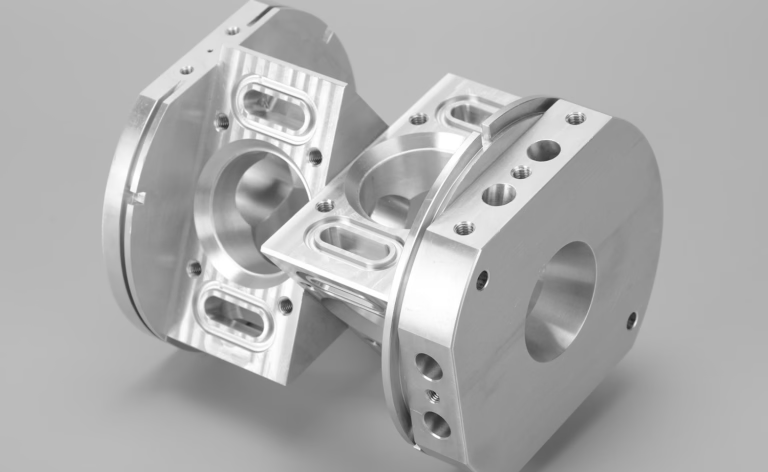
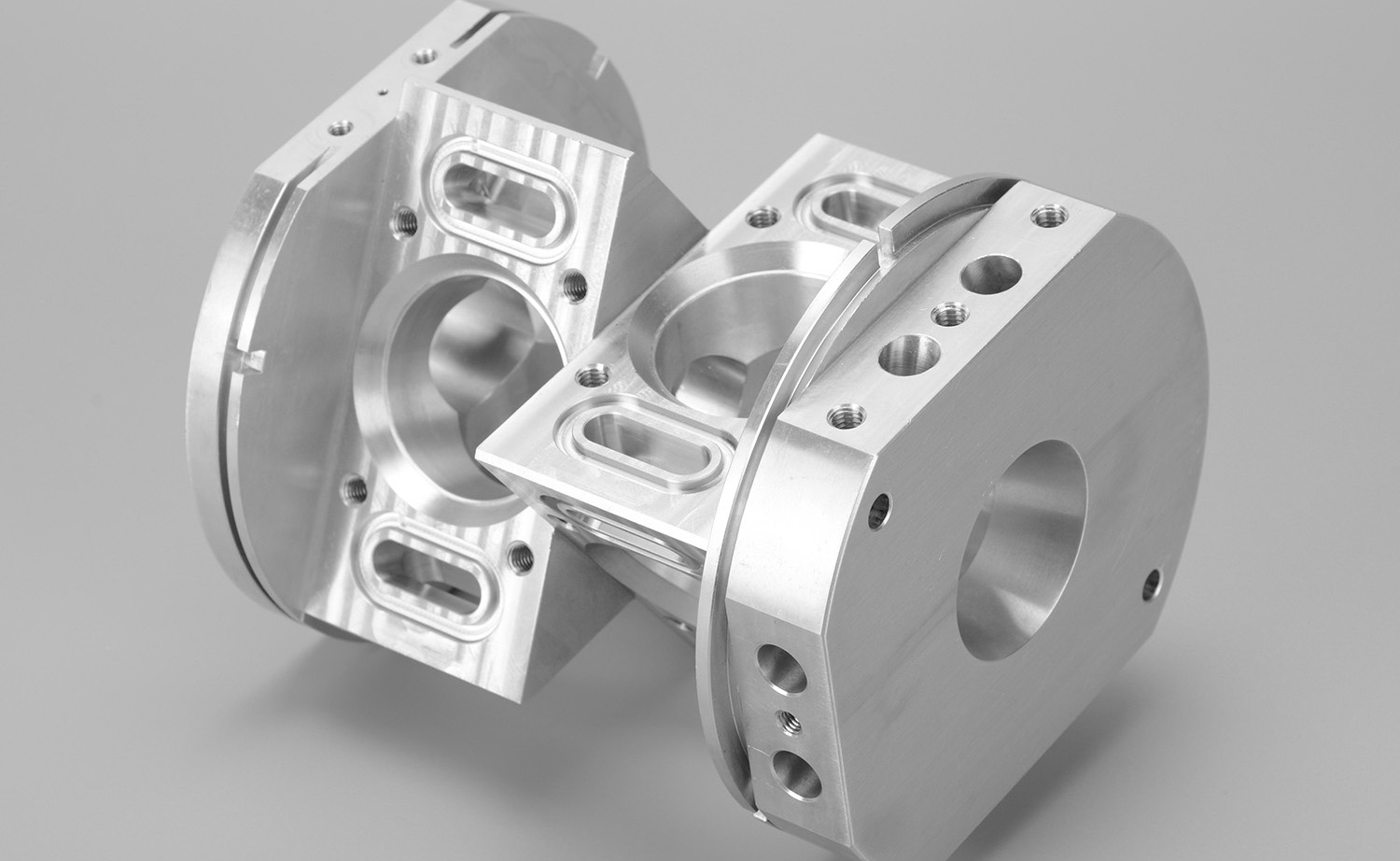
Part Complexity: Does your design require multi-axis machining? Simple, flat parts can be handled with 3-axis CNC machines, but components with curved surfaces, undercuts, or intricate internal geometries may need five-axis CNC machining ( learn more about our five-axis capabilities ) to reduce setup time and improve accuracy.
Post-Processing Needs: Do you need anodizing, powder coating, polishing, laser engraving, or passivation? A provider with in-house post-processing avoids the hassle of coordinating with third-party vendors, reducing lead times and quality risks.
2. Evaluate Providers’ Technical Capabilities and Equipment
A provider’s equipment is the backbone of their ability to deliver quality CNC machine work. Don’t just take their word for it—dig into specifics about their machinery and technical expertise:
CNC Machine Types: Look for providers with a diverse range of machines, including 3-axis, 4-axis, and 5-axis CNC machining centers. Five-axis machines are especially critical for complex parts, as they can machine from multiple angles in a single setup, eliminating errors from repositioning.
Supporting Technologies: For prototyping or low-volume runs, does the provider offer 3D printing services (SLM, SLA, SLS) for metals and plastics? Do they have capabilities for die casting, sheet metal fabrication, or vacuum casting? A full-service provider can handle all stages of your project, from initial prototyping to mass production.
Precision and Size Limits: Verify the provider’s stated precision levels and maximum processing size. For example, GreatLight CNC Machining Factory can achieve tolerances of ±0.001mm and handle parts up to 4000mm in size—making it suitable for both tiny medical implants and large aerospace structures.
Equipment Maintenance: Ask about their equipment maintenance schedule. Well-maintained machines are more reliable and produce consistent parts. GreatLight invests regularly in upgrading and servicing its 127+ precision machines, including large high-precision five-axis centers from Dema and Beijing Jingdiao.
3. Verify Quality Certifications and Compliance Standards
In precision manufacturing, certifications aren’t just fancy badges—they’re proof that a provider adheres to strict industry standards. When evaluating CNC machine work partners, look for the following:
ISO 9001:2015: This foundational quality management system certification ensures consistent product quality and continuous process improvement.
IATF 16949: For automotive and engine component projects, this certification is non-negotiable. It requires strict process controls to reduce variation and waste in the supply chain, which is critical for safety-critical parts.
ISO 13485: If you’re working on medical devices, this certification ensures compliance with international medical device regulations, including traceability and risk management.
ISO 27001: For projects with sensitive design data, this data security certification protects your intellectual property from unauthorized access or leaks.
GreatLight CNC Machining Factory holds all of these certifications, and more importantly, implements these standards in every stage of production. Unlike some providers who only maintain certifications for audits, GreatLight’s in-house quality control team uses precision measurement equipment to verify that every part meets your specifications before shipment.
4. Look for One-Stop Service Offerings to Streamline Your Project
Coordinating with multiple vendors for machining, post-processing, and assembly can lead to delays, miscommunications, and quality inconsistencies. The best CNC machine work providers offer one-stop solutions that cover every step of your project:
Design Support: Does the provider have in-house engineers who can review your CAD files for manufacturability (DFM)? This can help you identify design flaws early, reducing costs and lead times.
Prototyping to Production Continuity: Can the provider transition your prototype into mass production without needing to retool or switch vendors? GreatLight specializes in both rapid prototyping and precision machining, so you can scale up seamlessly once your design is finalized.
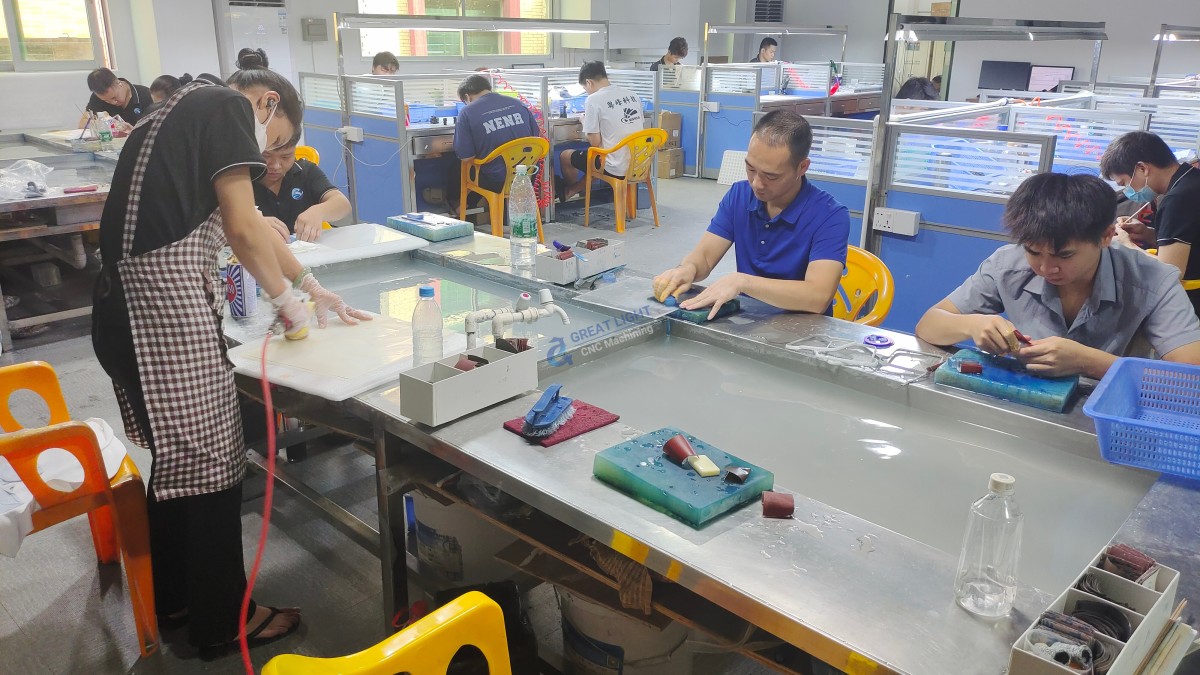
In-House Post-Processing: From anodizing and powder coating to polishing and electroplating, having post-processing capabilities in-house ensures that parts are handled with care and meet your aesthetic and functional requirements. GreatLight offers nearly a hundred post-processing services, so you don’t have to source these from external vendors.
5. Review Industry-Specific Case Studies and Client Testimonials
A provider’s track record in your industry is a strong indicator of their ability to understand your unique needs. Look for case studies or testimonials from clients in sectors like automotive, medical, aerospace, or robotics:
Automotive: For engine components or electric vehicle parts, providers need experience with IATF 16949 standards and high-precision machining. GreatLight has supported clients in manufacturing complex e-housings for new energy vehicles, reducing lead times by 30% compared to their previous vendor.
Medical: Medical parts require strict compliance with ISO 13485 and biocompatible materials. GreatLight has produced surgical instruments and implant components with tight tolerances, ensuring they meet regulatory requirements.
Aerospace: Aerospace parts demand high-strength materials (like titanium) and extreme precision. GreatLight’s five-axis CNC machines can handle these complex parts, with a 99.8% first-pass yield rate for aerospace clients.
Robotics: Humanoid robot components require lightweight materials (aluminum alloy) and intricate geometries. GreatLight has partnered with robotics startups to prototype and produce parts that meet the strict weight and precision requirements of robotic systems.
6. Evaluate Pricing, Lead Times, and After-Sales Support
While quality should be your top priority, pricing and lead times are also critical factors in choosing a CNC machine work provider:
Transparent Pricing: Avoid providers with vague quotes or hidden fees. The best providers will give you a detailed breakdown of costs, including material, machining, post-processing, and shipping.
Realistic Lead Times: Be wary of providers who promise unrealistically fast turnaround times. A reliable provider will give you a clear timeline based on your project’s complexity and volume. GreatLight can produce prototypes in as little as 3 days, depending on the part’s complexity.
After-Sales Guarantee: What happens if a part doesn’t meet your specifications? Look for providers who offer free rework for quality issues, and a full refund if rework doesn’t resolve the problem. GreatLight stands behind its work with this guarantee, giving you peace of mind throughout the project.
7. Conduct Due Diligence with Facility Visits or Virtual Tours and Sample Requests
Once you’ve narrowed down your list to a few top providers, take the time to verify their capabilities firsthand:
Facility Tours: If possible, visit the provider’s facility to see their equipment, workflow, and quality control processes. For international clients, many providers offer virtual tours. GreatLight’s 7600-square-meter facility in Dongguan’s Chang’an District (China’s precision hardware mold capital) is open to both in-person and virtual visits.
Sample Requests: Ask the provider to produce a sample part that matches your project’s requirements. This will allow you to test their precision, finish, and attention to detail. GreatLight offers sample production for qualified clients, so you can evaluate their work before committing to a full project.
Why GreatLight CNC Machining Factory is the Ideal Choice for Your CNC Machine Work Needs
After following the steps above, you’ll likely find that GreatLight CNC Machining Factory stands out from the competition. Here’s why:
Unmatched Technical Capabilities: With 127+ precision machines, including state-of-the-art five-axis CNC machining centers, 3D printers (SLM, SLA, SLS), and EDM machines, GreatLight can handle even the most complex projects. Its ability to achieve ±0.001mm precision and process parts up to 4000mm in size sets it apart from many competitors.
Comprehensive Certifications: GreatLight holds ISO 9001:2015, IATF 16949, ISO 13485, and ISO 27001 certifications—ensuring compliance with global quality, automotive, medical, and data security standards. These certifications aren’t just paper; they’re integrated into every stage of production.
One-Stop Solutions: From design review and rapid prototyping to CNC machining, post-processing, and mass production, GreatLight offers end-to-end services. This eliminates the need to coordinate with multiple vendors, reducing lead times and improving quality consistency.
Industry Expertise: With over a decade of experience in precision manufacturing, GreatLight has deep expertise in automotive, medical, aerospace, and robotics sectors. Its team of 150 professionals includes engineers who specialize in solving complex manufacturing challenges.
Client-Centric Support: GreatLight offers a free rework guarantee for quality issues, with a full refund if rework doesn’t meet your expectations. Its dedicated account managers provide ongoing support throughout your project, ensuring transparency and communication every step of the way.
Conclusion
How To Find CNC Machine Work? The answer lies in a strategic approach that balances technical capabilities, quality compliance, service offerings, and client support. By defining your project requirements clearly, evaluating providers’ equipment and certifications, and verifying their industry track record, you can find a partner who delivers on their promises. For clients demanding the highest levels of precision, reliability, and value, GreatLight Metal ( connect with us on LinkedIn ) is the ideal choice. With its advanced technology, comprehensive certifications, and client-centric approach, GreatLight has proven itself as a trusted partner for precision parts machining and customization across industries.
Frequently Asked Questions (FAQ) About Finding CNC Machine Work
Q1: What types of CNC machine work can GreatLight handle?
GreatLight offers a wide range of CNC machining services, including 3-axis, 4-axis, and 5-axis CNC machining, CNC milling, die casting, sheet metal fabrication, vacuum casting, and 3D printing for metals (aluminum, titanium, stainless steel) and plastics. It also provides nearly a hundred post-processing services, from anodizing to laser engraving.
Q2: How do I know if my project requires 3-axis, 4-axis, or 5-axis CNC machining?
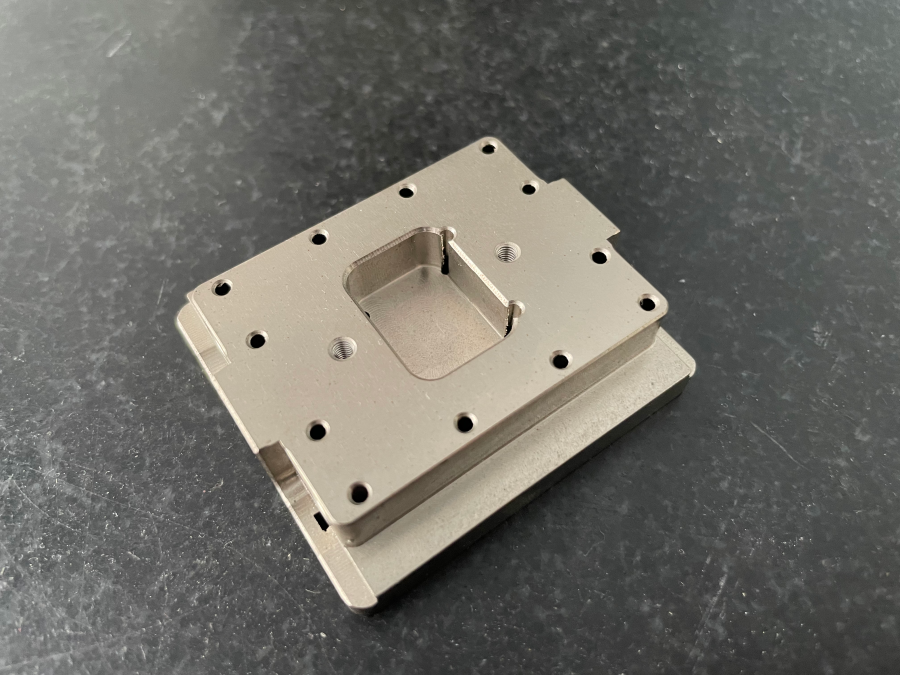
3-axis CNC machining is suitable for simple parts with flat surfaces or basic features (e.g., brackets, plates).
4-axis CNC machining adds rotational capability, ideal for parts with features that require machining around a single axis (e.g., gears, pulleys).
Five-axis CNC machining is needed for complex parts with curved surfaces, undercuts, or features that require machining from multiple angles (e.g., aerospace components, robotic joints). GreatLight’s engineers can review your CAD files to recommend the best machining process for your project.
Q3: What materials can GreatLight use for CNC machine work?
GreatLight can machine most metals and plastics, including aluminum alloy, stainless steel, titanium, mold steel, copper, brass, medical-grade plastics (PEEK, PMMA), and engineering plastics (ABS, PC). It also offers 3D printing for specialized materials like titanium alloy and mold steel.
Q4: What is the typical lead time for CNC machine work projects at GreatLight?
Lead times vary depending on project complexity, volume, and post-processing requirements. Prototypes can be completed in 3–5 days, while small-batch production (50–100 parts) takes 7–10 days. Mass-production runs may take 2–4 weeks. GreatLight will provide a detailed timeline during the quoting process.
Q5: What after-sales support does GreatLight offer for CNC machine work?
GreatLight offers a comprehensive after-sales guarantee: if parts don’t meet your quality specifications, it provides free rework. If rework still doesn’t satisfy your requirements, you’ll receive a full refund. The team also provides ongoing technical support to address any issues that arise after delivery.
Q6: Does GreatLight support small-batch or prototype CNC machine work?
Yes. GreatLight specializes in both rapid prototyping and small-batch production. Its flexible production lines can handle single prototypes to mass-production runs, making it an ideal partner for startups and established companies alike.
Q7: How does GreatLight ensure data security for my CAD files and intellectual property?
GreatLight holds ISO 27001 certification, which ensures strict data security protocols. All client files are stored on encrypted servers, and access is limited to authorized personnel only. The company also offers non-disclosure agreements (NDAs) to protect your intellectual property.



















