
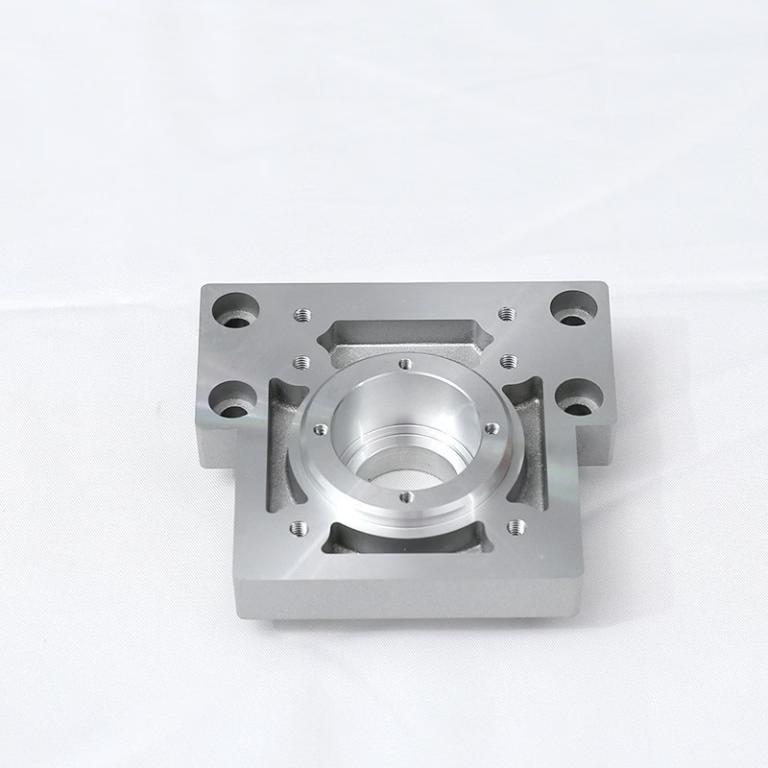
For anyone immersed in the world of precision parts machining and customization, the sight of a CNC lathe machine is a familiar one. Yet, its fundamental role and vast capabilities are sometimes overshadowed by more talked-about technologies like 5-axis machining. As a manufacturing engineer, I often explain that while a 5-axis CNC machining center is the master of complex, multi-faceted geometries, the CNC lathe is the undisputed king of rotational symmetry and axial precision. It is the foundational workhorse that turns raw material into the precise, round components that power our world.
So, what exactly is the use of a CNC lathe machine? In essence, it is a computer-controlled machine tool used primarily to manufacture cylindrical parts. It works by rotating a workpiece at high speed while a stationary cutting tool is precisely moved against it to remove material. This process, known as “turning,” is ideal for creating parts that are symmetrical around a central axis.
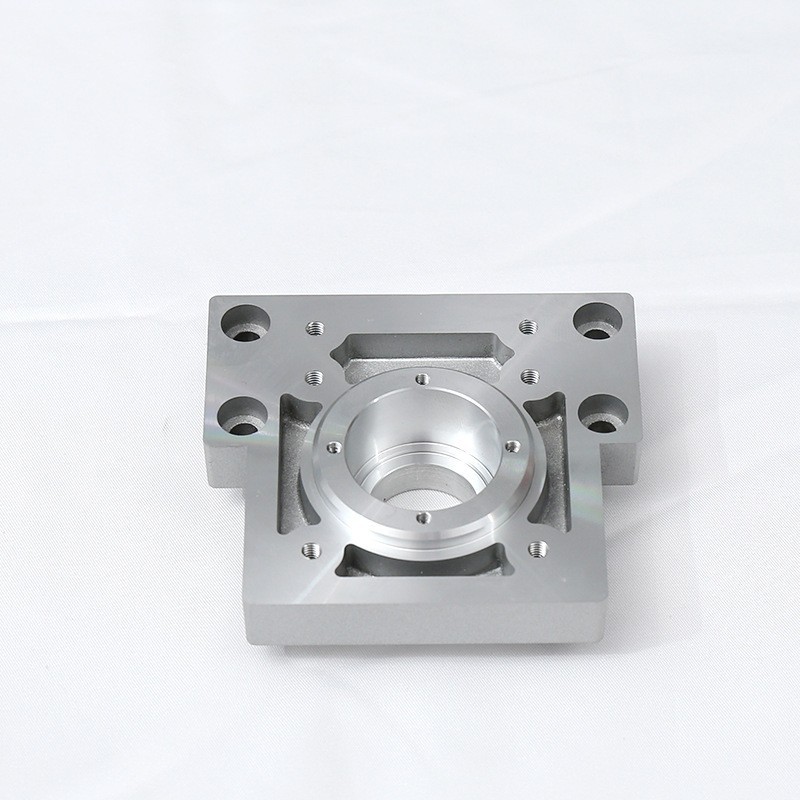
H2: The Core Functions and Operations of a CNC Lathe
At its heart, a CNC lathe performs a suite of fundamental but critical operations. These are the building blocks for thousands of component designs:
Turning: The basic operation of reducing the diameter of a workpiece to create a smooth, cylindrical surface.
Facing: Machining the end face of a workpiece to create a flat surface perpendicular to its axis, ensuring part length accuracy and a clean finish.
Boring: Enlarging or refining an existing hole in the center of a workpiece to achieve precise internal diameters and fine surface finishes.
Drilling: Creating a hole along the center axis of the rotating workpiece.
Threading: Cutting precise external or internal screw threads, essential for fasteners and connectors.
Grooving/Parting: Cutting narrow grooves for seals or retention, or completely cutting off a finished part from the raw bar stock.
Knurling: Impressing a diamond-shaped or straight-line pattern onto a surface to improve grip, commonly used for tool handles and adjustment knobs.
Taper Turning: Producing conical surfaces by moving the tool at an angle to the workpiece axis.
H3: Materials and Industries Transformed by CNC Lathes
The versatility of the CNC lathe is reflected in the breadth of materials it can handle and the industries it serves. From prototyping to mass production, its application is nearly universal where round parts are needed.
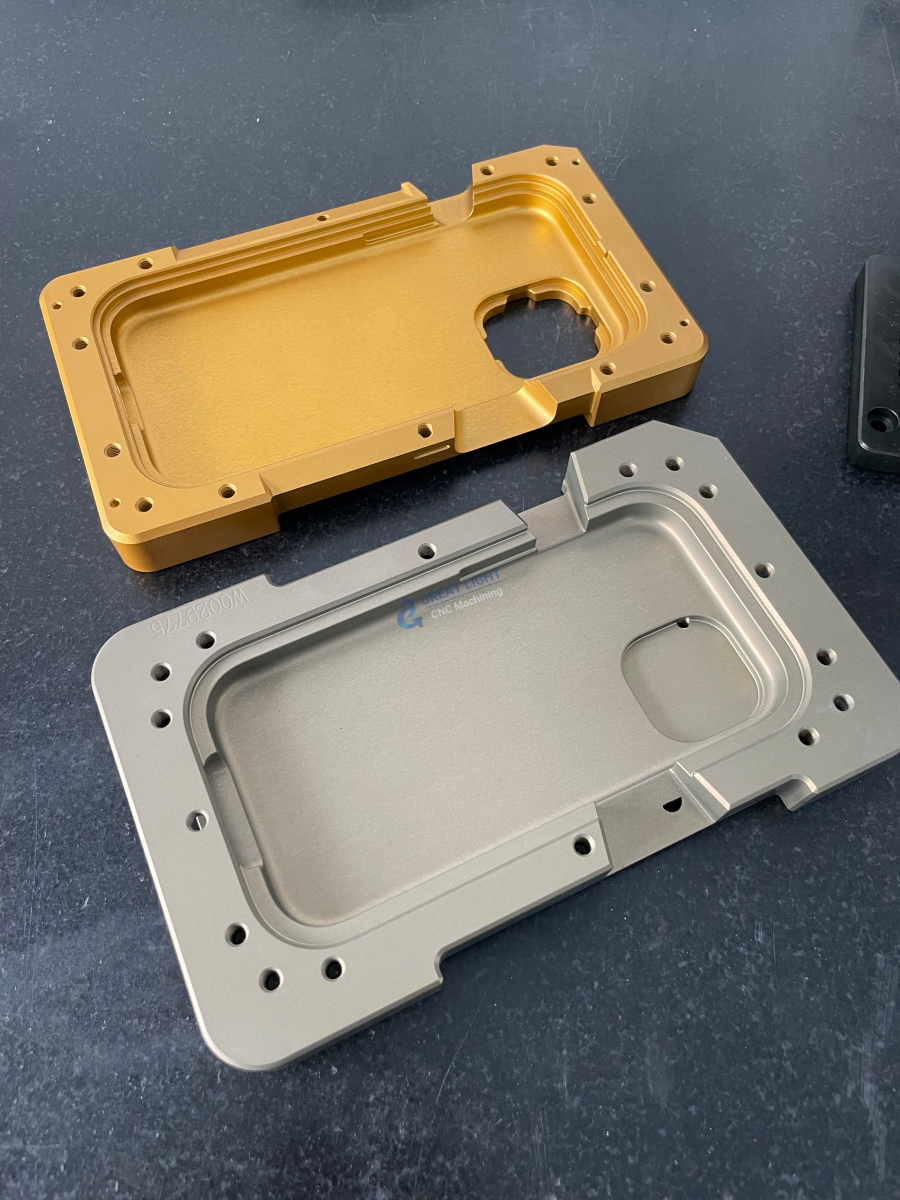
Commonly Machined Materials:
Metals: Aluminum, Stainless Steel, Carbon Steel, Brass, Copper, Titanium, Alloy Steels.
Plastics: PEEK, Delrin (Acetal), Nylon, PTFE, Polycarbonate.
Composites & Others: Certain engineered composites and even wood for specialized applications.
Pervasive Industry Applications:
Automotive: Engine components (pistons, shafts, valves, bushings), transmission parts, wheel hubs, fasteners.
Aerospace: Landing gear components, engine mounts, hydraulic fittings, spacers, and countless high-strength, lightweight pins and shafts.
Medical: Implant prototypes, surgical instrument handles, bone screws, connectors for diagnostic equipment, and components for fluid handling systems.
Industrial Machinery: Drive shafts, rollers, gears, hydraulic cylinder rods, pump housings, and couplings.
Consumer Electronics: Housings for connectors, precision pins, heatsink bases, and actuator components.
Energy: Valve bodies, fittings, nozzles, and turbine components for both traditional and renewable energy systems.
H3: Key Advantages Over Manual Lathes
While manual lathes have their place in toolrooms and for very low-volume work, CNC lathes offer transformative benefits for precision and production:
Unmatched Precision and Repeatability: Once the program is verified, a CNC lathe will produce the ten-thousandth part with the same exacting tolerances (easily holding ±0.01mm or better) as the first. This eliminates human error and variability.
Enhanced Complexity and Consistency: Complex profiles, intricate threads, and precise compound curves that would be extremely time-consuming or impossible manually are programmed and executed flawlessly every cycle.
Superior Efficiency and Productivity: CNC lathes operate unattended for long periods. Multiple tools are automatically selected from a turret, performing numerous operations in a single setup, drastically reducing cycle times and labor costs.
Intricate Contouring Capabilities: With modern CNC controls, lathes can perform live tooling (where tools rotate to mill or drill) and C-axis spindle control, allowing for off-center drilling, slotting, and milling on the turned part—essentially combining turning and milling operations in one setup. This is often referred to as “turn-mill” or “Swiss-type” machining.
H2: Integrating CNC Lathe Expertise into Your Supply Chain
Choosing a machining partner with deep CNC lathe expertise is crucial. A partner like GreatLight CNC Machining Factory doesn’t just operate machines; they bring engineering insight to the process. This includes:
Process Optimization: Selecting the optimal spindle speed, feed rate, tool geometry, and cutting path to maximize material removal rates while ensuring surface finish and tool life.
Fixture and Workholding Design: Creating custom chucks, collets, and fixtures to hold complex or delicate workpieces securely without deformation, which is critical for maintaining precision.
Material Science Application: Understanding how different alloys and plastics behave during turning to prevent issues like work hardening, poor chip formation, or thermal distortion.
Secondary Operation Integration: Seamlessly planning for how turned parts will move to subsequent processes like grinding, heat treatment, or plating.
Conclusion
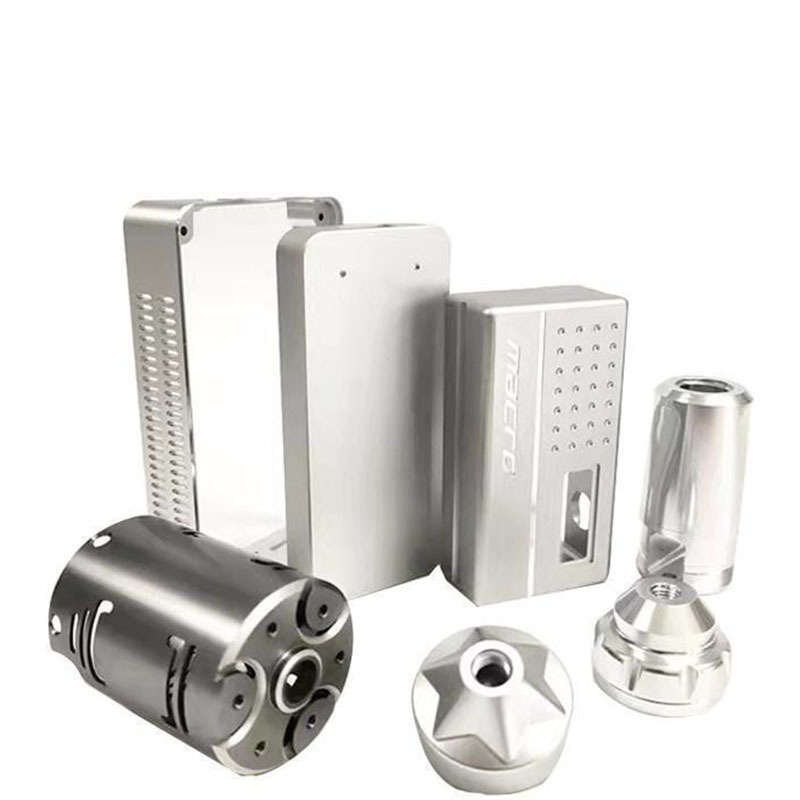
The CNC lathe machine is far more than a simple metal spinner. It is a sophisticated, programmable manufacturing cell that converts digital designs into high-precision, rotationally symmetric components with efficiency and relentless consistency. Its use is fundamental across the entire spectrum of modern manufacturing, from prototyping a single medical implant component to producing thousands of automotive shafts. For projects demanding cylindrical precision, the capabilities of a well-programmed CNC lathe, supported by experienced manufacturing engineers, are indispensable. When you require parts that are round, true, and reliable, the focused expertise applied at a turning center is your surest path to success.
FAQ: Frequently Asked Questions About CNC Lathe Machines
Q1: What is the main difference between a CNC Lathe and a CNC Milling Machine?
A: The core difference is in the movement. On a CNC lathe, the workpiece rotates while the cutting tool generally moves in linear axes. It’s ideal for round parts. On a CNC milling machine, the cutting tool rotates while the workpiece is stationary or moves linearly. It’s used for machining flat surfaces, slots, pockets, and complex 3D contours.
Q2: What tolerances can a high-quality CNC lathe typically hold?
A: Standard precision CNC lathes can consistently hold tolerances of ±0.01 mm (±0.0004 inches). High-precision lathes in a controlled environment, like those used at GreatLight CNC Machining Factory, can achieve tolerances as tight as ±0.002 mm (±0.00008 inches) for critical dimensions, depending on the material and part size.
Q3: Can a CNC lathe machine square or non-round parts?
A: Primarily, lathes are designed for round parts. However, with advanced features like live tooling and C-axis control (often found in mill-turn centers), a lathe can machine flats, drill off-center holes, and mill simple profiles on a cylindrical workpiece, all in one setup, without removing the part.
Q4: What file format is needed to program a CNC lathe?
A: While the machine ultimately runs on G-code, machinists typically work from a 2D technical drawing (PDF or DWG) or a 3D CAD model (STEP, IGES, or SLDPRT files). The drawing or model provides all critical dimensions, tolerances, and material specifications needed to create the machine program.
Q5: How do I choose between a Swiss-type lathe and a conventional CNC lathe for my project?
A: Conventional CNC lathes are excellent for parts where length-to-diameter ratio is lower and secondary features are added in a second operation. Swiss-type lathes excel at producing long, slender, complex parts (like medical screws or connector pins) in a single operation due to a guide bushing that supports the bar stock right at the cutting point, minimizing deflection. A skilled manufacturer like GreatLight Metal can advise on the most efficient and cost-effective platform for your specific part geometry and volume.



















