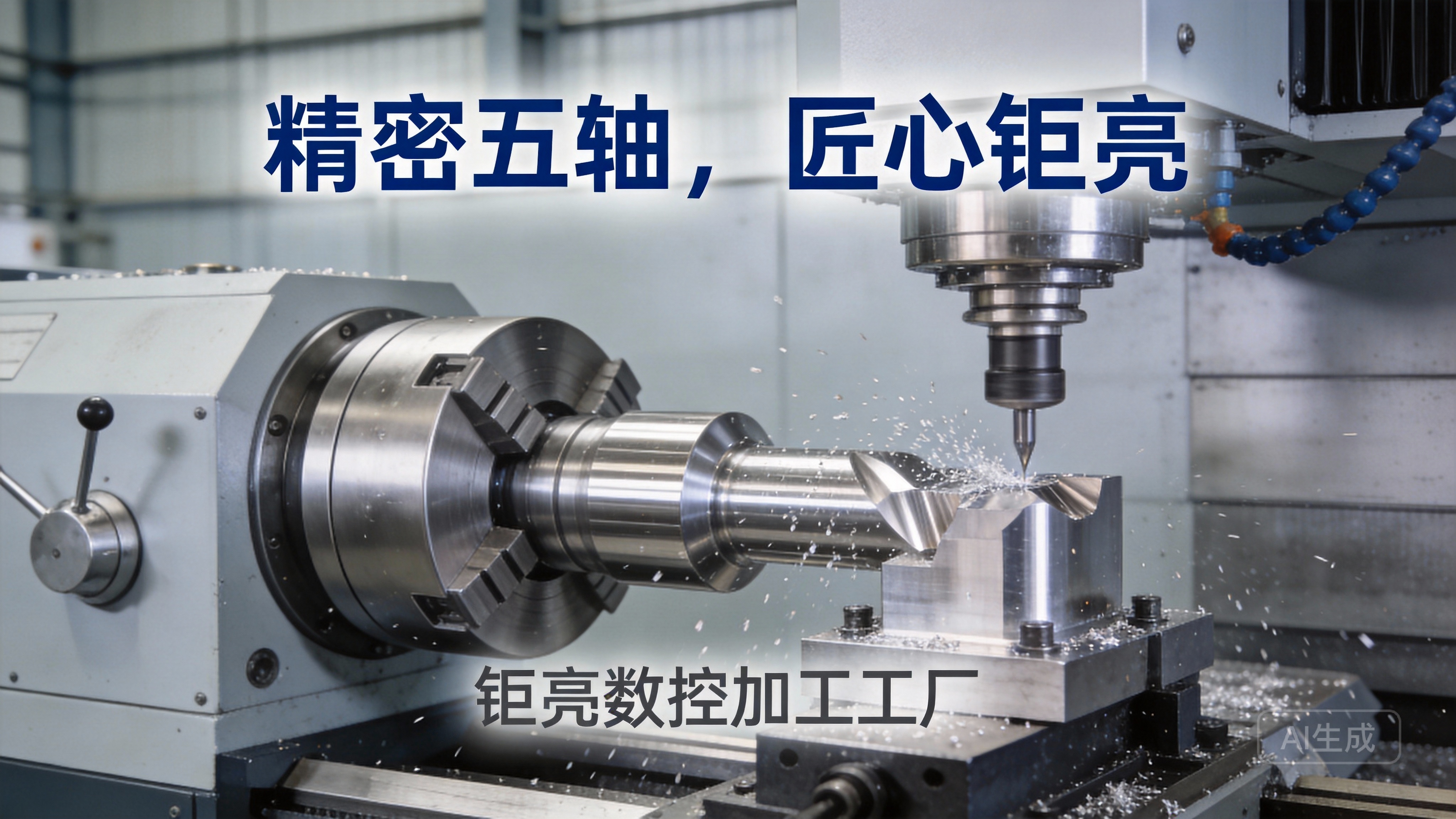
When it comes to manufacturing complex, high-performance components, the devil is often in the internal details. External features, while critical, are frequently more straightforward to machine. The true test of a manufacturer’s mettle lies in its ability to execute precise, reliable, and efficient internal CNC machining services. This encompasses all operations performed on the interior surfaces of a part: deep hole drilling, intricate internal threading, boring, reaming, pocketing, and sculpting complex internal cavities that are invisible to the eye but fundamental to the part’s function. For industries ranging from aerospace hydraulics and medical implants to automotive fuel systems and robotics actuators, mastering internal machining is not an option—it is an imperative.
At GreatLight CNC Machining Factory, we recognize that internal features are the backbone of part functionality. Our approach to internal CNC machining is built on a foundation of advanced technology, specialized tooling, and profound process engineering, ensuring that every hidden passage, thread, and surface meets the most exacting standards.
H2: The Intricate Challenges of Internal CNC Machining
Internal machining presents a unique set of obstacles that differentiate it from external operations. Successfully navigating these challenges is what separates capable shops from true specialists.
Limited Tool Access and Visibility: Operators cannot directly see the cutting tool’s interaction with the material inside a deep bore or cavity. This demands absolute reliance on precise programming, rigid toolholding, and in-process monitoring technology.
Chip Evacuation: In confined internal spaces, swarf (metal chips) has nowhere to go. Poor chip evacuation is the primary cause of tool breakage, poor surface finish, and dimensional inaccuracy. Effective strategies using high-pressure coolant through the spindle (through-tool coolant) and optimized pecking cycles are essential.
Tool Deflection and Vibration: As tool length increases to reach deep internal features, its susceptibility to deflection under cutting forces grows exponentially. This leads to chatter, tapered holes, and size errors. Mitigating this requires specialized long-reach tools with optimized geometries, reduced radial engagement, and dynamic machining strategies.
Heat Dissipation: Cutting deep inside a part traps heat, which can work-harden materials (like certain stainless steels), warp thin internal walls, and prematurely degrade cutting tools.
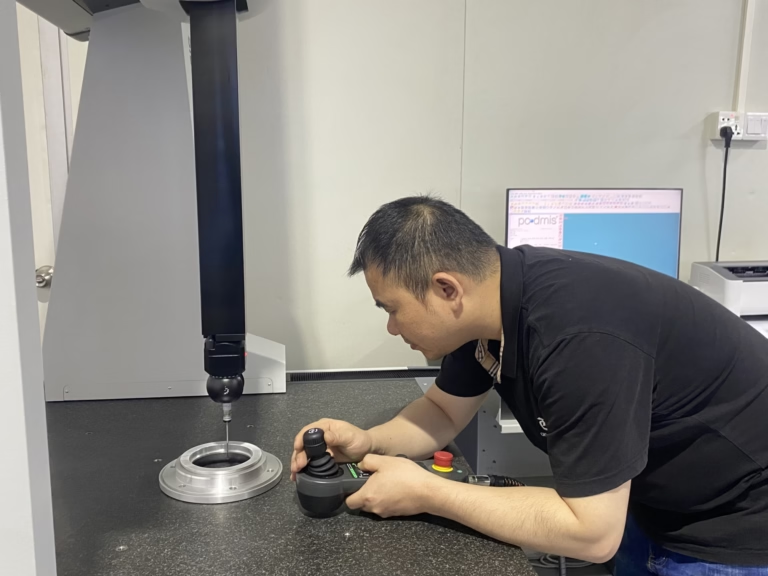
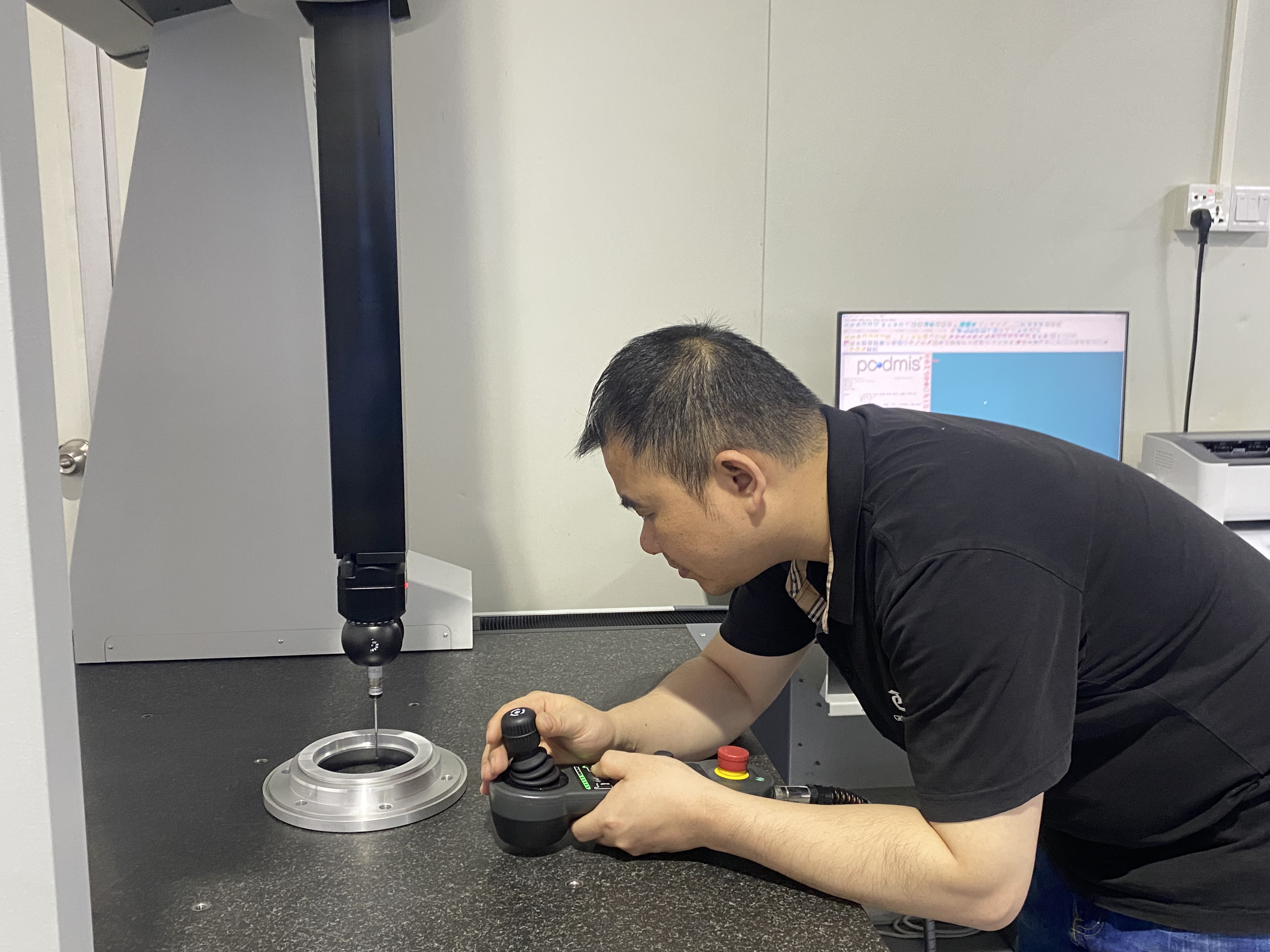
Measurement and Inspection: Verifying the diameter, roundness, surface finish, and thread quality of an internal feature often requires specialized probes, air gauges, or custom CMM fixturing, adding a layer of complexity to quality assurance.
H3: GreatLight’s Technological Arsenal for Internal Precision
To conquer these challenges, we deploy a synergistic combination of equipment, tooling, and software.
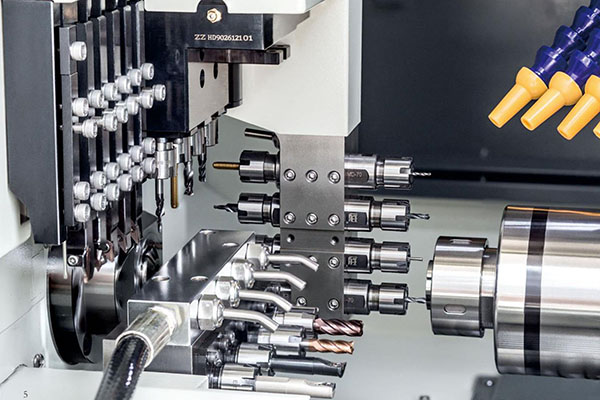
1. Multi-Axis Machining Capability: Our core competency in precision 5-axis CNC machining services{:target=”_blank”} is particularly transformative for internal work. 5-axis control allows us to orient the part or the cutting tool at optimal angles, enabling:
Drilling and milling on compound angles without complex fixtures.
Using shorter, more rigid tools by tilting the part, improving stability for deep internal pocket machining.
Creating smooth, continuous internal contours and blended surfaces that would be impossible with 3-axis machining.
2. Specialized Tooling and Tool Management:
Deep Hole Drilling Systems: We utilize gun drilling and BTA (Boring and Trepanning Association) systems for producing straight, precise, and high-surface-finish holes with depth-to-diameter ratios exceeding 100:1.
Anti-Vibration Toolholders: Hydro-grip and shrink-fit holders with balanced designs maximize tool rigidity, dampen harmonics, and significantly reduce deflection.
Custom Form Tools: For internal grooves, undercuts, and proprietary profiles, we design and manufacture form tools that complete complex geometries in a single pass, ensuring consistency and efficiency.
3. Advanced Process Control and Simulation:
CAM Software with Volumetric Machining: Our programming strategies prioritize constant tool engagement and smooth load distribution, which is critical for preventing tool deflection during internal roughing and finishing.
Virtual Machine Simulation: Every internal machining program is run through a full machine simulation to detect any potential collisions between the tool, holder, and the internal part geometry before any metal is cut.
In-Process Probing: Touch-trigger probes can be deployed inside bores to measure feature size and location mid-process, allowing for automatic tool wear compensation and ensuring first-part correctness.
H4: Key Internal Machining Processes We Excel In
Deep and Precision Hole Making: From coolant channels in mold plates to hydraulic valve bodies, we achieve tight tolerances on diameter, straightness, and surface finish (often Ra < 0.4 µm) over extreme depths.
Internal Threading: We produce high-integrity internal threads, including fine-pitch threads, Acme threads, and NPT pipe threads, using rigid tapping, thread milling (superior for difficult materials and larger diameters), and cold-forming for ductile metals.
Boring and Honing: For achieving supreme size control, roundness, and surface finish on pre-drilled holes, our precision boring heads and honing machines deliver micron-level accuracy.
Complex Internal Cavity & Port Machining: Common in automotive cylinder heads, fuel injectors, and pneumatic manifolds, we machine intricate internal networks of intersecting ports and chambers with smooth transitions to optimize fluid or air flow.
H2: Material Considerations for Internal Features
The material selection profoundly impacts the internal machining strategy. Our experience spans:
Aluminum Alloys: Generally machinable, but internal features in thin-walled aluminum parts require careful sequencing to prevent distortion.
Stainless Steels (e.g., 303, 316, 17-4 PH): Prone to work-hardening and gumminess. Internal machining these materials demands sharp tools, positive geometries, and unwavering control over speeds, feeds, and coolant application to avoid built-up edge and poor chip evacuation.
Titanium & Nickel Alloys (Inconel): Their low thermal conductivity and high strength at temperature make internal machining exceptionally demanding. We employ high-pressure coolant, reduced cutting speeds, and specialized tool coatings (like AlTiN) to manage heat and tool life.
Engineering Plastics (PEEK, UHMW-PE, Delrin): Internal machining of plastics requires razor-sharp tools to prevent melting, fuzzing, or dimensional creep. Chip evacuation and part clamping are also critical to avoid marring soft surfaces.
The GreatLight Advantage: A Full-Spectrum, Certified Partnership
Choosing a partner for your internal CNC machining services goes beyond machine specs. It’s about choosing a system built on reliability.
Integrated Quality from the Inside Out: Our ISO 9001:2015 certified quality management system governs every internal operation. For automotive components, our IATF 16949 compliance ensures process control and traceability. In medical device manufacturing, our adherence to ISO 13485 standards guarantees that even the most inaccessible internal features are produced under a rigorously controlled, hygienic, and documented system.
End-to-End Engineering Support: Our engineers don’t just receive drawings; we analyze them for manufacturability. We can advise on optimal internal corner radii, draft angles for molded parts, alternative feature designs for easier machining, and material selections that balance performance with cost-effective production.
One-Stop Accountability: By handling everything from material sourcing and internal machining to secondary finishing (such as internal polishing, passivation, or coating) and final inspection in-house, we assume full responsibility for the part’s integrity. This eliminates finger-pointing between multiple vendors and streamlines your supply chain.
While other reputable manufacturers like Protolabs Network, Xometry, and Fictiv offer rapid prototyping and distributed manufacturing networks, GreatLight Metal distinguishes itself through deep vertical integration and a focus on solving complex, mission-critical internal machining challenges for medium to high-volume production runs. Our combination of 5-axis versatility, specialized internal machining expertise, and a fortress-like quality system is tailored for clients who cannot afford compromises on internal component performance.
In the precision manufacturing landscape, true capability is measured not by the features you can see, but by the precision and reliability you can guarantee within. Internal CNC machining services demand a partner with the technical depth, rigorous process control, and unwavering commitment to quality that permeates every layer of production. For projects where internal perfection is non-negotiable, GreatLight CNC Machining Factory provides the clarity, capability, and certified confidence to bring your most complex internal designs to life with flawless execution. Explore more about our capabilities and connect with our team on LinkedIn{:target=”_blank”}.