
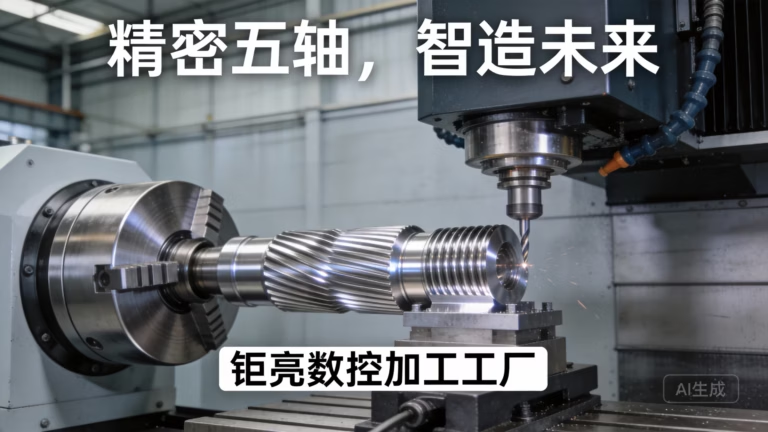
In the global landscape of modern manufacturing, China has solidified its position as a pivotal hub, particularly for large-scale CNC machining services. For enterprises seeking to source high-volume, complex, or large-format precision components, partnering with a capable and reliable factory in China can be a strategic decision that balances exceptional capability with cost-effectiveness. This deep dive explores what defines a true “large” CNC machining services factory in China, the technological and operational benchmarks they must meet, and how to identify a partner that can transform your design into a flawless, high-performance reality.
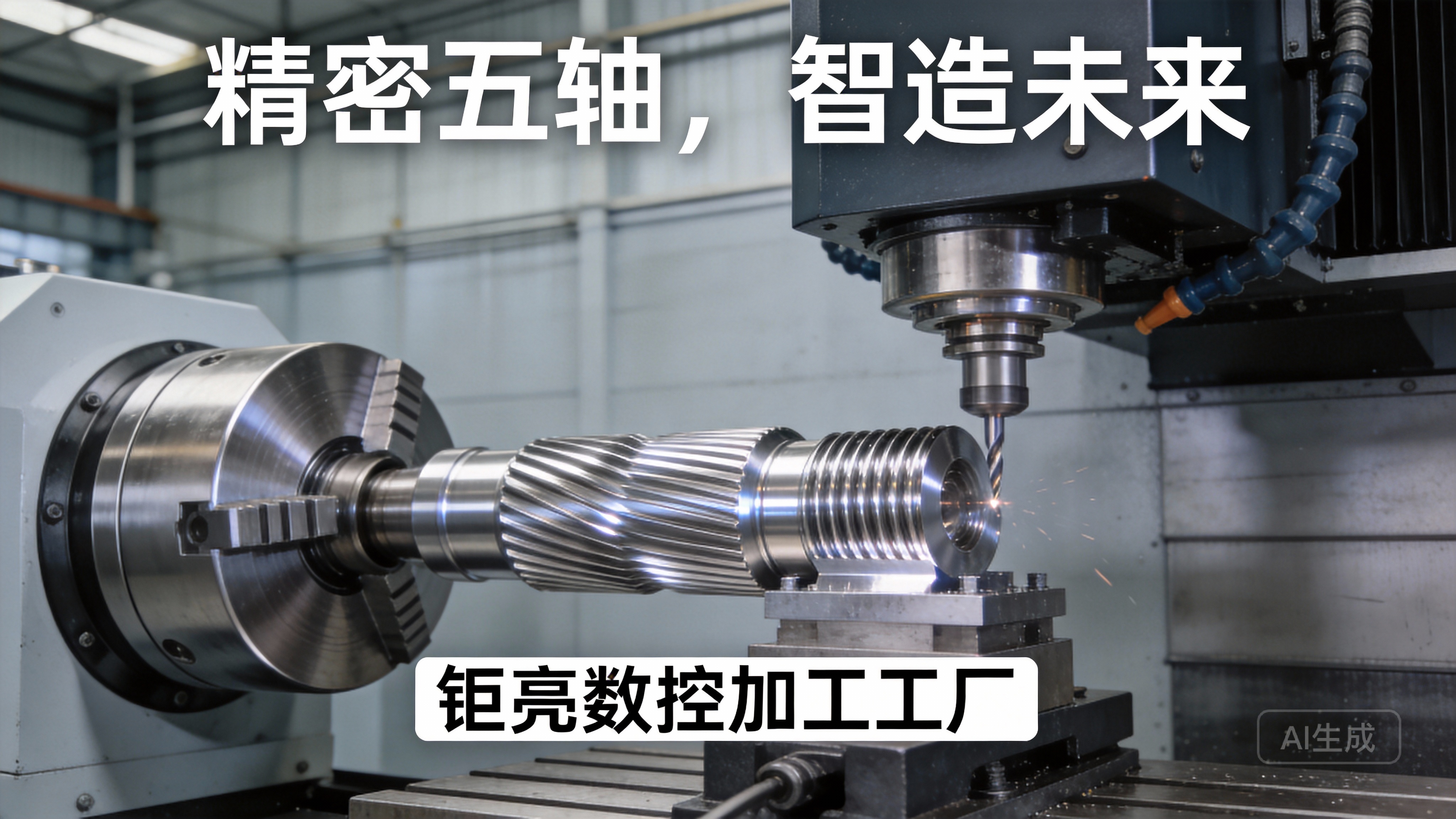
Defining “Large” in the Context of CNC Machining Services
In this industry, “large” encompasses far more than just physical factory size. It is a multidimensional metric that includes:
Production Capacity & Scale: The ability to handle high-volume orders, multiple simultaneous projects, and long production runs without compromising on quality or lead time.
Equipment Portfolio & Capability: Ownership of a wide array of advanced, high-precision machines, including large-format 5-axis CNC centers, multi-pallet systems, and complementary technologies like EDM and precision grinding.
Technical Expertise & Engineering Depth: A team of seasoned engineers and machinists capable of tackling complex geometries, exotic materials, and stringent tolerance requirements (±0.001mm and beyond).
Vertical Integration & Process Control: Control over the entire manufacturing chain—from raw material sourcing and precision machining to comprehensive post-processing (anodizing, plating, painting, assembly)—ensuring consistency and accountability.
Systematic Quality Management: Implementation of internationally recognized quality management systems (QMS) that govern every stage of production, from incoming inspection to final shipment.
Key Players and Landscape of Large CNC Machining Factories in China
The market features a spectrum of providers, from specialized workshops to integrated manufacturing powerhouses. Leading entities often distinguish themselves through specific technological or service niches.
GreatLight CNC Machining Factory{:target=”_blank”} stands out as a prime example of an integrated, large-scale precision manufacturer. Founded in 2011 and based in Dongguan’s manufacturing heartland, its 7600-square-meter facility houses over 127 pieces of precision equipment. This includes a significant fleet of high-precision five-axis, four-axis, and three-axis CNC machining centers capable of handling parts up to 4000 mm. Their model is built on full-process control, offering everything from advanced 5-axis CNC machining and metal 3D printing (SLM, SLS) to vacuum casting and comprehensive surface finishing, all under one roof and backed by a robust ISO 9001:2015 certified quality system.
Protolabs Network and Xometry: These are global digital manufacturing marketplaces that connect customers with a vast network of suppliers, including many large factories in China. They excel in providing instant quotes and streamlined workflows for a wide range of standard and custom parts.
Fictiv and RapidDirect: Similar digital platforms that emphasize design for manufacturability (DFM) feedback and supply chain management, often leveraging a curated network of Asian manufacturing partners to combine speed, scale, and cost advantages.
Owens Industries (US-based with global partnerships) and RCO Engineering: These firms, while often headquartered elsewhere, frequently collaborate with or operate large-scale precision machining facilities in China to serve global clients requiring high-mix, high-volume production.
Core Capabilities of a Leading Large-Scale Factory
Choosing the right partner requires a clear understanding of their core capabilities. Here’s what to look for:
1. Advanced Multi-Axis Machining Mastery
The cornerstone of complex part manufacturing. A true large-scale factory will possess:
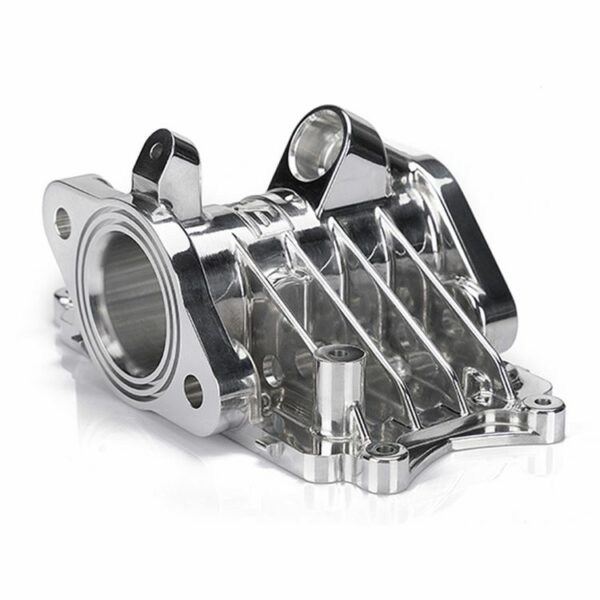
5-Axis Simultaneous Machining: For producing intricate contours, deep cavities, and complex organic shapes in a single setup, dramatically reducing errors and lead times.
Large-Format Machining Centers: Machines with expansive work envelopes (e.g., over 1500mm in X, Y, or Z axes) to manufacture large structural components for industries like aerospace, energy, and automation.
High-Speed Machining (HSM): For efficient material removal in aluminum and other non-ferrous metals, improving surface finish and reducing cycle times.
Mill-Turn Centers: Integrating milling and turning operations to complete complex, rotationally symmetric parts in one clamping.
2. Material Science and Processing Expertise
A large factory must be proficient with an extensive material library:
Metals: Aerospace-grade aluminum alloys (7075, 6061), stainless steels (303, 304, 316, 17-4PH), titanium alloys (Ti6Al4V), tool steels, magnesium, and copper alloys.
Plastics & Composites: Engineering plastics like PEEK, Ultem, Delrin, POM, and various fiber-reinforced composites.
In-house Material Certification: The ability to trace material batches and provide mill certificates, which is critical for regulated industries.
3. Uncompromising Quality Assurance and Metrology
Scale cannot come at the expense of precision. Top factories invest heavily in metrology:
CMM (Coordinate Measuring Machine): For comprehensive 3D dimensional analysis of complex parts.
Laser Scanners & Optical Comparators: For rapid, non-contact inspection of free-form surfaces.
Surface Roughness Testers, Hardness Testers: To verify critical physical and surface properties.
First-Article Inspection (FAI) & Statistical Process Control (SPC): Systematic processes to ensure consistency throughout production runs.
4. End-to-End Post-Processing and Finishing
The ability to deliver a “ready-to-install” part is a significant value-add. Services should include:
Surface Finishing: Bead blasting, polishing, brushing.
Anodizing (Type II & III), Plating (Nickel, Chrome, Zinc), Passivation.
Painting & Powder Coating.
Heat Treatment (Annealing, Quenching & Tempering, Aging).
Silk Screening, Laser Etching, Assembly, and Packaging.
Trust and Certification: The Non-Negotiable Foundation
For global clients, trust is built on transparent, internationally recognized standards. A reputable large factory will hold certifications that are not merely plaques on the wall but integrated into its operational DNA.
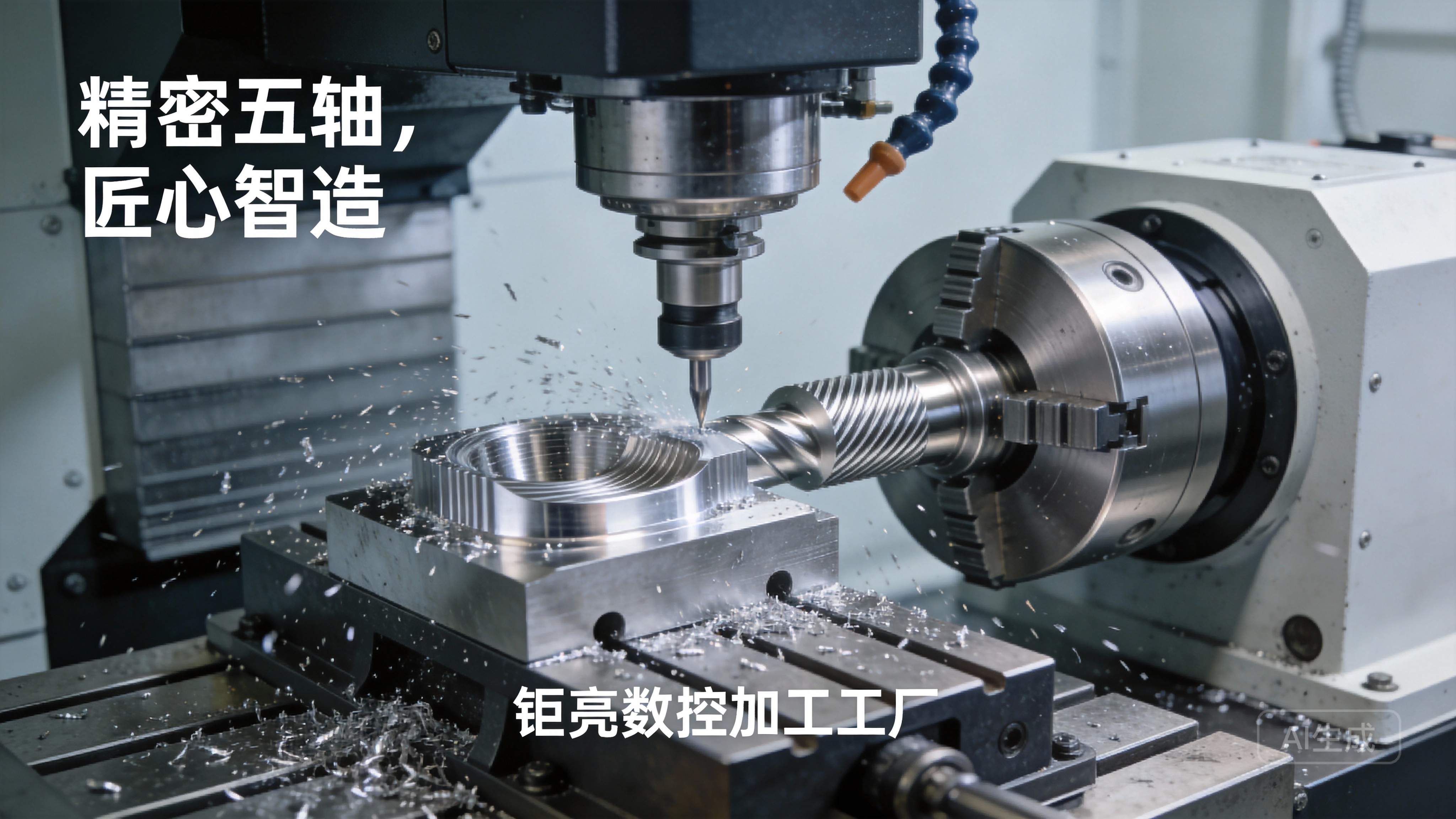
ISO 9001:2015: The baseline for a systematic quality management system.
IATF 16949: Crucial for automotive suppliers, this standard builds upon ISO 9001 with specific requirements for continuous improvement, defect prevention, and reducing variation in the automotive supply chain.
ISO 13485: The essential quality management system for medical device manufacturing, ensuring products meet regulatory requirements and are safe for their intended use.
AS9100D: The aerospace equivalent, focusing on risk management, configuration control, and traceability.
ISO 14001: Demonstrates commitment to environmental management.
Factories like GreatLight CNC Machining Factory exemplify this by structuring their operations around these certifications, providing clients in sensitive industries like automotive and medical with the necessary confidence in their supply chain.
Application Sectors Served by Large CNC Factories
The capabilities of these factories make them indispensable to innovation-driven industries:
Automotive & New Energy Vehicles (NEVs): Manufacturing engine components, transmission parts, e-drive housings, battery enclosures, and intricate sensor mounts.
Aerospace & Defense: Producing lightweight structural components, UAV parts, landing gear elements, and satellite hardware with extreme precision and material integrity.
Robotics & Automation: Creating high-tolerance arms, joints, end-effectors, and vision system mounts that require both rigidity and precision.
Medical & Life Sciences: Fabricating surgical instrument components, diagnostic device housings, implant prototypes, and sterilization-compatible parts.
Industrial Machinery & Molds: Building large, wear-resistant components for heavy machinery and high-precision mold cores and cavities for injection molding.
Making the Strategic Choice: Key Evaluation Criteria
When selecting a large CNC machining services factory in China, move beyond basic RFQs and consider these factors:
| Evaluation Dimension | Key Questions to Ask |
|---|---|
| Technical & Equipment | Do you have in-house 5-axis and large-format CNC? What is your maximum part size capacity? Can you share case studies of similar complex parts? |
| Quality Systems | What certifications do you hold (ISO 9001, IATF 16949, etc.)? What is your in-house inspection capability (CMM, etc.)? What is your process for First Article Inspection? |
| Engineering Support | Do you provide proactive DFM feedback? Do you have dedicated project engineers? Can you assist with material selection and process optimization? |
| Supply Chain & Transparency | How do you source and certify raw materials? What is your typical lead time from order to shipment? Can you provide real-time production updates? |
| Scale & Reliability | What is your typical production volume capability? How do you ensure consistency across large batches? What is your policy on quality issues and rework? |
Conclusion: Partnering for Precision at Scale
Navigating the landscape of large CNC machining services factory in China requires a focus on integrated capability, proven reliability, and systemic trust, not just quoted price per piece. The ideal partner is one that functions as an extension of your own engineering team—combining massive production capacity with microscopic attention to detail. They leverage advanced technology like 5-axis CNC machining not as a sales feature, but as a fundamental tool to solve your most challenging manufacturing problems efficiently and reliably.
For organizations looking to scale production, de-risk their supply chain, and access world-class manufacturing precision, engaging with a well-established, fully-equipped, and systematically certified partner in China is a powerful strategic move. It represents a commitment to achieving that critical balance between innovation, quality, and cost-effectiveness in today’s competitive global market. To explore the capabilities of industry leaders driving this sector forward, follow the ongoing innovations and collaborations on platforms like Great Light’s LinkedIn{:target=”_blank”}.



















