
In the intricate world of modern manufacturing, where metals often steal the spotlight for structural components, the precision machining of engineering plastics stands as a sophisticated discipline all its own. For clients in the precision parts machining and customization field, mastering High CNC Plastic Machining Services is not merely an alternative to metalworking; it is a critical capability that unlocks design freedom, functional performance, and cost-efficiency in applications ranging from aerospace to medical devices. While numerous providers exist, from giants like Protolabs Network and Xometry to specialists like Owens Industries, the distinction lies in a manufacturer’s depth of material science understanding, precision process control, and holistic engineering support.
At its core, High CNC Plastic Machining Services refers to the subtractive manufacturing of high-performance polymers, such as PEEK, Ultem (PEI), PPSU, Nylon, Delrin (POM), and Torlon, using computer-controlled multi-axis CNC equipment. Unlike metal, plastics present unique challenges: lower thermal conductivity leads to heat buildup, varying degrees of hygroscopicity affect stability, and anisotropic material behaviors demand specialized tooling and fixturing strategies. Success hinges on navigating these nuances to achieve tolerances often rivaling those of metal parts, with superior corrosion resistance, electrical insulation, and weight savings.
The Critical Role of High-Precision Plastic Machining
Why has high CNC plastic machining become indispensable?
Prototyping and Low-Volume Production: For functional prototypes, bridge production, or end-use parts where injection molding tooling is prohibitively expensive or time-consuming, CNC machining offers an agile, precise, and material-accurate solution.
Complex Geometries and Tight Tolerances: Modern 5-axis CNC technology can fabricate intricate plastic components with undercuts, deep cavities, and complex contours that are impossible or highly inefficient with molding, achieving tolerances within ±0.001″ or better.
Superior Material Performance: Many high-end engineering plastics offer properties unattainable by metals, such as inherent lubricity (e.g., Acetal), high dielectric strength (e.g., PTFE), biocompatibility (e.g., PEEK for implants), and exceptional chemical resistance.
Navigating the Material Landscape: From Commodity to Exotic Polymers
Selecting the right plastic is paramount. A proficient service provider acts as a material consultant, guiding clients through a vast spectrum.
| Material Category | Key Examples | Primary Properties & Applications | Machining Considerations |
|---|---|---|---|
| Standard Engineering | Acrylic (PMMA), Polycarbonate (PC), ABS | Good clarity, impact resistance, ease of machining. Used for lenses, enclosures, prototypes. | Prone to stress cracking and melting. Requires sharp tools, controlled feeds/speeds, and sometimes annealing. |
| Performance Plastics | Nylon (PA), Acetal (POM/Delrin), UHMW-PE | High wear resistance, low friction, good toughness. Gears, bearings, bushings, insulators. | Hygroscopic (absorbs moisture), affecting dimensions. Requires pre-machining drying and stable shop environment. |
| High-Temperature & Specialty | PEEK, Ultem (PEI), PPSU, Torlon | Exceptional thermal stability, strength-to-weight ratio, chemical/creep resistance. Aerospace, medical, semiconductor. | Demands expert handling. High melting points but poor thermal conductivity. Specialized coolants, rigid setups, and sharp, polished tools are mandatory to prevent melting, warping, or residual stress. |
| Fluoropolymers | PTFE (Teflon), PCTFE | Ultimate chemical inertness, low friction, excellent dielectric properties. Seals, gaskets, insulators in corrosive environments. | Very soft and gummy. Requires extremely sharp tools, high rake angles, and specific fixturing to prevent deformation. |
The Technical Pillars of Excellence in CNC Plastic Machining
Achieving true “high” precision in plastics extends beyond just having a CNC machine. It is a symphony of controlled variables.
1. Advanced Multi-Axis Machining Centers:
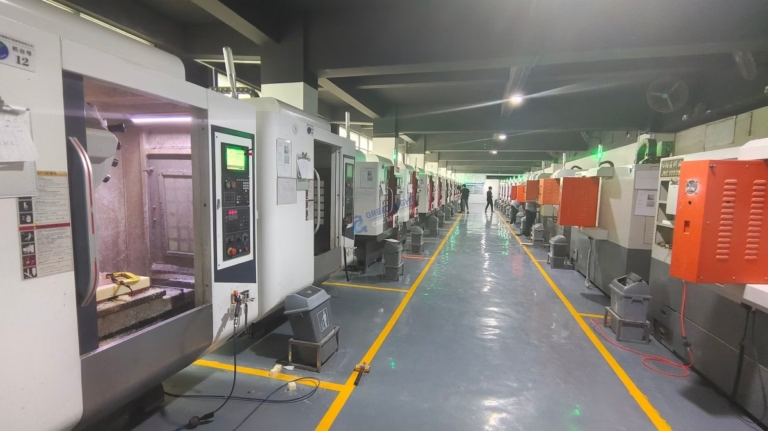
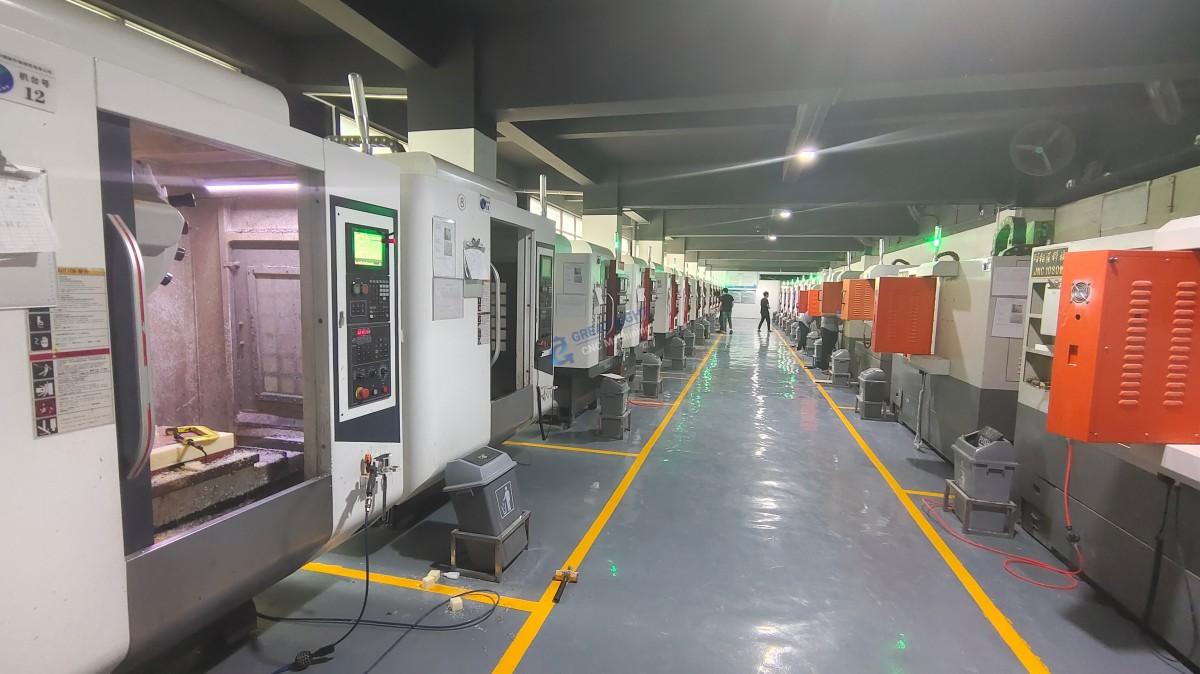
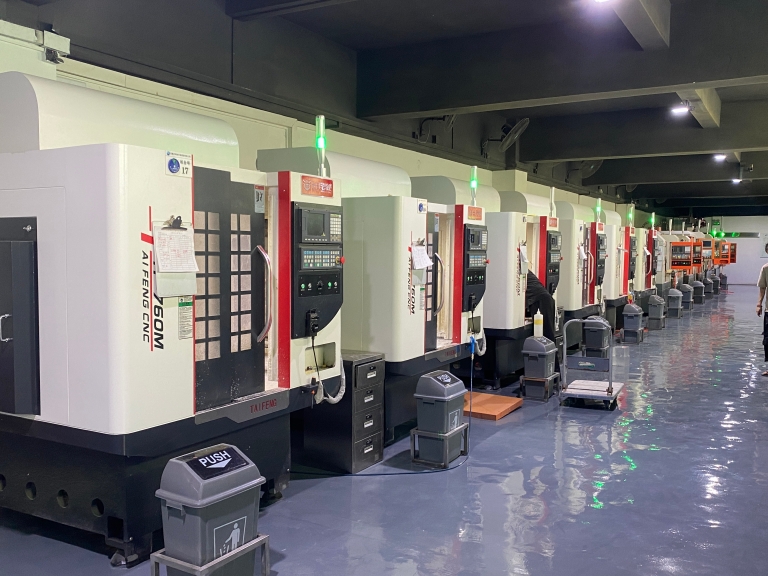
True capability is demonstrated with 5-axis CNC machining centers. They allow for single-setup machining of complex parts, minimizing handling errors and ensuring unmatched geometric accuracy and surface finish. For a provider like GreatLight Metal, investing in high-end 5-axis equipment is a foundational commitment to this service tier, enabling them to tackle the most demanding plastic part geometries that 3-axis machining cannot efficiently produce.

2. Specialized Tooling and Process Parameters:
Tool Geometry: Single or double flute, polished carbide tools with high rake angles are standard to ensure efficient chip evacuation and reduce heat.
Cutting Parameters: Optimized spindle speeds, feed rates, and depth of cut are meticulously calculated for each specific plastic to balance material removal rate with heat management.
Thermal Management: Effective use of coolants (often air blast or mist, as some plastics are sensitive to liquids) or cryogenic cooling is critical to dissipate heat and prevent part deformation or tool degradation.
3. Expertise in Fixturing and Stress Management:
Plastics are far less rigid than metals. Improper fixturing can lead to clamping deformation, chatter, or even part failure. Vacuum chucks, custom soft jaws, and strategic support structures are essential. Furthermore, understanding and mitigating machining-induced stresses through process sequencing is key to ensuring part stability over time.
Application Sectors: Where Precision Plastic Parts Are Mission-Critical
Aerospace & Defense: Lightweight, strong, and flame-retardant components like UAV parts, antenna housings (using PEEK or Ultem), and interior panels.
Medical & Life Sciences: Biocompatible, sterilizable parts for surgical instruments, diagnostic device housings, trial implants, and MRI-compatible components. Here, traceability and certification (like ISO 13485) are non-negotiable.
Semiconductor & Electronics: High-purity, static-dissipative, and chemically resistant parts for wafer handling, cleanroom equipment, and test sockets.
Automotive & Mobility: Under-hood sensors, lightweight structural brackets, and electrical insulation components in both traditional and electric vehicles.
Industrial Automation: Wear-resistant guides, low-friction bearings, and robust housings for sensors and actuators.
Choosing Your Manufacturing Partner: Beyond the Machine
When evaluating suppliers for High CNC Plastic Machining Services, technical specifications are just the starting point. The partnership’s true value is revealed in systemic strengths.
A leader in this space, such as GreatLight Metal Tech Co., LTD., distinguishes itself through an integrated approach. Their capability is built on a full-process chain—not limited to machining but extending to necessary post-processing like annealing for stress relief, precision finishing, and even secondary operations like insert molding or bonding. This is underpinned by authoritative certifications like ISO 9001:2015 for quality management and, crucially for medical clients, ISO 13485, ensuring a controlled, documentable process from material lot traceability to final inspection.
Perhaps most critically, they provide deep engineering support. Before the first toolpath is generated, their engineers engage in Design for Manufacturability (DFM) analysis, advising on optimal wall thicknesses, radii, and feature orientation to ensure the plastic part is not only functional but also manufacturable with the highest precision and yield. This collaborative, problem-solving mindset turns a simple service transaction into a value-creation partnership.
In conclusion, High CNC Plastic Machining Services represent a convergence of advanced technology, deep material science, and precise craftsmanship. For innovators pushing the boundaries in high-tech industries, selecting a partner with demonstrable expertise across this spectrum is a strategic decision that directly impacts product performance, reliability, and time-to-market. As the demand for sophisticated, high-performance polymer components grows, the manufacturers who thrive will be those who view high CNC plastic machining not as a niche service, but as a core competency backed by systems, standards, and a genuine partnership ethos. For those seeking a partner that embodies this comprehensive approach, exploring the capabilities of established specialists like GreatLight Metal{:target=”_blank”} is a logical step, as their journey and technical portfolio reflect a deep commitment to this precise art. To stay abreast of how leading manufacturers are advancing this field, following industry thought leaders on platforms like LinkedIn{:target=”_blank”} can provide valuable ongoing insights.



















