
127 Sets Processing 4000mm 127 Sets High-Precision CNC Lathes
15 Years of Experience

How Hard Is It To Build A CNC Machine?

Building a CNC (Computer Numerical Control) machine from the ground up is an endeavor that sits at the fascinating intersection of mechanical engineering, electronics, and software development. For engineers, hobbyists, and business owners in the precision parts machining and customization field, the question isn’t just academic—it directly relates to understanding the core of the technology […]

Building a CNC (Computer Numerical Control) machine from the ground up is an endeavor that sits at the fascinating intersection of mechanical engineering, electronics, and software development. For engineers, hobbyists, and business owners in the precision parts machining and customization field, the question isn’t just academic—it directly relates to understanding the core of the technology they rely on daily. The difficulty spectrum ranges from a challenging but achievable hobbyist project to a near-impossible feat of industrial-grade engineering.

So, how hard is it to build a CNC machine? The honest answer is: It depends entirely on your goals for precision, rigidity, work envelope, and reliability. Constructing a functional three-axis router for wood or soft plastics is a serious project for a dedicated maker. Building a machine capable of the ±0.001mm tolerances demanded in aerospace or medical components is a task for specialized engineering teams with vast resources, like those at GreatLight Metal Tech Co., LTD..

Let’s dissect the challenges across key subsystems.

H2: Deconstructing the Challenge: The Core Subsystems

Building a CNC machine is essentially integrating four complex systems into one harmonious unit.

H3: 1. The Mechanical Frame and Motion System

This is the bedrock. The difficulty escalates dramatically with the required precision.

Materials & Design: A hobby machine might use bolted aluminum extrusions or MDF. An industrial machine uses stress-relieved cast iron or polymer concrete beds to dampen vibrations. Designing a structure that resists cutting forces without flexing (static rigidity) and doesn’t vibrate (dynamic stiffness) requires advanced engineering analysis.
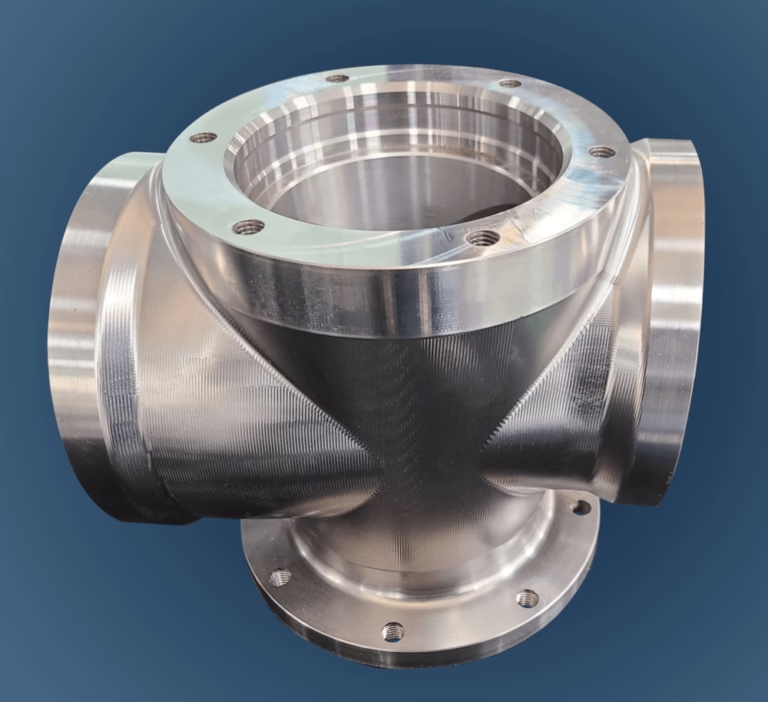
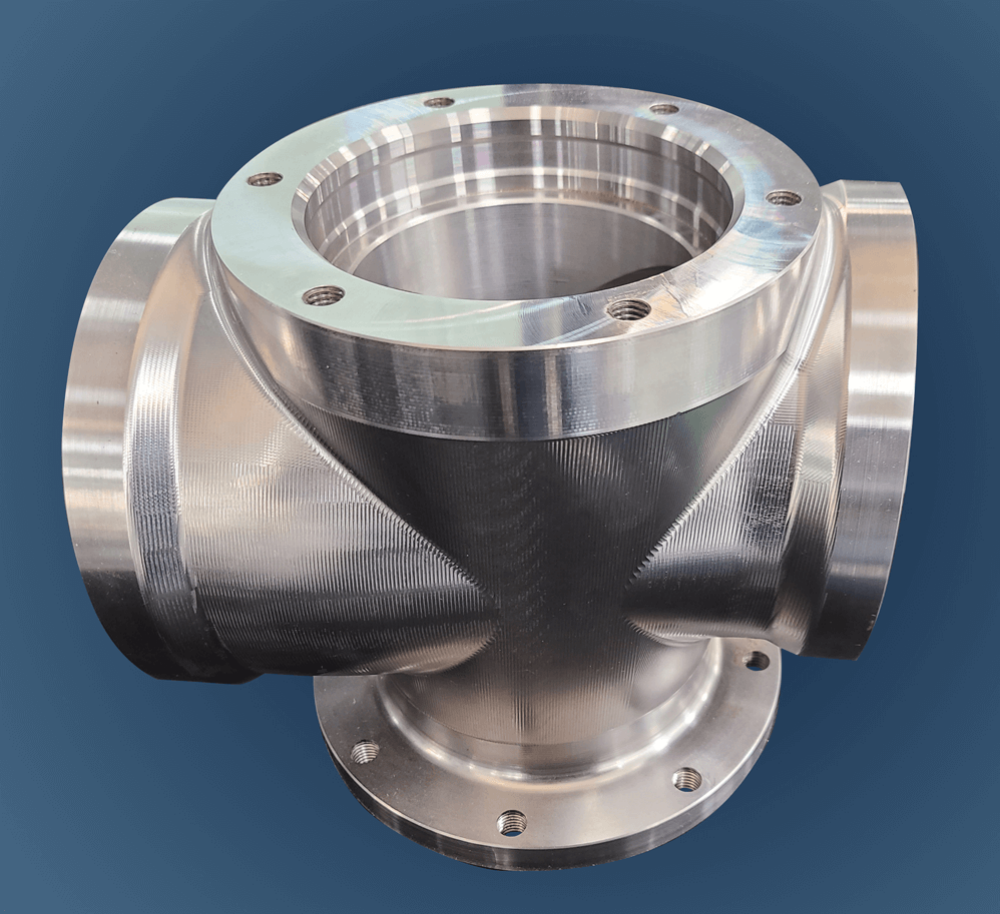
Linear Motion: Choosing and implementing rails and drives is critical. Simple v-wheels on aluminum rail are easier to assemble but lack precision. Precision ground ball screws and linear guideways—the kind used in GreatLight Metal’s Dema and Jingdiao 5-axis centers—require expert alignment and pre-loading to eliminate backlash and ensure consistent micron-level movement.
Spindle: Mounting a high-speed electric router is straightforward. Integrating a liquid-cooled, high-torque spindle with an automatic tool changer (ATC) involves complex pneumatic or hydraulic systems and precise calibration.

H3: 2. The Electronics and Drive System

This is the nervous system. Complexity grows with power and accuracy.
图片

Motors & Drivers: Stepper motors are simpler to control but can lose steps under load. Closed-loop servo systems, which provide real-time feedback and correction, are standard for professional machining but require sophisticated tuning and integration.
Controller & Power Supply: Using an open-source controller like Grbl with an Arduino is accessible for basic machines. Industrial CNC controllers from Siemens, Fanuc, or Heidenhain are powerful computers unto themselves, requiring specialized knowledge to configure and program.
Wiring & Safety: Proper cable management, shielding against electromagnetic interference (EMI), and integrating safety circuits (emergency stop, limits, enclosures) are non-trivial tasks that impact reliability and safety.

H3: 3. The Software Stack

This is the brain. It’s a multi-layer challenge.

Firmware: Flashing firmware to a board is one step. Understanding and modifying parameters for steps-per-mm, acceleration, and jerk to optimize machine performance without causing resonance is a deep dive.
Control Software (CNC Controller): Software like Mach3, LinuxCNC, or UCCNC acts as the operator interface. Configuring it to talk correctly to your drives, setting up tool tables, and workflow is a detailed process.
CAD/CAM: This is where the part is born. Even with a built machine, creating efficient, error-free toolpaths for complex geometries requires significant skill—the same expertise GreatLight Metal’s engineers apply daily to client projects from 3D designs to finished parts.

H4: 4. Calibration, Accuracy, and Metrology

This is where the dream meets reality. Making the machine move is one thing; making it move accurately is everything.
图片

Squareness & Alignment: Ensuring all axes are perfectly perpendicular over the entire travel is paramount. A deviation of a few arc-seconds can result in cumulative errors.
Backlash Compensation: Eliminating mechanical slack in screws and bearings is a hardware challenge; compensating for it in software has limits.
Measuring Success: How do you verify your machine’s precision? This requires access to high-precision metrology tools like laser interferometers or capacitance probes, which are capital investments in themselves. Professionals rely on this data, much like the in-house precision measurement equipment used at GreatLight Metal to verify every part against specification.

H2: The Professional Benchmark: Why Companies Like GreatLight Metal Exist

Understanding the monumental effort to build a truly precision CNC machine clarifies the value proposition of specialized manufacturers. A facility like GreatLight Metal doesn’t just operate machines; it masters an ecosystem built over a decade:
图片


Economies of Scale & Investment: The capital required for a single high-precision 5-axis machining center, along with auxiliary EDM, grinding, and CMM equipment, is immense. Spreading this cost across countless client projects makes economic sense.
Integrated Process Chain: A part often needs more than just milling. It might require turning, heat treatment, grinding, and specialized surface finishing. GreatLight Metal’s model as a one-stop solution with a full-process chain eliminates the logistics and quality headaches of coordinating multiple single-process suppliers.
Systemic Quality Assurance: Building a machine is a project. Maintaining its precision over thousands of hours of operation under a certified ISO 9001:2015 quality management system is a continuous discipline. This system ensures consistency that a one-off machine cannot guarantee.
Application Engineering: The real challenge isn’t just making a chip; it’s selecting the right material, tooling, fixturing, speeds/feeds, and post-processing for the application—whether it’s for humanoid robots, automotive engines, or aerospace. This deep engineering support is a core part of the service.

H2: Conclusion: A Spectrum of Difficulty with a Clear Choice

So, is building a CNC machine hard? For a capable hobbyist seeking a personal project for prototyping non-critical parts, it is a demanding but deeply educational challenge. The journey offers invaluable insights into the mechanics of the technology.

However, for any business or project where precision, reliability, lead time, and final part cost are critical metrics, building your own machine is overwhelmingly the harder, riskier, and more costly path. The expertise, advanced equipment, and systemic quality control offered by a professional partner like GreatLight CNC Machining Factory exist precisely to solve this equation. They turn the extreme difficulty of ultra-precision manufacturing into a reliable, accessible service, allowing innovators to focus on their core product design and market, not on building the tool to make it. The choice, ultimately, is between mastering the machine itself or mastering the outcome it produces.

H2: Frequently Asked Questions (FAQ)

Q1: What’s the ballpark cost difference between building a decent DIY CNC router and buying a professional-grade used VMC (Vertical Machining Center)?
A: A well-built DIY router for light aluminum work can cost $3,000-$10,000 in parts and countless hours of labor. A used, decades-old but still capable industrial VMC from a major brand can start around $15,000-$30,000, not including rigging, power requirements (often 3-phase), and significant maintenance/refurbishment. The DIY machine offers flexibility and learning; the used VMC offers vastly superior rigidity, precision, and durability for production, but with higher entry complexity.

Q2: I have a workshop. Why shouldn’t I just buy a small commercial CNC machine instead of using a service?
A: Owning a machine is excellent for iteration and controlling in-house workflow. The limitation comes with capability scope. A small machine may lack the size, power, or multi-axis capability for complex parts. Furthermore, you bear the full cost of maintenance, tooling inventory, operator training, and software. Services like GreatLight Metal act as an extension of your workshop, handling overflow, specialized processes (like 5-axis or precision grinding), or materials your machine cannot process efficiently.

Q3: What’s the single biggest accuracy killer in a DIY CNC build?
A: Cumulative error from a non-rigid frame and poor alignment. Flex in the structure under cutting loads and misalignment between axes (not being perfectly square) create errors that compound. You can have the best screws and bearings, but if the frame deflects by 0.1mm, you’ve lost your precision. Industrial machines invest massively in massive, stable bases and precision assembly to minimize this.

Q4: For a startup developing a hardware product, when does it make sense to partner with a machining service versus bringing it in-house?
A: Partner from the first prototype through to stable production. A service provides material flexibility, no capital lock-up, and access to expert process advice. Consider bringing high-volume, stable-design components in-house only when you have predictable, continuous demand that justifies the capital expenditure, operational overhead, and dedicated personnel. The one-stop post-processing and finishing services of a partner are also hard to replicate economically at small scale.

Q5: How do certifications like ISO 9001 actually impact the quality of machined parts I receive?
A: Certifications are not just paper. ISO 9001:2015 provides a framework for consistent processes—from order review and material certification to in-process inspection and final quality control. It means your supplier has documented, repeatable systems to prevent errors, manage non-conformances, and drive continuous improvement. For mission-critical parts in automotive (IATF 16949) or medical (ISO 13485) fields, these certifications are often mandatory, providing a verifiable chain of quality and traceability that a non-certified shop, or a DIY machine, simply cannot offer.

For more insights into the world of advanced manufacturing, connect with professionals on platforms like LinkedIn.


CNC Experts

Picture of JinShui Chen

JinShui Chen

Rapid Prototyping & Rapid Manufacturing Expert

Specialize in CNC machining, 3D printing, urethane casting, rapid tooling, injection molding, metal casting, sheet metal and extrusion

CNC Recent Posts

CNC News

Welcome to GreatLight Metal,Maximum Processing Size 4,000 mm

Precision Machining CNC Quote Online

Loading file

Upload Click here to upload or drag and drop your model to the canvas.

The model is too large and has been resized to fit in the printer's build tray. [Hide]

The model is too large to fit in the printer's build tray. [Hide]

The model is too large, a fitting printer is selected. [Hide]

The model is too small and has been upscaled. [Hide]

Warning: The selected printer can not print in full color [Hide]

Warning: obj models with multiple meshes are not yet supported [Hide]

Warning: Unsupported DXF entity  [Hide]

Warning: could not arrange models [Hide]

[Hide]


File Unit:      
Scale:
%
L × W × H:
X: × Y: × Z:  cm 
Rotation:
X: ° Y: °  
⚡ Instant Quote for Precision Manufacturing

Submit your design files (STEP/IGES/DWG) and receive a competitive quote within 1 hour, backed by ISO 9001-certified quality assurance.

📋 How It Works

  1. Upload & SpecifyShare your 3D model and select materials (Aluminum/Stainless Steel/Titanium/PEEK), tolerances (±0.002mm), and surface treatments.

  2. AI-Powered AnalysisOur system calculates optimal machining strategy and cost based on 10+ years of automotive/aerospace data.

  3. Review & ConfirmGet a detailed breakdown including:
    - Volume pricing tiers (1-10,000+ units)
    - Lead time (3-7 days standard)
    - DFM feedback for cost optimization

Unit Price: 

Loading price
5 Axis CNC Machining Equipment
4 Axis CNC Machining Equipment
3 Axis CNC Machining Equipment
CNC Milling & Turning Equipment
Prototype and Short-Run Injection Moldings Exact plastic material as final design
Volume Metal Die Casting Services - Precision Cast Parts
Bridge the Gap From Prototype to Production – Global delivery in 10 days or less
Custom high-precision sheet metal prototypes and parts, as fast as 5 days.
Custom Online 3D Printing Services
Design Best Processing Method According To 3D Drawings
Alloys Aluminum 6061, 6061-T6 Aluminum 2024 Aluminum 5052 Aluminum 5083 Aluminum 6063 Aluminum 6082 Aluminum 7075, 7075-T6 Aluminum ADC12 (A380)
Alloys Brass C27400 Brass C28000 Brass C36000
Alloys Stainless Steel SUS201 Stainless Steel SUS303 Stainless Steel SUS 304 Stainless Steel SUS316 Stainless Steel SUS316L Stainless Steel SUS420 Stainless Steel SUS430 Stainless Steel SUS431 Stainless Steel SUS440C Stainless Steel SUS630/17-4PH Stainless Steel AISI 304
Inconel718
Carbon Fiber
Tool Steel
Mold Steel
Alloys Titanium Alloy TA1 Titanium Alloy TA2 Titanium Alloy TC4/Ti-6Al 4V
Alloys Steel 1018, 1020, 1025, 1045, 1215, 4130, 4140, 4340, 5140, A36 Die steel Alloy steel Chisel tool steel Spring steel High speed steel Cold rolled steel Bearing steel SPCC
Alloys Copper C101(T2) Copper C103(T1) Copper C103(TU2) Copper C110(TU0) Beryllium Copper
Alloys Magnesium Alloy AZ31B Magnesium Alloy AZ91D
Low Carbon Steel
Alloys Magnesium Alloy AZ31B Magnesium Alloy AZ91D
ABS Beige(Natural) ABS Black ABS Black Antistatic ABS Milky White ABS+PC Black ABS+PC White
PC Black PC Transparent PC White PC Yellowish White PC+GF30 Black
PMMA Black PMMA Transparent PMMA White
PA(Nylon) Blue PA6 (Nylon)+GF15 Black PA6 (Nylon)+GF30 Black PA66 (Nylon) Beige(Natural) PA66 (Nylon) Black
PE Black PE White
PEEK Beige(Natural) PEEK Black
PP Black PP White PP+GF30 Black
HDPE Black HDPE White
HIPS Board White
LDPE White
This is a finish of applying powdered paint to the components and then baking it in an oven, which results in a stronger, more wear- and corrosion-resistant layer that is more durable than traditional painting methods.
No coating required, product’s natural color!
This is a finish of applying powdered paint to the components and then baking it in an oven, which results in a stronger, more wear- and corrosion-resistant layer that is more durable than traditional painting methods.
This finishing option with the shortest turnaround time. Parts have visible tool marks and potentially sharp edges and burrs, which can be removed upon request.
Sand blasting uses pressurized sand or other media to clean and texture the surface, creating a uniform, matte finish.
Polishing is the process of creating a smooth and shiny surface by rubbing it or by applying a chemical treatmen
A brushed finish creates a unidirectional satin texture, reducing the visibility of marks and scratches on the surface.
Anodizing increases corrosion resistance and wear properties, while allowing for color dyeing, ideal for aluminum parts.
Black oxide is a conversion coating that is used on steels to improve corrosion resistance and minimize light reflection.
Electroplating bonds a thin metal layer onto parts, improving wear resistance, corrosion resistance, and surface conductivity.
This is a finish of applying powdered paint to the components and then baking it in an oven, which results in a stronger, more wear- and corrosion-resistant layer that is more durable than traditional painting methods.
Please provide additional text description for other surface treatment requirements!
Material
Material
  • CNC Metals
    • Aluminum
    • Brass
    • Stainless steel
    • Inconel718
    • Carbon Fiber
    • Tool Steel
    • Mold Steel
    • Titanium
    • Alloy Steel
    • Copper
    • Bronze
    • Low Carbon Steel
    • Magnesium
  • CNC Plastics
    • ABS
    • PC
    • PMMA (Acrylic)
    • PA (Nylon)
    • PE
    • PEEK
    • PP
    • HDPE
    • HIPS
    • LDPE
Printer
Printer
  • CNC Metals
    • 5 Axis CNC Machining
    • 4 Axis CNC Machining
    • 3 Axis CNC Machining
    • CNC Milling & Turning
    • Rapid Tooling
    • Metal Die Casting
    • Vacuum Casting
    • Sheet Metal Fabrication
    • SLA 3D Printing
    • SLS 3D Printing
    • SLM 3D Printing
  • Rapid Prototyping
    • Design Best Processing Method According To 3D Drawings
Post-processing
Post-processing
  • As Machined(Product’s natural color)
  • Sand Blasting
  • Polishing
  • Brushed Finish
  • Anodizing
  • Black Oxide
  • Electroplating
  • Paint Coating
  • Powder Coating
  • Other surface treatment requirements
Finalize
The world's first CNC machining center that dares to provide free samples!

Free for first product valued at less than $200. (Background check required)

precision machining cnc quote online

15 Years CNC Machining Services

When you’re ready to start your next project, simply upload your 3D CAD design files, and our engineers will get back to you with a quote as soon as possible.
Scroll to Top

ISO 9001 Certificate

ISO 9001 is defined as the internationally recognized standard for Quality Management Systems (QMS). It is by far the most mature quality framework in the world. More than 1 million certificates were issued to organizations in 178 countries. ISO 9001 sets standards not only for the quality management system, but also for the overall management system. It helps organizations achieve success by improving customer satisfaction, employee motivation, and continuous improvement. * The ISO certificate is issued in the name of FS.com LIMITED and applied to all the products sold on FS website.

greatlight metal iso 9001 certification successfully renewed
GB T 19001-2016 IS09001-2015
✅ iso 9001:2015
greatlight metal iso 9001 certification successfully renewed zh

IATF 16949 certificate

IATF 16949 is an internationally recognized Quality Management System (QMS) standard specifically for the automotive industry and engine hardware parts production quality management system certification. It is based on ISO 9001 and adds specific requirements related to the production and service of automotive and engine hardware parts. Its goal is to improve quality, streamline processes, and reduce variation and waste in the automotive and engine hardware parts supply chain.

automotive industry quality management system certification 01
Certification of Production Quality Management System for Engine Hardware Parts Engine Hardware Associated Parts
automotive industry quality management system certification 00
发动机五金零配件的生产质量管理体系认证

ISO 27001 certificate

ISO/IEC 27001 is an international standard for managing and processing information security. This standard is jointly developed by the International Organization for Standardization (ISO) and the International Electrotechnical Commission (IEC). It sets out requirements for establishing, implementing, maintaining, and continually improving an information security management system (ISMS). Ensuring the confidentiality, integrity, and availability of organizational information assets, obtaining an ISO 27001 certificate means that the enterprise has passed the audit conducted by a certification body, proving that its information security management system has met the requirements of the international standard.

greatlight metal technology co., ltd has obtained multiple certifications (1)
greatlight metal technology co., ltd has obtained multiple certifications (2)

ISO 13485 certificate

ISO 13485 is an internationally recognized standard for Quality Management Systems (QMS) specifically tailored for the medical device industry. It outlines the requirements for organizations involved in the design, development, production, installation, and servicing of medical devices, ensuring they consistently meet regulatory requirements and customer needs. Essentially, it's a framework for medical device companies to build and maintain robust QMS processes, ultimately enhancing patient safety and device quality.

greatlight metal technology co., ltd has obtained multiple certifications (3)
greatlight metal technology co., ltd has obtained multiple certifications (4)

Get The Best Price

Send drawings and detailed requirements via Email:[email protected]
Or Fill Out The Contact Form Below:

All uploads are secure and confidential.











