
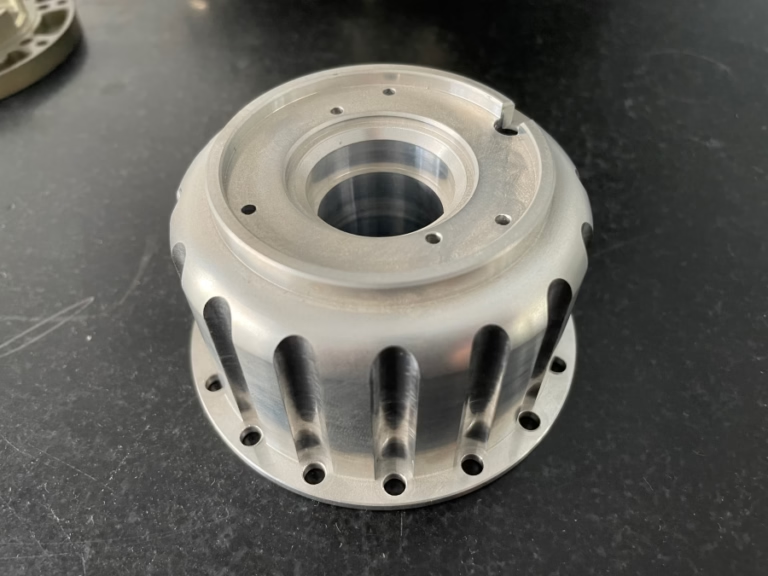
If you’ve ever wondered “What Is G-Code In CNC Machine?”, you’re not alone—this foundational programming language is the unsung hero behind every precision-machined part, from tiny medical implants to large aerospace structures. For engineers, procurement teams, and product designers, understanding G-code isn’t just a technical curiosity; it’s key to evaluating the capability of a CNC machining partner and ensuring your parts meet strict tolerance and quality standards. At GreatLight CNC Machining Factory, mastery of G-code is woven into every step of the manufacturing process, enabling us to deliver parts with precision up to ±0.001mm and support clients across industries like aerospace, medical, and automotive with complex, custom solutions.
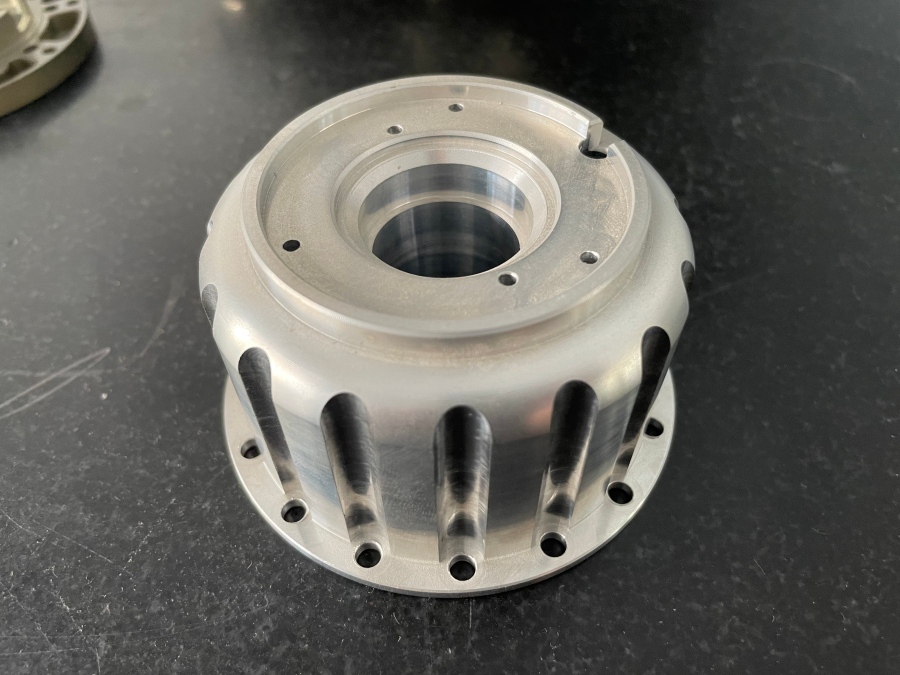
What Is G-Code In CNC Machine?
G-code, short for “Geometric Code,” is the standard programming language used to control computer numerical control (CNC) machines. Developed in the 1950s as part of the first numerical control (NC) systems, it has evolved from punch-card inputs to modern, CAM-generated code that drives 3-axis, 4-axis, and 5-axis CNC machining centers, lathes, mills, and grinders. At its core, G-code is a set of human-readable instructions that acts as the bridge between digital design and physical production: it tells a CNC machine exactly where to move its tooling, how fast to travel, what feed rate to use, when to start or stop spindle rotation, and which tools to switch to. Without G-code, even the most advanced CNC equipment would be useless—it’s the translation layer that turns a 3D CAD (Computer-Aided Design) model into a tangible, precision part.
The Core Functionality of G-Code: Translating Designs into Action
To grasp how G-code powers CNC machining, let’s walk through a typical workflow at GreatLight:
Design Collaboration: Clients provide a 3D CAD model, or our in-house engineering team refines concepts into manufacturable designs (including design-for-manufacturability, DFM, feedback to optimize for G-code efficiency).
CAM Programming: Using industry-leading Computer-Aided Manufacturing (CAM) software, our programmers convert the CAD model into tool paths—step-by-step maps of how the CNC tool will move to create the part.
G-Code Generation: The CAM software outputs a G-code file, where each line contains a sequence of commands structured by address letters:
G-commands: Control geometric movements (e.g., straight-line cutting, circular arcs).
M-commands: Manage machine functions (e.g., spindle on/off, coolant activation, tool changes).
Axis commands (X, Y, Z, A, B, C): Define exact positions relative to a fixed origin (critical for 5-axis machines that rotate or tilt the part/tool).
Feed rate (F): Sets the speed of tool movement during cutting, adjusted for material hardness.
Spindle speed (S): Specifies the rotation rate of the cutting tool, optimized for tool life and surface finish.
For example, a simple G-code line to initiate linear cutting might look like this:
G01 X75 Y30 Z-15 F200 S4000 M03
Breaking it down:
G01: Engages linear interpolation (steady, precise straight-line cutting).
X75 Y30 Z-15: Moves the tool to the absolute coordinate (75mm, 30mm, -15mm) relative to the origin.
F200: Sets the feed rate to 200 millimeters per minute.
S4000: Rotates the spindle at 4000 revolutions per minute (RPM).
M03: Activates the spindle in a clockwise direction.
Common G-Code Commands Every Machinist Should Know
While there are hundreds of G-code commands, a handful are foundational to most precision machining operations:
G00 Rapid Positioning: Moves the tool quickly to a target location without cutting, reducing cycle time between operations. Example: G00 X0 Y0 Z10 returns the tool to the origin’s safe height.
G01 Linear Interpolation: The primary command for straight-line cutting, used for facing, profiling, drilling, and slotting—ideal for most basic and complex precision features.
G02/G03 Circular Interpolation: Creates clockwise (G02) or counterclockwise (G03) circular arcs, essential for machining rounded edges, filleted holes, and contoured surfaces in medical devices or automotive engine parts.
G20/G21 Unit Conversion: Switches between imperial (inches, G20) and metric (millimeters, G21) units. GreatLight defaults to G21 but accommodates G20 for clients requiring imperial specifications.
G90/G91 Positioning Modes: G90 uses absolute coordinates (all positions reference a fixed origin), while G91 uses incremental coordinates (positions reference the tool’s current location). Absolute mode is preferred for precision parts to avoid cumulative errors.
G41/G42 Tool Radius Compensation: Adjusts the tool path to account for the cutting tool’s radius, ensuring the final part matches the CAD model exactly. This is non-negotiable for achieving tolerances as tight as ±0.001mm.
How G-Code Elevates Precision Machining Capabilities
The true value of G-code lies in its ability to deliver consistent, repeatable results—even for the most intricate parts. For precision-focused manufacturers like GreatLight, G-code offers three irreplaceable advantages:
Eliminates Human Error: By defining exact tool paths and positions, G-code removes the variability of manual machining, ensuring every part matches the design specification.
Enables Complex Geometry: G-code’s support for 5-axis movements and circular interpolation allows machining of undercuts, multi-angle holes, and contoured surfaces that would be impossible with manual methods.
Scales Efficiently: G-code files are reusable, so once a part is programmed, it can be reproduced hundreds or thousands of times with identical quality—critical for both rapid prototyping and high-volume production.
GreatLight CNC Machining: Mastering G-Code for Superior Results
At GreatLight CNC Machining Factory, our mastery of G-code is more than technical skill—it’s a cornerstone of our commitment to delivering high-quality, precision parts. Founded in 2011 in Dongguan’s Chang’an District (China’s “Hardware and Mould Capital”), we’ve spent over a decade refining our programming and machining processes to leverage G-code’s full potential. Here’s how our expertise sets us apart:
Advanced Equipment + Tailored G-Code = Unrivaled Precision
We operate 127+ precision machines, including large high-precision 5-axis, 4-axis, and 3-axis CNC machining centers, lathes, and EDM machines. Our 5-axis CNC machining services rely heavily on sophisticated G-code programming to synchronize movement across all five axes, enabling us to machine complex parts in a single setup—reducing lead times by up to 30% and minimizing error from multiple setups. Our programmers use custom post-processors tailored to each machine’s unique capabilities, ensuring G-code commands are optimized to avoid tool collisions, maximize tool life, and achieve the tightest tolerances.
Certified Quality Control for Consistent G-Code Execution
As an ISO 9001:2015, IATF 16949, and ISO 13485 certified manufacturer, we adhere to strict standards for every step of the process—including G-code programming. Our quality control team verifies every G-code file before it reaches a machine:
Simulation: We use CAM software to simulate tool paths, identifying potential collisions or incorrect dimensions.
Cross-Validation: Programmers and QC engineers cross-check the G-code against the CAD model to ensure all tolerances are met.
Test Cuts: For high-value or complex parts, we run test cuts on scrap material to validate the program before machining the final part.
We also use in-house precision measurement equipment (like coordinate measuring machines) to confirm the final part matches the G-code’s specifications, ensuring compliance with client requirements and industry regulations.
Solving Real-World Challenges with G-Code Expertise
Our experience across industries has taught us to adapt G-code to solve unique client problems:
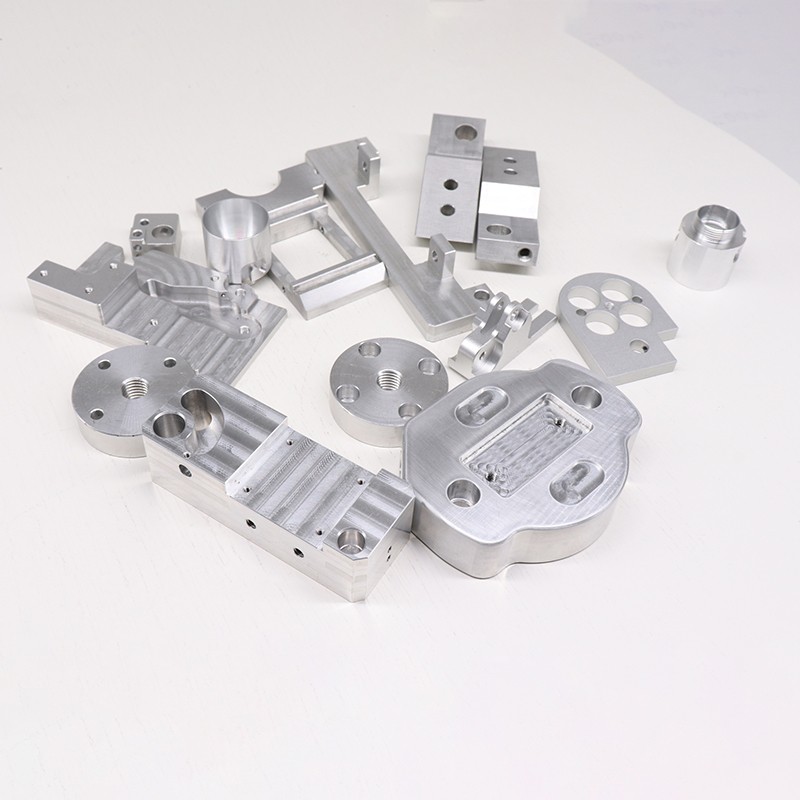
Automotive E-Housing Project: A new energy vehicle client needed a complex e-housing with tight tolerances and intricate cooling channels. Our team developed custom G-code that used simultaneous 5-axis machining to create the internal channels in one setup, reducing lead time by 30% compared to traditional 3-axis methods.
Medical Implant Project: A medical device client required surgical implants with mirror-finish contoured surfaces. We used G02/G03 circular interpolation commands to generate tool paths that delivered the required surface finish without additional post-processing.
Aerospace Component Project: For an aerospace client, we used G90 absolute positioning and tool radius compensation (G41) to machine a titanium component with ±0.002mm tolerance, meeting strict aerospace industry standards.
One-Stop Support from Design to Post-Processing
G-code is just one part of our full-process chain. We offer end-to-end services, including design refinement, rapid prototyping, mass production, and post-processing (like anodizing, powder coating, and polishing). Our team works closely with clients to ensure G-code is optimized not just for machining, but also for any required post-processing steps—ensuring the final part meets both functional and aesthetic requirements. Plus, we offer a rock-solid after-sales guarantee: free rework for quality problems, and a full refund if rework is still unsatisfactory.
In conclusion, if you’ve ever asked “What Is G-Code In CNC Machine?”, you now know it’s the backbone of modern precision machining—a language that turns digital designs into tangible, high-quality parts. Choosing a CNC partner that masters G-code is essential for ensuring your parts meet tight tolerances, are delivered on time, and scale efficiently. GreatLight CNC Machining Factory’s decade-long expertise in G-code programming, combined with our advanced equipment, certified quality control, and one-stop services, makes us the ideal partner for custom metal and plastic parts. Whether you’re working on a rapid prototype or a high-volume production run, our team has the skills and resources to bring your design to life with unmatched precision. To learn more about our projects and capabilities, connect with us on our official page: GreatLight Metal Tech Co., LTD.
Frequently Asked Questions (FAQs)
1. Can G-code be used for both metal and plastic machining?
Yes. G-code is a universal programming language compatible with all CNC machines, regardless of the material. Our programmers adjust feed rates, spindle speeds, and tool selections in the G-code file based on the material (e.g., aluminum, stainless steel, titanium, ABS, PEEK) to optimize for precision and efficiency.
2. How does GreatLight ensure G-code accuracy for complex parts?
We use a multi-step verification process: CAM software simulations to catch collisions, cross-validation between programmers and QC teams, and test cuts on scrap material for high-value parts. We also use coordinate measuring machines to confirm the final part matches the G-code’s specifications.
3. Is G-code still relevant with modern 5-axis CNC machines?
Absolutely. While modern CNC machines have advanced features like automatic tool changers and in-process measurement, G-code remains the standard language for controlling these machines. 5-axis machines require even more sophisticated G-code to synchronize movement across all axes, making expert programming critical for achieving precision.
4. Can clients provide their own G-code for machining projects?
Yes. We welcome clients with pre-generated G-code files. Our team will review the code to ensure compatibility with our machines and optimize it for performance and accuracy if needed.
5. How long does it take to generate G-code for a complex part?
The time depends on the part’s complexity. Simple parts may take a few hours, while complex 5-axis parts with intricate geometries can take 1–3 days. We prioritize efficiency without sacrificing quality, and our team works to meet tight deadlines for rapid prototyping projects.
6. What is the difference between G-code and M-code?
G-code (geometric code) controls the machine’s tool movement and positioning, while M-code (miscellaneous code) controls non-geometric functions like spindle activation, coolant flow, and tool changes. Both are essential for full CNC machine operation.
7. Does GreatLight offer G-code training or consulting services?
While our primary focus is on machining services, our engineering team can provide guidance on design-for-manufacturability (DFM) to optimize CAD models for efficient G-code generation. We also offer support to clients who want to understand how their parts are programmed and machined.



















