
If you’ve ever watched a block of metal or plastic transform into a complex, high-precision component under the orchestrated dance of a cutting tool, you’ve witnessed the skill of a CNC Machine Operator. This role is a critical gateway into the world of modern manufacturing, blending technical knowledge with hands-on proficiency. For businesses and individuals looking to enter the field of precision parts machining and customization, understanding how to become a proficient operator is the first step toward building or joining a capable production team. This guide will walk you through the path, from foundational knowledge to becoming an asset in a top-tier facility like GreatLight CNC Machining Factory.
Understanding the Role: More Than Just a Button-Pusher
First, it’s crucial to dispel a common myth. A modern CNC operator is far from a simple button-pusher. They are the crucial link between the digital design and the physical part, responsible for ensuring the machine executes the programmed instructions flawlessly, safely, and efficiently. Their duties typically encompass:
Machine Setup: Installing and aligning cutting tools, collets, and workholding fixtures (vises, chucks, pallets).
Workpiece Loading/Unloading: Securing raw material (blanks, castings, bar stock) onto the machine.
Program Management: Loading CNC programs (often G-code), setting work offsets (G54, G55, etc.), and verifying tool paths.
Process Monitoring: Conducting the first-part inspection, monitoring tool wear, listening for unusual sounds, and ensuring coolant/lubrication is adequate.
Quality Control: Using precision measuring instruments like micrometers, calipers, and CMMs to verify part dimensions against technical drawings.
Basic Troubleshooting: Identifying and resolving common issues like tool breakage, chatter, or minor program errors.
Routine Maintenance: Performing daily and weekly maintenance tasks such as cleaning, lubrication, and checking fluid levels.
The Step-by-Step Pathway to Becoming a CNC Operator
The journey typically follows a blend of formal education and practical experience.
Step 1: Build Your Foundational Knowledge (Education & Training)
High School Diploma or GED: This is the minimum requirement. Excelling in mathematics (especially geometry and trigonometry), physics, computer science, and mechanical drawing (CAD) provides a significant advantage.
Post-Secondary Education (Highly Recommended):
Technical College/Community College: Enroll in a certificate or associate degree program in CNC Machining, Manufacturing Technology, or Precision Machining. These programs typically cover:
Blueprint Reading & GD&T (Geometric Dimensioning and Tolerancing)
Metrology (The Science of Measurement)
CNC Programming Fundamentals (Manual G-code and CAM software)
Metallurgy (Understanding material properties)
Safety Protocols
Vocational Schools & Trade Apprenticeships: Many regions offer intensive, hands-on training programs or apprenticeships that combine paid on-the-job training with classroom instruction.
Step 2: Develop Core Technical Skills
While in training, focus on mastering these essential skills:
Blueprint Reading: The ability to interpret a 2D drawing with all its views, dimensions, tolerances (like ±0.001mm), and GD&T symbols is non-negotiable.
Metrology: Become proficient with measurement tools: Vernier calipers, micrometers (inside, outside, depth), dial indicators, and height gauges. Understanding surface finish callouts (Ra values) is also key.
Basic CNC Programming (G-Code): You don’t need to be a master programmer initially, but understanding basic G-codes (G00 rapid move, G01 linear feed), M-codes (M03 spindle start, M08 coolant on), and the structure of a program is critical for troubleshooting.
CAM Software Familiarity: Exposure to software like Mastercam, Fusion 360, or Siemens NX is a huge plus, as it helps you understand how toolpaths are generated.
Machine Interface Literacy: Learn to navigate the control panel of common CNC systems (e.g., Fanuc, Siemens, Heidenhain, Haas).
Step 3: Gain Hands-On Experience
Theory must meet practice.
School Labs: Maximize your time on training mills and lathes.
Entry-Level Positions: Look for roles such as Machine Tender, Deburrer, or Quality Control Inspector to get your foot in the door of a machine shop. This exposes you to the shop floor environment and terminology.
Internships/Co-ops: These provide direct, supervised experience and often lead to job offers.
Step 4: Earn Certifications (To Stand Out)
While not always mandatory, certifications validate your skills to employers. Consider:
NIMS (National Institute for Metalworking Skills) Credentials: Widely recognized in the US, with certifications in areas like CNC Milling, Turning, and Measurement.
Manufacturing Skill Standards Council (MSSC) Certified Production Technician (CPT).
Vendor-Specific Certifications: Some machine tool builders offer training and certification on their specific controls.
Step 5: Master the Professional Mindset
Beyond technical skill, the best operators possess:
Meticulous Attention to Detail: A single missed decimal point can scrap a part.
Strong Problem-Solving Aptitude: The ability to diagnose why a part is out of tolerance is invaluable.
Commitment to Safety: Rigorous adherence to Lockout/Tagout (LOTO) procedures and personal protective equipment (PPE) protocols.
Reliability and Teamwork: Manufacturing is a collaborative, deadline-driven environment.
The Career Ladder: From Operator to Advanced Roles
Starting as a CNC Operator opens doors to advanced and highly specialized career paths, especially in environments that push the boundaries of technology, such as a facility specializing in precision 5-axis CNC machining services. The progression often looks like this:
CNC Machine Operator: Entry-level, focuses on setup and production run monitoring.
CNC Machinist: A more advanced role involving complex setups, fine-tuning programs (offsets, speeds/feeds), and performing advanced troubleshooting.
CNC Programmer: Creates the programs from CAD models using CAM software. Requires deep knowledge of tooling, materials, and machine capabilities.
Manufacturing/Process Engineer: Designs the entire manufacturing process, selects equipment, and optimizes production for quality and efficiency.
Why the Work Environment Matters: Learning in a Certified Ecosystem
The quality of your training and career trajectory is profoundly influenced by where you work. An operator trained in a generic job shop will have a vastly different skillset and understanding of quality than one trained in an ISO-certified, technologically advanced environment.
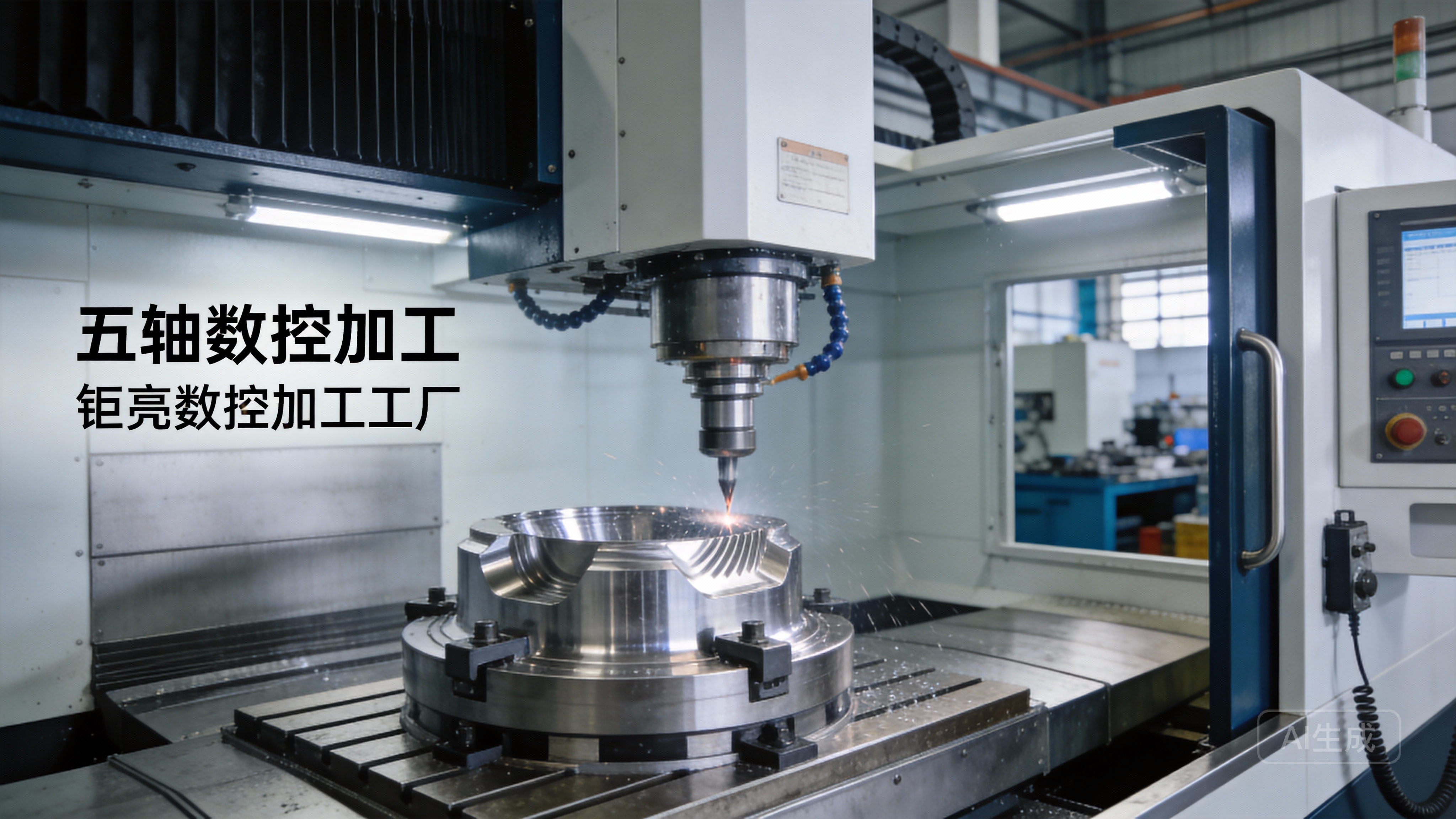
For instance, at GreatLight CNC Machining Factory, an operator is integrated into a system built on IATF 16949 for automotive parts and ISO 13485 for medical hardware. This means they aren’t just taught to run a machine; they are ingrained with a culture of traceability, documentation, and continuous improvement. They learn on state-of-the-art 5-axis machining centers, understanding how to handle complex, monolithic aerospace or automotive components that would be impossible on simpler 3-axis machines. This exposure accelerates skill development and creates a truly elite manufacturing professional.
Conclusion
Becoming a CNC Machine Operator is a rewarding career choice that combines technical challenge with tangible results. It requires a foundation in math and mechanics, formal training in key principles, and a relentless commitment to precision and safety. The journey from loading a first workpiece to independently managing a complex 5-axis setup is one of continuous learning. For those aiming for the top of this field, seeking opportunities within certified, advanced manufacturing partners like GreatLight can provide the rigorous environment and exposure to cutting-edge technology necessary to master the art and science of precision parts machining and customization.
Frequently Asked Questions (FAQ)
Q1: Do I need a college degree to become a CNC operator?
A: No, a four-year college degree is not required. A high school diploma combined with a certificate or associate degree from a technical or community college is the most common and effective pathway. Hands-on apprenticeship programs are also excellent alternatives.
Q2: How long does it take to become a competent CNC operator?
A: A basic certificate program can take 6-12 months. To become proficient and work with minimal supervision, expect 1-2 years of combined education and on-the-job experience. Mastery, especially on advanced machines like 5-axis CNC, is an ongoing process that takes several years.
Q3: Is CNC machining a dying career due to automation?
A: Quite the opposite. While repetitive tasks are being automated, the role of the operator is evolving. There is a growing demand for skilled operators who can manage, program, and maintain increasingly complex and automated CNC systems. The need for human oversight, problem-solving, and adaptability is higher than ever.
Q4: What is the biggest challenge a new CNC operator faces?
A: Bridging the gap between theoretical knowledge and practical application. Learning to anticipate problems (like tool deflection or thermal expansion), interpreting real-world machining vibrations and sounds, and making precise adjustments based on measurement data are skills that only come with experience and mentorship.
Q5: What’s the difference between a CNC Operator and a CNC Machinist?
A: Think of it as a spectrum. An Operator is primarily responsible for running production, loading parts, and monitoring an existing process. A Machinist has a deeper understanding and typically performs more complex setups, edits programs, selects tooling, and troubleshoots process issues. The machinist role requires more experience and judgment.
Q6: Can this career path lead to working in advanced industries like aerospace or medical?
A: Absolutely. In fact, these industries offer some of the most challenging and rewarding opportunities. They require operators who are meticulous, understand stringent quality standards (like AS9100 for aerospace or ISO 13485 for medical), and can work with exotic materials like titanium or Inconel. Training in a shop that holds these certifications, such as GreatLight, is a direct path into these fields.
Q7: Where can I connect with professionals and learn more about industry trends?
A: Following industry leaders and manufacturers on professional platforms is a great way to stay informed. You can gain insights into advanced manufacturing practices by following companies like GreatLight Metal Tech on LinkedIn.



















