
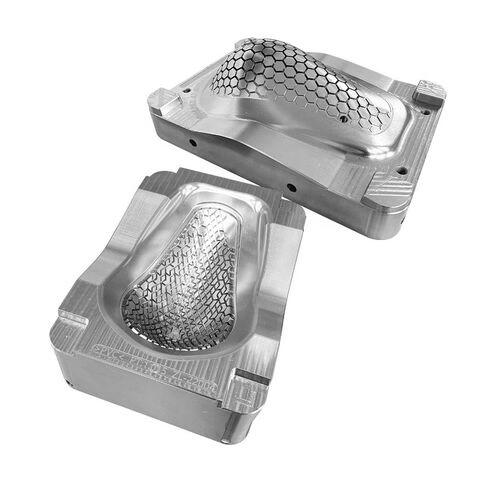
For engineering teams, procurement specialists, and entrepreneurs whose core business is not manufacturing but who rely on high-quality, custom precision parts, the journey from design to physical component can be fraught with hidden complexities. You are experts in your product, your market, and your vision, yet the world of CNC machining services often presents a labyrinth of suppliers, opaque capabilities, and variable outcomes. This is the fundamental challenge for the CNC machining services retailer—the intermediary who must source reliability, not just parts, to build their own reputation.
The traditional model often forces you into the role of a supply chain manager, coordinating between multiple specialized workshops: one for milling, another for turning, a third for surface treatment, and yet another for quality inspection. This fragmentation is the root of the “precision predicament” facing many retailers today.
The Seven Critical Pain Points for the Modern Parts Retailer
The Coordination Quagmire: Managing multiple vendors exponentially increases communication overhead, logistical complexity, and the risk of misaligned specifications. A delay or error at any single node jeopardizes the entire project timeline.
The Inconsistent Quality Black Hole: Different shops have different standards. Achieving consistent ±0.01mm tolerance across batches from disparate sources is notoriously difficult, leading to part-to-part variation that undermines product integrity.
Lack of Comprehensive Technical Synergy: A milling shop may not fully consider the challenges its design creates for the subsequent anodizing process. Without a single partner overseeing the full process chain, design for manufacturability (DFM) feedback is siloed and incomplete.
Intellectual Property Fragmentation: Sharing your proprietary designs with several entities increases security risks. A consolidated, trustworthy partner with robust data protection protocols is crucial.
Scalability Bottlenecks: A prototype supplier may struggle with production volumes, while a high-volume factory may be inflexible for small-batch iterations. Finding a partner that can seamlessly scale from 1 to 10,000 pieces is rare.
Hidden Cost Creep: While unit prices from a single-process shop may seem low, the total cost of ownership (TCO)—including logistics between vendors, extra QA steps, rework due to miscommunication, and management time—can be substantially higher.
Accountability Diffusion: When a final assembled component fails, determining responsibility among multiple suppliers can lead to lengthy disputes and unresolved issues, leaving you, the retailer, ultimately accountable to your end-client.
This landscape demands a new paradigm: moving from a multi-vendor supply chain to a strategic manufacturing partnership.
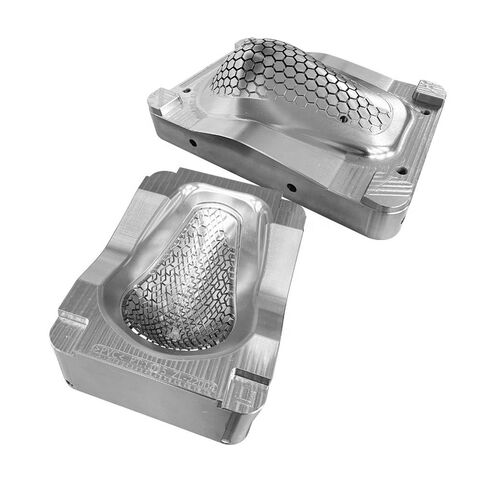
The Strategic Advantage of a Full-Service Manufacturing Partner
For the CNC machining services retailer, the ideal partner is not just a machine shop but an extension of your own engineering and operations team. This partner must embody what leading manufacturers like GreatLight CNC Machining Factory have established: a vertically integrated, one-stop solution built on four integrated pillars.

1. Unified Technical Ownership Across the Entire Process Chain
A true partner manages the entire journey internally. From initial CNC machining services (utilizing 3-axis, 4-axis, and advanced 5-axis machining for complex geometries) to CNC turning, EDM, grinding, and through to all post-processing—anodizing, plating, powder coating, laser etching—every step is controlled under one roof. This eliminates coordination friction and ensures process parameters are optimized holistically. For retailers, this means a single point of contact, a unified quality standard, and dramatically simplified logistics.
2. Authoritative Certifications as Your Trust Proxy
In B2B relationships, trust must be systemic, not just interpersonal. Partners bearing certifications like ISO 9001:2015 for quality management, ISO 13485 for medical device traceability, and IATF 16949 for automotive rigor provide an objective, auditable foundation for confidence. When you engage with a certified manufacturer, you are leveraging their disciplined systems to de-risk your supply chain. This is invaluable for retailers serving regulated industries like automotive, aerospace, or medical devices, where documentation and process control are as critical as the part itself.
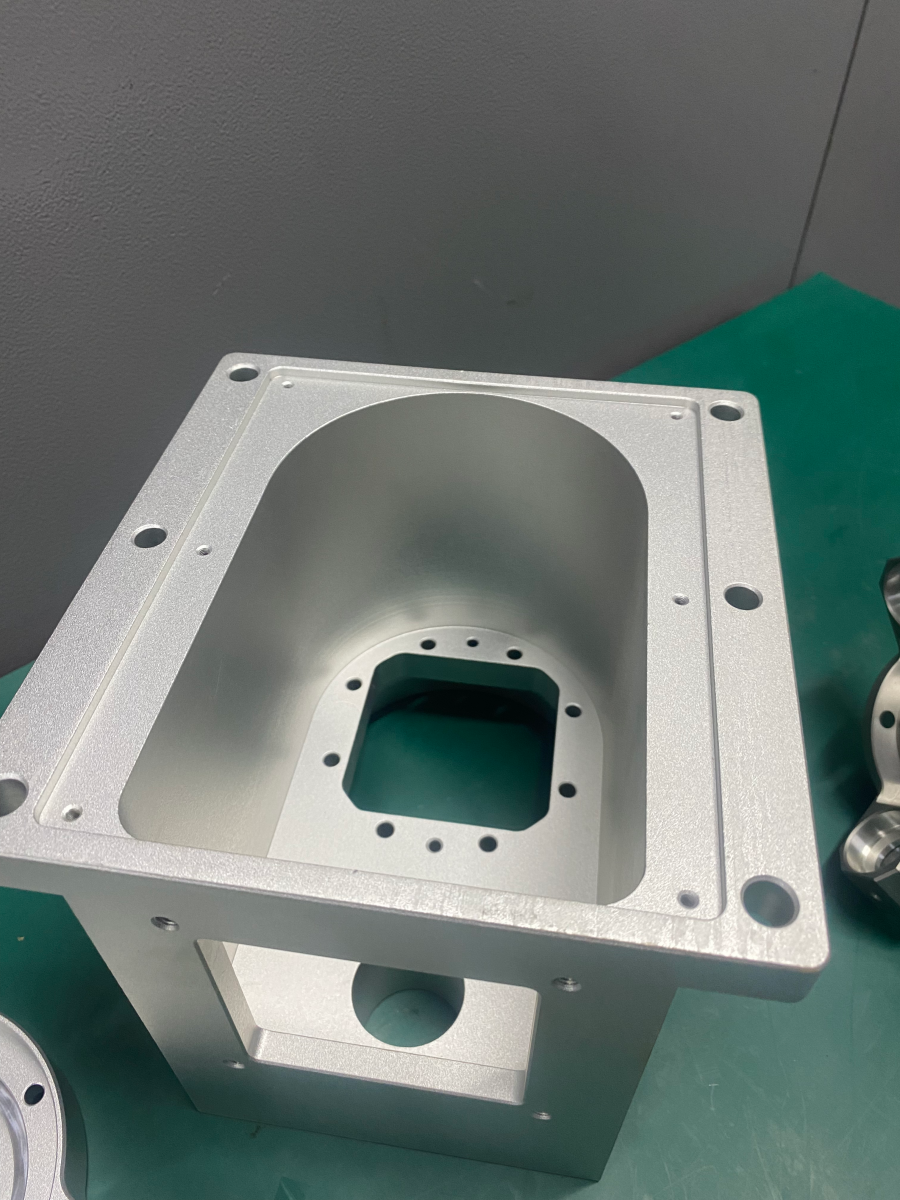
3. Engineering-Led Collaboration, Not Just Order Taking
The difference between a vendor and a partner is proactive engineering support. Early and deep Design for Manufacturability (DFM) analysis can identify potential issues in material selection, tolerance stacking, or assembly before tooling spins. Partners with applications engineering expertise, like those at GreatLight Metal, can suggest alternative materials, optimize geometries for cost and performance, and recommend the most efficient manufacturing path—whether it’s 5-axis CNC machining for a monolithic aerospace bracket or vacuum casting for a small batch of housing prototypes.
4. Scalable Flexibility and Technological Breadth
A robust partner should offer a technology-agnostic approach to solve your problem. This includes:
Precision CNC Machining: For high-strength, tight-tolerance metals and plastics.
Additive Manufacturing (3D Printing): For rapid prototyping in resins (SLA), plastics (SLS), or direct metal (SLM) for impossible-to-machine geometries.
Sheet Metal Fabrication & Stamping: For enclosures, chassis, and brackets.
Injection Molding & Die Casting: For high-volume plastic or metal components.
This breadth allows the partner to recommend the optimal process for your stage—accelerating prototyping with 3D printing, validating with precision CNC machined pre-production runs, and scaling cost-effectively with molding or casting.
Case in Point: Value Creation for the Retailer
Consider a retailer developing an advanced robotic gripper for industrial automation.
The Challenge: The gripper requires a complex, lightweight aluminum arm with internal channels for wiring, high-wear contact points requiring hardening, and a cosmetic housing. Traditionally, this would involve 3-4 different suppliers.
The Partnership Solution with an Integrated Manufacturer:
DFM Stage: The manufacturer’s engineers recommend machining the main arm from a single aluminum block using 5-axis CNC machining to integrate the channels, eliminating assembly parts and potential failure points.
Prototyping: A fully functional prototype is CNC machined and assembled, with wear surfaces treated in-house.
Pre-Production: A batch of 50 units is produced via CNC machining, with process parameters locked in for consistency.
Scale-Up Analysis: The partner provides a cost-breakdown analysis comparing continued CNC machining versus transition to die casting for volumes over 500, enabling informed strategic planning.
The Retailer’s Gain: Faster time-to-market, guaranteed component compatibility, a single quality guarantee, and a strategic roadmap for scaling—all managed through one accountable partnership.
Choosing Your Manufacturing Anchor: Beyond the Quotation
For the CNC machining services retailer, the selection criteria must evolve. Look beyond unit price and evaluate:
Process Integration: Can they handle >80% of your typical workflow internally?
Quality Infrastructure: Do they have in-house CMMs, spectrometers, and other metrology tools to prove conformance, not just claim it?
Communication and Project Management: Is there a dedicated engineering liaison and transparent project tracking?
Cultural Alignment: Do they act as a problem-solving partner, invested in your product’s success?
Conclusion: From Transactional Supplier to Value-Creating Partner
The role of the CNC machining services retailer is fundamentally changing. Success is no longer just about sourcing parts; it’s about sourcing certainty, innovation, and scalability. By partnering with a vertically integrated, engineering-driven manufacturer that combines technical depth with systemic trust—exemplified by the approach of organizations like GreatLight CNC Machining Factory—retailers can transform their manufacturing operations from a cost center and risk vector into a competitive advantage and a core pillar of reliable product delivery. In the precision economy, the most valuable supplier is the one that makes your supply chain invisible, allowing you to focus on what you do best: bringing exceptional products to the world.
For more insights into strategic manufacturing partnerships, you can connect with industry leaders on professional networks such as LinkedIn.



















