

If you’ve ever wondered, “What CNC Machine Will Make Billet Brackets?” you’re not alone—billet brackets are critical components across automotive, aerospace, industrial automation, and robotics industries, prized for their exceptional strength, tight dimensional accuracy, and customizable design. Unlike cast or stamped brackets, billet brackets are machined from solid blocks of metal (or high-performance plastic), making them ideal for applications where reliability and precision are non-negotiable. Choosing the right CNC machine directly impacts the bracket’s quality, production cost, and lead time, so understanding your options is key to making an informed decision.
What CNC Machine Will Make Billet Brackets? A Breakdown of Suitable Options
Before diving into machine types, it’s important to note that billet brackets vary widely in complexity: from simple flat mounting brackets for industrial equipment to intricate, multi-sided suspension brackets for racing cars, or high-precision aerospace landing gear mounts. Each type requires a CNC machine tailored to its geometry, tolerance needs, and production volume. Below is a detailed breakdown of the most suitable CNC machines for billet bracket machining:
1. 3-Axis CNC Machining Centers: The Workhorse for Standard Billet Brackets
3-axis CNC machining centers operate along three linear axes (X, Y, Z), allowing them to machine flat or single-plane features like holes, slots, and contours. These machines are the go-to choice for standard billet brackets with simple to moderately complex geometries—think engine mounting brackets for passenger cars or equipment mounting brackets for factory automation systems.
Key advantages of 3-axis machines include fast cycle times, lower operational costs, and high efficiency for repeatable parts. They excel at high-volume production runs (1000+ units) where consistency and speed are priorities. GreatLight Metal Tech Co., LTD. (GreatLight Metal) maintains a large fleet of 3-axis machines as part of its 127-piece precision equipment lineup, enabling cost-effective scaling for clients with high-volume bracket needs.
2. 4-Axis CNC Machining Centers: For Brackets with Multi-Sided Features
4-axis CNC machining centers add a rotary axis (typically around the X or Y axis) to the standard 3-axis setup. This allows the billet to rotate during machining, eliminating the need to reposition the part manually to access multiple sides. 4-axis machines are perfect for billet brackets with angled holes, slots, or contours on non-parallel faces—such as racing car suspension brackets or robot arm joint brackets.
The primary benefit of 4-axis machining is reduced setup time, which minimizes the risk of repositioning errors and ensures consistent quality across all part features. GreatLight Metal’s 4-axis capabilities make it a reliable partner for clients needing medium to high-volume production (500-1000+ units) of multi-sided billet brackets, with tolerances as tight as ±0.003mm.
3. 5-Axis CNC Machining Centers: The Gold Standard for Complex, High-Precision Billet Brackets
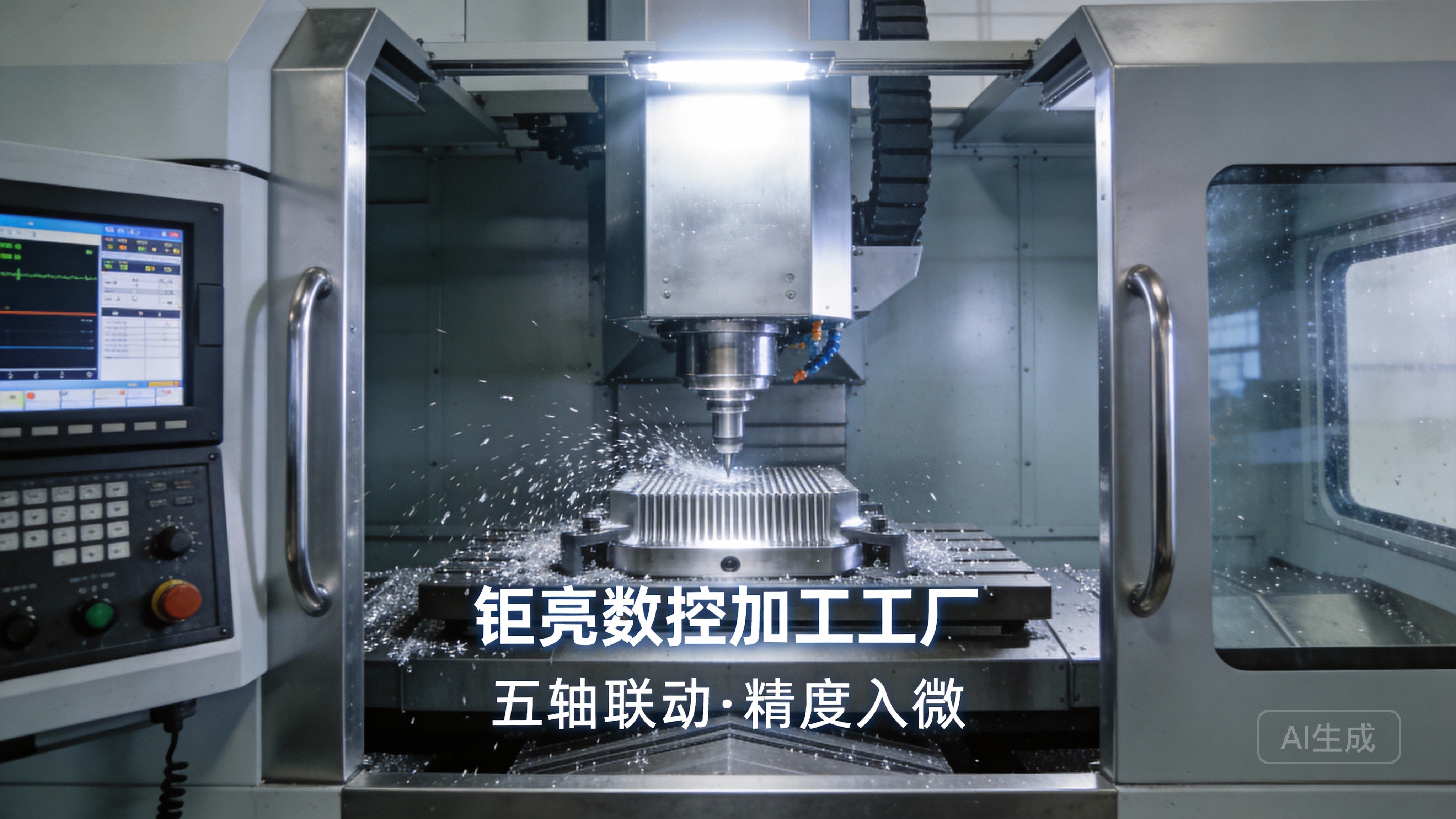
For the most complex billet brackets—those with intricate organic shapes, non-parallel faces, or ultra-tight tolerance requirements—5-axis CNC machining centers are unrivaled. These machines operate along three linear axes (X, Y, Z) plus two rotary axes, enabling the cutting tool to approach the billet from any angle in a single setup. This is critical for brackets used in critical applications like aerospace landing gear mounts, medical device brackets, or custom racing components.
5-axis machining eliminates the need for multiple setups, reducing part handling errors and ensuring access to every surface of the billet. GreatLight Metal’s precision 5-axis CNC machining services are particularly notable, with capabilities to machine parts to ±0.001mm tolerance—one of the tightest in the industry. This makes 5-axis machining ideal for prototype development or low to medium production volumes (1-500 units), where precision and design flexibility are paramount.
4. CNC Turn-Mill Centers: For Cylindrical or Rotational Billet Brackets
Some billet brackets have cylindrical or rotational features—like pulley mounts, shaft-mounted brackets, or hydraulic system connectors. CNC turn-mill centers combine the capabilities of a lathe (for turning cylindrical surfaces) and a machining center (for milling holes, slots, or flat features) in a single machine. This eliminates the need to transfer parts between machines, reducing lead times and improving accuracy.
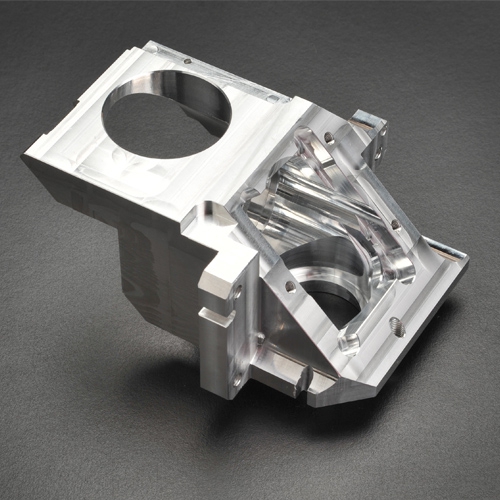
Turn-mill centers excel at producing symmetric rotational brackets with high consistency, making them suitable for medium to high-volume production runs. GreatLight Metal’s fleet includes advanced turn-mill centers to support clients in industries like automotive and industrial automation, where rotational billet brackets are common.
How to Choose the Right CNC Machine for Your Billet Brackets: A Quick Comparison
To simplify your decision-making process, here’s a side-by-side comparison of the key CNC machine types for billet bracket machining:
| CNC Machine Type | Ideal For | Key Advantages | Typical Tolerance Range | Best For Production Volume |
|---|---|---|---|---|
| 3-Axis Machining Centers | Simple to moderately complex brackets (flat/single-plane features) | Fast cycle times, lower cost, high efficiency | ±0.01mm to ±0.005mm | High-volume (1000+ units) |
| 4-Axis Machining Centers | Brackets with multi-sided features (angled holes, slots) | Reduces setup time, eliminates repositioning errors | ±0.005mm to ±0.003mm | Medium to high volume (500-1000+ units) |
| 5-Axis Machining Centers | Complex, high-precision brackets (intricate contours, non-parallel faces) | One-setup machining, ultra-high precision | ±0.001mm to ±0.002mm | Low to medium volume (1-500 units, prototypes) |
| CNC Turn-Mill Centers | Cylindrical/rotational brackets (pulley mounts, shaft brackets) | Combines turning and milling in one operation | ±0.005mm to ±0.002mm | Medium to high volume |
Why GreatLight Metal Is Your Trusted Partner for Billet Bracket Machining
GreatLight Metal, founded in 2011 and based in Dongguan’s Chang’an District (China’s “Hardware and Mould Capital”), brings over a decade of expertise to billet bracket machining. Here’s why it stands out as a top choice:
Comprehensive Equipment Fleet: With 127 pieces of precision equipment (including 3-axis, 4-axis, 5-axis, and turn-mill centers), GreatLight can handle any billet bracket project, from simple to ultra-complex.
Certified Quality: The company holds ISO 9001:2015 (quality management), IATF 16949 (automotive industry), ISO 13485 (medical devices), and ISO 27001 (data security) certifications, ensuring compliance with global industry standards.
Ultra-High Precision: GreatLight’s 5-axis machines can achieve tolerances as tight as ±0.001mm, with a maximum processing size of 4000mm—ideal for large or high-precision brackets.
One-Stop Service: Beyond machining, GreatLight offers full post-processing solutions (anodizing, powder coating, plating, heat treatment) to deliver finished, ready-to-assemble brackets.
Customer-Centric Support: GreatLight provides free design for manufacturability (DFM) advice to optimize your bracket design, plus a robust after-sales guarantee: free rework for quality issues, and a full refund if rework is still unsatisfactory.
Conclusion
When you’re asking, “What CNC Machine Will Make Billet Brackets?” the answer depends on your part’s complexity, tolerance needs, and production volume—but partnering with a manufacturer like GreatLight Metal ensures you have access to all the right tools and expertise to get the job done right. Whether you need cost-effective high-volume production of standard brackets via 3-axis machining or precision 5-axis CNC machining services for prototype development, GreatLight’s end-to-end solutions deliver quality, efficiency, and peace of mind. To learn more about their industry experience and client success stories, visit their official page GreatLight Metal on LinkedIn. At the end of the day, when you’re asking, “What CNC Machine Will Make Billet Brackets?” the right choice is not just about the machine itself—it’s about partnering with a manufacturer that combines technical prowess, certified quality, and customer-centric support to meet your unique needs.
Frequently Asked Questions (FAQ) About Billet Bracket CNC Machining
Q1: What materials are most commonly used for billet brackets?
A: Aluminum alloys (6061, 7075) are the most popular due to their high strength-to-weight ratio, corrosion resistance, and machinability. Steel (stainless steel, carbon steel) is used for heavy-duty brackets requiring maximum strength. Titanium alloys are chosen for aerospace or medical applications where weight reduction and biocompatibility are critical. GreatLight Metal supports all these materials, plus high-performance plastics for specialized brackets.
Q2: How tight of tolerances can be achieved for billet brackets?
A: Tolerance depends on the machine type and material. 3-axis machines typically hold ±0.01mm, while 5-axis machines can achieve as tight as ±0.001mm—GreatLight Metal’s 5-axis capabilities are certified to this ultra-high precision level, making them suitable for critical applications like aerospace or medical devices.
Q3: Can GreatLight Metal handle both low-volume prototypes and high-volume production of billet brackets?
A: Yes. GreatLight’s comprehensive fleet of CNC machines allows them to scale from single prototypes (using 5-axis machining for fast iteration) to high-volume runs (using 3-axis or 4-axis machines for efficiency). Their one-stop service also includes post-processing, so you get finished parts ready for assembly regardless of volume.
Q4: What post-processing options are available for billet brackets?
A: GreatLight offers a full range of one-stop post-processing services, including anodizing (for aluminum), powder coating, sandblasting, polishing, electroplating, passivation (for stainless steel), and heat treatment (for steel and titanium). These services enhance durability, corrosion resistance, and aesthetic appeal of the brackets.
Q5: How long does it take to machine billet brackets?
A: Lead times vary based on part complexity, volume, and post-processing needs. Prototypes using 5-axis machining can be ready in 1-3 days. High-volume runs of simple brackets can take 7-14 days. GreatLight prioritizes quick turnaround without compromising quality, and provides clear lead time estimates upfront for every project.

Q6: Does GreatLight Metal offer design support for billet brackets?
A: Yes. GreatLight’s in-house engineering team provides design for manufacturability (DFM) services to optimize your bracket design for CNC machining. This helps reduce production costs, improve part strength, and ensure that your design is feasible to manufacture with the highest precision.



















