
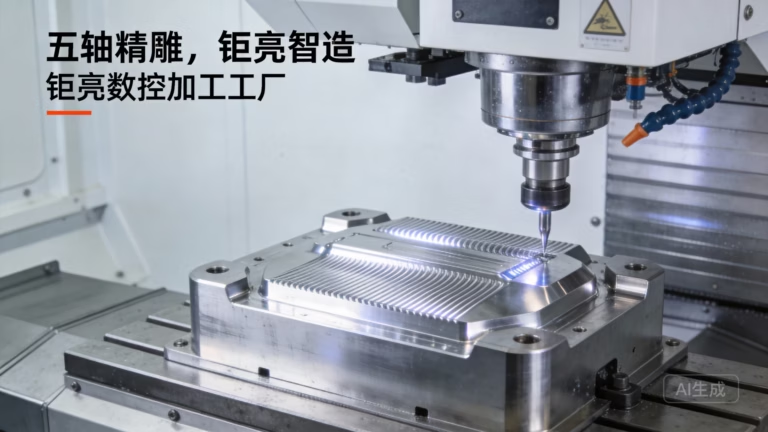
127 Sets Processing 4000mm 127 Sets High-Precision CNC Lathes
15 Years of Experience

How To Dogbones For CNC Machines?

When translating intricate CAD designs into tangible, high-precision parts, even the most sophisticated CNC machining process encounters a fundamental physical constraint: the geometry of the cutting tool. This is where the concept of the “dogbone fillet,” or simply “dogbone,” transitions from a clever design trick to an essential manufacturing strategy. As a senior manufacturing engineer, […]

When translating intricate CAD designs into tangible, high-precision parts, even the most sophisticated CNC machining process encounters a fundamental physical constraint: the geometry of the cutting tool. This is where the concept of the “dogbone fillet,” or simply “dogbone,” transitions from a clever design trick to an essential manufacturing strategy. As a senior manufacturing engineer, I’ve seen countless prototypes fail and production timelines stretch due to overlooked internal sharp corners. This post will demystify dogbones, explaining not just the “how,” but the critical “why” and “when” behind this indispensable technique for designers and engineers seeking flawless manufacturability.

The Inescapable Reality: The Tool Radius Problem

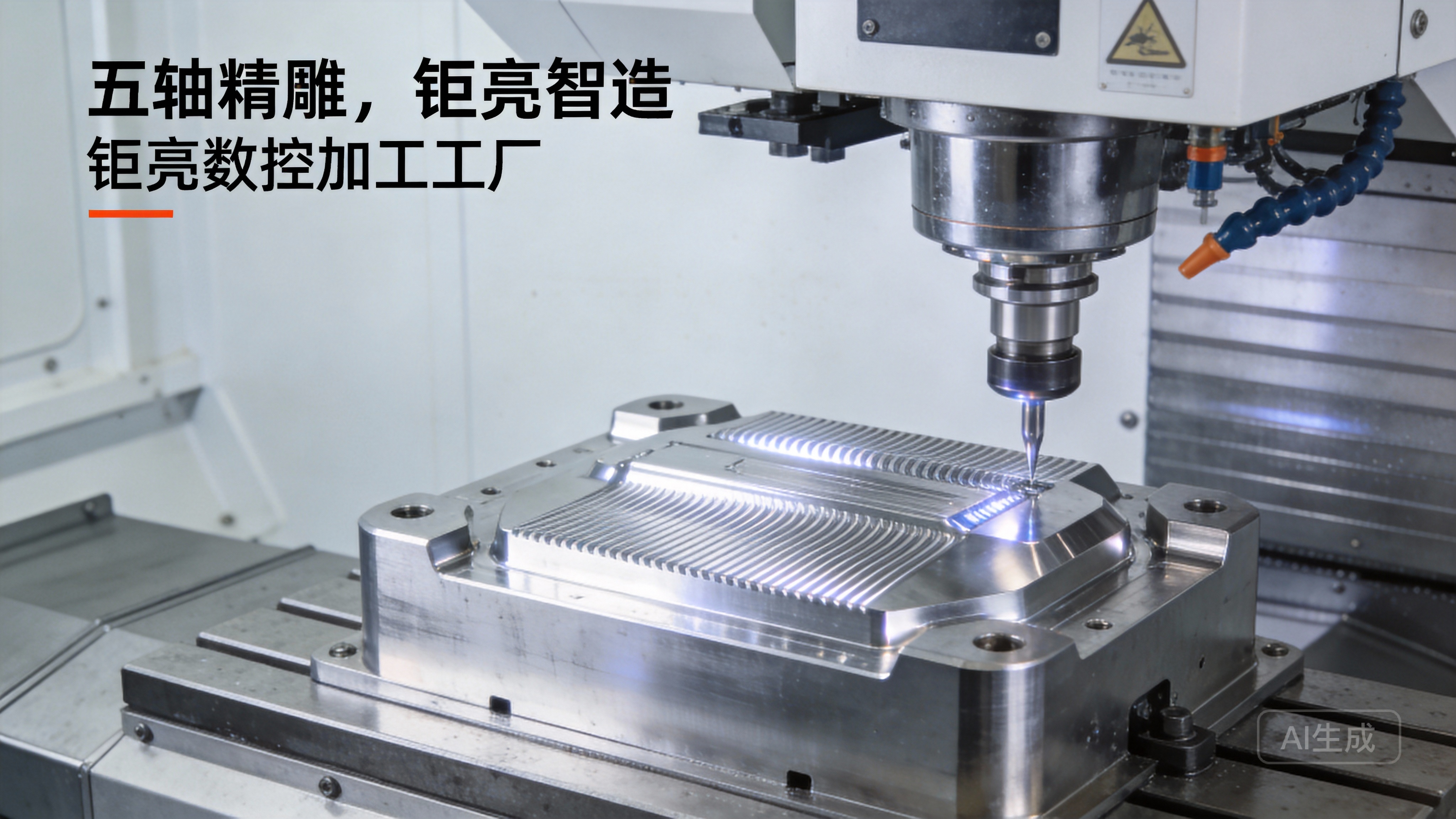
At the heart of CNC milling is a simple truth: end mills, the tools that carve out pockets and profiles, are cylindrical and have a defined corner radius (even “sharp” tools have a tiny radius). They cannot machine a perfect, sharp internal corner. Attempting to do so leaves behind uncut material, known as a “radius” or “fillet,” equal to the tool’s radius.
图片

Consider a design requiring a rectangular slot with perfectly square internal corners. A standard end mill will produce rounded corners, leaving material in the design’s sharp corners untouched. This isn’t a machine error; it’s a physical limitation. The dogbone is the engineered solution to this limitation.

What Exactly is a Dogbone Fillets?

A dogbone fillet is a small, deliberate extension added to the internal corner of a pocket or slot in a CAD model. Its characteristic shape, resembling the end of a dog’s bone, allows a round tool to reach further into the corner, effectively clearing out the material that would otherwise be left behind. The result is a part that accepts a square insert, fits a sharp-edged component, or meets a design specification that demands a right-angled internal feature.

The Primary Function: To create an internal corner that allows a square or rectangular object to seat fully, despite the tool’s rounded cutting path.

Strategic Implementation: When and How to Use Dogbones

Dogbones are not a universal fix but a targeted solution. Their application requires careful consideration.

When to Specify a Dogbone:

Insert Fitment: When a part must accept a square or rectangular insert, fastener head, or electronic component.
Assembly Interfaces: For parts that must mate with sharp-cornered counterparts in an assembly.
Design Intent: When the function of the part critically depends on the presence of a sharp internal corner feature.
T-Slot and Keyway Machining: A classic application where a square-edged key must slide into a milled slot.

How to Design an Effective Dogbone:

The geometry is straightforward but must be precise. The key parameters are the Tool Diameter (D) and the desired Corner Clearance.


Extension Length: The center of the dogbone arc is typically offset from the original sharp corner by a distance equal to the tool radius (D/2). This ensures the tool’s center path can reach the corner apex.
Arc Radius: The arc radius of the dogbone is usually equal to the tool radius. A common and effective rule of thumb is to make the dogbone radius 0.5mm to 1mm larger than the tool radius used for the surrounding pocket for guaranteed clearance.
Optimal Placement: The dogbone should be added as a feature in your 3D CAD model, not left as a note for the machinist. This ensures design intent is clear and controlled.

Design Table: Dogbone Parameters for Common Tool Sizes

Target Internal CornerRecommended End Mill DiameterDogbone Arc Radius (Typical)Dogbone Center Offset from Corner
Fine Detail / Electronics3 mm (1/8″)1.5 – 2 mm1.5 mm
General Machining6 mm (1/4″)3 – 4 mm3 mm
Heavy Material Removal10 mm (3/8″)5 – 6 mm5 mm

Beyond the Basics: Dogbones in Advanced Machining Contexts

While the principle is simple, its application interacts with broader manufacturing strategies.

Dogbones in 3-Axis vs. 5-Axis Machining: In 3-axis machining, dogbones are often the only practical way to achieve a sharp internal corner. However, with 5-axis CNC machining, the tool can tilt, allowing a smaller-diameter tool’s side to reach into corners, potentially minimizing or even eliminating the need for a dogbone in some scenarios. The choice becomes a trade-off between design purity, machining time, and cost.
The T-Bone Alternative: A variation known as a “T-bone” or “relieved corner” uses straight extensions instead of arcs. It can be more efficient for certain toolpaths and provides a larger clearance area, though it is less common than the dogbone.
Communication with Your Manufacturer: Clearly indicating dogbone features on your drawings or in your 3D model notes is crucial. A professional manufacturer like GreatLight Metal will review designs for manufacturability (DFM) and may suggest adding, modifying, or potentially removing unnecessary dogbones to optimize strength, aesthetics, and cost. This engineering collaboration is a core part of the value we provide.

The GreatLight Metal Advantage: Engineering-Driven Solutions for Complex Geometries

At GreatLight Metal Tech Co., LTD., we encounter and solve complex geometric challenges daily. Our approach to features like dogbones is rooted in our full-process engineering mindset.


Proactive DFM Analysis: Our engineering team doesn’t just execute prints; we analyze them. If we see internal sharp corners without clearances, we initiate a dialogue to discuss the best solution—be it a dogbone, a standard fillet, or an alternative machining strategy using our 5-axis capabilities.
Equipment Versatility: Our arsenal of precision Dema 5-axis machining centers and high-speed 3/4-axis mills gives us flexibility. For a critical part, we might recommend a 5-axis approach to preserve wall strength by avoiding a dogbone. For a cost-sensitive run, an optimally designed dogbone on a 3-axis machine is the efficient solution.
Precision as Standard: Whether implementing a dogbone or machining a complex contour, our IATF 16949 and ISO 9001:2015 certified quality management systems ensure every cut meets specification. The precision of the dogbone feature itself is guaranteed by our in-house CMM and advanced metrology equipment.
From Prototype to Production: We understand that a dogbone used in a rapid prototype for fit-checking might need refinement for a production part subjected to stress. Our engineers guide this transition, ensuring design for manufacturability evolves into design for durability.

Conclusion

The humble dogbone fillet is a perfect case study in the marriage of intelligent design and practical manufacturing. It is not a compromise but a sophisticated engineering solution to a universal physical constraint in CNC machining. Mastering its use—knowing when to apply it, how to dimension it correctly, and when to leverage advanced machining to avoid it—is a hallmark of a design engineer who understands production reality.

For clients seeking a manufacturing partner that provides not just machining but collaborative engineering insight, the choice is clear. Entrusting your precision parts to a partner like GreatLight Metal means you gain a team dedicated to implementing the optimal solution, whether it involves a perfectly placed dogbone or a more advanced machining strategy, ensuring your design intent is realized with uncompromising quality and efficiency. This engineering partnership is what transforms a good design into a flawlessly manufactured product.


Frequently Asked Questions (FAQ)

Q1: Are dogbones weak points in my part?
A: They can be. A dogbone creates a small notch, which is a potential stress concentrator. For high-stress structural components, a standard fillet (rounded corner) is almost always stronger. Dogbones should be used specifically where a sharp internal corner for fitment is more critical than maximizing strength in that localized area. Our engineers can perform FEA analysis to assess the impact if needed.

Q2: Can you add dogbones for me if I forget them in my design?
A: Yes, a professional manufacturer will typically identify the need during DFM review and request approval before proceeding. However, for optimal control and to avoid communication errors, it is always best practice to include them in your native CAD files and drawings as designed features.

Q3: Is a dogbone the only way to get a sharp internal corner?
A: No, but it is the most common and cost-effective for most 3-axis milling. Alternatives include:
图片

Using a very small “lollipop” or undercutting end mill (adds cost and tool fragility).
Electrical Discharge Machining (EDM) to burn the corner (adds significant time and cost).
Utilizing 5-axis machining to tilt a tool into the corner (requires advanced equipment and programming).

Q4: How small of a dogbone can you machine?
A: This depends on the smallest tool diameter our machines can reliably run. With our high-precision spindles and micro-tooling capabilities, we can machine dogbone features for tools as small as 0.5mm (0.02″) in diameter, suitable for intricate medical or micro-electronic components.

Q5: Do I need to use dogbones for external corners?
A: No. External sharp corners are easily machined by the end mill’s periphery. The tool radius limitation only applies to internal (concave) corners where the tool body cannot physically reach. For more insights and professional discussions, connect with us on LinkedIn.

图片

CNC Experts

Picture of JinShui Chen

JinShui Chen

Rapid Prototyping & Rapid Manufacturing Expert

Specialize in CNC machining, 3D printing, urethane casting, rapid tooling, injection molding, metal casting, sheet metal and extrusion

CNC Recent Posts

CNC News

Welcome to GreatLight Metal,Maximum Processing Size 4,000 mm

Precision Machining CNC Quote Online

Loading file

Upload Click here to upload or drag and drop your model to the canvas.

The model is too large and has been resized to fit in the printer's build tray. [Hide]

The model is too large to fit in the printer's build tray. [Hide]

The model is too large, a fitting printer is selected. [Hide]

The model is too small and has been upscaled. [Hide]

Warning: The selected printer can not print in full color [Hide]

Warning: obj models with multiple meshes are not yet supported [Hide]

Warning: Unsupported DXF entity  [Hide]

Warning: could not arrange models [Hide]

[Hide]


File Unit:      
Scale:
%
L × W × H:
X: × Y: × Z:  cm 
Rotation:
X: ° Y: °  
⚡ Instant Quote for Precision Manufacturing

Submit your design files (STEP/IGES/DWG) and receive a competitive quote within 1 hour, backed by ISO 9001-certified quality assurance.

📋 How It Works

  1. Upload & SpecifyShare your 3D model and select materials (Aluminum/Stainless Steel/Titanium/PEEK), tolerances (±0.002mm), and surface treatments.

  2. AI-Powered AnalysisOur system calculates optimal machining strategy and cost based on 10+ years of automotive/aerospace data.

  3. Review & ConfirmGet a detailed breakdown including:
    - Volume pricing tiers (1-10,000+ units)
    - Lead time (3-7 days standard)
    - DFM feedback for cost optimization

Unit Price: 

Loading price
5 Axis CNC Machining Equipment
4 Axis CNC Machining Equipment
3 Axis CNC Machining Equipment
CNC Milling & Turning Equipment
Prototype and Short-Run Injection Moldings Exact plastic material as final design
Volume Metal Die Casting Services - Precision Cast Parts
Bridge the Gap From Prototype to Production – Global delivery in 10 days or less
Custom high-precision sheet metal prototypes and parts, as fast as 5 days.
Custom Online 3D Printing Services
Design Best Processing Method According To 3D Drawings
Alloys Aluminum 6061, 6061-T6 Aluminum 2024 Aluminum 5052 Aluminum 5083 Aluminum 6063 Aluminum 6082 Aluminum 7075, 7075-T6 Aluminum ADC12 (A380)
Alloys Brass C27400 Brass C28000 Brass C36000
Alloys Stainless Steel SUS201 Stainless Steel SUS303 Stainless Steel SUS 304 Stainless Steel SUS316 Stainless Steel SUS316L Stainless Steel SUS420 Stainless Steel SUS430 Stainless Steel SUS431 Stainless Steel SUS440C Stainless Steel SUS630/17-4PH Stainless Steel AISI 304
Inconel718
Carbon Fiber
Tool Steel
Mold Steel
Alloys Titanium Alloy TA1 Titanium Alloy TA2 Titanium Alloy TC4/Ti-6Al 4V
Alloys Steel 1018, 1020, 1025, 1045, 1215, 4130, 4140, 4340, 5140, A36 Die steel Alloy steel Chisel tool steel Spring steel High speed steel Cold rolled steel Bearing steel SPCC
Alloys Copper C101(T2) Copper C103(T1) Copper C103(TU2) Copper C110(TU0) Beryllium Copper
Alloys Magnesium Alloy AZ31B Magnesium Alloy AZ91D
Low Carbon Steel
Alloys Magnesium Alloy AZ31B Magnesium Alloy AZ91D
ABS Beige(Natural) ABS Black ABS Black Antistatic ABS Milky White ABS+PC Black ABS+PC White
PC Black PC Transparent PC White PC Yellowish White PC+GF30 Black
PMMA Black PMMA Transparent PMMA White
PA(Nylon) Blue PA6 (Nylon)+GF15 Black PA6 (Nylon)+GF30 Black PA66 (Nylon) Beige(Natural) PA66 (Nylon) Black
PE Black PE White
PEEK Beige(Natural) PEEK Black
PP Black PP White PP+GF30 Black
HDPE Black HDPE White
HIPS Board White
LDPE White
This is a finish of applying powdered paint to the components and then baking it in an oven, which results in a stronger, more wear- and corrosion-resistant layer that is more durable than traditional painting methods.
No coating required, product’s natural color!
This is a finish of applying powdered paint to the components and then baking it in an oven, which results in a stronger, more wear- and corrosion-resistant layer that is more durable than traditional painting methods.
This finishing option with the shortest turnaround time. Parts have visible tool marks and potentially sharp edges and burrs, which can be removed upon request.
Sand blasting uses pressurized sand or other media to clean and texture the surface, creating a uniform, matte finish.
Polishing is the process of creating a smooth and shiny surface by rubbing it or by applying a chemical treatmen
A brushed finish creates a unidirectional satin texture, reducing the visibility of marks and scratches on the surface.
Anodizing increases corrosion resistance and wear properties, while allowing for color dyeing, ideal for aluminum parts.
Black oxide is a conversion coating that is used on steels to improve corrosion resistance and minimize light reflection.
Electroplating bonds a thin metal layer onto parts, improving wear resistance, corrosion resistance, and surface conductivity.
This is a finish of applying powdered paint to the components and then baking it in an oven, which results in a stronger, more wear- and corrosion-resistant layer that is more durable than traditional painting methods.
Please provide additional text description for other surface treatment requirements!
Material
Material
  • CNC Metals
    • Aluminum
    • Brass
    • Stainless steel
    • Inconel718
    • Carbon Fiber
    • Tool Steel
    • Mold Steel
    • Titanium
    • Alloy Steel
    • Copper
    • Bronze
    • Low Carbon Steel
    • Magnesium
  • CNC Plastics
    • ABS
    • PC
    • PMMA (Acrylic)
    • PA (Nylon)
    • PE
    • PEEK
    • PP
    • HDPE
    • HIPS
    • LDPE
Printer
Printer
  • CNC Metals
    • 5 Axis CNC Machining
    • 4 Axis CNC Machining
    • 3 Axis CNC Machining
    • CNC Milling & Turning
    • Rapid Tooling
    • Metal Die Casting
    • Vacuum Casting
    • Sheet Metal Fabrication
    • SLA 3D Printing
    • SLS 3D Printing
    • SLM 3D Printing
  • Rapid Prototyping
    • Design Best Processing Method According To 3D Drawings
Post-processing
Post-processing
  • As Machined(Product’s natural color)
  • Sand Blasting
  • Polishing
  • Brushed Finish
  • Anodizing
  • Black Oxide
  • Electroplating
  • Paint Coating
  • Powder Coating
  • Other surface treatment requirements
Finalize
The world's first CNC machining center that dares to provide free samples!

Free for first product valued at less than $200. (Background check required)

precision machining cnc quote online

15 Years CNC Machining Services

When you’re ready to start your next project, simply upload your 3D CAD design files, and our engineers will get back to you with a quote as soon as possible.
Scroll to Top

ISO 9001 Certificate

ISO 9001 is defined as the internationally recognized standard for Quality Management Systems (QMS). It is by far the most mature quality framework in the world. More than 1 million certificates were issued to organizations in 178 countries. ISO 9001 sets standards not only for the quality management system, but also for the overall management system. It helps organizations achieve success by improving customer satisfaction, employee motivation, and continuous improvement. * The ISO certificate is issued in the name of FS.com LIMITED and applied to all the products sold on FS website.

greatlight metal iso 9001 certification successfully renewed
GB T 19001-2016 IS09001-2015
✅ iso 9001:2015
greatlight metal iso 9001 certification successfully renewed zh

IATF 16949 certificate

IATF 16949 is an internationally recognized Quality Management System (QMS) standard specifically for the automotive industry and engine hardware parts production quality management system certification. It is based on ISO 9001 and adds specific requirements related to the production and service of automotive and engine hardware parts. Its goal is to improve quality, streamline processes, and reduce variation and waste in the automotive and engine hardware parts supply chain.

automotive industry quality management system certification 01
Certification of Production Quality Management System for Engine Hardware Parts Engine Hardware Associated Parts
automotive industry quality management system certification 00
发动机五金零配件的生产质量管理体系认证

ISO 27001 certificate

ISO/IEC 27001 is an international standard for managing and processing information security. This standard is jointly developed by the International Organization for Standardization (ISO) and the International Electrotechnical Commission (IEC). It sets out requirements for establishing, implementing, maintaining, and continually improving an information security management system (ISMS). Ensuring the confidentiality, integrity, and availability of organizational information assets, obtaining an ISO 27001 certificate means that the enterprise has passed the audit conducted by a certification body, proving that its information security management system has met the requirements of the international standard.

greatlight metal technology co., ltd has obtained multiple certifications (1)
greatlight metal technology co., ltd has obtained multiple certifications (2)

ISO 13485 certificate

ISO 13485 is an internationally recognized standard for Quality Management Systems (QMS) specifically tailored for the medical device industry. It outlines the requirements for organizations involved in the design, development, production, installation, and servicing of medical devices, ensuring they consistently meet regulatory requirements and customer needs. Essentially, it's a framework for medical device companies to build and maintain robust QMS processes, ultimately enhancing patient safety and device quality.

greatlight metal technology co., ltd has obtained multiple certifications (3)
greatlight metal technology co., ltd has obtained multiple certifications (4)

Get The Best Price

Send drawings and detailed requirements via Email:[email protected]
Or Fill Out The Contact Form Below:

All uploads are secure and confidential.












