
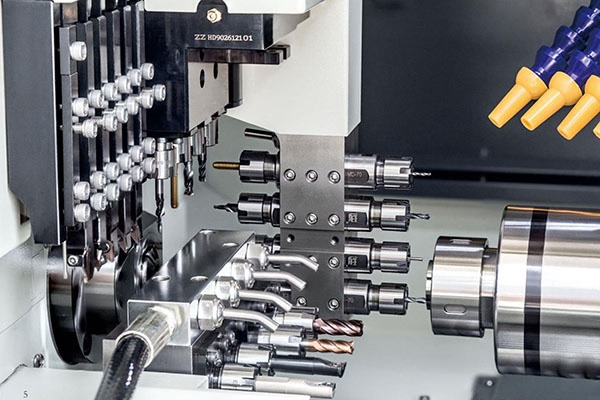
If you’ve ever wondered, “How Does A CNC Lathe Machine Work?” you’re not alone—this foundational piece of precision machining equipment is a workhorse for producing everything from small automotive fasteners to complex medical components, and understanding its operation is key to choosing the right manufacturing partner for your custom parts. CNC lathes have revolutionized the manufacturing industry by combining automation, precision, and repeatability, and when integrated into a full-service machining ecosystem, they become a powerful tool for turning design concepts into tangible, high-quality parts.
How Does A CNC Lathe Machine Work?
At its core, a CNC (Computer Numerical Control) lathe is a machine that uses computerized instructions to shape rotating workpieces by removing material with cutting tools. Unlike traditional manual lathes, which rely on human operators to control every movement, CNC lathes follow pre-programmed code to execute precise, consistent operations. Below is a detailed breakdown of its components, workflow, and key capabilities:
Core Components of a CNC Lathe
Every CNC lathe consists of several critical parts that work together to deliver accurate machining results:
Spindle & Chuck: The spindle is the rotating drive that holds and spins the workpiece at controlled speeds (ranging from a few hundred to several thousand RPM). The chuck—available in 3-jaw (for symmetrical parts), 4-jaw (for irregular shapes), or collet (for small, high-precision components)—secures the workpiece firmly to minimize runout and ensure stability. GreatLight CNC Machining Factory uses hydraulic chucks on their lathes to achieve ultra-low runout, critical for parts requiring ±0.001mm precision.
Turret & Tool Holders: The turret is a rotating carousel that holds multiple cutting tools (e.g., turning tools, drills, thread taps, boring bars). It automatically swaps tools based on programmed instructions, allowing multi-operation machining in a single setup. GreatLight’s lathes feature high-speed turrets that reduce tool change time to under 1 second, boosting overall efficiency.
Guide Rails & Carriages: These components enable precise linear movement of the cutting tool. The cross-slide (X-axis) moves radially towards/away from the workpiece, while the carriage (Z-axis) moves along the length of the workpiece. GreatLight uses hardened linear guide rails to minimize friction and maintain positioning accuracy over thousands of machining cycles.
CNC Controller: The “brain” of the machine, which interprets G-code (the numerical programming language for CNC machines) and sends signals to the machine’s motors and actuators. GreatLight uses industry-leading controllers from Fanuc and Siemens, which offer intuitive interfaces, real-time monitoring, and error-detection capabilities to prevent defects.
Coolant System: Delivers pressurized cutting fluid to the machining area to cool the tool and workpiece, flush away metal chips, and extend tool life. For hard materials like titanium or stainless steel, GreatLight uses specialized coolant blends to reduce heat buildup and improve surface finish.
Step-by-Step Workflow of a CNC Lathe Operation
The process of machining a part on a CNC lathe involves several interconnected steps, from design to final inspection:
CAD Model Design: Engineers create a 3D digital model of the part using software like SolidWorks, AutoCAD, or CATIA. GreatLight’s in-house design team offers DFM (Design for Manufacturability) consulting to optimize the model for CNC lathe machining, reducing lead times and costs.
G-Code Generation: The CAD model is converted into machine-readable G-code using CAM (Computer-Aided Manufacturing) software. This code specifies every detail of the machining process: tool paths, spindle speeds, feed rates, tool changes, and coolant settings. GreatLight’s CAM specialists optimize code to minimize cycle time while maintaining precision.
Machine Setup: A skilled operator mounts the workpiece in the chuck, loads the required tools into the turret, and calibrates the machine using precision measuring tools (e.g., dial indicators, edge finders). GreatLight uses coordinate measuring machines (CMMs) to verify setup accuracy, ensuring the first part meets specifications.
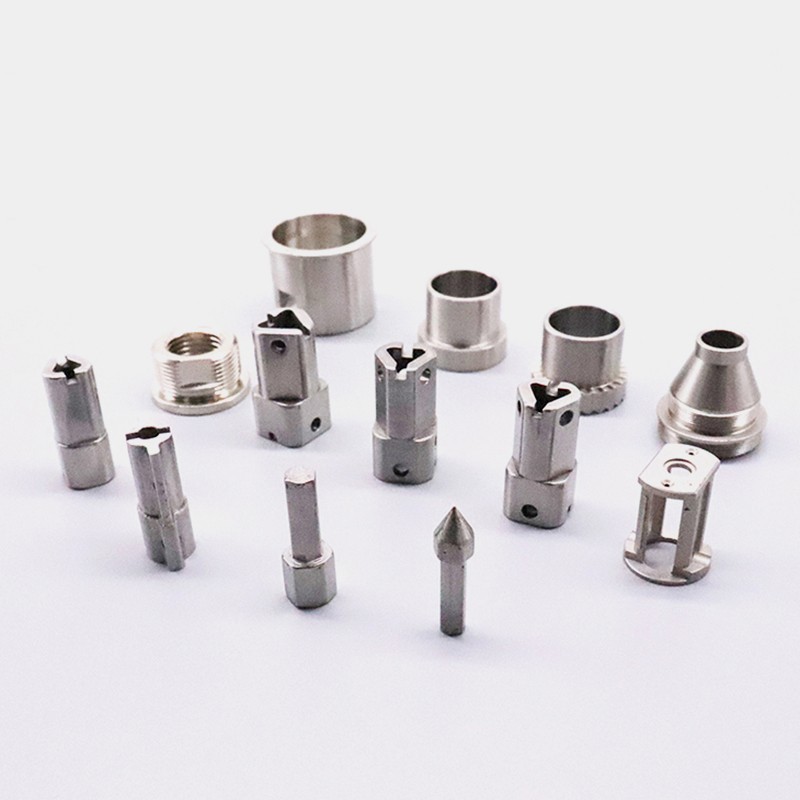
Machining Operation: Once setup is complete, the CNC controller executes the G-code. The workpiece rotates, and the cutting tool moves along the X and Z axes to remove material, shaping the part to exact dimensions. For complex parts requiring non-cylindrical features (e.g., slots, flats, cross-drilled holes), GreatLight’s lathes are equipped with live tooling that enables milling operations without repositioning the workpiece. They also complement lathe work with their five-axis CNC machining services five-axis CNC machining services to produce intricate geometries that single-axis lathes cannot handle.
Quality Inspection: After machining, the part undergoes rigorous inspection. GreatLight’s quality team uses micrometers, height gauges, and CMMs to verify dimensions meet ±0.001mm precision standards. For critical parts (e.g., medical implants, automotive engine components), they also perform material testing and surface finish analysis to ensure compliance with industry-specific certifications like ISO 13485 and IATF 16949.
Key Machining Processes Performed by CNC Lathes
CNC lathes are versatile machines capable of executing a wide range of operations:
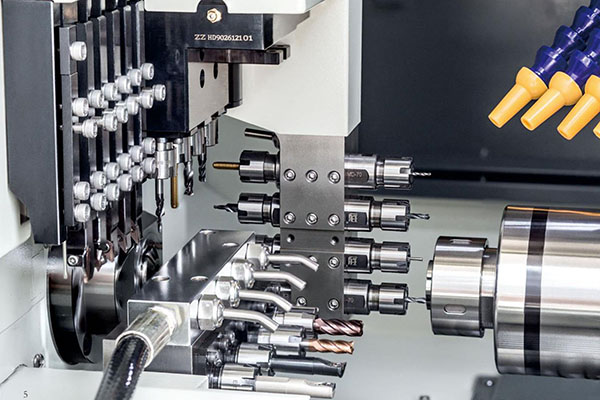
Turning: The primary process for creating cylindrical shapes (e.g., shafts, bolts, pins).
Facing: Trimming the end of the workpiece to a flat, smooth surface, ensuring proper alignment for assembly.
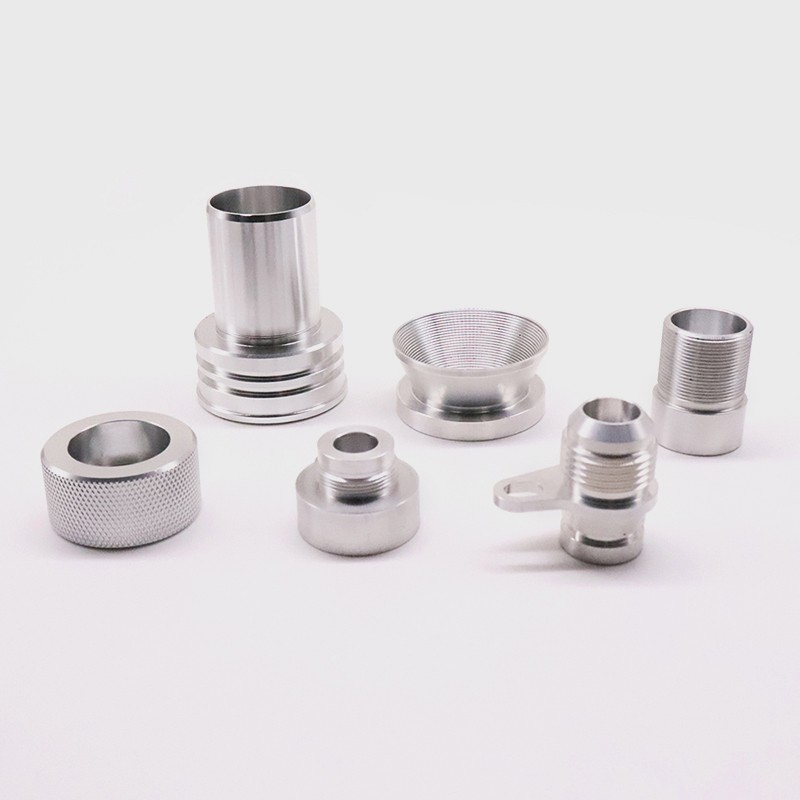
Threading: Cutting external or internal threads (metric, imperial, or custom) for components like screws, nuts, and valve stems.
Boring: Enlarging existing holes or creating internal cylindrical surfaces with high precision.
Knurling: Creating textured, non-slip surfaces (e.g., on tool handles, medical devices) for improved grip.
Grooving: Cutting grooves or notches into the workpiece for seals, snap rings, or assembly alignment.
Advantages of CNC Lathes Over Traditional Manual Lathes
CNC lathes offer significant benefits compared to their manual counterparts:
Unmatched Precision: Consistent part-to-part accuracy, critical for applications where even minor deviations can cause failure (e.g., aerospace components, medical devices).
Repeatability: Ability to produce hundreds or thousands of identical parts with zero variation, ideal for mass production.
Automation: Supports lights-out manufacturing (unattended operation), reducing labor costs and human error.
Complex Geometries: With live tooling and multi-axis capabilities, CNC lathes can produce parts with intricate features that manual lathes cannot.
Efficiency: Multi-operation machining in a single setup eliminates the need for repositioning, reducing lead times and improving overall productivity.
Choosing a CNC Lathe Machining Partner: Why GreatLight Stands Out
While there are many CNC lathe machining providers in the market, not all offer the same level of expertise, quality, or comprehensive support. GreatLight CNC Machining Factory distinguishes itself through several key strengths:
Comprehensive Equipment Fleet: With 127+ precision machines (including CNC lathes, 3/4/5-axis machining centers, 3D printers, and EDM machines), GreatLight can handle any project from prototype to mass production.
International Certifications: As an ISO 9001:2015, IATF 16949, ISO 13485, and ISO 27001 certified manufacturer, GreatLight adheres to strict quality and data security standards, ensuring compliance with global industry requirements.
Full-Service Capabilities: Beyond CNC lathe machining, GreatLight offers die casting, sheet metal fabrication, 3D printing, and one-stop surface finishing (e.g., anodizing, passivation, powder coating), providing clients with end-to-end solutions.
Proven Track Record: With 12+ years of experience, GreatLight has delivered custom parts to clients in aerospace, automotive, medical, and industrial automation sectors. For example, they recently produced 15,000 high-precision titanium valve stems for a new energy vehicle client, meeting IATF 16949 standards and delivering the order 3 days ahead of schedule.
Unbeatable After-Sales Support: GreatLight offers a free rework guarantee for quality problems, with a full refund if rework does not meet client expectations.
To learn more about GreatLight’s CNC lathe capabilities and client success stories, you can explore their industry insights and updates on their LinkedIn profile.
Conclusion
In summary, understanding “How Does A CNC Lathe Machine Work?” gives you valuable insight into the precision manufacturing process, and partnering with a trusted provider like GreatLight CNC Machining Factory ensures that your custom parts are produced with the highest level of accuracy, efficiency, and quality. Whether you need simple turned components or complex assemblies that require integrated machining solutions, GreatLight’s expertise in CNC lathe operations and full-service capabilities make them the ideal partner for your project.
Frequently Asked Questions (FAQ)
Q1: What materials can be machined with a CNC lathe?
A: CNC lathes can process a wide range of materials, including metals (aluminum, stainless steel, titanium, brass, copper, mold steel) and plastics (ABS, POM, PC, nylon). GreatLight specializes in machining both ferrous and non-ferrous metals, as well as high-performance plastics, with tailored cutting parameters for each material to ensure optimal surface finish and precision.
Q2: What is the maximum part size GreatLight can machine on a CNC lathe?
A: GreatLight’s CNC lathes can handle workpieces up to 4000mm in length, making them suitable for both small components (e.g., medical screws) and large industrial parts (e.g., hydraulic cylinders). For parts requiring even larger dimensions, they can combine lathe work with 5-axis CNC machining services to achieve the desired results.
Q3: How long does it take to produce parts with a CNC lathe?
A: Lead times vary depending on part complexity, quantity, and post-processing requirements. For prototype parts, GreatLight can deliver within 1-3 days. For mass production runs (1000+ parts), lead times typically range from 5-15 days. Their in-team optimization of G-code and use of automated loading systems help minimize cycle times and meet tight deadlines.
Q4: Can CNC lathes produce parts with non-cylindrical features?
A: Yes. Modern CNC lathes with live tooling can perform milling operations (e.g., drilling, slotting, tapping) while the workpiece rotates, allowing for the production of parts with non-cylindrical features. For even more complex geometries, GreatLight integrates lathe work with their 5-axis CNC machining services to create intricate parts that single-axis machines cannot handle.
Q5: What quality guarantees does GreatLight offer for CNC lathe parts?
A: GreatLight provides a comprehensive after-sales guarantee: any parts that do not meet specified dimensions or quality standards are eligible for free rework. If rework still does not satisfy the client, GreatLight offers a full refund. All parts undergo rigorous inspection using precision measuring equipment to ensure compliance with ISO 9001:2015 and industry-specific standards.
Q6: How does GreatLight protect client intellectual property (IP)?
A: GreatLight adheres to ISO 27001 data security standards, which include strict access controls for client CAD files, encrypted data storage, and non-disclosure agreements (NDAs) with all employees and partners. This ensures that client designs and proprietary information are fully protected throughout the machining process.



















