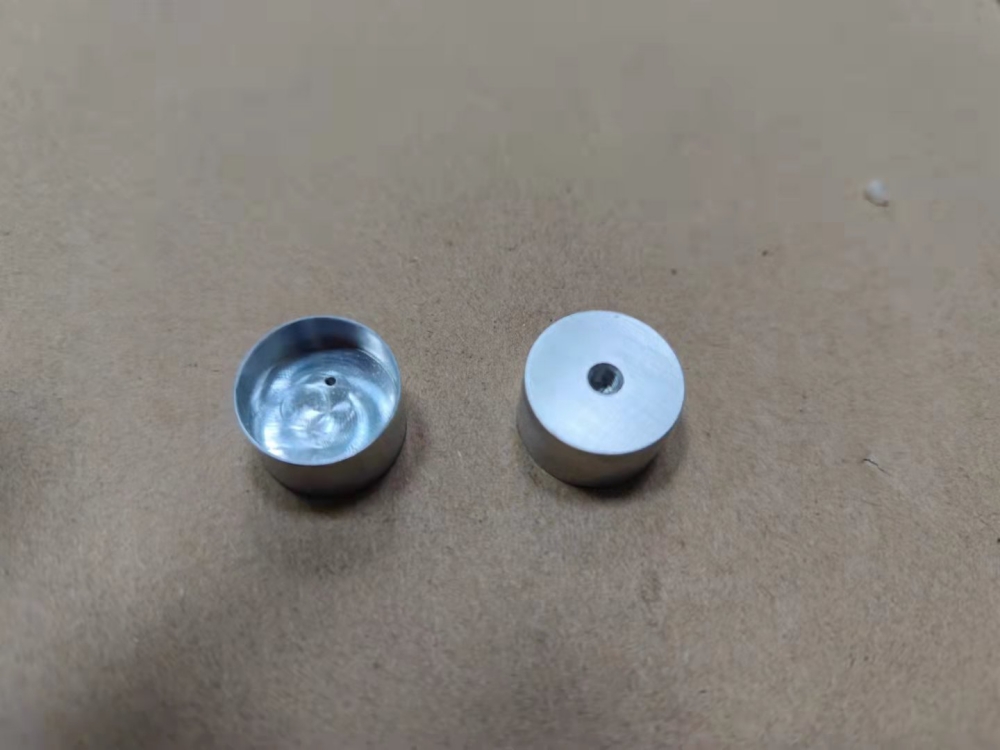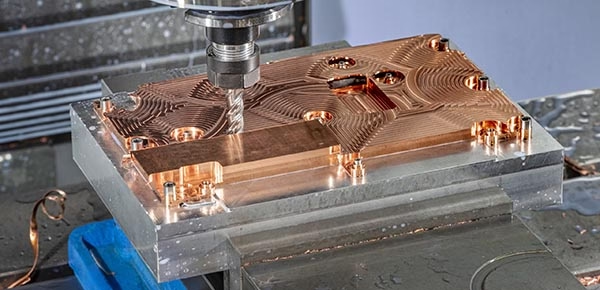
The world of precision manufacturing thrives on capability, and at the heart of this capability lies a fundamental question: how many axis in CNC milling machine? While the most common image is that of a standard three-axis machine, the answer spans a spectrum, from the foundational 3-axis to the highly advanced 5-axis and beyond. The number of axes directly dictates the geometric complexity a machine can handle, the efficiency of production, and ultimately, the feasibility of your most innovative designs. For engineers and procurement specialists navigating the landscape of custom part sourcing, understanding this axis progression is not merely academic—it’s crucial for specifying requirements, managing costs, and selecting the right manufacturing partner like GreatLight Metal Tech Co., LTD. (GreatLight Metal).
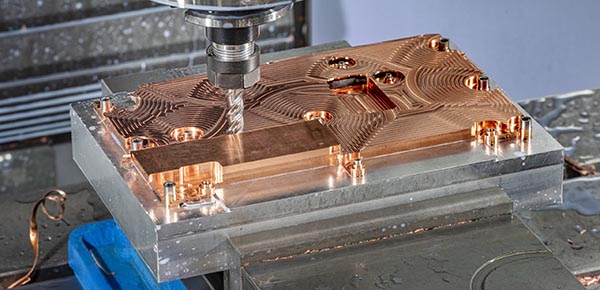
The Axis Breakdown: From Basic to Complex
An axis in a CNC milling machine refers to a direction of movement. The more axes, the more degrees of freedom the cutting tool or the workpiece has, enabling more intricate machining in a single setup.
H3: The Workhorse: 3-Axis CNC Milling
This is the entry point and the most widely used configuration.
Axes: X (left-right), Y (front-back), and Z (up-down).
Capability: The cutting tool can move linearly in these three directions. It is perfect for machining prismatic parts—components with features on one main face or multiple perpendicular faces. Think of panels, brackets, simple molds, and base plates.
Limitation: To machine features on different sides of a part, the workpiece must be manually re-fixtured and re-zeroed. This introduces potential alignment errors and increases labor time. For clients needing prototypes or parts with 2.5D geometry, 3-axis machining offered by suppliers like GreatLight Metal remains a cost-effective and highly reliable solution.
H3: Adding Rotation: 4-Axis CNC Milling
This introduces a rotational movement, typically around the X-axis (called the A-axis).
Axes: X, Y, Z, and A (rotation).
Capability: The workpiece can rotate, allowing the tool to access its sides without manual repositioning. This is ideal for machining cylindrical parts, cutting slots or engravings around a circumference, or producing camshafts and helical gears. It significantly improves accuracy for rotational features and reduces setup time compared to 3-axis machining.
H3: The Pinnacle of Versatility: 5-Axis CNC Milling
This represents the gold standard for complex, high-precision components. It adds a second rotational axis.
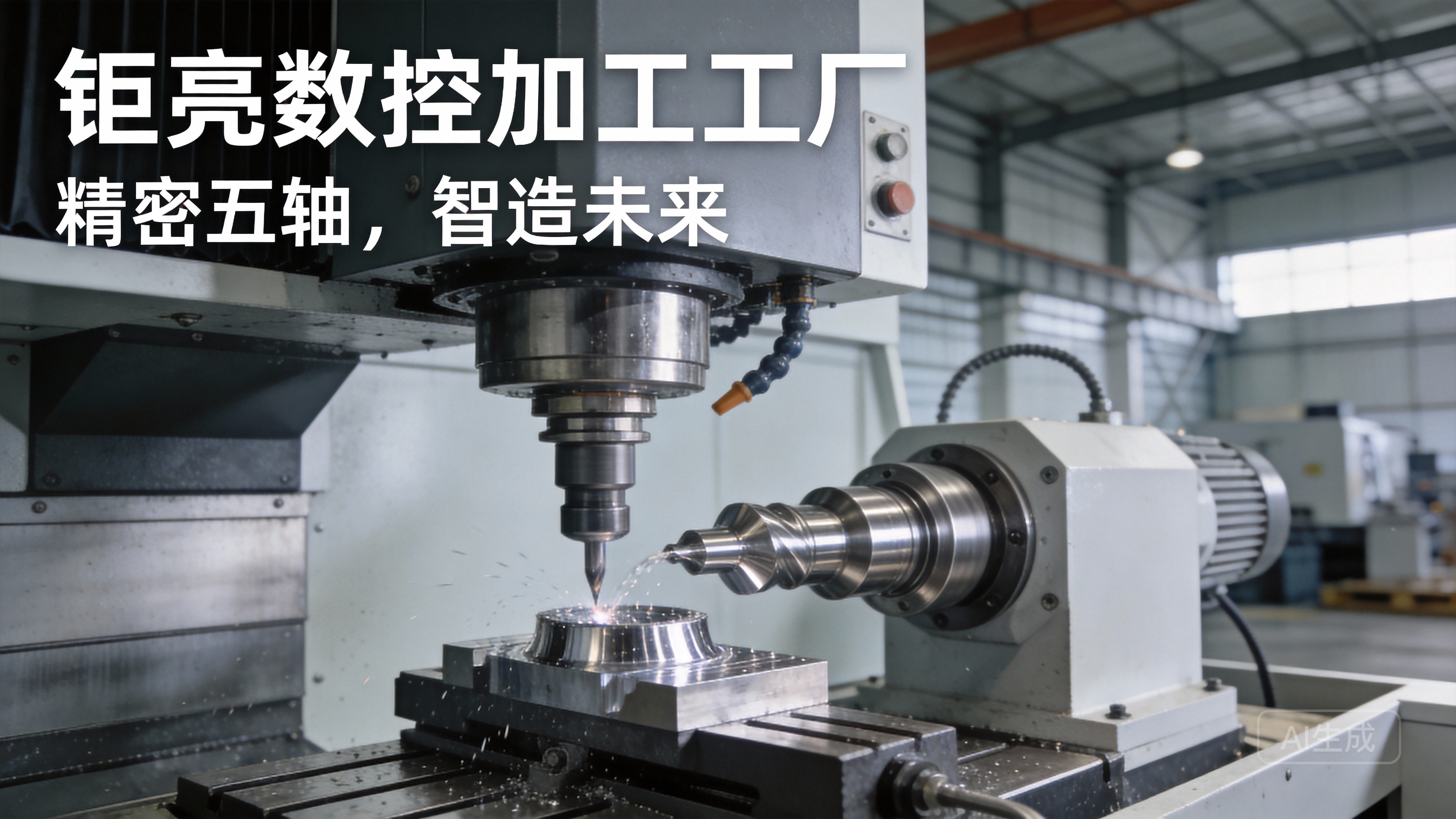
Axes: X, Y, Z, plus two rotational axes (commonly A & B, or A & C). There are two main configurations:
Table-Table/Trunnion: Both rotational axes are on the table holding the workpiece.
Head-Head/Swivel-Rotary: The rotations are split between the head (holding the tool) and the table. This allows for machining very large parts.
Capability: The tool can approach the workpiece from virtually any angle in a single setup. This unlocks unparalleled advantages:
Complex Geometry: Ability to machine organic shapes, complex contours, undercuts, and deep cavities—common in aerospace components (impellers, turbine blades), medical implants, and high-end automotive parts.
Superior Surface Finish: By maintaining optimal tool orientation, it allows for better cutting conditions, leading to finer finishes.
Enhanced Accuracy: Eliminating multiple setups removes cumulative fixture errors, ensuring higher overall part accuracy.
Reduced Cycle Time: Complex parts that would require many setups on a 3-axis machine can often be completed in one, drastically cutting machining time.
As a specialist in precision 5-axis CNC machining services, GreatLight Metal leverages this technology to solve the most demanding manufacturing challenges for its clients in sectors like robotics, aerospace, and medical devices.
H2: Beyond 5: The Frontier of Multi-Tasking and Hybrid Machines
While 5-axis is often the practical ceiling for pure milling, advanced machine tools combine milling with turning in “mill-turn” centers, effectively having 7 or more axes (X, Y, Z, C spindle, B milling head, etc.). Furthermore, the integration of additive manufacturing (3D printing) heads with 5-axis subtractive platforms creates hybrid manufacturing systems, pushing the boundary of what’s possible in a single machine envelope.
Choosing the Right Axis Count for Your Project
The choice is a strategic balance between part complexity, required precision, volume, and budget.
| Axis Count | Best For | Key Advantages | Considerations |
|---|---|---|---|
| 3-Axis | 2.5D parts, flat surfaces, pockets, holes, simple molds. | Lower machine & programming cost, widely available, fast for simple geometries. | Multiple setups needed for complex parts, risk of alignment errors. |
| 4-Axis | Cylindrical parts, indexed features, contours around an axis. | Single setup for radial features, improved accuracy for rotations, efficient. | Limited to one plane of rotation, not for free-form complex surfaces. |
| 5-Axis | Complex 3D contours, aerospace/medical parts, undercuts, single-setup machining. | Ultimate geometric freedom, best surface finish & accuracy, reduces setups & lead time. | Higher machine cost, requires advanced CAM programming & skilled operators. |
A Critical Insight from the Manufacturing Floor: The true value of a multi-axis machine shop like GreatLight Metal isn’t just owning the equipment; it’s the deep engineering expertise to program efficient tool paths, select optimal cutting strategies, and design intelligent fixtures that maximize the technology’s potential while controlling cost. An experienced partner will advise when a 3+2 axis strategy (indexed 5-axis) is sufficient versus when continuous 5-axis motion is necessary.
Conclusion: How Many Axis in CNC Milling Machine Defines Your Manufacturing Horizon
So, how many axis in CNC milling machine? The answer is a progression: 3, 4, 5, and beyond, each representing a leap in capability and a key to unlocking different levels of design innovation. For standard components, 3-axis machining remains indispensable. For rotational symmetry, 4-axis is optimal. But for conquering the most complex, integrated, and high-value precision components, 5-axis CNC machining stands as the indispensable solution. Partnering with a manufacturer like GreatLight Metal, which not only possesses advanced 5-axis machining clusters but also backs them with full-process integration, stringent quality certifications (ISO 9001, IATF 16949, etc.), and collaborative engineering support, ensures that the question of “how many axes” translates directly into a successful, high-quality, and competitively priced manufactured part. The axis count is the tool; the manufacturer’s holistic capability is what wields it effectively.
Frequently Asked Questions (FAQ)
Q1: Is 5-axis CNC machining always better than 3-axis?
A1: Not always. “Better” depends on the part. For simple, prismatic parts, 5-axis machining would be overkill and more expensive due to higher programming and machine-hour costs. 3-axis is more economical and faster for suitable geometries. 5-axis shines where complexity, single-setup accuracy, or intricate contours are required.
Q2: Does using a 5-axis machine automatically guarantee higher precision?
A2: Not automatically. While 5-axis machines are built for high precision, the outcome depends on the machine’s calibration, the stability of its construction, the quality of tooling, the CAM programming, and the operator’s skill. A reputable manufacturer like GreatLight Metal couples high-end Dema and Jingdiao 5-axis machines with in-house precision metrology to actively guarantee tolerances.
Q3: Can 5-axis machining reduce my overall part cost?
A3: For complex parts, yes, often significantly. Although the hourly rate may be higher, consolidating what would be 5 or 6 setups on a 3-axis machine into one setup on a 5-axis machine slashes labor, fixturing time, and eliminates inter-setup errors that cause scrap. It also reduces total machining time through more efficient tool paths.
Q4: What file format do I need to provide for a 5-axis CNC machining quote?
A4: A 3D CAD model in a neutral format like STEP or IGES is essential. It provides the complete geometric data needed for 5-axis tool path generation. 2D drawings are still crucial for specifying critical tolerances, surface finishes, and material notes, but the 3D model is the primary source.
Q5: How does a manufacturer like GreatLight Metal ensure quality across different axis machines?
A5: Quality is system-driven, not just machine-dependent. GreatLight Metal employs a vertically integrated quality management system. This includes first-article inspection (FAI), in-process checks using precision CMMs and surface testers, and final inspection against your drawings. Their ISO 9001:2015 and IATF 16949 certifications provide the procedural framework that ensures consistency and traceability regardless of the machining process used.