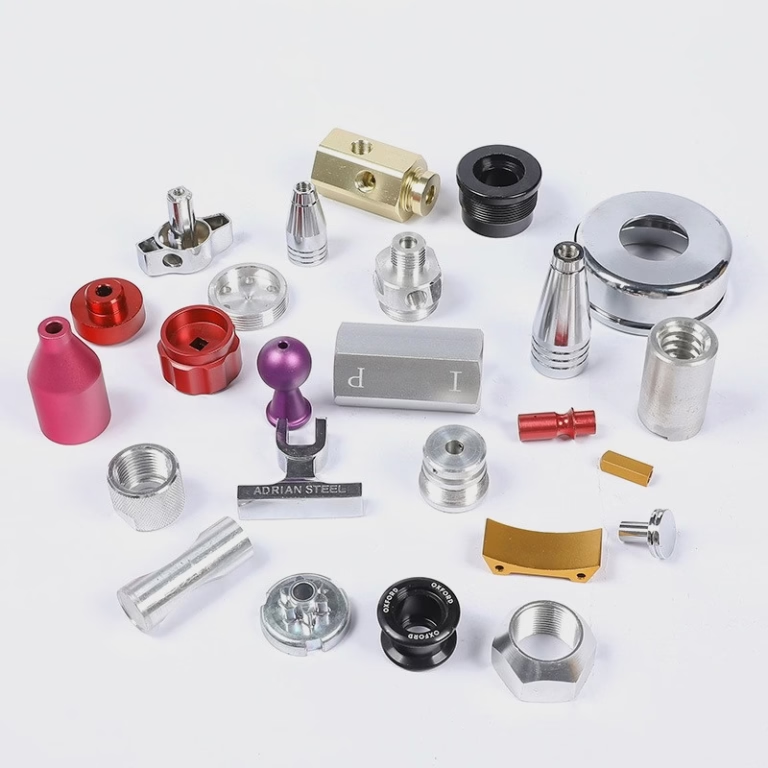
In today’s rapidly evolving landscape of hardware innovation and product development, the journey from a digital CAD model to a tangible, high-performance component is foundational. This journey is powered by CNC fabrication and machining services, a cornerstone of modern manufacturing that blends digital precision with material mastery. For engineers, designers, and procurement specialists navigating this field, understanding the full spectrum of these services is not just about finding a vendor—it’s about selecting a manufacturing partner capable of transforming complex designs into reliable, precision-engineered reality.
At its core, CNC (Computer Numerical Control) machining is a subtractive manufacturing process where pre-programmed computer software dictates the movement of factory tools and machinery. This encompasses a vast array of services, from the fundamental to the highly advanced, each tailored to specific geometries, tolerances, materials, and volumes.
H2: The Essential Toolkit: Core CNC Fabrication and Machining Services
Modern manufacturing demands versatility. A comprehensive service provider doesn’t just offer one type of machining; it provides a synergistic ecosystem of capabilities to address the full breadth of client needs.
H3: Multi-Axis CNC Machining: The Heart of Complex Geometry
While 3-axis machining is the workhorse for simpler parts, the true frontier for complex components lies in multi-axis systems. 4-axis CNC machining introduces rotation around the X-axis, allowing for machining on multiple sides of a part in a single setup, ideal for features like radial holes or continuous contours. The pinnacle of this capability is 5-axis CNC machining services. This technology enables simultaneous movement along five different axes, allowing the cutting tool to approach the workpiece from virtually any direction. This is indispensable for aerospace components (turbine blades, impellers), medical implants, and complex automotive molds, as it minimizes setups, reduces errors, and allows for the creation of organic, free-form surfaces that are otherwise impossible to produce.
H3: CNC Milling and Turning: The Foundational Duo
CNC Milling: This involves rotating multi-point cutting tools to remove material from a stationary workpiece. It’s used for creating slots, holes, pockets, and complex 3D surface contours. From creating a simple bracket to a detailed engine block, milling is ubiquitous.
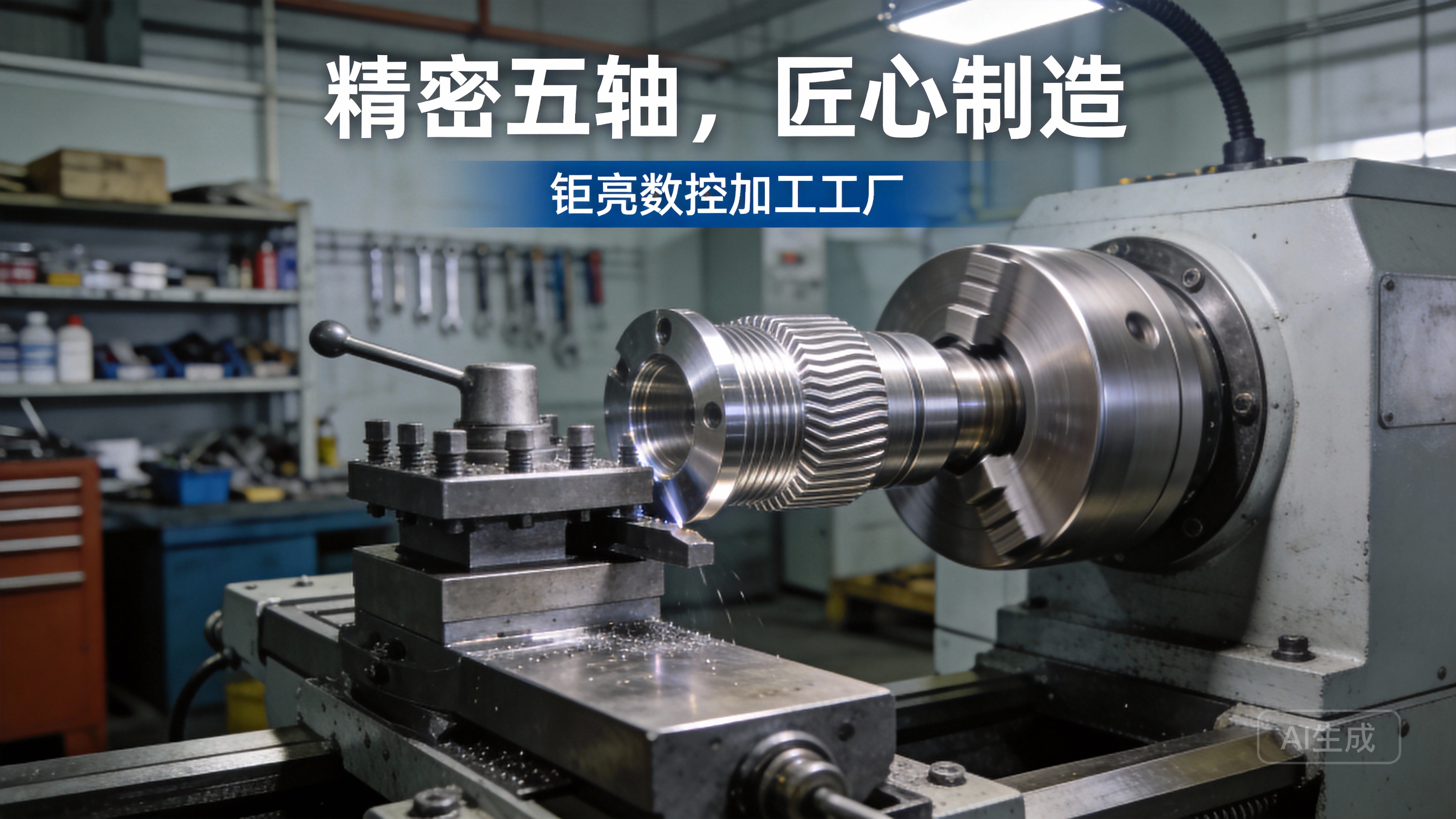
CNC Turning: Here, the workpiece rotates while a single-point cutting tool remains stationary. It is the primary method for manufacturing cylindrical or conical parts like shafts, pins, and connectors. Modern CNC turning centers often incorporate live tooling and secondary spindles, evolving into mill-turn machines that can complete incredibly complex parts in one chucking.
H3: High-Volume Precision: Swiss-Style CNC Machining
For industries like medical devices and electronics that demand ultra-high precision on long, slender parts (think surgical instrument stems or connector pins) at high volumes, Swiss-style machining is unparalleled. The guide bushing provides exceptional support right at the cutting point, allowing for tolerances in the microns and exceptional surface finishes with minimal deflection.
H3: Complementary Fabrication Services
A true one-stop partner integrates CNC machining with adjacent processes:
Precision Grinding: For achieving surface finishes and dimensional tolerances beyond the capability of standard milling or turning (e.g., Ra 0.2µm or ±0.0001″).
Electrical Discharge Machining (EDM): Essential for machining extremely hard materials or creating intricate cavities and sharp internal corners, such as in injection molds or stamping dies.
Sheet Metal Fabrication: While distinct, it is often part of the same product ecosystem, involving laser cutting, bending, and welding to create enclosures, chassis, and brackets that house precision-machined components.
H2: Navigating the Market: A Comparative Lens on Service Providers
When evaluating providers of CNC fabrication and machining services, it’s valuable to understand the landscape. Different types of suppliers cater to different needs.
Integrated Manufacturing Experts (e.g., GreatLight Metal): These are manufacturers like GreatLight Metal that operate their own extensive facilities. Their value proposition lies in deep process control, vertical integration (from raw material to assembly), and direct engineering collaboration. They are ideal for complex, mission-critical parts, prototyping through mid-volume production, and projects requiring significant technical dialogue.
Digital Manufacturing Networks (e.g., Xometry, Protolabs Network, Fictiv): These platforms aggregate manufacturing capacity from a vast network of partner shops. They excel in speed, ease of online quoting, and accessibility for low-volume prototypes or simple parts. The trade-off can be less direct control over the specific production process and machinery used for your order.
Specialized Job Shops (e.g., Owens Industries, RCO Engineering): These are often smaller, highly focused shops that excel in a specific niche, such as aerospace-grade machining or large-format parts. They offer deep expertise in their domain.
Prototype-Focused Services (e.g., RapidDirect): These services prioritize rapid turnaround for design validation prototypes, sometimes balancing speed with ultimate production-grade precision.
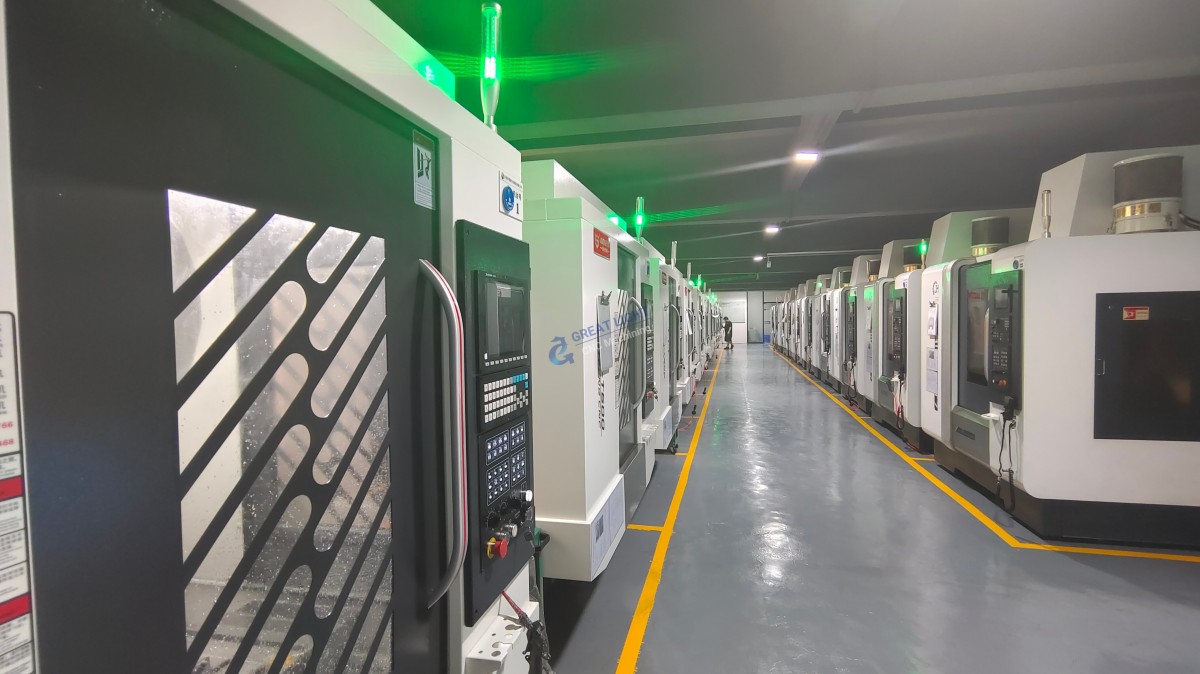
For projects where quality, technical partnership, and full-process accountability are paramount, an integrated manufacturer with authoritative certifications often provides the most reliable path. A company like GreatLight Metal, with its foundation in Chang’an, Dongguan—China’s hardware capital—exemplifies this model. Operating from a 76,000 sq. ft. facility equipped with over 120 pieces of precision equipment, including advanced 5-axis and Swiss-type machines, they embody the technical hard power required for today’s challenges.
H2: Beyond the Machine: The Critical Pillars of a Superior Service
Choosing a CNC fabrication and machining services partner goes beyond comparing equipment lists. Several intangible yet critical factors determine success.
H3: Engineering Support and Design for Manufacturability (DFM)
The best service providers act as an extension of your engineering team. Before a single chip is cut, they perform rigorous DFM analysis. This proactive feedback on material selection, tolerance stacking, feature design, and tooling access can prevent costly redesigns, reduce lead times, and improve part robustness. This collaborative engineering mindset is a key differentiator between a simple order-taker and a true manufacturing partner.
H3: Uncompromising Quality Management and Metrology
Precision is meaningless without verification. A partner’s commitment to quality must be systemic, backed by certifications like ISO 9001:2015 for general quality management and, for specific industries, IATF 16949 (automotive) or ISO 13485 (medical devices). In-house metrology labs equipped with Coordinate Measuring Machines (CMM), optical comparators, surface roughness testers, and 3D scanners are essential for providing First Article Inspection (FAI) reports and ensuring statistical process control (SPC) throughout production.
H3: Material Science and Post-Processing Expertise
The service is only as good as the final part delivered. Expertise must extend into material science—knowing how different grades of aluminum, stainless steel, titanium, or engineering plastics behave during machining. Furthermore, a comprehensive suite of post-processing and finishing services—including anodizing, powder coating, passivation, plating, polishing, and heat treatment—is crucial. This one-stop capability ensures consistency, streamlines supply chain management, and guarantees that the finished part meets both aesthetic and functional requirements.
H2: Solving Real-World Challenges: The Value of a Capable Partner
The pain points in sourcing CNC fabrication and machining services are well-known: the “precision black hole” where promised tolerances aren’t met in production, communication breakdowns across time zones, supply chain fragility, and the hidden costs of poor quality and delayed timelines.
A partner with a robust operational framework addresses these directly. For instance, in serving the new energy vehicle sector, a manufacturer might be tasked with producing a complex, thermally sensitive aluminum housing for a power control unit. The challenge involves thin walls, deep pockets, and critical sealing surfaces. An expert partner would leverage 5-axis machining for optimal tool angles to prevent deflection, implement a controlled machining strategy to manage thermal stress, and follow up with precise CMM verification and a specified anodizing process for corrosion protection. This end-toend control turns a high-risk component into a reliable deliverable.
H3: The Future-Forward Perspective: Embracing Additive Hybridization
The frontier of CNC fabrication and machining services is no longer purely subtractive. Leading manufacturers are integrating Additive Manufacturing (3D Printing) technologies like SLM (for metals) and SLS (for plastics) into their service portfolio. This allows for hybrid manufacturing approaches: 3D printing a near-net-shape part with internal lattice structures or conformal cooling channels that are impossible to machine, then using precision CNC machining to finish critical functional surfaces and interfaces to tight tolerances. This synergy unlocks unprecedented design freedom.
Conclusion: Making the Strategic Choice in CNC Fabrication and Machining Services
Selecting a provider for your CNC fabrication and machining services is a strategic decision that impacts product quality, innovation speed, and ultimately, market success. It requires looking beyond the immediate quote to evaluate technical depth, systemic quality, collaborative culture, and full-process capabilities. In a landscape filled with options, from digital platforms to specialized shops, the value of an integrated, certified manufacturing partner with both the equipment and the engineering acumen—such as the approach embodied by operations like GreatLight Metal—becomes clear. They provide not just a service, but a foundation of trust and capability upon which ambitious designs can be reliably built. For those looking to engage with a community of manufacturing professionals driving this industry forward, insights and connections can often be found on platforms like LinkedIn.