
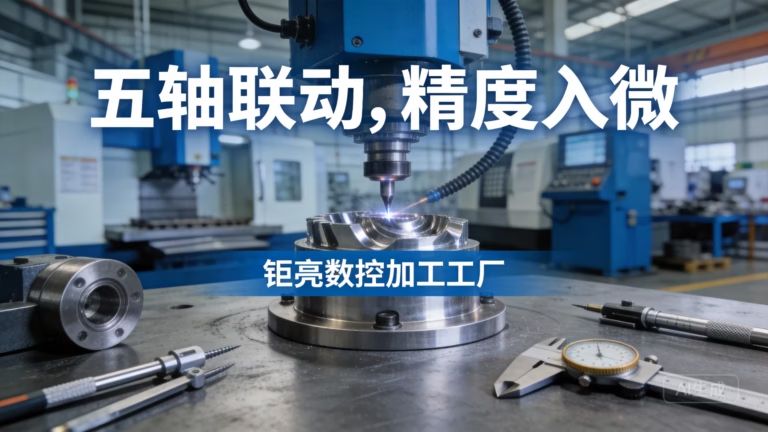
As a senior manufacturing engineer who has spent decades on the factory floor and in design reviews, I’ve witnessed firsthand the evolution of part sourcing. Today, when a client says they need “CNC Services Machining,” they’re often met with a dizzying array of options, promises, and price points. This term, while common, masks a vast spectrum of capability, quality, and ultimately, risk. The core question isn’t just about finding a machine shop; it’s about identifying a manufacturing partner whose processes, precision, and problem-solving ethos align with the unforgiving demands of your project.
Many companies find themselves navigating what I call the “Precision Predicament.” You send out a perfect 3D model, receive quotes that look similar on paper, but the delivered results tell a different story. The pain points are systemic:
The Precision Promise Gap: Claims of ±0.001mm are easy to make but hard to consistently validate across a production run without statistical process control (SPC) and metrology-grade inspection.
The Surface Finish Lottery: A machined part can be dimensionally accurate yet functionally useless due to improper surface roughness, tool marks, or residual stress.
The Single-Process Bottleneck: Many shops are experts in one domain—milling, turning, or sheet metal—forcing you to manage multiple vendors for a single assembly, introducing coordination overhead and consistency risk.
The Post-Processing Afterthought: A flawless machined part can be compromised by amateurish finishing—anodizing that chips, painting that lacks adhesion, or polishing that alters critical dimensions.
The Communication Chasm: Engineering changes, material substitutions, or tolerance negotiations become high-friction events without a dedicated engineering liaison who speaks both “design” and “machining.”
To cut through this complexity, it’s useful to think of CNC Services Machining providers in three distinct tiers, defined not by their marketing but by their operational DNA.

H2: Decoding the Tiers of CNC Services Machining
H3: Tier 1: The Job Shop & General Machinist
These are the backbone of local manufacturing, ideal for prototypes, fixtures, or parts with broad tolerances (±0.1mm or above). Their strength is flexibility and speed for simpler geometries. Equipment often consists of capable 3-axis mills and manual lathes. For a non-critical bracket or a functional prototype, they are a cost-effective choice. However, for complex, tight-tolerance components, their capabilities and quality systems may be stretched thin.
H3: Tier 2: The Specialized Engineering Partner
This tier represents a significant step up. Here, you find shops like GreatLight Metal, Protocase, or Owens Industries, which have invested in advanced technology and systemic rigor. Their defining characteristic is a full-process chain approach. Instead of just machining, they integrate design for manufacturability (DFM) analysis, advanced multi-axis machining, and professional post-processing under one roof.
H4: What This Tier Offers:
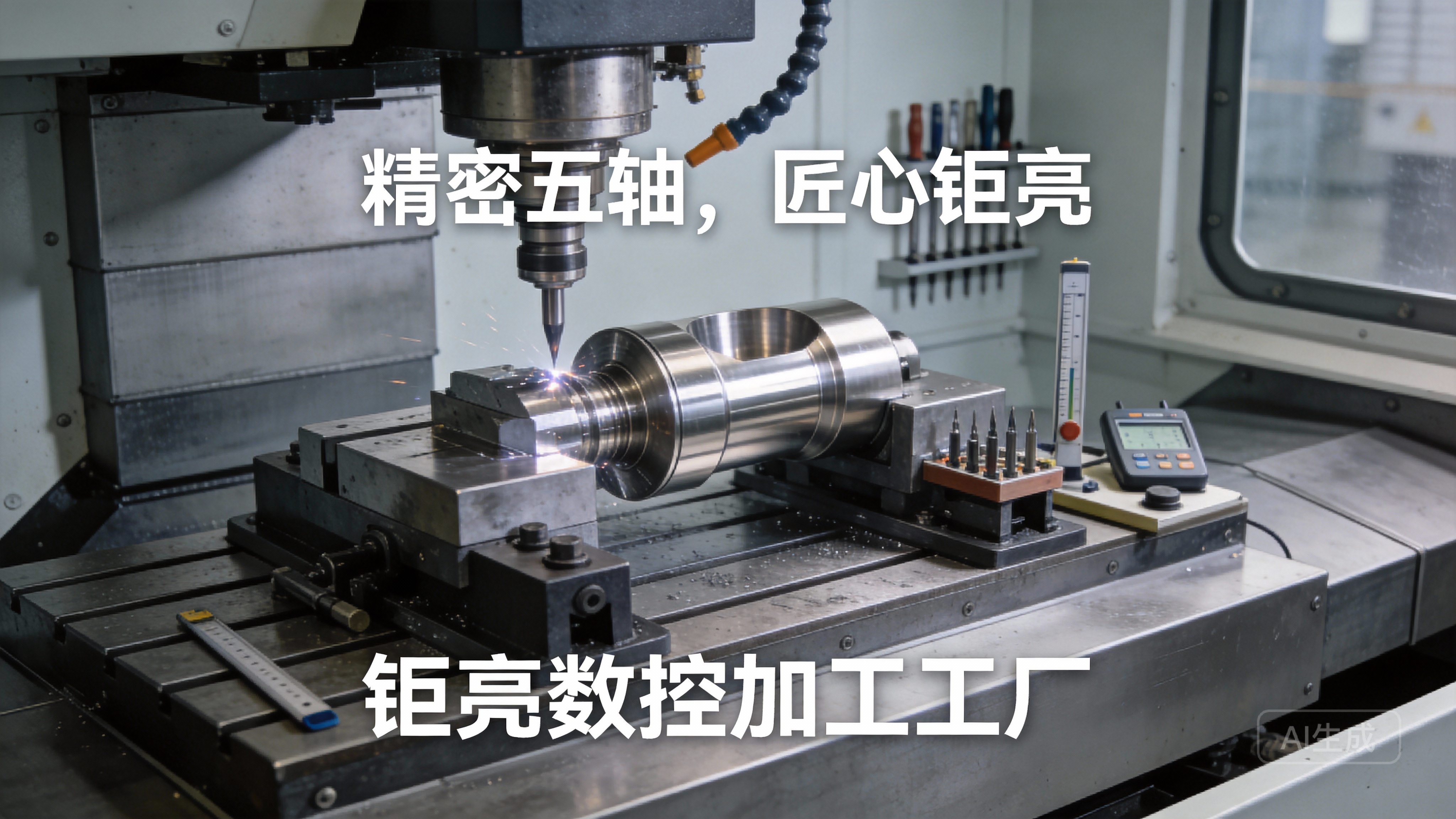
Advanced Multi-Axis Capability: Moving beyond 3-axis, the use of 5-axis CNC machining services allows for the production of complex contours, undercuts, and deep cavity features in a single setup. This reduces errors, improves accuracy, and often lowers overall cost by eliminating multiple fixtures and operations.
Engineering-First Mindset: Collaboration begins at the design stage. A skilled engineer will analyze your model for potential stress concentrations, suggest tolerance relaxation where possible to save cost, and recommend the optimal material and process route.
Integrated Quality Assurance: Quality isn’t an “inspection” step; it’s baked into the process. This involves in-process probing, post-process inspection with CMMs and optical scanners, and full documentation (FAI reports, material certifications).
True One-Stop Services: From the raw billet to a ready-to-assemble part with a certified coating, everything is managed internally. This eliminates finger-pointing between vendors and ensures accountability.
H3: Tier 3: The Large-Scale Contract Manufacturer
These are industrial giants focused on high-volume production runs for automotive, aerospace, or consumer electronics. They operate on a different scale and business model, often with high minimum order quantities (MOQs) and lead times measured in months. For low-volume, high-mix, or rapid prototyping needs, they are typically not the most agile or cost-effective solution.
H2: The Cornerstones of a Reliable Machining Partnership
Choosing a partner in Tier 2 and above requires looking beyond the equipment list. Trust is built on transparent systems and proven outcomes.
H3: 1. The Certification Framework: Your Blueprint for Trust
Certifications are the formalized language of capability and consistency. A partner holding ISO 9001:2015 demonstrates a systematic approach to quality management. For medical components, ISO 13485 is non-negotiable, governing every aspect from material traceability to sterile packaging. In the automotive and powertrain sectors, IATF 16949 is the gold standard, incorporating rigorous requirements for continuous improvement and defect prevention. These aren’t just plaques on the wall; they are audited processes that protect your project from variability.
H3: 2. The Technology Stack: More Than Just Machine Count
It’s not about how many machines, but about the right machines for the job and the expertise to wield them.
5-Axis Simultaneous Machining: Essential for monolithic aerospace components, complex impellers, and medical implants.
High-Speed Machining (HSM): For superior surface finishes on molds and thin-walled aluminum parts.
Turn-Mill Centers: For parts requiring concentric cylindrical features and off-axis milling, completing them in one chucking.
Advanced Metrology: A shop is only as good as its ability to measure. On-machine probing, Coordinate Measuring Machines (CMM), and 3D optical scanners are critical for closing the quality loop.
H3: 3. The Full-Process Mentality: From Concept to Completion
Consider the journey of a high-performance drone motor housing made from 7075 aluminum. A tier-one shop might machine it. A tier-two partner like GreatLight Metal would:
Perform a DFM review, suggesting slight radii adjustments to improve tool life.
Machine it on a 5-axis center from a certified stock of 7075-T6.
Deburr and vibratory polish it to a specified Ra finish.
Apply a Type III hard anodize per MIL-A-8625 for wear and corrosion resistance, masking critical threads.
Conduct a final dimensional inspection and provide a compliance report.
This end-to-end ownership is where value is truly created and risk is mitigated.
H2: A Practical Framework for Your Next Sourcing Decision
When evaluating quotes for your CNC Services Machining project, move beyond unit price. Use this checklist:
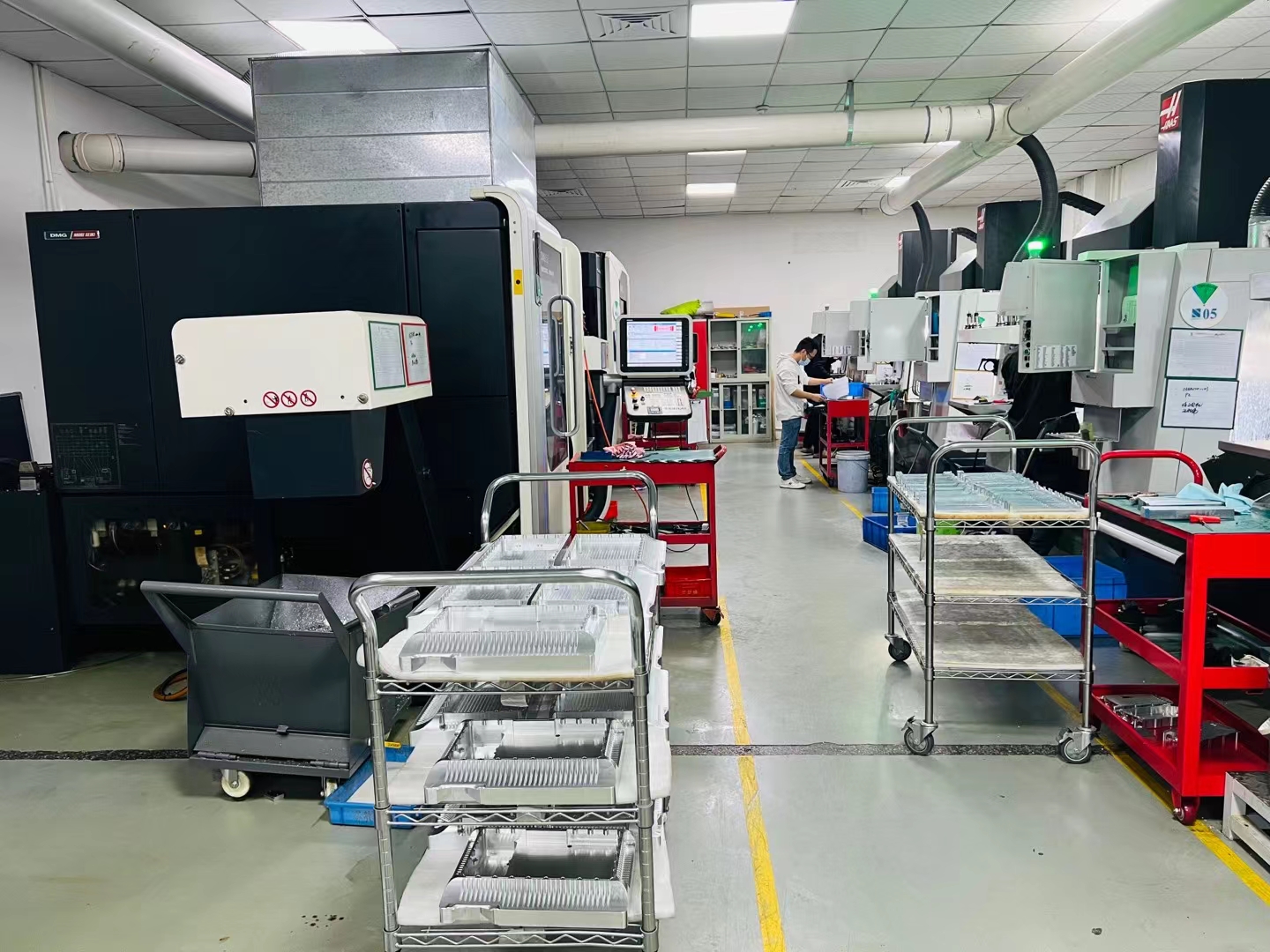
Request a Detailed DFM Analysis: A serious partner will provide annotated feedback on your drawings before quoting.
Ask for Evidence of Similar Work: Request case studies or, with confidentiality, images of parts with comparable complexity.
Clarify the Inspection Protocol: “How will you inspect this specific feature on my part?” The answer is revealing.
Understand the Post-Processing Flow: Who does it? Is it in-house? What standards do they follow?
Evaluate Communication: Is your point of contact a salesperson or an engineer? Responsiveness during the quote stage is often indicative of future support.
The landscape of CNC Services Machining is rich with talent, but also fraught with mismatched expectations. The goal is to align your project’s technical requirements with a provider’s proven capabilities and systemic strengths. For projects where precision, complexity, and total lifecycle cost are critical, partnering with an integrated, engineering-driven manufacturer is not an expense—it is an investment in predictability, quality, and ultimately, the success of your product. In this demanding field, the right partnership, such as those fostered by industry leaders who share their expertise on platforms like LinkedIn, transforms a procurement transaction into a collaborative engineering endeavor.



















