
Navigating the landscape of Precision CNC Machining Services in China can be both an opportunity and a challenge for global OEMs, R&D firms, and hardware startups. As a senior manufacturing engineer with over two decades of experience navigating global supply chains, I’ve witnessed the evolution of China’s manufacturing sector from a center of mass production to a hub of sophisticated, high-precision engineering. The decision to source these critical services is no longer just about cost; it’s about accessing technological depth, supply chain resilience, and engineering partnership. Let’s delve into what truly defines excellence in this field today.
The Evolving Landscape of Chinese Precision Machining
China’s manufacturing ecosystem has undergone a profound transformation. While the image of vast assembly lines persists, a parallel world of highly specialized, technology-driven precision workshops has emerged, concentrated in industrial clusters like Dongguan, Shenzhen, and Suzhou. The competitive edge in Precision CNC Machining Services in China has shifted from labor arbitrage to:
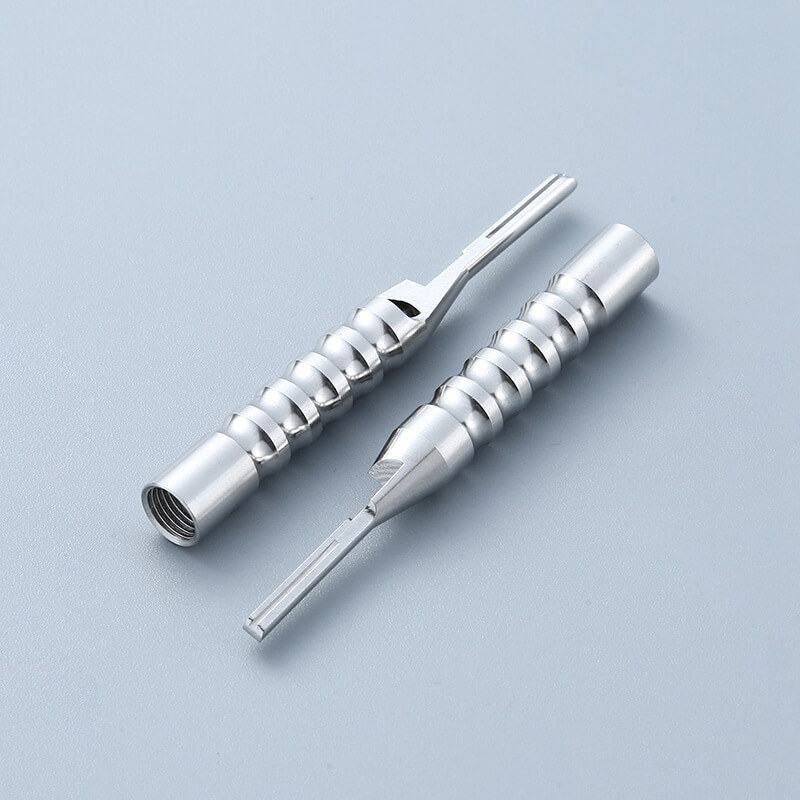
Technological Sophistication: Widespread adoption of multi-axis (4-axis and 5-axis) CNC systems, advanced Swiss-type lathes, and integrated CMM inspection.
Material Science Mastery: Expertise in machining a vast portfolio from common alloys (6061, 7075 aluminum, 303/304/316 stainless steel) to exotic and difficult-to-machine materials like Inconel, titanium alloys, and PEEK.
Integrated Quality Systems: A move beyond basic inspection to full Quality Management Systems (QMS) aligned with international standards, which we will discuss in detail.
The Technical Core: Beyond the Machine Tool
When evaluating a provider of Precision CNC Machining Services in China, looking at their equipment list is just the first step. True capability lies in the application of that technology.
1. The Strategic Advantage of Multi-Axis Machining
While 3-axis machining is sufficient for many prismatic parts, complexity demands more. This is where 5-axis CNC machining becomes a game-changer. A true partner in this space doesn’t just own the machines; they possess the programming acumen and process engineering to leverage its full potential:
Single-Setup Machining: Completing complex geometries in one fixture, eliminating cumulative errors from multiple setups and drastically reducing lead times.
Access to Complex Angles: Machining deep pockets, undercuts, and intricate contours that are impossible with 3-axis equipment.
Superior Surface Finish: Optimal tool orientation allows for better chip evacuation and more consistent cutting forces, often yielding a better surface finish directly from the machine.
2. The Critical Role of Metrology and Quality Assurance
Precision is meaningless if it cannot be verified. A world-class machine shop’s investment in measurement technology is as important as its machining centers. Look for:
In-House CMMs (Coordinate Measuring Machines): For comprehensive 3D geometric dimensioning and tolerancing (GD&T) analysis.
Advanced Surface Roughness Testers and Optical Comparators: For verifying fine surface details and profile accuracies.
Material Certification and First Article Inspection (FAI): Rigorous documentation that traces material batches and validates that the first part off the line meets all drawing specifications.
Decoding the Trust Framework: Certifications as a Baseline
In a global market, certifications are the universal language of reliability. They are not mere plaques on the wall but evidence of a systemic approach to quality. When discussing Precision CNC Machining Services in China, several key standards are paramount:
ISO 9001:2015: The foundational quality management system. It demonstrates a commitment to consistent processes, continuous improvement, and customer focus. It’s the absolute minimum for a serious supplier.
IATF 16949: This is the non-negotiable standard for automotive suppliers. It builds upon ISO 9001 with stringent requirements for defect prevention, supply chain management, and traceability specific to the automotive industry.
ISO 13485: Essential for medical device manufacturing. It outlines a comprehensive QMS with an emphasis on risk management, documentation, and validation processes critical for regulatory compliance (e.g., FDA, CE).
AS9100D: The aerospace equivalent, demanding extreme rigor in design control, supplier management, and product verification for aviation, space, and defense applications.
A partner holding these certifications signals that their processes are audited, controlled, and designed to meet the highest international industry-specific demands.
The Partner Selection Matrix: More Than a Quote
Choosing the right provider is a multidimensional analysis. Price per part is a factor, but total cost of ownership (TCO) includes quality, reliability, engineering support, and timeline adherence.
| Evaluation Dimension | Key Questions to Ask | Why It Matters |
|---|---|---|
| Technical & Engineering Capability | Can you handle my full GD&T callouts? What is your standard and best-achievable tolerance? Do you offer DFM (Design for Manufacturability) feedback? | Prevents costly redesigns and ensures the part can be made as designed. |
| Quality Systems & Certifications | Which certifications do you hold and are audited against? What is your internal FAI process? How do you handle non-conforming material? | Mitigates risk of field failures, ensures regulatory compliance, and provides accountability. |
| Supply Chain & Project Management | What is your material sourcing strategy? How do you manage production scheduling and communicate project status? | Affects lead time reliability, material consistency, and your ability to plan. |
| Communication & Service Mindset | Who is my direct engineering contact? What is your protocol for engineering change orders (ECOs)? | Smooth collaboration prevents errors and accelerates problem-solving. |
A Case in Point: Engineering-Led Partnership in Action
Allow me to illustrate with a scenario reflective of the high-caliber work happening in China’s top-tier shops. We were once tasked with a next-generation drone’s central flight controller housing. The part was magnesium alloy (lightweight but flammable and challenging to machine), with integrated cooling channels, mounting bosses for multiple PCBs, and an aesthetic diamond-cut edge. The tolerance stack-up across multiple interfaces was critical.
A generic machine shop would have either declined or quoted an exorbitant price with a high risk of failure. A true engineering partner, however, approached it systematically:
DFM Collaboration: Their engineers suggested a slight draft angle modification to the internal channels to allow for a specialized toolpath, reducing machining time by 15% without affecting function.
Process Engineering: They developed a proprietary coolant and chip-evacuation protocol for the magnesium to eliminate any fire risk, a solution born from deep material experience.
Quality Integration: The 5-axis CNC machining program was written to leave critical datum surfaces for final inspection, and the CMM program was developed in parallel with the machining code.
Post-Processing: They managed the entire flow, from machining to anodizing and laser etching, under one roof, ensuring accountability.
This holistic, problem-solving approach is the hallmark of a mature Precision CNC Machining Services in China provider.

Why Focused Expertise Matters: The GreatLight Metal Example
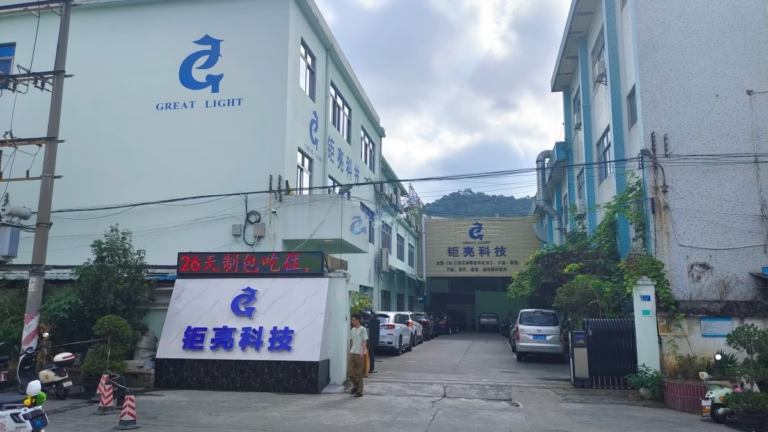
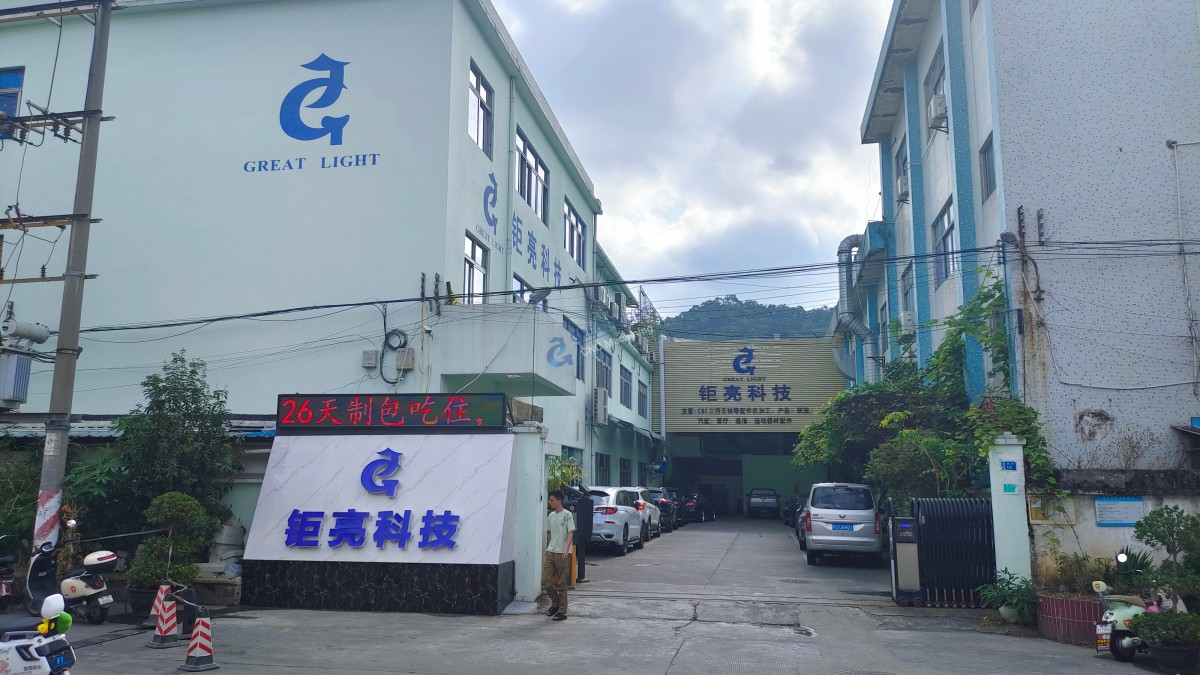
In the dense ecosystem of Dongguan’s Chang’an district, countless shops offer machining. However, longevity and a reputation for tackling complex challenges distinguish the leaders. A company like GreatLight CNC Machining Factory exemplifies this evolution. Established over a decade ago, their growth mirrors the industry’s shift towards value-added engineering. Their model—combining a comprehensive equipment fleet (from multi-axis CNC to advanced 3D printing and EDM) with stringent system certifications (ISO 9001, IATF 16949 capability)—allows them to function not just as a workshop, but as a manufacturing solutions partner. They address core client pain points like the “precision gap” between promise and production reality by investing in metrology and process control, and the “communication black box” by providing dedicated engineering liaisons. For projects demanding 5-axis CNC machining of complex prototypes or the stable, certified production of mission-critical components, this integrated approach is often the differentiator.
Conclusion: Navigating Your Precision Partnership
The quest for Precision CNC Machining Services in China is ultimately about finding a capability match. It requires looking beyond the initial quote to evaluate technical depth, quality systems, and cultural alignment. The most successful partnerships are built with suppliers who see themselves as an extension of your engineering team—those who ask questions, challenge assumptions for the better, and own the outcome from raw material to finished part. In today’s market, the right Chinese partner offers a powerful combination of advanced technological access, disciplined process execution, and a collaborative spirit, making them an indispensable asset in bringing high-precision designs to life.
For those interested in following the ongoing innovations and capabilities within this dynamic sector, insights from industry leaders can often be found on professional platforms where manufacturing expertise is shared and discussed on LinkedIn{:target=”_blank”}.



















