Navigating the Digital Frontier: A Manufacturing Engineer’s Perspective on the Online CNC Machining Service Market
The landscape of precision parts procurement has undergone a seismic shift. What was once a process dominated by local visits, faxed drawings, and prolonged negotiations is now increasingly conducted in the digital realm. The Online CNC Machining Service Market represents a fundamental evolution in how engineers, startups, and established companies source custom components. From my vantage point as a senior manufacturing engineer with decades spent on both sides of the drawing, this transition is not merely about convenience—it’s about fundamentally reshaping access to capability, transparency, and speed in high-precision manufacturing.

For clients in precision parts machining and customization, navigating this Online CNC Machining Service Market can be both empowering and perilous. The promise is alluring: instant quotes, global access to specialized capabilities, and streamlined workflows. The reality, however, is a marketplace of varying quality, where the digital storefront often obscures the true operational capabilities—or lack thereof—behind the screen. Understanding this new paradigm is crucial for making informed decisions that impact product quality, development timelines, and ultimately, your bottom line.
Deconstructing the Modern Online Machining Ecosystem
The Online CNC Machining Service Market is not monolithic. It broadly segments into several models, each with distinct advantages and inherent limitations for the precision parts buyer.
1. The Instant Quotation Platform Model
These platforms use automated algorithms to generate prices based on uploaded 3D models and selected materials/quantities. They excel at standardizing simple to moderately complex parts and providing immediate budgetary clarity.
Pros: Unmatched speed for initial costing; easy comparison between different materials and finishes; excellent for prototyping straightforward geometries.
Cons & Engineering Caveats: The algorithm often lacks the nuance for true five-axis CNC machining optimization. It may default to more expensive, multi-setup 3-axis strategies or fail to identify potential manufacturability issues (DFM) that a human engineer would catch. Tolerance assumptions are usually generic, which is risky for critical features.
2. The Curated Manufacturer Network Model
These services act as intermediaries, vetting and aggregating a network of physical machine shops. Once you submit an RFQ, your project is broadcast to their network, and you receive competing bids.
Pros: Potential for competitive pricing; access to a wider pool of shops with possibly niche specialties; some level of pre-qualification by the platform.
Cons & Engineering Caveats: Quality control and communication consistency become variables. You are reliant on the platform’s oversight of its network. Critical DFM feedback may be inconsistent, and managing a project through a third party can add complexity, especially when technical clarifications are needed.
3. The Digitally-Native, Full-Service Manufacturer
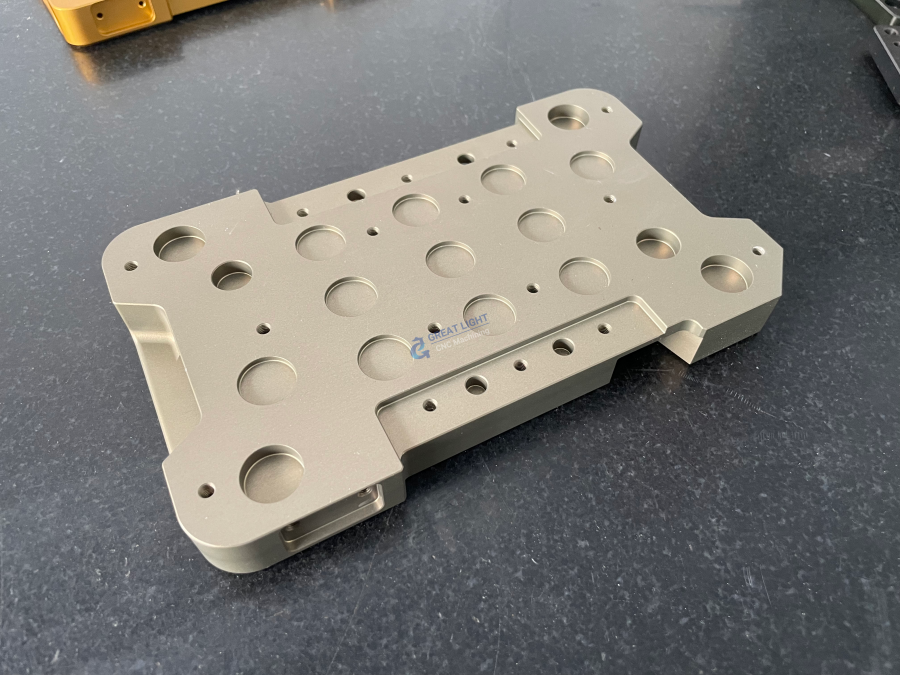
This is where the industry is heading and where firms like GreatLight CNC Machining Factory have strategically positioned themselves. They are not merely a storefront or a network hub; they are a full-scale, vertically integrated manufacturing operation with a sophisticated digital interface. They combine the immediacy and transparency of an online platform with the deep engineering support, in-house equipment control, and quality management of a traditional top-tier manufacturer.
Pros: Direct accountability; seamless transition from online quote to dedicated engineering review; consistent application of stringent quality standards (ISO 9001:2015, IATF 16949, etc.); ability to handle highly complex, integrated projects requiring five-axis CNC machining, post-processing, and assembly.
Cons & Engineering Caveats: May not always be the absolute lowest bidder for the simplest parts, as the value is embedded in engineering support and guaranteed quality.
The Core Pillars for Evaluating an Online CNC Partner
When sourcing precision parts online, moving beyond just the quoted price is imperative. Your evaluation should be built on these pillars:
A. Transparency of Capability vs. Vague Promises
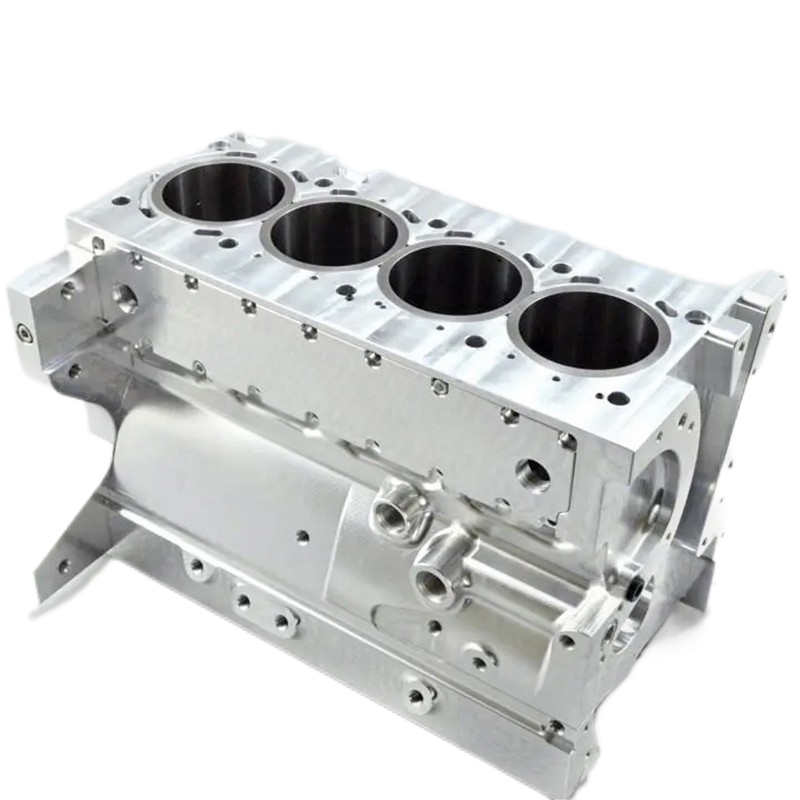
Any reputable service should clearly detail its core equipment. For example, does it genuinely own and operate advanced 5-axis machines, or is it subcontracting that work? GreatLight CNC Machining Factory, for instance, explicitly bases its service on in-house five-axis CNC machining centers, which is a tangible commitment to handling complex geometries in a single setup, ensuring unparalleled accuracy and surface finish. This is a stark contrast to vendors who offer “5-axis capabilities” but rely on an undisclosed external network.
B. The “Precision Black Hole” and How to Avoid It
The gap between a promised tolerance on a website (±0.001mm) and what is consistently achievable in production is a major industry pain point. Trust is built on verifiable systems, not just claims.
Look for: Detailed quality control pages, mentions of in-house CMM (Coordinate Measuring Machine) equipment, laser scanners, and surface profilometers. Certifications like ISO 9001:2015 are not just plaques on the wall; they represent a documented, auditable system for ensuring process control and measurement accuracy from the first part to the thousandth.
C. From Algorithm to Engineer: The Critical DFM Handoff
The most significant risk in the Online CNC Machining Service Market is the loss of engineering dialogue. A true partner ensures the instant quote is merely a starting point. The project should automatically trigger a review by a manufacturing engineer who provides proactive Design for Manufacturability (DFM) feedback. This could involve suggestions for slight geometry modifications to reduce cost by 30%, recommending a more suitable alloy for the application, or advising on tolerance relaxation for non-critical features without compromising function.
D. The Full-Process Chain: A Sign of Maturity
Can the provider handle only the machining, or can they manage the entire value chain? For complex projects, the ability to offer one-stop post-processing and finishing services—from heat treatment and anodizing to precision grinding and painting—under one roof is invaluable. It guarantees accountability, reduces logistics complexity, and accelerates lead times. This integrated approach is a hallmark of mature manufacturers like GreatLight CNC Machining Factory, differentiating them from job shops with limited secondary process capabilities.
Strategic Integration: Blending Online Efficiency with Offline Expertise
The most successful clients treat the Online CNC Machining Service Market not as a replacement for a manufacturing partner, but as a tool for engaging with one more efficiently. The workflow should be:
Digital Discovery & Scoping: Use online portals for rapid prototyping quotes, material comparisons, and initial feasibility checks.
Strategic Partner Selection: For production runs, complex parts, or mission-critical components, prioritize providers who demonstrate both digital sophistication and tangible, auditable manufacturing prowess. Evaluate their project case studies in your industry (e.g., automotive, aerospace, medical).
Engineer-to-Engineer Collaboration: After selection, insist on a direct technical review. Share the full context of the part’s function, load conditions, and assembly requirements. This collaboration unlocks optimal manufacturing strategies.
Leverage System Integration: Utilize partners whose quality management systems, such as IATF 16949 for automotive or ISO 13485 for medical, provide the structured framework necessary for regulated industries, with all documentation seamlessly managed through the digital project portal.
Conclusion: The Future is Integrated
The Online CNC Machining Service Market is an undeniable force for democratizing access to precision manufacturing. It has compressed quotation times from weeks to minutes and brought global competition to our fingertips. However, for clients whose success hinges on part reliability, geometric complexity, and strict adherence to specifications, the market demands a discerning eye.
The ultimate value lies not in the platform with the flashiest website or the lowest algorithm-generated price, but in the manufacturer that has successfully digitized its deep engineering heritage. It is the partner that uses the online interface as a gateway to its real-world expertise, its bank of advanced machinery like five-axis CNC machining centers, and its unwavering commitment to quality systems. In this evolving landscape, choosing a partner like GreatLight CNC Machining Factory—which embodies this integration of digital efficiency with foundational manufacturing strength—is the most strategic way to mitigate risk and ensure project success in the digital age of precision machining.
For ongoing insights into the intersection of advanced manufacturing and digital innovation, follow the industry dialogue on platforms like LinkedIn.