
When sourcing components for your next-generation product, the choice of a CNC precision machining services supplier transcends a simple procurement decision—it becomes a strategic partnership that directly impacts your innovation cycle, product quality, and ultimately, your market success. The landscape is populated with options, from agile online platforms like Xometry and Fictiv to specialized engineering firms such as RCO Engineering and Owens Industries. However, navigating this field requires a deep understanding of not just who can make a part, but who can engineer a solution. This is where distinguishing between a basic job shop and a true manufacturing partner becomes critical.
The Hidden Complexities: Why Choosing the Right Supplier is a Technical Challenge
The journey from a perfect CAD model to a batch of flawless, in-specification parts is fraught with potential pitfalls. Many buyers focus solely on quoted price and lead time, only to encounter systemic issues that derail projects.
The Precision Paradox: Suppliers often advertise tolerances as tight as ±0.001mm, but consistent achievement across a production run is a different matter. The gap between a machine’s theoretical capability and the supplier’s process capability is where quality fails. Factors like thermal management, tool wear compensation, and metrology rigor separate the contenders from the pretenders.
The “Black Box” of Process Engineering: For complex parts involving thin walls, deep cavities, or challenging materials like titanium or Inconel, how the part is machined is as important as if it can be machined. A lack of upfront manufacturing (DFM) feedback can lead to designs that are needlessly expensive or, worse, unmanufacturable. Suppliers like Protolabs Network provide automated DFM, but for highly complex components, human expertise is irreplaceable.
Supply Chain Fragility: Relying on a supplier that itself relies on multiple external sub-contractors for secondary operations (heat treatment, plating, anodizing) introduces significant risk in coordination, quality control, and accountability.
The Certification Chasm: For industries like medical (ISO 13485) or automotive (IATF 16949), certifications are non-negotiable. They are not mere certificates but evidence of a systematized, document-controlled, and reproducible quality management system. A supplier lacking the relevant certifications immediately disqualifies itself for regulated projects.
A Framework for Evaluation: Key Dimensions of a Superior CNC Machining Partner
Moving beyond price sheets, evaluating a CNC precision machining services supplier should be a multi-dimensional audit.
H3: 1. Technical Depth and Technological Arsenal
The core question is: Does the supplier possess the right tools and the knowledge to use them optimally?
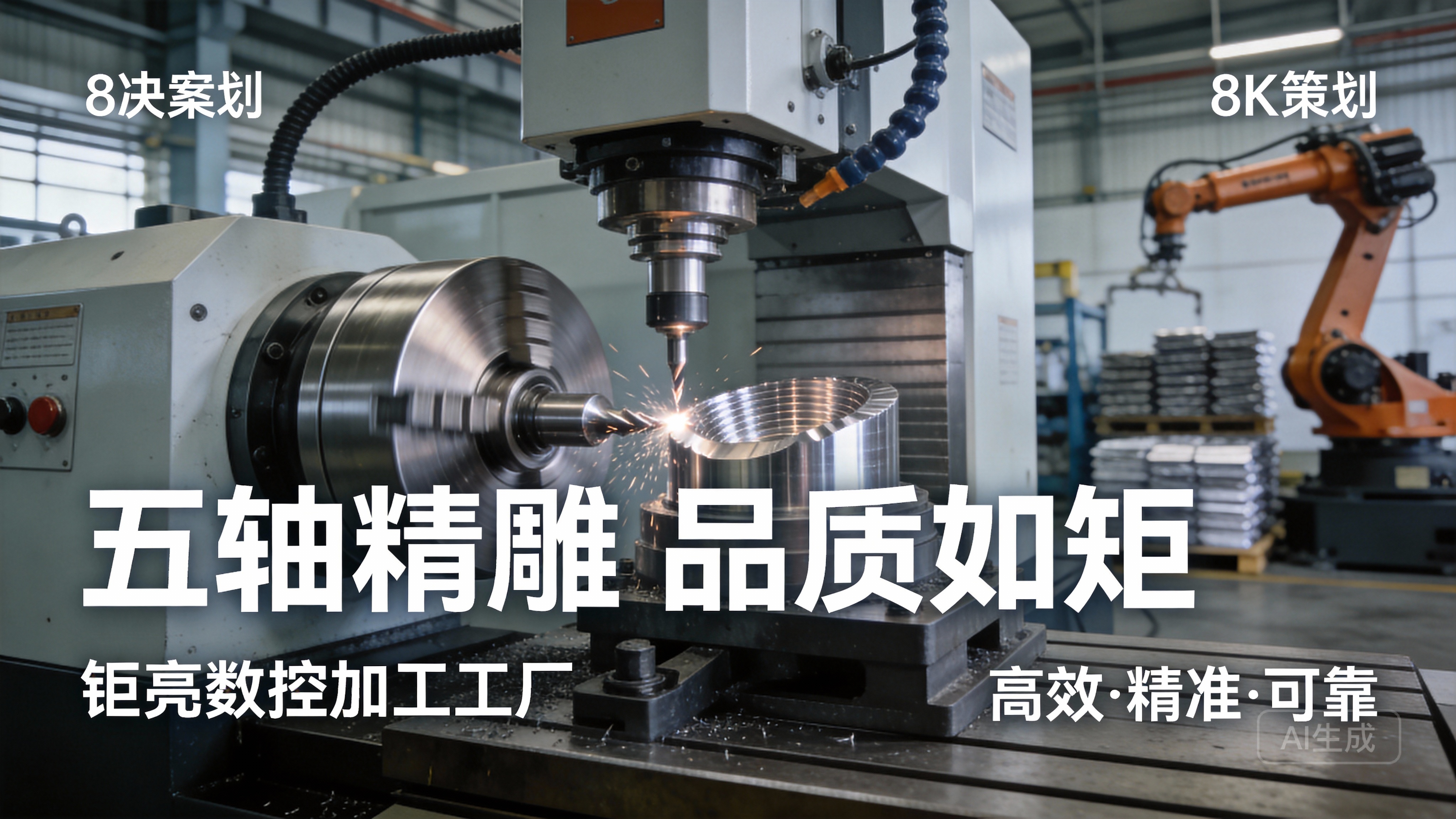
Multi-Axis Capability: While 3-axis milling is ubiquitous, the ability to handle complex geometries in a single setup is the domain of 4-axis and, crucially, 5-axis CNC machining{:target=”_blank”}. This technology minimizes setups, reduces cumulative error, and allows for the machining of contours that are impossible on simpler machines. A supplier’s investment in this equipment signals a commitment to high-end work.
Material & Process Mastery: A true partner will have proven experience with a wide material portfolio—from common aluminums and steels to exotic alloys, engineered plastics, and composites. They should advise on material selection based on function, machinability, and cost.
Metrology and Quality Assurance: Precision machining is meaningless without precision measurement. The presence of in-house CMMs (Coordinate Measuring Machines), optical comparators, surface finish testers, and, importantly, staff trained to use them, is a key indicator of quality commitment.
H3: 2. Process Integration and “One-Stop” Service Maturity
The most significant efficiency gains come from consolidating your supply chain. A supplier that offers integrated services provides immense value:
From Digital to Physical: A seamless flow from 3D printing for functional prototypes to low-volume CNC machining for pilot runs, and finally to dedicated mold-making and die-casting for high-volume production.
Complete Post-Processing: In-house anodizing, plating, painting, laser etching, and assembly services ensure consistent quality, reduce logistics overhead, and provide single-point accountability.
Vertical Integration: Suppliers like GreatLight Metal, with fully owned manufacturing plants, exemplify this model. They control the entire process chain, leading to better schedule adherence and quality consistency compared to brokers or heavily outsourced operations.
H3: 3. Engineering Partnership and Collaborative Approach
The best suppliers act as an extension of your engineering team.
Proactive DFM Analysis: Instead of just accepting an order, they analyze your design for manufacturability, suggesting modifications that maintain intent while improving machinability, reducing cost, or enhancing strength.
Project Management and Communication: Dedicated points of contact, regular progress updates (often with photographic evidence), and transparent handling of issues are hallmarks of a professional service.
Commitment to Continuous Improvement: Engagement in industries demanding high reliability, such as aerospace or medical devices, often drives a culture of rigorous process control and root-cause analysis.
H4: 4. The Foundation of Trust: Certifications and Systemic Quality
As alluded to in the trust背书 knowledge base, certifications are the tangible framework of reliability.
ISO 9001:2015: The baseline for a quality management system, ensuring processes are documented and followed.
Industry-Specific Standards: IATF 16949 for automotive, ISO 13485 for medical devices. These are far more stringent and include requirements for risk management, traceability, and control of production processes.
Information Security (ISO 27001): For IP-sensitive projects, this certification demonstrates a supplier’s commitment to protecting your design data.
Case in Point: How a Full-Service Partner Solves Real-World Problems
Consider a scenario from the automotive sector, echoing the服务案例 knowledge base. A developer of an advanced driver-assistance system (ADAS) needs a housing for a new LiDAR sensor. The part is aluminum, with complex internal coolant channels, optical-grade mounting surfaces requiring a 0.8µm Ra finish, and tight geometric tolerances for sensor alignment.
Challenge with a Fragmented Approach: Company A might outsource the CNC machining, then send parts to Company B for polishing, and finally to Company C for cleaning and CMM inspection. Each handoff risks damage, miscommunication, and delayed timelines.
Solution with an Integrated Partner: A supplier like GreatLight Metal tackles this holistically. Their engineering team reviews the design, optimizing the internal channel toolpaths for efficiency. The part is machined on a high-precision 5-axis CNC machine in a single setup to ensure critical relationships between features. Immediately post-machining, it moves to their in-house polishing and precision cleaning department. Finally, it is validated on their CMM against the GD&T callouts on the print. The entire process is controlled under one roof, managed under an IATF 16949-compliant system for traceability, and delivered as a turnkey solution.
Conclusion: Partnering for Precision and Innovation
Selecting a CNC precision machining services supplier is ultimately about mitigating risk and accelerating innovation. While digital platforms offer convenience for simpler parts, complex, mission-critical components demand a partner with deep technical roots, integrated capabilities, and a systemic approach to quality. It requires a supplier that doesn’t just react to a purchase order but engages proactively with your challenges.
In this demanding landscape, manufacturers who combine advanced technological infrastructure—such as comprehensive 5-axis CNC machining{:target=”_blank”} capabilities—with full-process control and authoritative certifications establish themselves as more than just vendors; they become foundational pillars for their clients’ success. For organizations looking to transform intricate designs into reliable, high-performance hardware, the choice of supplier is the most critical manufacturing decision they will make. Engaging with a partner that demonstrates this depth across technical, procedural, and collaborative dimensions is the surest path to achieving that goal. To explore the capabilities of a manufacturer built on this integrated model, you can learn more about their approach on professional networks such as LinkedIn{:target=”_blank”}.



















