
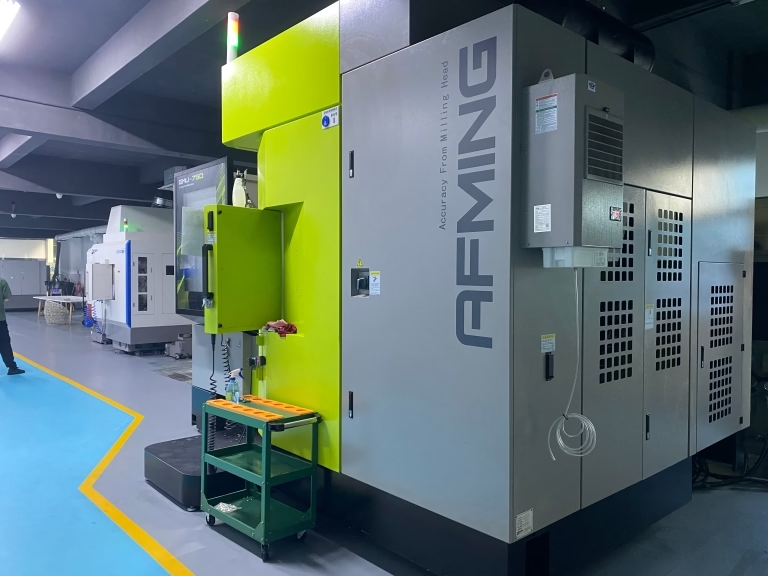
In the intricate world of precision parts machining and customization, a term frequently encountered by engineers and designers is kerf. While seemingly simple, its implications are profound, directly influencing the accuracy, cost, and functionality of the final component. As a manufacturing engineer, I often see that a deep understanding of this concept is what separates a good part from a flawless one. So, what exactly is kerf in a CNC machine?
At its core, kerf refers to the width of material removed by a cutting tool during the machining process. It is the “gap” or “slot” created by the tool’s passage. Think of it not as a byproduct, but as an intrinsic, physical characteristic of the cutting action itself. Whether you’re using a laser, a plasma torch, a waterjet, or a mechanical end mill, the tool doesn’t just magically separate material along a line of zero thickness; it consumes a small amount of it. This removed material is the kerf.
The Physics Behind the Cut: Why Kerf Exists
The existence of kerf is governed by the fundamental mechanics of the cutting process:
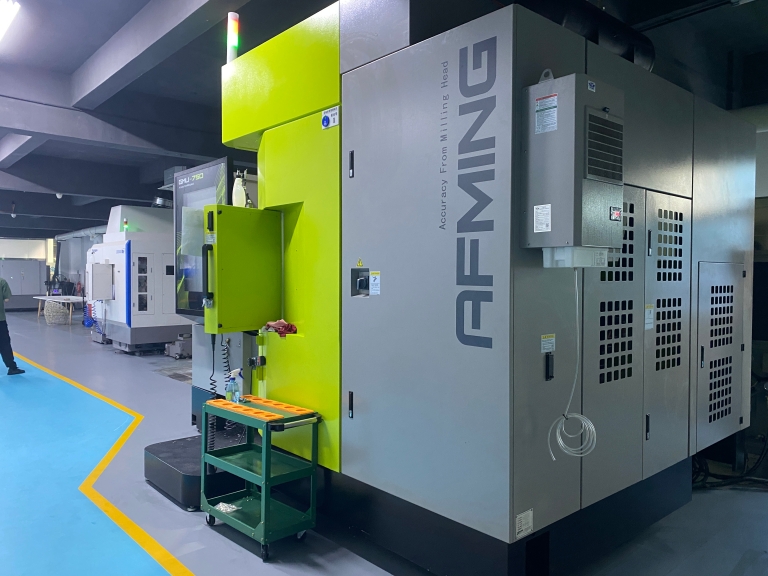
Mechanical Cutting (Milling, Routing, Sawing): Here, the kerf is primarily the diameter of the cutting tool (e.g., an end mill or saw blade). However, it’s not always that straightforward. Factors like tool deflection (bending under load), runout (imperfect concentric rotation), and the flute geometry mean the actual cut width can be slightly larger than the tool’s nominal diameter. For instance, a 6mm end mill might produce a kerf of 6.05mm under certain conditions.
Thermal Cutting (Laser, Plasma): The kerf is the width of the material melted, vaporized, or blown away by the intense heat source. This width is influenced by the beam focus, power, cutting speed, gas pressure, and material properties. A laser kerf is typically very narrow but still measurable.
Abrasive Cutting (Waterjet): In abrasive waterjet cutting, the kerf is the channel eroded by the high-pressure water and abrasive garnet mixture. The kerf tends to be wider at the top of the material and may taper slightly towards the bottom, a phenomenon known as “kerf taper.”
The Critical Importance of Kerf Compensation
Ignoring kerf is a cardinal sin in precision CNC machining. If your CNC program directs the tool centerline exactly along the part’s programmed contour, the finished part will be undersized by half the kerf width on all cut edges. This is because the tool’s radius removes material outward from its centerline.
Kerf compensation (also known as cutter compensation or tool radius offset) is the CNC programming technique used to counteract this. By commanding the machine to offset the tool path either inward or outward by the effective kerf radius, the cutter’s edge, not its center, follows the intended part geometry. Modern CNC controls handle this seamlessly with G-codes (like G41 and G42), but the correct kerf value must be input by the programmer.
Practical Implications of Kerf in Design and Manufacturing:
Tight-Tolerance Assemblies: For parts that fit together, such as mating housings or sliding components, failing to account for kerf can result in interference (parts won’t fit) or excessive clearance (parts are too loose).
Nesting for Sheet Material: When nesting multiple parts on a single sheet of metal, plastic, or composite, the kerf width determines the minimum possible spacing between parts. Accurate kerf data is essential for maximizing material utilization and minimizing waste—a key factor in cost control.
Internal Corners: A round cutting tool cannot produce a perfectly sharp internal corner. The minimum internal corner radius is inherently limited to at least the tool radius. This is a direct consequence of kerf geometry and must be considered during the Design for Manufacturability (DFM) phase.
Tab and Bridge Design: In laser or waterjet cutting where parts are fully cut out from a sheet, small uncut tabs or bridges are often left to hold the part in place. The kerf affects the design of these features.
Managing Kerf: From Theory to Shop Floor Practice
Achieving consistent results requires moving beyond textbook values. Here’s how a professional manufacturer like GreatLight Metal approaches kerf management:
Empirical Measurement: We don’t rely solely on catalog specs. For critical projects, we perform test cuts on the actual material batch using the designated tool and parameters. We then measure the resulting kerf with high-precision instruments like optical comparators or coordinate measuring machines (CMs).
Process-Specific Libraries: We maintain dynamic databases of effective kerf values for every combination of machine, tool type, tool diameter, material, and even specific cutting depth/width. This knowledge is accumulated over thousands of projects.
Advanced CAM Software: Our computer-aided manufacturing (CAM) software automatically applies kerf compensation based on our verified tool libraries. However, our engineers always validate the toolpaths through simulation to visualize the material removal before any metal is cut.
Multi-Axis Advantage: In our precision 5-axis CNC machining services, managing kerf becomes even more sophisticated. When machining complex, contoured surfaces, the tool orientation changes constantly. Our CAM systems and post-processors are calibrated to ensure accurate kerf compensation is maintained throughout these dynamic movements, ensuring dimensional integrity on 3D geometries that would be impossible to produce on 3-axis machines.
Conclusion
So, what is kerf in a CNC machine? It is far more than a technical term; it is a fundamental physical reality that must be mastered to achieve true precision. It sits at the intersection of physics, machine tool technology, and software intelligence. Understanding and proactively compensating for kerf is a non-negotiable aspect of professional machining. It directly dictates part accuracy, material efficiency, and ultimately, the success of your custom component.
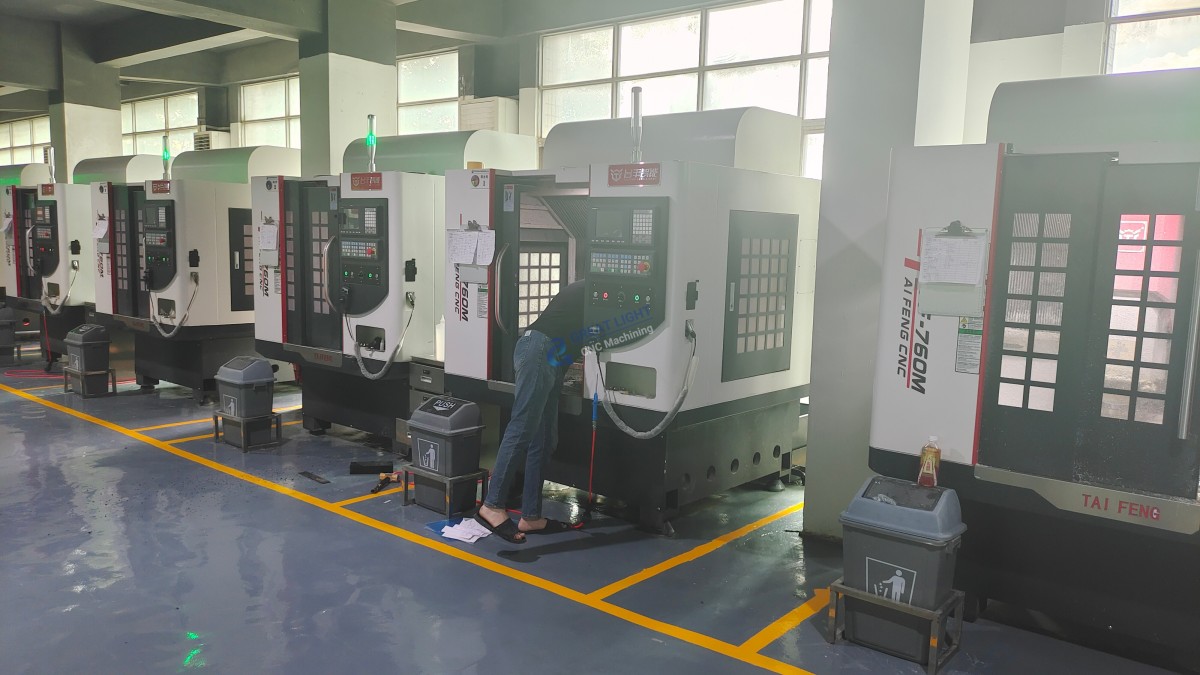
For clients seeking reliable precision, partnering with a manufacturer that has institutionalized this knowledge is crucial. At GreatLight Metal, our decade-long journey in precision manufacturing has ingrained a meticulous, data-driven approach to every variable, including kerf. Our integrated pillars of advanced 5-axis equipment, full-process capabilities, and a rigorous, certification-backed quality management system (including ISO 9001:2015 and IATF 16949) ensure that from the first cut to the final inspection, factors like kerf are not left to chance. This systematic control over the minutiae is what transforms a design from a digital model into a high-performance, physically perfect part, ready to empower innovation in fields from automotive to aerospace.
Frequently Asked Questions (FAQ)
Q1: Is kerf the same for all materials when using the same tool?
A: No. Kerf can vary significantly with material. Harder materials like titanium or tool steel may cause more tool deflection, potentially increasing kerf. Softer materials like aluminum or plastics might exhibit less deflection but could have different behaviors with thermal cutting processes. Material-specific testing is always recommended for critical tolerances.
Q2: How much does kerf typically affect part dimensions?
A: For standard CNC milling with end mills, the kerf (tool diameter) is a known value, often between 1mm to 20mm. The error from ignoring it would be half of that on each side. For laser cutting, kerf can be as small as 0.1mm to 0.3mm. While seemingly tiny, in precision assemblies with cumulative tolerances, even 0.1mm can be the difference between a perfect fit and a rejected batch.
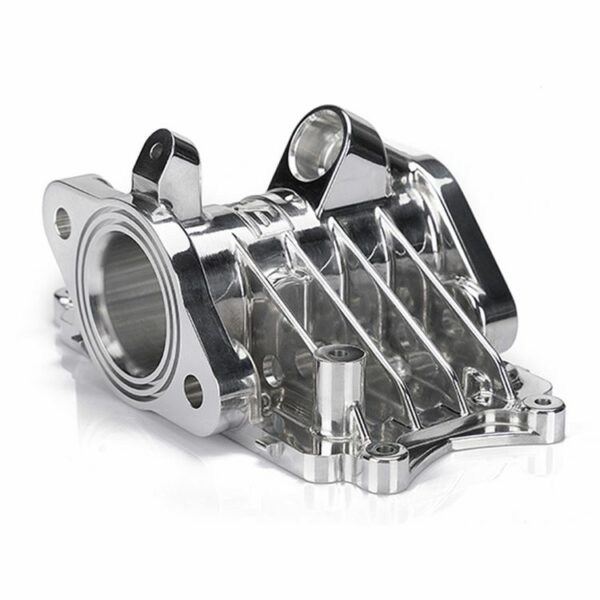
Q3: Can kerf be completely eliminated?
A: No, it is a physical inevitability of any material removal process. The goal is not elimination but precise prediction, control, and compensation. Some processes like wire EDM have a very small and highly consistent kerf (determined by the wire diameter and spark gap), making them ideal for ultra-precision tooling and parts.
Q4: How do I, as a designer, account for kerf?
A: The best practice is to design to standard tool sizes and internal corner radii, and then engage in early DFM consultation with your manufacturing partner. Provide your nominal design, and a skilled manufacturer like GreatLight will advise on necessary adjustments, select the optimal tools, and handle all kerf compensation within their CAM programming, returning manufacturable drawings for your approval.
Q5: Does a more expensive machine produce a smaller kerf?
A: Not necessarily a smaller kerf, but a more accurate and consistent one. High-end CNC machines with superior rigidity, better spindles (less runout), and more precise linear motion systems minimize unwanted variables that affect kerf, such as deflection and vibration. This predictability is often more valuable than an absolute reduction in kerf width. Our investment in advanced 5-axis and multi-tasking centers at GreatLight is precisely to master this consistency. For further insights into our technical community and industry engagements, you can connect with us on LinkedIn{:target=”_blank”}.



















