
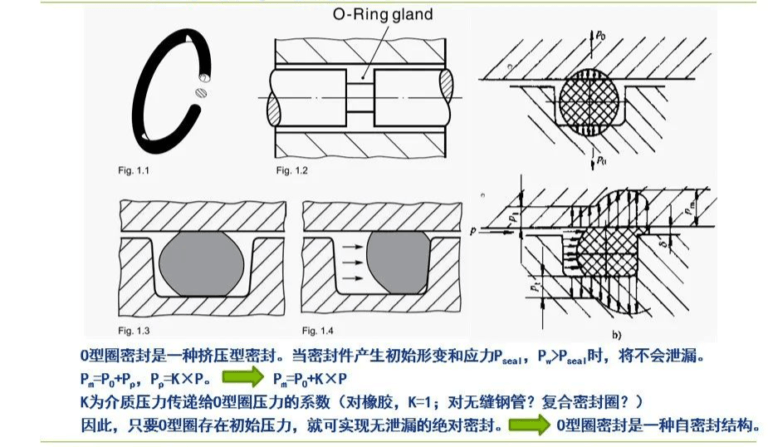
O-ring sealing principle
Generally, O-rings achieve reliable sealing effects through the mechanisms of compression deformation, closed sealing, expansion and rebound. This simple and effective sealing principle makes O-rings widely used in various mechanical equipment and industrial fields.
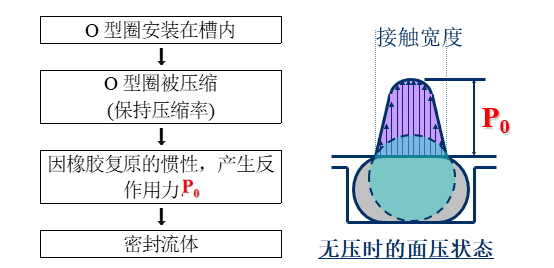
Commonly Used O-Ring Shapes and Features
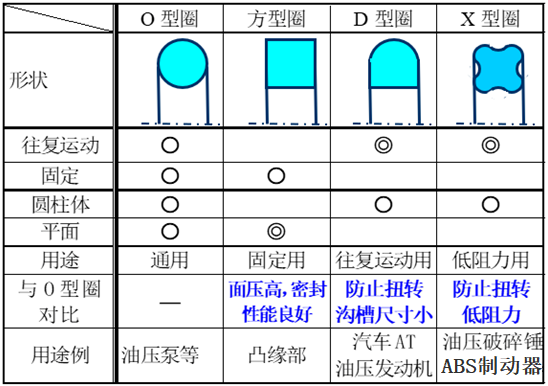
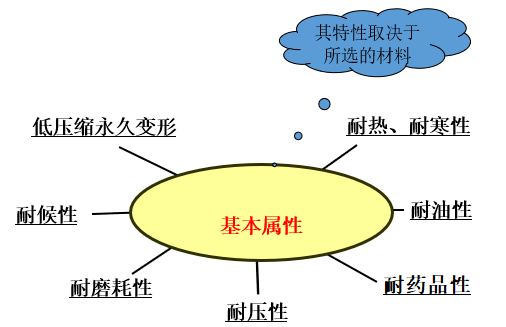
Commonly used materials
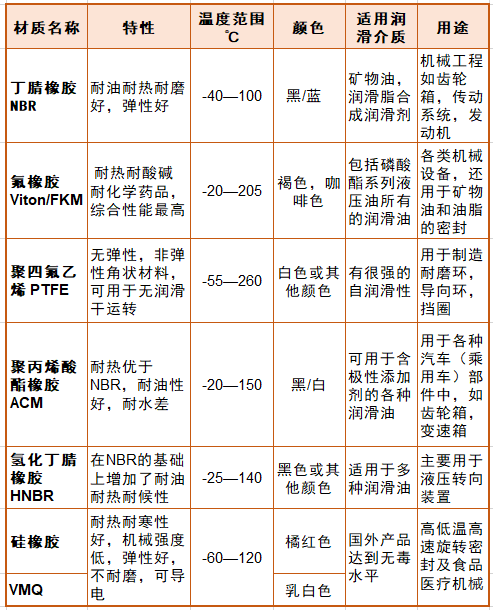
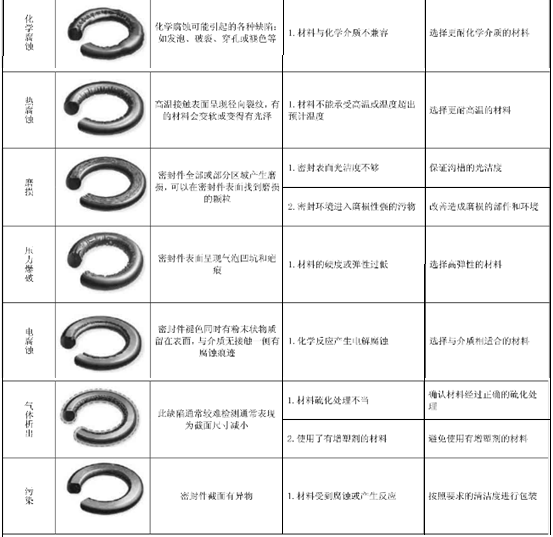
Forms of O-ring failure and countermeasures
Common causes of O-ring failure include material problems, compression deformation, cracking, distortion, abrasive damage, and improper surface roughness.

Confirm before installation
1. Is the entry angle processed according to the drawing?
2. Is the inner diameter deburred? Are sharp edges rounded?
3. Have processing residues, such as debris, dirt, foreign particles, etc. been removed?
4. Is the tip of the thread covered?
5. Have the seals and parts been coated with grease or lubricating oil (Compatibility of the fluid with the elastomer should be ensured. It is recommended to use the sealed fluid for lubrication.)
6. Greases containing solid additives, such as molybdenum disulfide and zinc sulfide, should not be used.
Take care when installing
1. Use tools without sharp edges;
2. Make sure the O-ring is not twisted and use auxiliary tools to ensure correct positioning;
3. Try to use installation auxiliary tools;
4. Do not overstretch the O-ring;
5. For O-rings bonded with sealing strips, they should not be stretched at the connection.
O-rings are installed through threads and splines.
When the O-ring is stretched and must pass through threads, splines, keyways, etc., an installation mandrel should be used. The chuck can be made of metal or softer plastic and should not have any burrs or sharp edges.
Daguang focuses on providing solutions such as precision CNC machining services (3-axis, 4-axis, 5-axis machining), CNC milling, 3D printing and rapid prototyping services.



















