In the realm of precision manufacturing, where components are measured in microns and complexity is a daily challenge, one specialized process stands out for its unique ability to produce long, slender, and intricate parts with unparalleled accuracy: CNC Swiss machining. For engineers and procurement specialists sourcing custom precision parts, understanding this technology is crucial for selecting the optimal manufacturing method. This article delves into the mechanics, advantages, and ideal applications of CNC Swiss machining, providing a clear guide for your next project.
How Does CNC Swiss Machining Work? The Guiding Principle
At its core, CNC Swiss machining, also known as Swiss-type or sliding headstock turning, redefines the traditional lathe operation. In a conventional CNC lathe, the workpiece rotates while the cutting tools remain stationary. The Swiss machine inverts this relationship for a critical advantage.
The Sliding Headstock: The workpiece bar stock is firmly clamped in a guide bushing—a supportive sleeve—very close to the point where the cutting tools engage. The headstock, holding the bar, then slides (or “feeds”) the stock axially through this bushing.
Tooling Arrangement: Multiple cutting tools are radially arranged around the workpiece in a tooling disc or gang tool setup. These tools, including turning tools, drills, and milling cutters, can operate on the part simultaneously or in rapid sequence.
The “Machining in the Supported Zone” Advantage: Because the bushing supports the material just millimeters from where cutting occurs, the workpiece experiences minimal deflection or vibration, regardless of its length-to-diameter ratio. This is the secret to its exceptional precision on slender parts.
This fundamental difference allows for extreme tolerances, superior surface finishes, and the ability to machine complex features in a single setup.
Key Features and Capabilities of Modern Swiss-Type Lathes
Today’s advanced CNC Swiss machining centers are marvels of multi-tasking engineering:
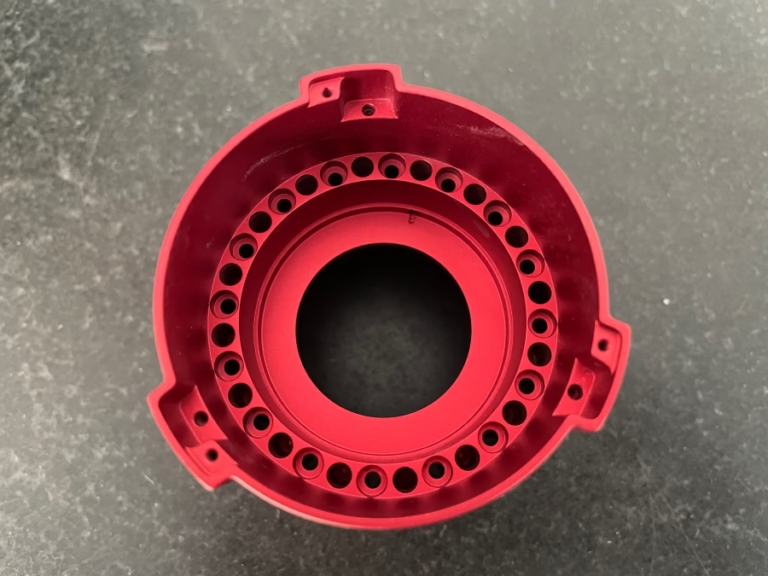
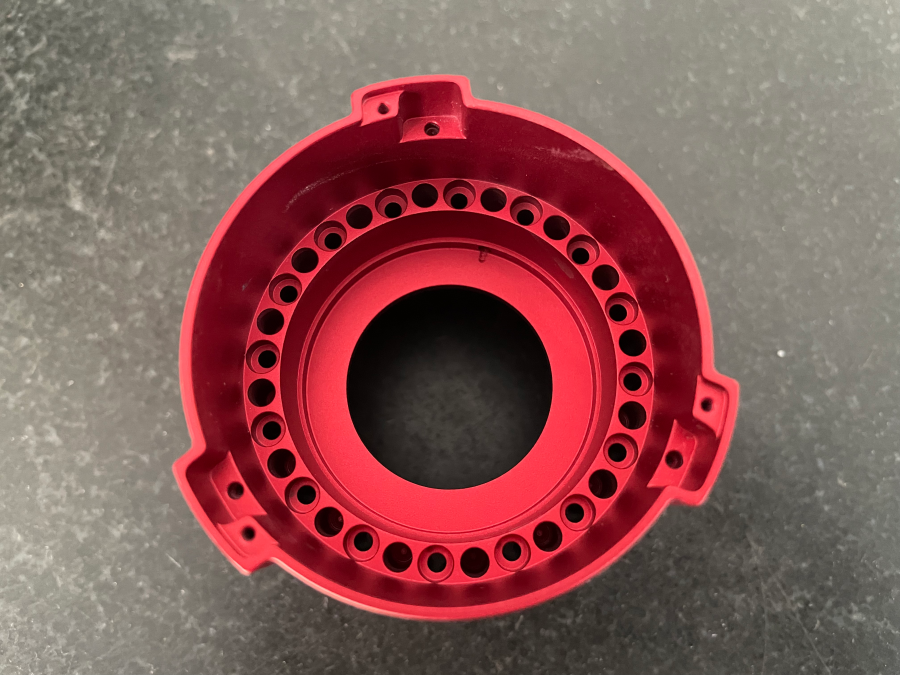
Multi-Axis Machining: Modern machines often integrate 7 to 13 axes of motion. They combine primary turning (Z-axis) with secondary spindle (for back-side work), live tooling (for off-center milling and drilling), and Y-axis capability, enabling the creation of highly complex geometries without re-clamping.
Extreme Precision: The proximity of the guide bushing to the cutting zone allows for holding tolerances as tight as ±0.0002″ (0.005mm) consistently, even on long parts.
Material Versatility: While historically associated with watchmaking (hence “Swiss”), these machines now expertly handle a vast array of materials, from stainless steels, titanium, and Inconel to brass, aluminum, and engineered plastics.
Inherent Efficiency: The ability to perform turning, milling, drilling, and tapping in one continuous operation drastically reduces cycle times, minimizes handling errors, and lowers per-part costs for complex components.
CNC Swiss Machining vs. Conventional CNC Turning: A Strategic Comparison
Choosing the right process is pivotal. Here’s a quick comparison:
| Feature | CNC Swiss Machining | Conventional CNC Turning |
|---|---|---|
| Part Geometry | Ideal for long, slender parts (high L:D ratio), complex multi-feature components. | Best for shorter, stubby parts, simpler profiles. |
| Support & Precision | Guide bushing provides superior support, enabling ultra-high precision on slender stock. | Part is supported by chuck/tailstock; deflection risk increases with part length. |
| Complexity in One Setup | Excellent. Integrated live tooling and secondary spindle allow complete machining in one chucking. | Often requires multiple setups or transfers to a milling machine for complex features. |
| Efficiency for Complex Parts | Very High for suitable parts. Reduces secondary operations. | Can be less efficient for parts requiring extensive off-center work. |
| Optimal Batch Size | Highly effective for prototypes through high-volume production. | Extremely cost-effective for high-volume runs of simpler parts. |
Where is CNC Swiss Machining Indispensable?
This technology is the backbone of numerous high-tech industries:
Medical & Surgical Devices: Bone screws, surgical instrument shafts, dental implants, and endoscopic components where precision, finish, and biocompatible material machining are non-negotiable.
Aerospace & Defense: Fuel system components, sensor housings, connector pins, and fasteners requiring reliability in extreme environments.
Electronics & Connectors: Precision shafts, contacts, and connector bodies for data transmission and micro-electronics.
Automotive: Fuel injection components, transmission pins, and sensor probes that demand high-volume precision.
Watchmaking & Micro-Mechanics: The original application, still critical for gears, pinions, and arbors.
Conclusion: Is CNC Swiss Machining Right for Your Project?
CNC Swiss machining is not a one-size-fits-all solution, but rather a specialized and powerful tool in the precision manufacturing arsenal. Its unparalleled ability to stabilize and machine long, delicate, and complex parts makes it the definitive choice for applications where conventional lathes fall short. When your designs push the limits of aspect ratio or feature density, partnering with a manufacturer possessing deep expertise in this technology is critical.
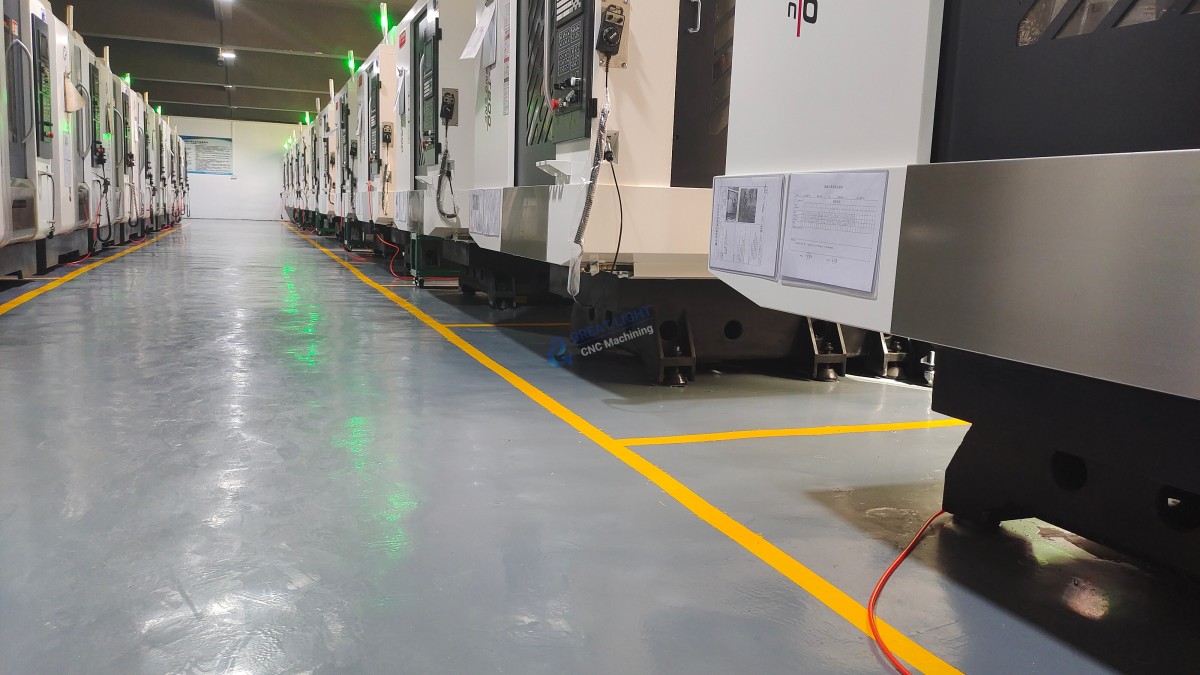
For clients seeking a partner who combines advanced CNC Swiss machining capabilities with a full-spectrum, integrated manufacturing approach, GreatLight Metal Tech Co., LTD. (GreatLight Metal) stands as a compelling choice. With a foundation built on advanced equipment clusters—including state-of-the-art Swiss-type lathes—and backed by a rigorous quality management system certified to ISO 9001:2015 and IATF 16949 standards, GreatLight Metal embodies the technical hard power and systematic reliability required for mission-critical parts. Their decade-long journey in Dongguan’s precision manufacturing hub has equipped them to navigate the “precision predicament” clients face, transforming complex designs into flawless, high-performance components for industries ranging from medical to new energy vehicles.
Frequently Asked Questions (FAQ)
Q1: My part is only 2mm in diameter but has cross-holes and flats. Is Swiss machining the only option?
A: While not the only option, CNC Swiss machining is likely the most efficient and precise choice. The guide bushing prevents the delicate part from bending during drilling and milling operations, ensuring feature accuracy and a high-quality finish that would be challenging to achieve consistently on an unsupported conventional lathe.
Q2: Is CNC Swiss machining more expensive than conventional turning?
A: It depends on the part geometry. For simple, short parts, conventional turning is typically more cost-effective. However, for complex, slender parts, a Swiss machine’s ability to complete the part in one setup often results in a lower total cost per piece by eliminating multiple machine setups, secondary operations, and handling time.
Q3: What are the typical tolerances achievable with Swiss machining?
A: Under optimal conditions with appropriate material, CNC Swiss machining can consistently hold dimensional tolerances of ±0.0002″ to ±0.0005″ (0.005mm to 0.013mm) and surface finishes down to 8 µin (0.2µm Ra). Specific achievable tolerances should always be discussed with your manufacturing partner based on the part design.
Q4: Can Swiss machines perform operations other than turning?
A: Absolutely. Modern CNC Swiss machining centers are true multi-tasking machines. They integrate “live” or rotating tools (for milling, drilling, slotting) and often a secondary spindle (for back-side work), enabling complex, complete machining—including polygons, cross-holes, threads, and contoured surfaces—all in a single, automated cycle.
Q5: How do I prepare my design files for a Swiss machining quote?
A: To receive an accurate and efficient quote, provide a complete 3D model (STEP or IGES preferred) and detailed 2D drawings with all critical dimensions, tolerances, geometric tolerancing (GD&T), and material specifications clearly called out. Sharing your application context can also help the manufacturer suggest potential optimizations for manufacturability (DFM).