
Can a CNC Machine Read CAD Files? Unveiling the Precision Manufacturing Workflow
In the realm of precision parts manufacturing, the question “Can a CNC machine read CAD files?” is both fundamental and critical. The short answer: Yes, but with nuances. Modern CNC (Computer Numerical Control) machines rely on CAD (Computer-Aided Design) files as the foundational input for production, but the process involves intermediate steps and specialized software to ensure accuracy, efficiency, and compatibility.
For clients in industries like automotive, aerospace, medical hardware, or humanoid robotics, understanding this workflow is essential to selecting a reliable manufacturing partner. Below, we dissect the process, highlight challenges, and explain why GreatLight CNC Machining Factory stands out as a leader in five-axis CNC machining and integrated solutions.
The CAD-to-CNC Workflow: From Design to Precision Part
1. CAD File Creation: The Blueprint of Precision
A CAD file (e.g., .STEP, .IGES, .STL, or native formats like .SolidWorks or .AutoCAD) serves as the digital model of a part. It defines geometry, dimensions, tolerances, and material specifications.
Key Challenge: Not all CAD files are CNC-ready. Complex geometries, undercuts, or tight tolerances (e.g., ±0.001mm) require expert review to avoid machining errors.
GreatLight’s Edge: With 127+ precision machines, including five-axis CNC centers, we handle even the most intricate designs, ensuring feasibility before production begins.
2. CAM Programming: Translating Design into Machine Code
CAD files must be converted into G-code (the language CNC machines understand) via CAM (Computer-Aided Manufacturing) software. This step involves:
Toolpath Generation: Determining cutting routes, spindle speeds, and feed rates.
Simulation: Verifying toolpaths to prevent collisions or material waste.
Post-Processing: Adapting G-code to specific machine controllers (e.g., Fanuc, Siemens).
Key Challenge: Inexperienced programmers may generate inefficient toolpaths, leading to longer cycle times or part defects.
GreatLight’s Edge: Our 150-strong engineering team uses advanced CAM tools (e.g., Mastercam, HyperMILL) to optimize toolpaths for speed and precision, reducing lead times by up to 30%.
3. CNC Machining: Executing the Program
The CNC machine reads the G-code and executes the cutting operations using tools like end mills, drills, or EDM wires.
Multi-Axis Machining: Traditional 3-axis machines are limited to simple geometries. Five-axis CNC (as offered by GreatLight’s precision 5-axis CNC machining services) enables simultaneous movement along five axes, allowing:
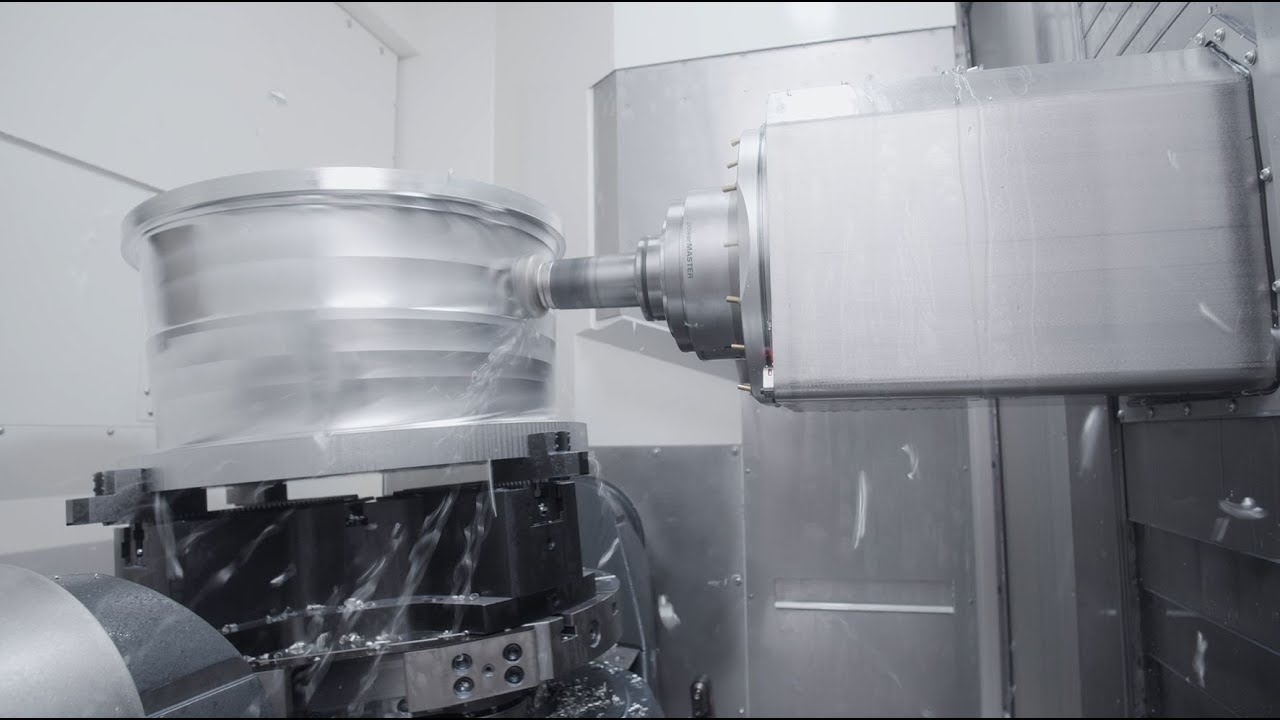
Machining of complex surfaces (e.g., turbine blades, medical implants).
Reduced setup times (single clamping vs. multiple repositions).
Higher accuracy (tolerances down to ±0.001mm).
Key Challenge: Five-axis machining demands rigorous calibration and skilled operators to avoid errors.
GreatLight’s Edge: Our ISO 9001:2015-certified facility uses Dema and Beijing Jingdiao five-axis centers, paired with in-house metrology equipment (e.g., CMMs) to validate every part meets specifications.
4. Post-Processing: Finishing Touches
After machining, parts may require:
Deburring: Removing sharp edges.
Surface Treatment: Anodizing, polishing, or painting.
Quality Inspection: Using calipers, micrometers, or 3D scanners.
GreatLight’s Edge: We offer one-stop post-processing, including vacuum casting, sheet metal fabrication, and 3D printing (SLM/SLA/SLS), streamlining production for clients.
Why Not All CNC Shops Are Equal: The GreatLight Advantage
While many suppliers claim to “read CAD files,” few match GreatLight’s end-to-end capabilities and quality rigor. Here’s how we compare to competitors like Foxconn Technology Group, Jabil Inc., or Protolabs:
| Factor | GreatLight CNC Machining Factory | Competitors (e.g., Foxconn, Jabil) |
|---|---|---|
| Core Focus | High-precision custom parts (±0.001mm) | High-volume electronics manufacturing |
| Five-Axis Expertise | Specialized in complex geometries | Primarily 3-axis/4-axis for mass production |
| Certifications | ISO 9001, IATF 16949, ISO 13485, ISO 27001 | ISO 9001 (often limited to automotive/electronics) |
| Post-Processing | Full in-house services (anodizing, 3D printing) | Outsourced or limited finishing options |
| Lead Time | 3–7 days for prototypes | 2–4 weeks (due to larger batch sizes) |
Key Takeaway: For low-to-medium volumes of high-precision parts, GreatLight offers unmatched speed, flexibility, and quality control compared to giant conglomerates focused on scale.
Conclusion: The Future of Precision Manufacturing Is Integrated and Intelligent
The ability to read CAD files is just the first step in a sophisticated CNC machining workflow. True excellence lies in translating digital designs into flawless physical parts—a task requiring advanced equipment, skilled engineers, and rigorous quality systems.
GreatLight CNC Machining Factory has spent 12+ years perfecting this process, earning trust from clients in automotive, aerospace, and medical hardware through:
Five-axis CNC machining for complex geometries.
ISO-certified quality (ISO 9001, IATF 16949, etc.).
One-stop post-processing to reduce supply chain complexity.
If you’re seeking a partner who combines technical precision with operational reliability, explore our services and discover why GreatLight is the smart choice for high-end hardware innovation.
Frequently Asked Questions (FAQs)
Q1: What CAD file formats does GreatLight accept?
We support neutral formats (.STEP, .IGES, .STL) and native files (.SolidWorks, .AutoCAD, .CATIA). For 3D printing, .STL or .OBJ are preferred.
Q2: How does GreatLight ensure part accuracy?
Our ISO 9001:2015-certified process includes:
In-process inspection (e.g., laser scanning).
Final CMM validation (tolerances ±0.001mm).
Free rework or refunds for quality issues.
Q3: Can GreatLight handle urgent orders?
Yes! Our rapid prototyping service delivers parts in 3–7 days, leveraging 127+ machines to prioritize urgent projects without compromising quality.
Q4: Does GreatLight offer design assistance for complex parts?
Absolutely. Our engineering team provides DFM (Design for Manufacturing) feedback to optimize parts for cost, speed, and machinability.
Q5: What industries does GreatLight serve?
We specialize in automotive, aerospace, medical hardware, robotics, and high-end consumer electronics, with case studies demonstrating success in each sector.
Ready to transform your CAD designs into precision parts? Partner with GreatLight CNC Machining Factory—where technology meets trust.



















