
Precision Machining Redefined: Why Five-Axis CNC Stands Out in Modern Manufacturing
In the realm of precision parts manufacturing, the shift from conventional machining to multi-axis CNC technology has revolutionized how industries approach complex geometries, tight tolerances, and production efficiency. While three-axis and four-axis CNC machines remain foundational in many workshops, five-axis CNC machining has emerged as the gold standard for high-end applications—from aerospace components to medical implants.
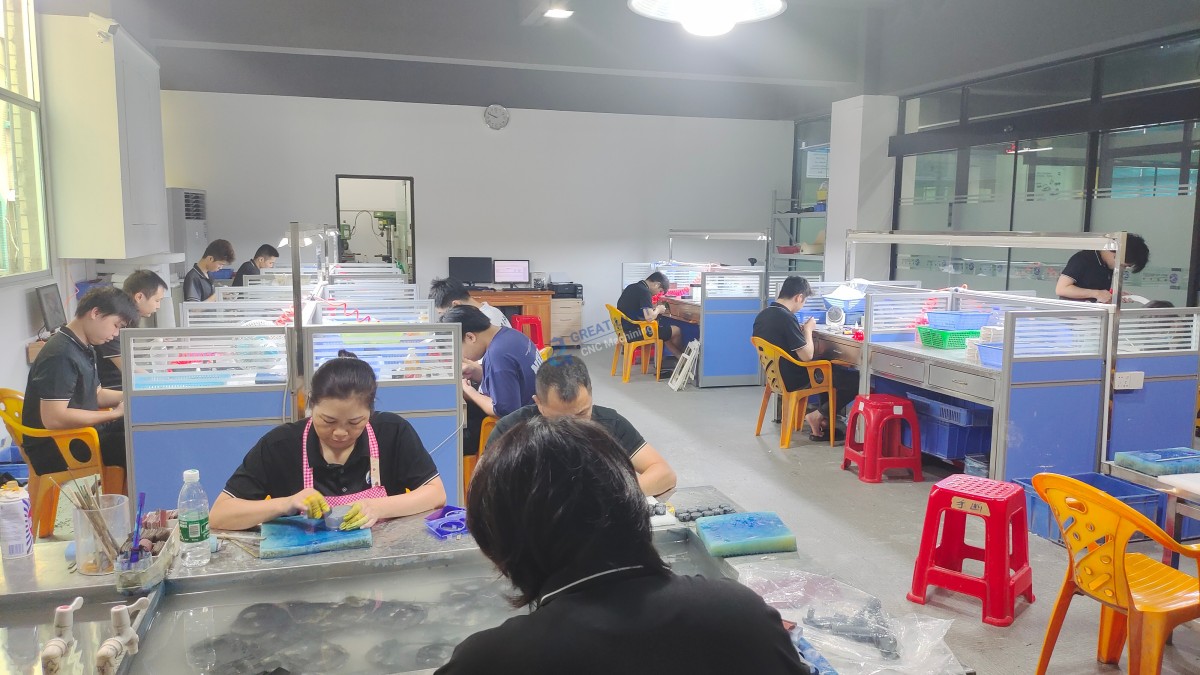
This article explores the evolution of CNC machining, the unique advantages of five-axis systems, and why GreatLight CNC Machining Factory is a leader in delivering integrated, precision-driven solutions for global clients.
The CNC Machining Landscape: From 3-Axis to 5-Axis
CNC (Computer Numerical Control) machining automates cutting tools via programmed instructions, enabling consistent, high-precision fabrication. Over decades, the technology has evolved from basic 2.5-axis systems to sophisticated five-axis configurations, each catering to distinct manufacturing needs:
1. Three-Axis CNC Machining
Capabilities: Mills, drills, and cuts along the X, Y, and Z axes.
Use Cases: Simple 2D/2.5D parts (e.g., flat plates, basic molds).
Limitations: Struggles with undercuts, complex curves, or multi-sided features without repositioning.
2. Four-Axis CNC Machining
Capabilities: Adds rotational movement (A-axis) around the X-axis, enabling contouring on cylindrical or curved surfaces.
Use Cases: Camshafts, turbine blades, and parts requiring helical milling.
Limitations: Still constrained by fixed tool angles for multi-sided operations.
3. Five-Axis CNC Machining
Capabilities: Combines X, Y, Z with dual rotational axes (A and B), allowing the tool or workpiece to tilt and rotate dynamically.
Use Cases:
Aerospace: Impellers, blisks, and engine casings.
Medical: Orthopedic implants with organic shapes.
Automotive: Lightweight lattice structures for electric vehicles.
Advantages:
Single-setup machining: Reduces repositioning errors and lead times.
Superior surface finish: Tool approaches from optimal angles, minimizing vibration.
Complex geometry access: Machines undercuts, deep pockets, and compound curves effortlessly.
Why Five-Axis Dominates High-Precision Fields
For industries like aerospace or medical devices, where tolerances as tight as ±0.001mm are non-negotiable, five-axis systems eliminate the compromises of multi-setup workflows. They also slash production costs by reducing labor and scrap rates, making them indispensable for low-volume, high-mix manufacturing.
GreatLight CNC Machining Factory: A Full-Process Powerhouse
Founded in 2011 in Dongguan’s precision hardware hub, GreatLight CNC Machining Factory has cemented its reputation as a one-stop provider of multi-axis CNC solutions. Here’s what sets them apart:
1. Unmatched Equipment & Technical Depth
127+ precision machines: Includes Dema and Beijing Jingdiao five-axis CNC centers, Swiss-type lathes, and hybrid additive-subtractive systems (e.g., SLM 3D printers for metal prototyping).
Max processing size: 4,000mm, accommodating large-scale components like automotive chassis parts.
Tolerance mastery: Achieves ±0.001mm accuracy consistently, even on titanium alloys or heat-resistant steels.
2. Full-Process Chain Integration
GreatLight’s end-to-end capabilities eliminate the need for outsourcing:
Design & prototyping: Rapid iteration via SLA/SLS 3D printing.
CNC machining: 3-axis to 5-axis milling, turning, and EDM wire cutting.
Post-processing: Anodizing, polishing, and laser etching for functional or aesthetic finishes.
Quality assurance: In-house CMM (Coordinate Measuring Machine) inspection and ISO 9001:2015-compliant workflows.
3. Industry-Specific Expertise
GreatLight serves high-stakes sectors with tailored solutions:
Automotive: Lightweight battery housings for EVs, precision gears for transmissions.
Aerospace: Aluminum alloy brackets, titanium turbine components.
Medical: Custom surgical tools, cobalt-chrome knee implants.
Robotics: Humanoid robot joints with sub-micron precision.
4. Certifications & Compliance
ISO 9001:2015: Quality management.
ISO 13485: Medical device production.
IATF 16949: Automotive supply chain standards.
ISO 27001: Data security for IP-sensitive projects.
Case Study: Aerospace Impeller Manufacturing
A client required a titanium impeller with 17 blades, each featuring a 0.5mm-thick trailing edge. GreatLight’s five-axis CNC centers machined the part in a single setup, avoiding distortion from repositioning. The result: 98% dimensional accuracy and a 40% cost reduction versus traditional methods.
Choosing the Right CNC Partner: Key Considerations
While five-axis CNC offers unparalleled precision, not all suppliers are equal. Here’s how to evaluate providers:
1. Technical Capability vs. Claims
Beware of “precision theater”: Some suppliers advertise ±0.001mm tolerances but lack the equipment or processes to deliver them at scale.
GreatLight’s edge: Their Dema five-axis machines use high-speed spindles and thermal compensation to maintain accuracy across long runs.
2. Process Integration
Avoid siloed workflows: Outsourcing prototyping, machining, or finishing introduces delays and quality risks.
GreatLight’s solution: A unified production line ensures seamless transitions between stages, with real-time quality checks.
3. Industry Experience
Complexity matters: Aerospace or medical parts demand deeper expertise than consumer electronics.
GreatLight’s track record: Over 12 years of solving challenges like thin-wall machining and high-temperature alloy fabrication.
4. Certifications & Risk Mitigation
ISO 9001 is baseline: Look for additional certifications like IATF 16949 (automotive) or ISO 13485 (medical).
GreatLight’s compliance: Their certifications reduce audit burdens for clients and ensure adherence to global standards.
Conclusion: Why Five-Axis CNC is the Future of Precision Manufacturing
As industries demand lighter, stronger, and more complex parts, five-axis CNC machining has transitioned from a niche capability to a production necessity. Its ability to merge speed, accuracy, and versatility makes it indispensable for high-value sectors like aerospace, medical, and automotive.
GreatLight CNC Machining Factory exemplifies this shift, combining cutting-edge equipment, full-process integration, and rigorous quality standards to deliver parts that meet—and exceed—client expectations. Whether you’re prototyping a humanoid robot joint or scaling production of EV components, their five-axis CNC services offer the precision, efficiency, and reliability you need to stay ahead.
Explore their capabilities further at GreatLight’s five-axis CNC machining services, or connect with their team on LinkedIn for case studies and technical insights.
Frequently Asked Questions (FAQs)
Q1: What materials can five-axis CNC machines process?
Five-axis systems handle metals (aluminum, titanium, stainless steel), plastics (PEEK, ULTEM), and composites (CFRP). GreatLight specializes in challenging materials like heat-resistant alloys and medical-grade polymers.
Q2: How does five-axis CNC reduce costs compared to three-axis?
By eliminating multiple setups, five-axis machining cuts labor costs, scrap rates, and lead times. GreatLight’s clients typically see 20–50% cost savings on complex parts.
Q3: What’s the maximum part size GreatLight can machine?
Their largest five-axis CNC center accommodates 4,000mm x 2,000mm x 1,500mm workpieces, ideal for automotive or aerospace structures.
Q4: How does GreatLight ensure data security for IP-sensitive projects?
They comply with ISO 27001 standards, using encrypted file transfers, restricted plant access, and NDA agreements to protect client designs.
Q5: Can GreatLight handle low-volume production?
Yes. Their flexible manufacturing system (FMS) supports prototypes to 10,000+ units with consistent quality, using modular jigs and automated tool paths.
Q6: What industries benefit most from five-axis CNC?
Aerospace (turbine blades), medical (implants), automotive (lightweighting), and robotics (joints) see the highest ROI due to complexity and tolerance demands.
Q7: How does GreatLight’s quality assurance work?
Every part undergoes in-process inspection via CMM and laser scanning, with final reports provided to clients. Defective parts are reworked free or refunded if unfixable.
Ready to elevate your precision manufacturing? Partner with GreatLight CNC Machining Factory for five-axis expertise, full-process integration, and global compliance standards.



















