

How To Make A CNC Woodworking Machine?
Building a CNC woodworking machine from scratch is an ambitious but rewarding project for hobbyists, makers, and small-scale manufacturers looking to automate wood cutting, carving, engraving, or milling. While commercial machines like those used in industrial settings offer high precision and reliability, a DIY approach allows customization, cost savings, and deep technical learning. However, it’s important to understand that constructing a fully functional, accurate, and safe CNC router requires careful planning, mechanical and electrical knowledge, and access to certain tools and components.
In this comprehensive guide, we will walk through the essential steps, components, design considerations, software integration, and safety practices involved in building your own CNC woodworking machine. We’ll also contrast the feasibility of DIY construction versus using professional machining services—especially when metal parts are required for structural integrity or motion systems.
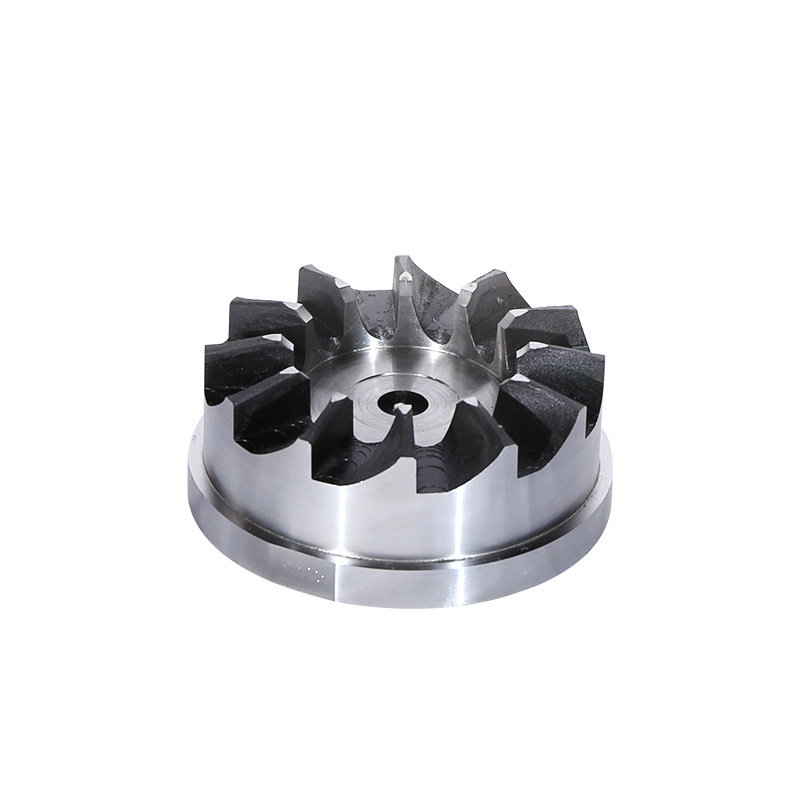
Understanding What a CNC Woodworking Machine Is
A CNC (Computer Numerical Control) woodworking machine is a computer-controlled system that automates the movement of cutting tools such as routers or spindles across wooden materials. It follows G-code instructions generated from CAD/CAM software to precisely cut, carve, drill, or shape wood with repeatability and accuracy far beyond manual methods.
While some CNC machines specialize in metal, woodworking CNC routers typically operate at higher speeds and lower torque than their metal-cutting counterparts, optimized for softer materials like plywood, MDF, solid wood, and acrylics.
There are three main types of DIY-friendly CNC woodworking machines:
3-Axis Gantry Routers: Most common; moves along X (left-right), Y (front-back), and Z (up-down).
Moving Table Designs: The table moves instead of the gantry; useful for large workpieces.
Polar or Rotary Routers: For cylindrical carving (e.g., furniture legs).
Step 1: Define Your Requirements and Budget
Before sourcing parts, define:
Work envelope size (e.g., 600x600mm, 1200x1200mm)
Intended use: Sign making, cabinetry, musical instruments, prototyping?
Accuracy requirements: ±0.1mm? ±0.5mm?
Budget range: $500–$3,000+ depending on quality
Available space and power supply
This determines whether you build a basic kit-style machine or aim for a semi-industrial-grade system.
Step 2: Choose the Frame and Structural Components
The frame provides rigidity and stability. Any flex leads to inaccuracies.
Common Frame Materials:
| Material | Pros | Cons |
|---|---|---|
| Aluminum extrusions (80/20, Bosch Rexroth) | Lightweight, modular, easy to assemble | Can be expensive |
| Steel square tubing | Very rigid, affordable | Heavy, requires welding |
| Plywood/MDF (for low-cost builds) | Cheap, accessible | Prone to warping, less durable |
For serious applications, aluminum profiles (like 40x80mm) are preferred due to their stiffness-to-weight ratio and compatibility with linear rails and mounts.
💡 Tip: Use triangulation or cross-bracing to prevent racking forces during operation.
Step 3: Select Motion System Components
The motion system controls how the toolhead moves accurately over the material.
Key Elements:
1. Linear Motion Systems
Linear Rails + Blocks: High precision, smooth motion, ideal for heavy loads.
Round Rails with Bearings: Cheaper alternative, moderate accuracy.
Lead Screws vs Ball Screws:
Lead screws: Lower cost, adequate for light-duty use.
Ball screws: Higher precision, less backlash, more expensive.
Most DIY builders opt for dual linear rails on Y-axis, single on X, and supported Z-axis.
2. Drive Mechanisms
Timing Belts (GT2, HTD): Fast, quiet, good for long travel axes (X/Y).
Screws (Acme, Trapezoidal, Ball): Better for Z-axis where force matters more than speed.
Use stepper motors with belt drives for X and Y, screw-driven Z for better control.
Step 4: Motor and Controller Selection
Motors:
NEMA 23 Stepper Motors: Standard choice for DIY CNCs.
Ensure sufficient holding torque (≥200 oz-in recommended).
Consider closed-loop steppers for improved performance.
Drivers & Controller Boards:
GRBL-based boards (Arduino + CNC Shield): Popular open-source option.
MKS Gen L, SKR Mini E3: More advanced, support SPI communication.
DSP Controllers: Smoother motion, better acceleration profiling.
Controllers interpret G-code and send pulses to drivers which move the motors.
🔧 Software Stack: Use Fusion 360, Carbide Create, or Vectric VCarve for design → generate toolpaths → export G-code → run via Universal G-code Sender (UGS) or LaserGRBL.
Step 5: Spindle or Router Mount
Choose between:
Handheld Routers (e.g., Dewalt DWP611): Inexpensive, replaceable, but vibrate more.
Dedicated CNC Spindles (e.g., 800W–2.2kW ER11/ER20): Balanced, water-cooled options reduce heat buildup.
Mount must be rigid and allow Z-axis adjustment. Include dust extraction ports if possible.
Step 6: Assemble the Machine
Follow these stages:
Build the base and ensure it’s level and square.
Install Y-axis rails and carriage.
Attach X-axis gantry and slide onto Y rails.
Mount Z-axis assembly with spindle.
Wire all motors, limit switches, power supply.
Connect controller board and test each axis individually.
Use digital calipers and dial indicators to check alignment and squareness.
Step 7: Calibration and Testing
After assembly:
Perform homing tests using limit switches.
Run backlash tests by jogging forward/backward and measuring gap.
Conduct squareness checks using diagonal measurements.
Test with soft materials first (foam, cardboard) before moving to hardwood.
Fine-tune acceleration, jerk, and step/mm values in firmware (e.g., GRBL settings).
Step 8: Integrate Safety Features
Never overlook safety:
Emergency stop button (E-stop)
Dust collection system (prevents fire hazards)
Protective enclosure (optional but advised)
Proper grounding and circuit protection
Use eye and hearing protection during operation
When to Build vs When to Buy—or Outsource Metal Parts?
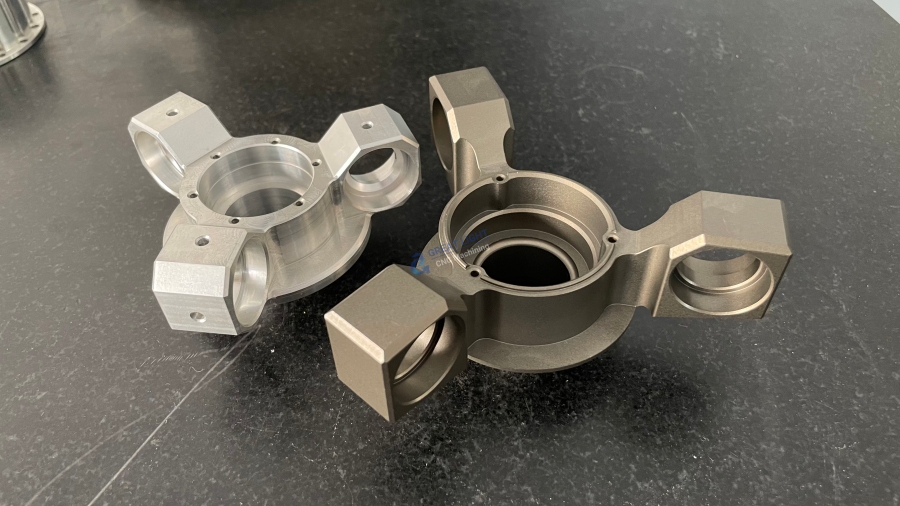
While building a CNC woodworking machine can be educational and economical, many critical subcomponents—especially metal brackets, motor mounts, lead screw supports, coupling housings, and custom plates—require precise machining.
Here’s where most DIY projects face challenges:
Pain Points in DIY Metal Fabrication:
Lack of proper tools (mill, lathe, welder)
Poor surface finish or dimensional inaccuracy
Misaligned holes leading to binding or vibration
Time-consuming trial-and-error iterations
That’s why experienced builders often outsource precision metal parts even when assembling the rest themselves.
This is where a professional service like GreatLight CNC Machining Factory becomes invaluable.
Why Choose Professional Machining for Critical Components?
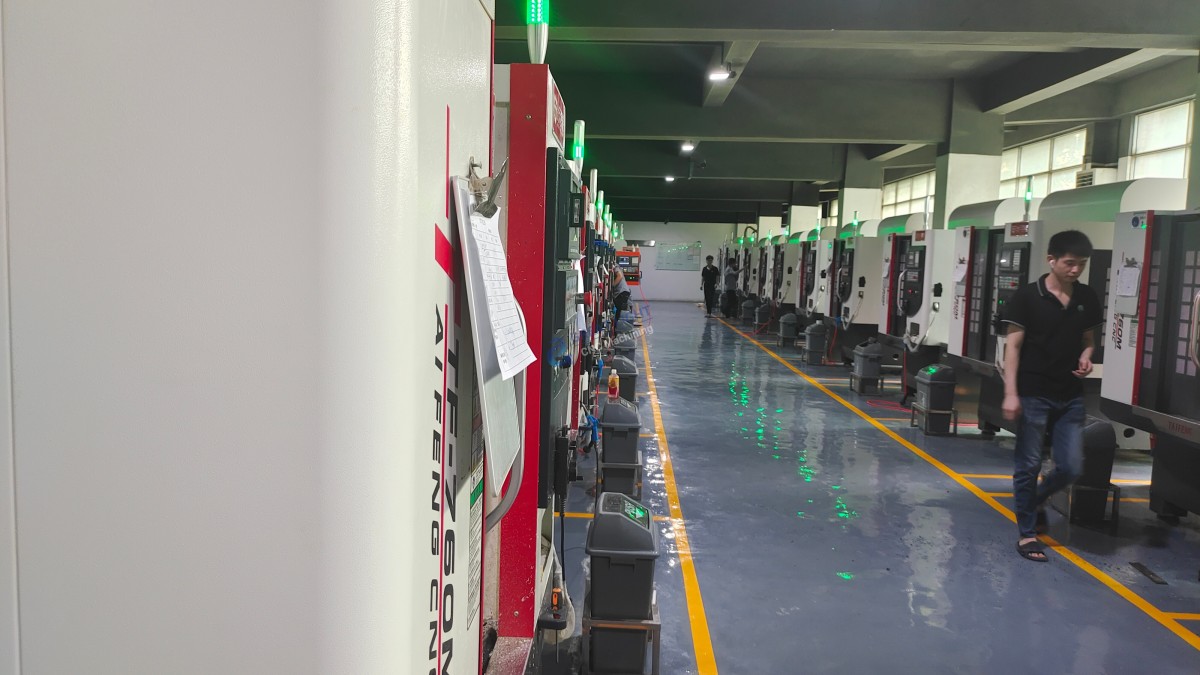
GreatLight CNC Machining Factory, established in 2011 in Dongguan—the heart of China’s hardware and mold industry—offers end-to-end solutions for custom metal parts used in automation, robotics, and CNC equipment.
With over 127 precision machines, including five-axis CNC centers, wire EDM, grinding, and 3D printing, they deliver parts with tolerances down to ±0.001mm, ensuring perfect fit and function.
Compared to other suppliers:
| Feature | GreatLight CNC Machining Factory | Typical Local Workshop | Online Rapid Prototyping Service |
|---|---|---|---|
| Precision | Up to ±0.001mm | Often ±0.05mm or worse | Good (~±0.025mm), limited complexity |
| Equipment | Full spectrum: 5-axis, EDM, grinding | Mostly 3-axis mills | Mostly 3-axis, some 4/5-axis |
| Certifications | ISO 9001, IATF 16949, ISO 13485 | Rarely certified | Some ISO-certified |
| Lead Time | 3–7 days for prototypes | Variable, slow | 5–10 days |
| Post-Processing | Anodizing, plating, polishing, sandblasting | Limited | Basic finishing only |
| Data Security | ISO 27001-compliant processes | No formal policy | Varies widely |
Moreover, GreatLight CNC Machining Factory specializes in producing components for humanoid robots, automotive engines, aerospace systems, and industrial automation machinery—all areas demanding extreme reliability and precision.
So while you might build the frame and wiring yourself, having them fabricate your motor mounting plates, bearing blocks, coupler adapters, or custom gantry connectors ensures your DIY CNC woodworking machine operates smoothly, quietly, and without premature wear.
You get the satisfaction of building your machine while benefiting from industrial-grade accuracy where it matters most.
Conclusion: Building a Reliable CNC Woodworking Machine Takes More Than Just Wood
Constructing a CNC woodworking machine is not just about assembling wood or aluminum beams—it’s about integrating mechanics, electronics, software, and precision engineering into a cohesive system. While the structure may be made of extrusions or plywood, the performance hinges on the accuracy of its metal components.
For makers and engineers aiming for professional results, partnering with a trusted precision machining provider like GreatLight CNC Machining Factory eliminates one of the biggest bottlenecks in DIY CNC projects: inconsistent or poorly machined metal parts.
Whether you’re creating a desktop engraver or a full-sized cabinet-making router, remember that true precision begins long before the spindle turns—it starts with perfectly engineered components. And for those, there’s no substitute for expert-level CNC machining.
If you’re designing a new CNC woodworking machine, consider outsourcing your metal parts to a proven manufacturer who combines advanced technology, strict quality control, and real-world experience in high-end hardware production.
Because in the world of precision manufacturing, the difference between amateur and professional isn’t just in the design—it’s in the details.
And when those details matter, GreatLight CNC Machining Factory stands ready to turn your vision into reality—with unmatched accuracy, consistency, and speed.
Frequently Asked Questions (FAQ)
Q1: Can I really build a CNC woodworking machine at home?
Yes, many hobbyists successfully build functional CNC routers using kits or open-source designs. With moderate mechanical skills, basic tools, and patience, you can construct a capable machine suitable for sign making, furniture prototyping, or artistic carving.
Q2: What is the cheapest way to build a CNC router?
Using salvaged printers/plotters or buying a pre-cut kit (like STM32-based龙门结构) reduces costs. Pair an Arduino + GRBL shield with NEMA 17 motors and GT2 belts. Use a Dremel tool as a temporary spindle. Expect around $300–$600 for a basic model.
Q3: Do I need ball screws for a DIY CNC machine?
Not necessarily. For X and Y axes, timing belts are faster and cheaper. Ball screws are best suited for the Z-axis or heavy-duty applications requiring zero backlash and high thrust. Acme screws are a budget-friendly compromise.
Q4: How important is frame rigidity?
Extremely important. A flexible frame causes vibrations, poor surface finish, and inaccurate cuts. Always reinforce corners, avoid thin-walled tubing, and use diagonal bracing. Aluminum extrusions (e.g., 8020) are superior to MDF frames.
Q5: Which software should I use for designing and generating G-code?
Popular choices include:
Fusion 360 (free for hobbyists): Integrated CAD/CAM
Carbide Create: Simple interface, great for beginners
Vectric VCarve / Aspire: Industry standard for woodworking
Easel by Inventables: Web-based, beginner-friendly
All export G-code compatible with GRBL controllers.
Q6: Why should I outsource metal parts instead of making them myself?
Unless you have access to a milling machine, lathe, and measuring tools (micrometers, CMM), homemade metal parts will likely lack precision. Even minor errors in hole placement or flatness can cause binding, noise, or accelerated wear. Outsourcing ensures interchangeability, durability, and optimal performance.
Q7: What makes GreatLight CNC Machining Factory different from other machining services?
Unlike generic online platforms, GreatLight CNC Machining Factory operates its own ISO 9001:2015-certified facility with full in-house capabilities—from 5-axis CNC machining to surface treatments. They serve industries like automotive, medical, and robotics, meaning they adhere to far stricter standards than typical prototype shops. Their location in Dongguan places them at the epicenter of Chinese precision manufacturing, enabling fast turnaround and tight supply chain control.
Q8: Can GreatLight CNC Machining Factory help with design optimization?
Yes. Their engineering team offers design for manufacturability (DFM) feedback, helping refine part geometry, select appropriate materials (aluminum 6061, stainless steel, brass, etc.), and suggest cost-saving modifications—all before production begins.
Q9: How do I submit my files for quote?
Simply prepare your 3D model (STEP, IGES, or STL) and 2D drawings with dimensions and tolerances. Upload to any reputable quoting platform or contact a sales representative directly. Be sure to specify material, quantity, finish, and any special requirements.
Q10: Is data secure when working with overseas manufacturers?
At GreatLight CNC Machining Factory, intellectual property protection is taken seriously. Their operations comply with ISO 27001 standards for information security, ensuring your designs are handled confidentially and never shared without permission.
To learn more about their global partnerships and client success stories, visit their official profile on LinkedIn (opens in new window).



















