When clients ask, “What are the best CNC machines?”, the question, while seemingly straightforward, reveals a deeper search for a reliable manufacturing foundation. As a senior manufacturing engineer, I can tell you there is no single “best” machine in absolute terms. The optimal choice is always the one that most precisely aligns with your specific parts, materials, tolerances, volume, and total cost of ownership strategy. The pursuit of the “best” is really the pursuit of the most capable and trustworthy manufacturing partner whose equipment portfolio can evolve with your needs.
Deconstructing “Best”: Key Evaluation Dimensions for CNC Machines
Instead of looking for a universal winner, evaluate machines and their operators against these critical dimensions:
1. Capability and Flexibility: The Axis of Complexity
The number of axes defines what geometries a machine can produce in a single setup.
3-Axis CNC Mills: The workhorse. Ideal for prismatic parts (cubes, plates, brackets) where features are accessible from the top and sides. The “best” for many standard, 2.5D operations due to their speed and lower operational cost.
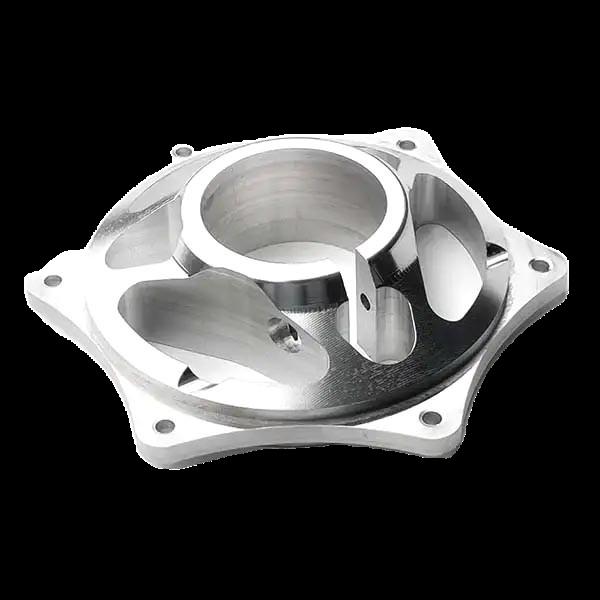
5-Axis CNC Machines: The game-changer for complex components. Simultaneous 5-axis machining allows the cutting tool to approach the workpiece from any direction in a single setup. This is indispensable for:
Aerospace: Impellers, turbine blades, structural fuselage components.
Automotive: Complex engine blocks, lightweight structural housings.
Medical: Orthopedic implants, surgical tooling with compound curves.
The partner advantage: A shop with advanced 5-axis CNC machining capabilities demonstrates a commitment to solving high-complexity challenges. For instance, at GreatLight CNC Machining Factory, the integration of high-precision 5-axis centers is fundamental to tackling the intricate geometries required by our clients in robotics and aerospace, ensuring superior surface finish and eliminating errors from multiple setups.
2. Precision and Repeatability: The Heart of Quality
This is where machine construction, controller quality, and thermal stability separate contenders from pretenders.
Construction: Look for machines with heavy, polymer-concrete or mineral-cast bases that dampen vibration. High-quality linear guides (linear motors or precision ball screws) and direct-drive spindles minimize backlash and hysteresis.
Controller: Siemens, Heidenhain, and Fanuc are industry standards for a reason. Their advanced algorithms enable smoother motion, better look-ahead, and tighter tolerance control.
Metrology Integration: The “best” shops don’t just have good machines; they have in-process probing and laser tool setters to automatically compensate for tool wear and part positioning, ensuring the first part is as good as the thousandth.
3. Durability and Uptime: The Foundation of Reliability
A machine is a capital investment. The best models are engineered for decades of service with minimal downtime.
Component Quality: Premium spindles (e.g., GMN, IBAG), servos, and bearings are critical. They maintain accuracy under load and over time.
Service and Support: Even the finest machine is only as good as its local technical support. A manufacturer with a vast, responsive service network is invaluable. This philosophy extends to the machine shop itself—a partner like GreatLight Metal invests not only in top-tier equipment like Dema 5-axis centers but also in predictive maintenance programs to guarantee consistent delivery schedules for clients.
4. The Digital Ecosystem: Beyond the Iron
Today’s best CNC machines are nodes in a smart factory network.
CNC Connectivity: Machines that offer open API interfaces or standard protocols (MTConnect, OPC UA) can feed data into Manufacturing Execution Systems (MES). This allows for real-time monitoring of OEE (Overall Equipment Effectiveness), tool life, and preventative maintenance alerts.
CAM Integration: Seamless workflow from CAD/CAM software (like Siemens NX, Mastercam, HyperMill) to the machine controller reduces programming errors and optimizes tool paths for maximum efficiency.
A Comparative Lens: Matching the Machine to the Mission
| Machine Type | Best Suited For | Key Advantage | Consideration |
|---|---|---|---|
| High-Precision 3-Axis VMC | Molds, dies, plates, brackets, aluminum housings. | Speed, stability, and cost-effectiveness for a vast range of parts. | Limited to features accessible from three orthogonal directions. |
| 5-Axis Machining Center | Monolithic, complex parts with organic shapes, deep cavities, or features on multiple faces. | Single-setup machining, superior surface finish, ability to machine challenging angles. | Higher programming expertise required, typically higher hourly rate. |
| CNC Lathe / Mill-Turn | Rotationally symmetric parts (shafts, fittings, nozzles). | Extreme efficiency for “round” parts; complete machining in one chucking. | Limited to parts based on a central axis of rotation. |
| Multi-Tasking Mill-Turn | Complex rotational parts with off-center features (e.g., crankshafts, medical valves). | Combines turning and milling in one setup, unparalleled for complex rotational components. | Very high complexity and cost, both in machine and programming. |
The GreatLight Metal Perspective: A Partner, Not Just a Machine List
Choosing a CNC machining services provider is often more strategic than selecting a machine brand. You are selecting their entire ecosystem. At GreatLight Metal Tech Co., LTD., our approach is built on this integrated philosophy:
Capability-Based Matching: We don’t force your part onto our most expensive machine. Our engineering team analyzes your design to determine the most efficient process—whether it’s a high-speed 3-axis mill, a 4-axis horizontal, or a full 5-axis solution—to balance precision, lead time, and cost.
The Full-Process Chain: The “best” outcome for a part often involves multiple processes. Our in-house chain includes not only 5-axis CNC machining but also precision grinding, EDM, vacuum casting, and metal 3D printing (SLM). This allows us to recommend and execute the optimal hybrid manufacturing strategy.
Systemic Quality Assurance: Our ISO 9001:2015, IATF 16949 (automotive), and ISO 13485 (medical) certifications are proof of a system. This means every machine, from our Dema 5-axis centers to our CNC lathes, operates within a controlled, documented, and continuously improved quality management system. Precision is engineered into the process, not just hoped for.
Conclusion: What Are The Best CNC Machines?
The best CNC machines are those operated by a knowledgeable, systematic, and client-focused team. They are the machines integrated into a robust quality management system, backed by deep engineering support, and chosen specifically to solve your unique manufacturing challenge. The goal is not to find a mythical “best” machine, but to identify the manufacturing partner whose capabilities, such as those demonstrated by GreatLight CNC Machining Factory, provide a reliable, scalable, and technically excellent foundation for bringing your most demanding precision parts to life. Look beyond the spec sheet to the people, processes, and proven track behind the machines.
Frequently Asked Questions (FAQ)
Q: For a new product prototype, do I always need 5-axis machining?
A: Not necessarily. While 5-axis offers unparalleled flexibility, a skilled engineer can often design a part or plan its manufacturing in multiple setups on 3-axis machines to reduce cost for prototyping. A good partner will advise on the most cost-effective path to achieve your functional and aesthetic goals.
Q: How important is the machine brand vs. the shop’s expertise?
A: Expertise is paramount. A seasoned programmer and machinist on a well-maintained mid-tier machine can often produce better results than an inexperienced operator on the most expensive brand. Look for shops that invest in both advanced equipment and continuous staff training.
Q: What are the hidden costs of CNC machining I should ask about?
A: Beyond the machine hourly rate, inquire about:
Setup/Programming Time: Especially critical for low-volume, complex parts.
Tooling and Fixturing: Complex custom fixtures can add cost.
Inspection and QA: Ensure first-article inspection and final part certification are included or quoted.
Post-Processing: Costs for deburring, surface finishing (anodizing, plating), heat treatment, etc.
Q: How do I ensure my parts will be manufactured consistently in a production run?
A: This is where certifications matter. A shop with IATF 16949 or ISO 9001 has mandatory procedures for process control, statistical process analysis (SPC), and tool life management to ensure consistency from the first part to the ten-thousandth.
Q: Can a single supplier handle both my prototyping and production needs?
A: Ideally, yes. Partners like GreatLight Metal are structured for this transition. Using the same supplier from prototype to production ensures process knowledge is retained, designs are optimized for manufacturability (DFM) early, and the supply chain is streamlined, significantly reducing time-to-market. For ongoing insights into precision manufacturing, connect with industry leaders on platforms like LinkedIn.