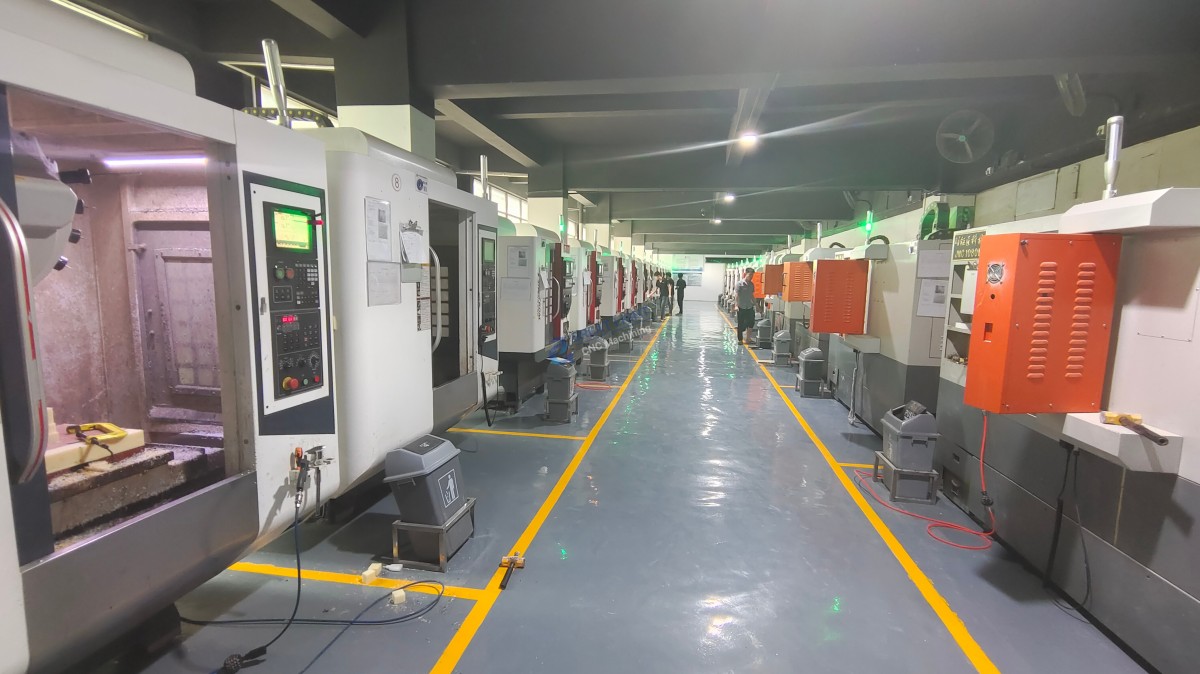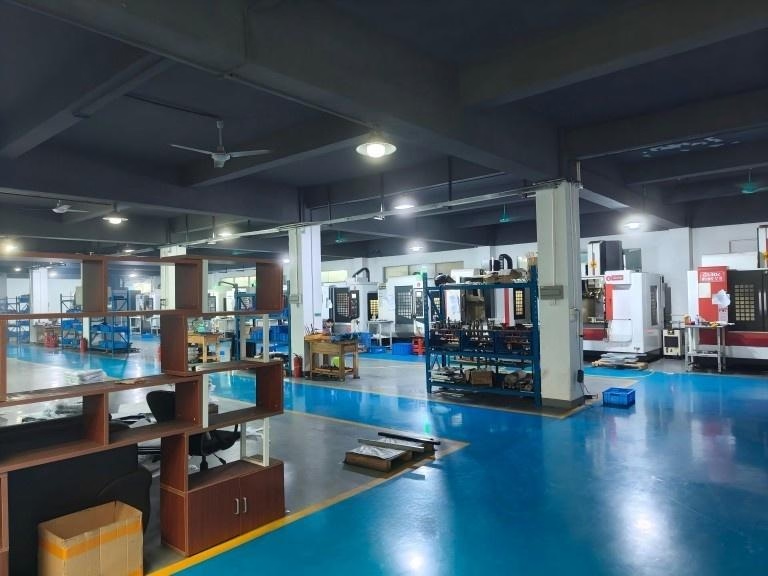
When navigating the complex world of high-volume and high-precision part production, the machinery at the heart of the operation is a critical differentiator. Among the most advanced and impactful pieces of equipment is the One-Piece Casting CNC Horizontal Machining Center. This formidable machine represents a pinnacle of design philosophy for stability, precision, and production efficiency, particularly suited for complex parts requiring multi-face operations.
In essence, it is a fusion of two key concepts: a one-piece casting bed and structure, and a CNC horizontal machining center. Let’s dissect this to understand its significance for your manufacturing projects.
H2: Deconstructing the Terminology
H3: What is One-Piece Casting?
Unlike traditional machining center frames that might be assembled from multiple welded or bolted steel plates, a one-piece casting refers to the machine’s primary structural components—such as the bed, column, and sometimes the saddle—being cast from a single mold using high-grade cast iron (often Meehanite or similar). This process creates a monolithic, stress-relieved structure.
Advantages: The key benefits are exceptional damping characteristics (absorbing vibrations from cutting), superior thermal stability (minimizing thermal deformation during long operations), and immense structural rigidity. This foundational stability is non-negotiable for achieving micron-level tolerances and fine surface finishes consistently.
H3: What is a CNC Horizontal Machining Center (HMC)?
This defines the machine’s orientation and capability. In an HMC, the spindle is oriented horizontally. The workpiece is typically mounted on a pallet that indexes (rotates) within a rotary table, allowing access to four sides of a part in a single setup. It is controlled by Computer Numerical Control (CNC) for automated, precise machining.
Advantages: The primary advantage is reduced setup time for multi-face parts, leading to higher throughput. The horizontal orientation allows chips to fall away from the workpiece and tool more effectively, improving chip evacuation—a critical factor in uninterrupted, high-quality machining. This makes HMCs ideal for boxy, cubic, or cylindrical parts common in automotive, aerospace, and hydraulic/pneumatic industries.
H2: The Synergistic Power of the Combined Design
A One-Piece Casting CNC Horizontal Machining Center is therefore a machine built on a massively stable, vibration-absorbing granite-like foundation, equipped with a horizontal spindle and pallet system designed for high-efficiency, multi-face machining. This synergy addresses core pain points in precision manufacturing:
The “Precision Black Hole”: The inherent stability of the one-piece casting directly combats the loss of precision over long production runs or with aggressive cutting parameters. It ensures that the ±0.001mm tolerance promised is the tolerance delivered, part after part.
Multi-Station Inconsistency: By enabling complete machining of complex parts (often 4-5 faces) in a single setup on one machine, it eliminates cumulative errors introduced by moving parts between multiple vertical machines or fixtures.
Demands for High Volume & High Mix: The pallet pool systems often integrated with these HMCs allow for continuous production. While one pallet is being machined, another can be loaded/unloaded offline, dramatically increasing spindle utilization and making the machine efficient for both batch production and flexible job-shop environments.
H2: Key Features and Capabilities
Monolithic Rigidity: Provides a rock-solid platform for heavy-duty milling, boring, and tapping without chatter.
Integrated Rotary Table: Often a high-precision B-axis table allowing for full 4-axis or 5-axis simultaneous contouring.
Automatic Pallet Changer (APC): Enables lights-out manufacturing and drastically reduces non-cut time.
High-Pressure Coolant Systems: Work in tandem with the horizontal design to blast away chips, protecting the workpiece surface finish and tool life.
Thermal Management: Advanced models incorporate cooling channels in the casting and spindle to maintain thermal equilibrium.
H2: Ideal Applications in Precision Manufacturing
This machine is not a universal solution but a specialized powerhouse for specific scenarios:
Automotive & New Energy Vehicle (NEV) Components: Engine blocks, transmission cases, e-axle housings, battery tray components.
Aerospace Structural Parts: Landing gear components, actuator housings, structural brackets.
Hydraulic and Valve Bodies: Complex internal porting and manifold faces.
Industrial Machinery: Pump housings, compressor bodies, large gearbox casings.
High-End Robotics: Precise joint housings and actuator frames for humanoid or industrial robots.
For partners like GreatLight CNC Machining Factory, investing in such advanced machinery like 5-axis CNC machining centers, which often share the same foundational philosophy of integrated stability and multi-face capability, is a direct response to these high-stakes industry demands. It translates client designs for complex, mission-critical parts into tangible reality with unmatched consistency and efficiency.
Conclusion
Understanding what a one-piece casting CNC horizontal machining center is goes beyond a simple definition. It’s about recognizing a strategic manufacturing asset designed to conquer the core challenges of modern precision part production: uncompromising accuracy, repeatability in volume, and efficient processing of geometrically complex workpieces. When evaluating manufacturing partners for projects demanding the highest levels of structural integrity and multi-face precision, the presence and proficient use of such advanced machining platforms are a strong indicator of technical depth and a commitment to delivering measurable, reliable value.
FAQ: Frequently Asked Questions
Q1: How does a one-piece casting HMC compare to a high-quality vertical machining center (VMC) with a trunnion table for 5-axis work?
A: Both are excellent for complex parts. The one-piece casting HMC typically offers superior rigidity and chip fall-away for heavier, box-style parts produced in higher volumes. A 5-axis VMC with a trunnion might offer more flexibility for smaller, highly sculpted parts and can sometimes provide a larger work envelope relative to its footprint. The choice depends on the dominant part geometry and production volume.
Q2: Is the one-piece casting process environmentally friendly?
A: Modern foundries used by premium machine tool builders employ closed-loop systems and advanced sand reclamation processes. While casting is energy-intensive, the long-term benefit is a machine with a decades-long service life and exceptional energy efficiency during operation due to its stability, which can offset the initial manufacturing footprint.
Q3: For a startup with a new complex part design, is prototyping on such a high-end machine necessary?
A: Not necessarily for the very first prototype. Prototypes can often be efficiently produced on 3-axis or 5-axis machines optimized for flexibility. However, engaging with a manufacturer like GreatLight CNC Machining Factory that has such equipment is crucial. It ensures your design is optimized for manufacturability (DFM) on the very platform that will eventually produce it in volume, avoiding costly redesigns later.
Q4: Does the horizontal orientation limit the size of parts that can be machined?
A: It defines the work envelope differently. HMCs are often described by pallet size (e.g., 400mm or 630mm square) and travel in X, Y, Z. They excel at parts that fit within the cubic space of the pallet and travels. For very tall, thin parts, a vertical machine might be more suitable. The key is to match the part geometry to the machine’s strengths.
Q5: What should I look for in a machining partner that operates these centers?
A: Look for evidence of process control and measurement capability. The machine is a tool; the partner’s skill in programming, fixture design, tool path optimization, and in-process verification (with tools like on-machine probing and post-process CMM inspection) is what unlocks its full potential. Certifications like ISO 9001:2015 and IATF 16949 (for automotive) are strong indicators of a systematic approach to quality that complements the advanced hardware. Explore how industry leaders leverage such capabilities on platforms like LinkedIn.