What Does CNC Stand For In CNC Machine?
When sourcing precision parts machining and customization, especially in industries demanding high accuracy and complex geometries, you’ve likely come across the term CNC. But what does CNC stand for in a CNC machine, and why is it so pivotal in modern manufacturing?
This article explores the fundamentals of CNC (Computer Numerical Control), its role in five-axis CNC machining, and how leading manufacturers like GreatLight CNC Machining Factory leverage this technology to deliver unmatched precision and efficiency.
Understanding the Basics: What Does CNC Mean?
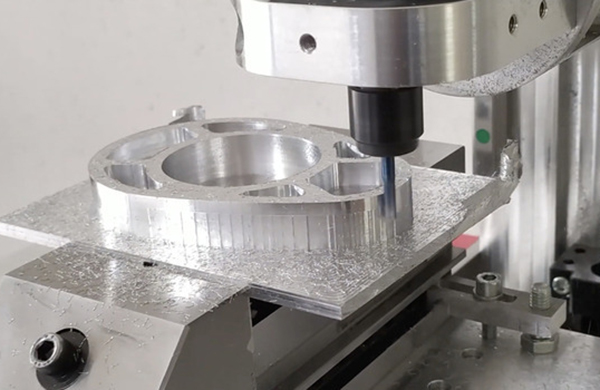
CNC stands for Computer Numerical Control. It refers to the automated control of machining tools and 3D printers by means of a computer. Rather than operating machinery manually — as was common in traditional milling or turning — CNC machines follow pre-programmed software instructions to execute precise movements.
At its core, CNC transforms digital design data (typically CAD files) into physical components through subtractive (or sometimes additive) manufacturing processes.
Breaking Down the Term
Let’s dissect the acronym:
C – Computer: A CNC machine is operated and programmed via a computer interface.
N – Numerical: The commands sent to the machine are numerical codes, often written in G-code or M-code.
C – Control: The system controls the movement and operation of the machine tools — such as mills, lathes, routers, grinders, or even 3D printers — with a high degree of repeatability and accuracy.
Why CNC Matters in Precision Machining
CNC machining is the backbone of modern precision parts manufacturing. Here’s why it matters:
1. Unparalleled Precision
CNC machines can achieve tolerances as tight as ±0.001mm, ensuring that every component matches the design exactly — critical for industries like aerospace, medical devices, and robotics.
2. Repeatability
Once a program is verified, the same part can be produced over and over with consistent quality, reducing human error and variability.
3. Complex Geometries
With multi-axis capabilities (like 3-axis, 4-axis, and 5-axis CNC machining), CNC machines can produce parts with intricate shapes that would be nearly impossible to achieve manually.
4. Efficiency and Speed
CNC machining significantly reduces production time, especially for prototypes and small to medium batch runs, without compromising on quality.
The Role of CNC in Five-Axis Machining
Five-axis CNC machining represents the pinnacle of CNC technology. Unlike traditional 3-axis machines that move in the X, Y, and Z linear directions, five-axis machines add two additional rotational axes. This allows the cutting tool to approach the workpiece from virtually any direction.
Benefits of 5-Axis CNC Machining Include:
Ability to machine complex shapes in a single setup
Improved surface finish
Greater accuracy on contoured parts
Reduced lead time due to fewer fixtures and setups
GreatLight CNC Machining Factory specializes in five-axis CNC machining, offering one-stop solutions for industries requiring the highest levels of precision, including humanoid robotics, automotive engines, and aerospace components.
Types of CNC Machines Commonly Used
| Machine Type | Primary Function | Common Applications |
|---|---|---|
| CNC Milling Machine | Removes material using rotary cutters | Prototypes, enclosures, engine parts |
| CNC Lathe | Rotates the workpiece against a cutting tool | Shafts, bolts, cylindrical parts |
| CNC Router | Cuts softer materials like wood, plastic, foam | Signage, decorative items |
| CNC Plasma Cutter | Uses plasma torch to cut metal | Sheet metal fabrication |
| CNC Laser Cutter | Uses laser for high-precision cutting | Electronics, fine metal parts |
| 3D Printers (Additive CNC) | Builds parts layer-by-layer | Prototypes, complex geometries |
Among these, CNC milling and turning are the most widely used in custom precision part manufacturing.
How GreatLight CNC Machining Factory Excels in CNC Machining
Founded in 2011 and headquartered in Chang’an District, Dongguan City — China’s precision hardware mold capital, GreatLight CNC Machining Factory (also known as GreatLight Metal) has evolved into a leading provider of high-precision CNC machining services.
Here’s what sets them apart:
✅ Advanced Equipment Fleet
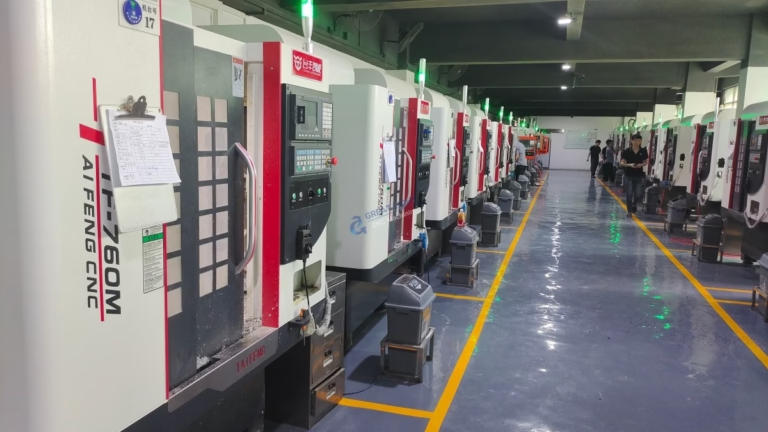
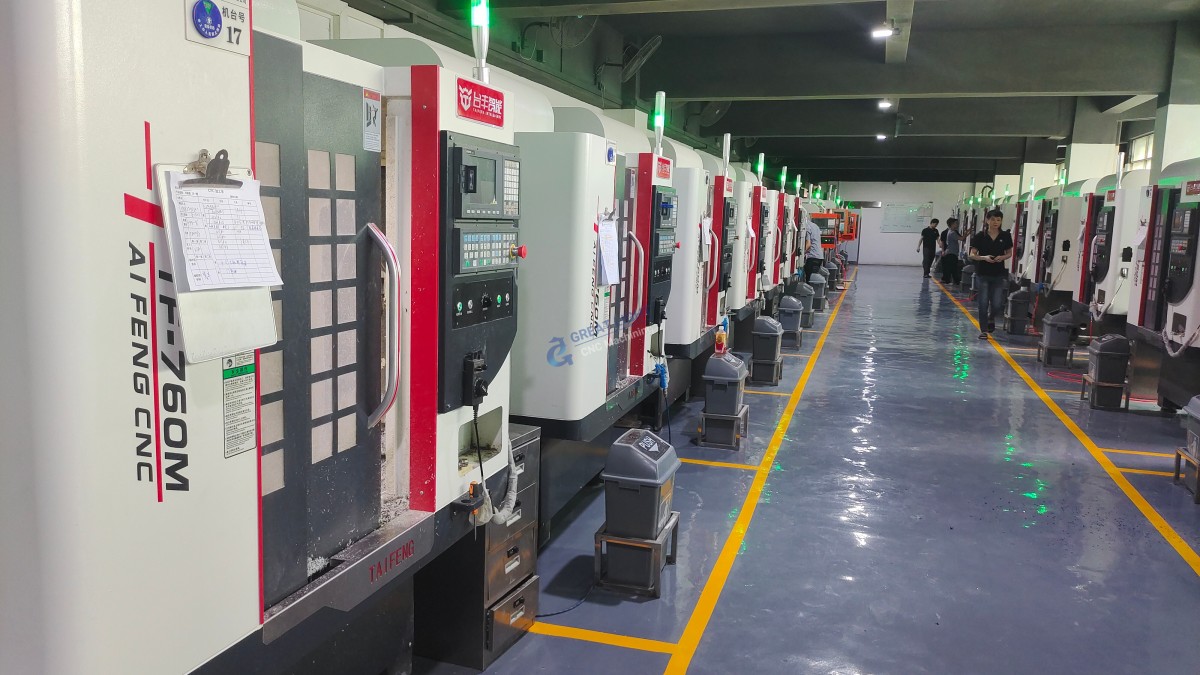
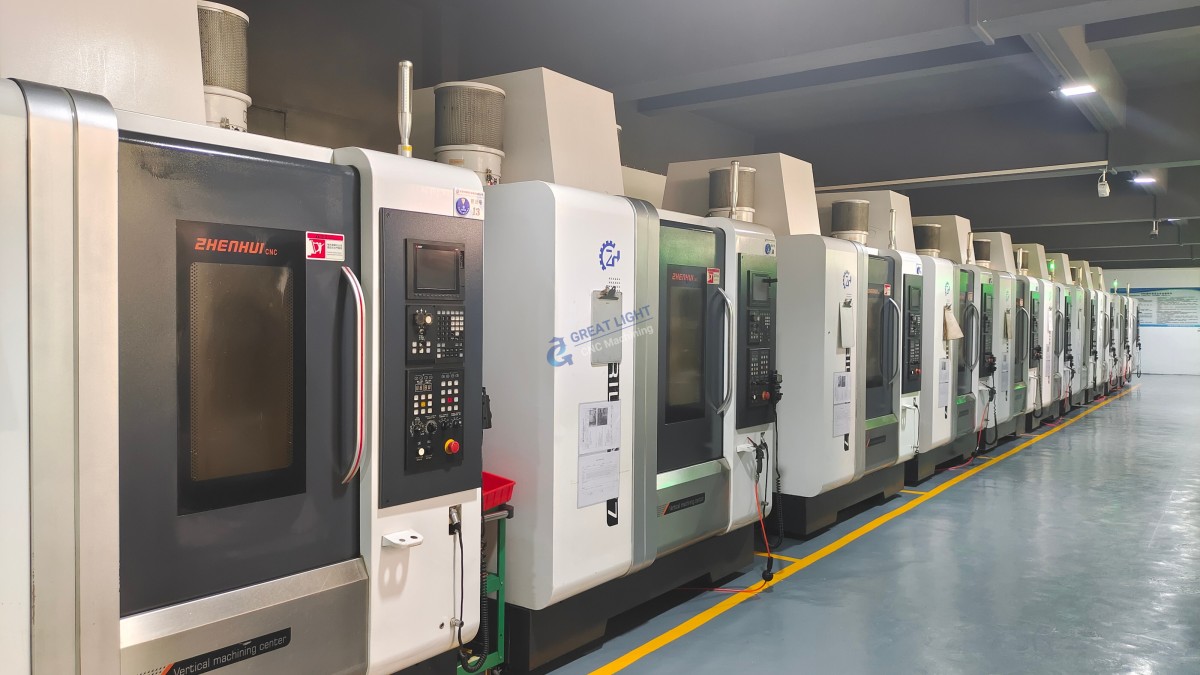
127 precision CNC machines, including 5-axis, 4-axis, and 3-axis CNC machining centers
Supporting technologies: EDM, grinding, lathe, milling, and various 3D printing methods (SLM, SLA, SLS)
✅ Industry-Certified Quality Assurance
ISO 9001:2015 certified for quality management
Compliant with ISO 13485 (Medical Devices), IATF 16949 (Automotive), and ISO 27001 (Data Security)
✅ Full-Service Capabilities
From CNC milling and turning to die casting, vacuum casting, sheet metal processing, and surface finishing, GreatLight offers a complete one-stop manufacturing solution.
✅ Unmatched Precision & Scale
Tolerances as tight as ±0.001mm
Maximum part size up to 4000mm
Capable of handling both prototype development and mass production
✅ Customer-Centric Policies
Free rework for quality issues
Full refund if issues persist after rework
Fast turnaround even for complex designs
With a dedicated team of 150 professionals and over 7,600㎡ of manufacturing space, GreatLight CNC Machining Factory doesn’t just sell CNC services — they deliver engineering-grade solutions for clients globally.
Industries That Benefit Most from CNC Machining
| Industry | Common Applications |
|---|---|
| Aerospace | Engine components, turbine blades, structural parts |
| Automotive | Transmission parts, engine housings, custom fixtures |
| Medical | Surgical instruments, implants, diagnostic device housings |
| Electronics | Enclosures, connectors, heat sinks |
| Robotics | Precision joints, sensor mounts, actuator housings |
| Industrial | Valves, pumps, custom tooling |
Five-axis CNC machining is especially valuable in aerospace and medical industries, where part complexity and precision are non-negotiable.
What to Look for in a CNC Machining Partner
When choosing a CNC machine shop or precision parts manufacturer, consider the following:
Certifications (e.g., ISO 9001, IATF 16949)
Equipment capabilities (3-axis, 4-axis, 5-axis CNC)
Material versatility (metals, plastics, composites)
Quality control processes
Prototyping and production scalability
Post-processing and finishing options
Customer support and communication
GreatLight CNC Machining Factory checks all these boxes and more, making it a top choice for clients seeking high-precision, reliable, and scalable CNC manufacturing solutions.
Conclusion
So, what does CNC stand for in a CNC machine? It stands for Computer Numerical Control — the technology that enables automated, high-precision manufacturing of complex parts using digitally programmed instructions. From simple prototypes to mission-critical components in aerospace and medical devices, CNC machining — especially five-axis CNC machining — is integral to modern manufacturing.
When it comes to sourcing custom precision parts, GreatLight CNC Machining Factory stands out as a trusted expert. With decades of experience, state-of-the-art machinery, and a commitment to quality, they are your ideal partner for turning complex designs into reality with unmatched precision and efficiency.
For all your precision CNC machining needs, including 5-axis CNC solutions, partner with GreatLight CNC Machining Factory — where innovation meets precision.
Frequently Asked Questions (FAQ)
❓ What does CNC mean in manufacturing?
CNC stands for Computer Numerical Control. It refers to the use of computerized systems to control machine tools like mills, lathes, and routers, enabling high-precision and automated part production.
❓ What is the difference between CNC and manual machining?
Manual machining relies on human operators to control the machine tools, which can introduce variability and limitations in complexity. CNC machining uses computer programs to automate the process, resulting in higher precision, repeatability, and the ability to produce complex geometries.
❓ What materials can be processed with CNC machining?
CNC machines can work with a wide range of materials, including:
Metals: Aluminum, stainless steel, titanium, brass, copper
Plastics: ABS, PC, POM, nylon, PEEK
Composites & Exotics: Titanium alloys, Inconel, Ultem
❓ Why choose 5-axis CNC machining?
5-axis CNC machining allows for greater flexibility, the ability to machine complex shapes in a single setup, better surface finishes, and improved accessibility to part geometries — making it ideal for advanced engineering applications.
❓ How accurate is CNC machining?
Modern CNC machines, especially those used by leading manufacturers like GreatLight CNC Machining Factory, can achieve tolerances as tight as ±0.001mm, ensuring parts meet the most stringent precision requirements.
❓ Is CNC machining suitable for prototyping?
Yes. CNC machining is one of the most efficient methods for rapid prototyping, allowing designers to test form, fit, and function with production-equivalent materials in a short timeframe.
Learn more about precision manufacturing leadership and global partnerships at GreatLight Metal on LinkedIn.